Evaluation of Right Ventricular Myocardial Properties Using Systolic Myocardial T1 Mapping
Yuki Sasaki, Hideharu Oka, Kouichi Nakau, Yuki Shibagaki, Keita Ito, Rina Imanishi, Sorachi Shimada, Yuki Akiho, Kazunori Fukao, Sadahiro Nakagawa, Kunihiro Iwata, Satoru Takahashi

TL;DR
This study shows that measuring right ventricular T1 values during systole can help assess heart muscle damage in patients with right ventricular overload.
Contribution
The study introduces systolic T1 mapping as a novel method to evaluate right ventricular myocardial properties.
Findings
Right ventricular systolic nT1 was significantly higher in patients with right ventricular overload compared to healthy volunteers.
Right ventricular nT1 changes between diastole and systole due to blood effects, unlike the left ventricle.
Systolic T1 mapping can detect myocardial damage caused by right ventricular stress.
Abstract
Introduction Myocardial properties can be quantitatively evaluated using myocardial native T1 values (nT1) obtained using cardiac magnetic resonance imaging (CMR). In terms of myocardial wall thickness, the left ventricular nT1 is easy to measure, but the right ventricular nT1 is difficult. Patients with congenital heart disease often develop right ventricular overload. If right ventricular nT1 can be measured consistently, inflammation and fibrosis of the right ventricular myocardium can be quantitatively evaluated. We aimed to determine whether T1 mapping during systole can be used to evaluate right ventricular myocardial properties. Methods T1 mapping was performed at diastole and systole. Systolic T1 mapping was calculated from diastolic T1 mapping and cine images. The myocardial properties of both ventricles were evaluated in 13 healthy volunteers (21-26 years old) and 12…
Genes, proteins, chemicals, diseases, species, mutations and cell lines named across the full text — each resolved to its canonical identifier and authoritative record.
Click any figure to enlarge with its caption.
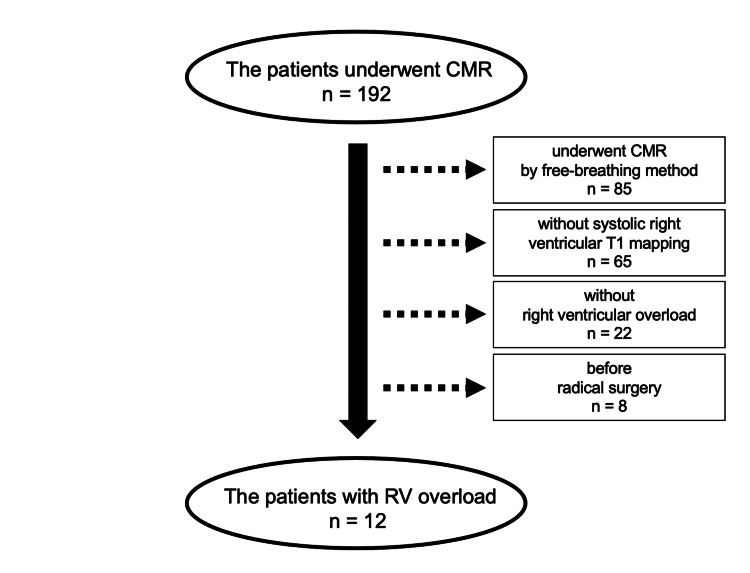 Figure 1
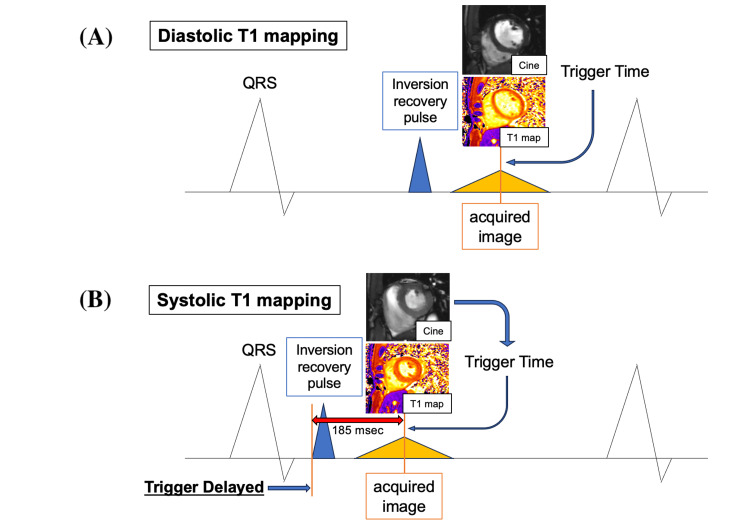 Figure 2
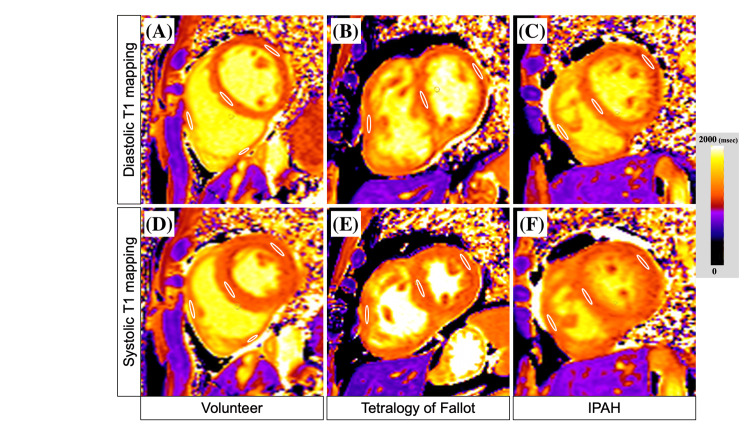 Figure 3
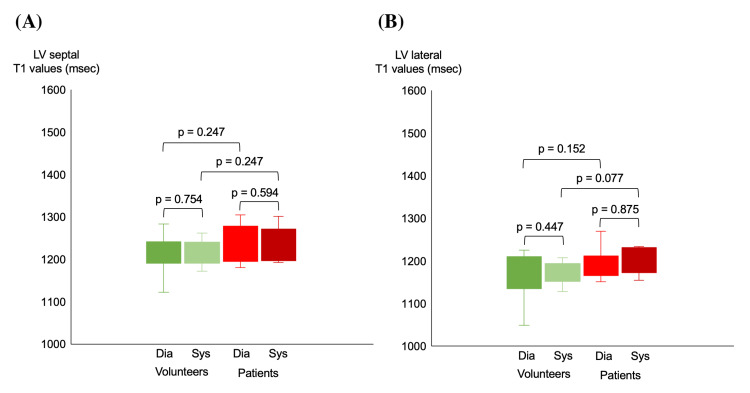 Figure 4
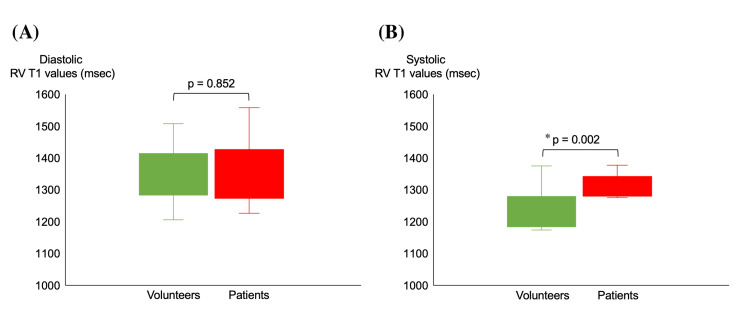 Figure 5
Peer Reviews
No public reviews on file for this paper yet. If you reviewed it on a platform where reviews are public (OpenReview, ICLR, NeurIPS, ICML), you can paste yours below so the community can read it here.
Videos
No videos yet. Explain this paper in a talk, walkthrough, or lecture? Add one.
Taxonomy
TopicsCardiac Imaging and Diagnostics · Cardiovascular Function and Risk Factors · Pulmonary Hypertension Research and Treatments