A longitudinal study on the relation between parenting and Toddler’s disruptive behavior: what is the role of Toddler’s negative emotionality and physiological stress reactivity?
Marijke Huijzer-Engbrenghof, Loes van Rijn-van Gelderen, Hannah Spencer, Christiane Wesarg-Menzel, Nicole Creasey, Esmee S. Lalihatu, Geertjan Overbeek

TL;DR
This study explores how parenting affects toddler behavior, but finds that child temperament and stress reactivity don't mediate this link.
Contribution
The study is novel in examining physiological stress reactivity as a mediator in the parenting-disruptive behavior relationship in toddlers.
Findings
Negative emotionality and heart rate reactivity did not mediate the link between parenting and disruptive behavior.
No reinforcing dynamic between parenting, stress, and behavior was found in toddlers.
Parenting practices remain directly linked to disruptive behavior without mediation by child traits.
Abstract
Harsh and unsupportive parenting is a risk factor for the development of disruptive behavior in children. However, little is known about how children’s temperament and stress reactivity influence this relation. In a three-wave longitudinal study, we examined whether the associations between parenting practices (supportive parenting, positive discipline, and harsh discipline) and child disruptive behavior were mediated by child temperament (negative emotionality) and stress reactivity (heart rate reactivity). In 72 families (Mage child = 14.6 months), living in the Netherlands, parents reported on their parenting practices and their children’s disruptive behavior and negative emotionality. Children’s heart rate reactivity was assessed through a series of stress-inducing tasks. Results from regression-based mediation analyses with bootstrapping showed that negative emotionality and stress…
Genes, proteins, chemicals, diseases, species, mutations and cell lines named across the full text — each resolved to its canonical identifier and authoritative record.
Click any figure to enlarge with its caption.
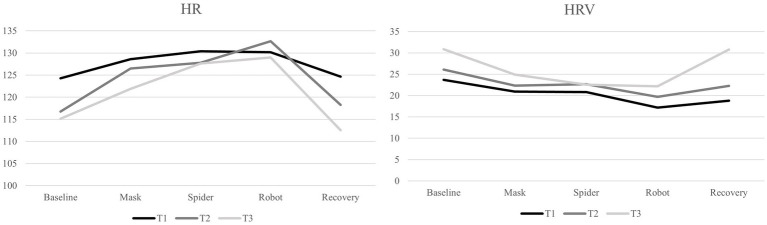 Figure 1
Peer Reviews
No public reviews on file for this paper yet. If you reviewed it on a platform where reviews are public (OpenReview, ICLR, NeurIPS, ICML), you can paste yours below so the community can read it here.
Videos
No videos yet. Explain this paper in a talk, walkthrough, or lecture? Add one.
Taxonomy
TopicsPsychosocial Factors Impacting Youth · Child and Adolescent Psychosocial and Emotional Development · Early Childhood Education and Development