Uncovering Hidden Framings in Dark Triad Self-Ratings: What Frames-of-Reference Do People Use When Responding to Generic Dark Triad Items?
Julian Schulze, Manuel Heinrich, Jan-Philipp Freudenstein, Philipp Schäpers, Stefan Krumm

TL;DR
This study explores how people interpret generic Dark Triad personality questions, finding that responses may vary depending on the type of social context imagined.
Contribution
The study reveals that generic Dark Triad items may contain hidden context-specific biases, particularly in how people mentally frame their responses.
Findings
Generic Dark Triad items showed strongest links with work-related items and weakest with family-related items.
Associations between generic and contextual items varied across different traits and specific items.
The findings suggest that hidden contextual framings may affect the predictive validity of Dark Triad self-reports.
Abstract
In typical Dark Triad (DT) questionnaires, generic items oftentimes refer to “others” or “people” in general. Hence, respondents have to mentally aggregate their behavior across several kinds of “others” (e.g., work colleagues, family members, and friends). It remains unknown if individuals consider different kinds of interaction partners equally or if their self-reports contain “hidden” interaction partner-specific tendencies. To shed light on this issue, we assessed generic and contextualized DT items (referring to family, friends, work, and strangers; N = 814 from the general population). The correlated trait-correlated (method − 1) model was used to investigate preregistered research questions. On average, generic DT items showed the strongest association with work-contextualized DT items and the weakest association with family-contextualized DT items. However, the associations…
Genes, proteins, chemicals, diseases, species, mutations and cell lines named across the full text — each resolved to its canonical identifier and authoritative record.
Click any figure to enlarge with its caption.
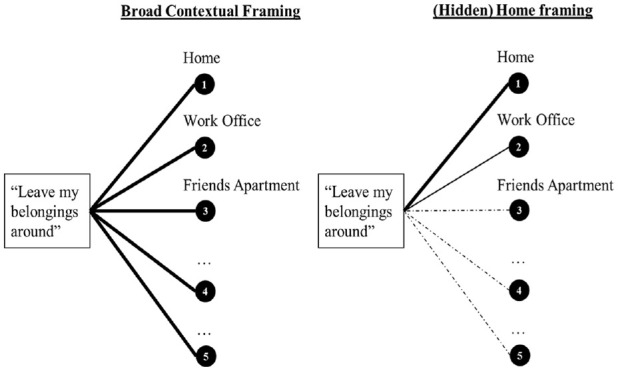 Figure 1
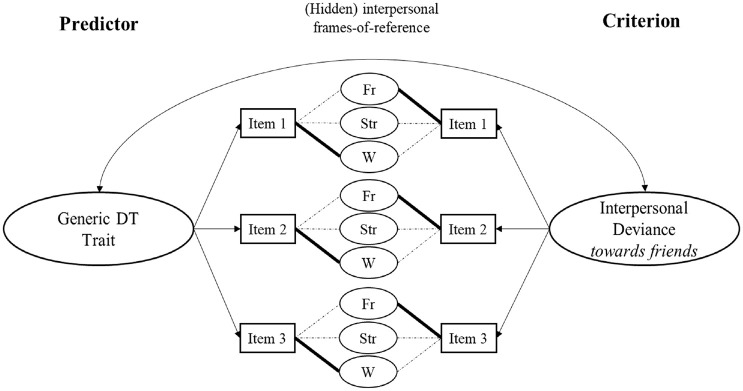 Figure 2
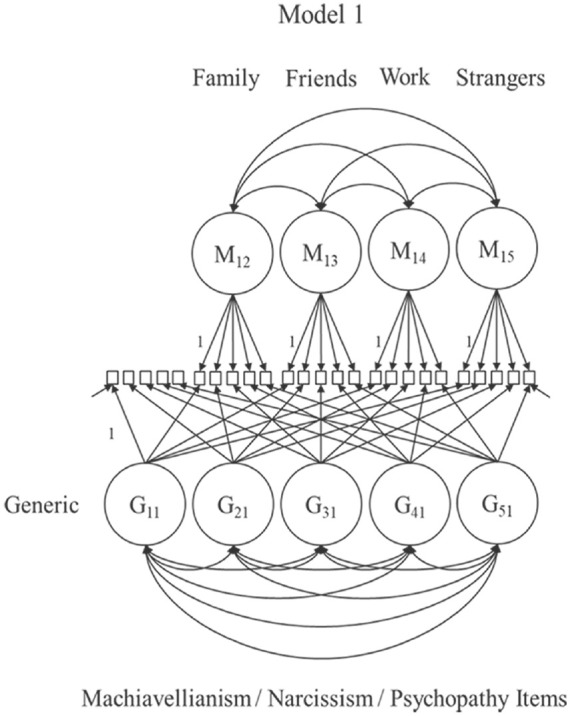 Figure 3
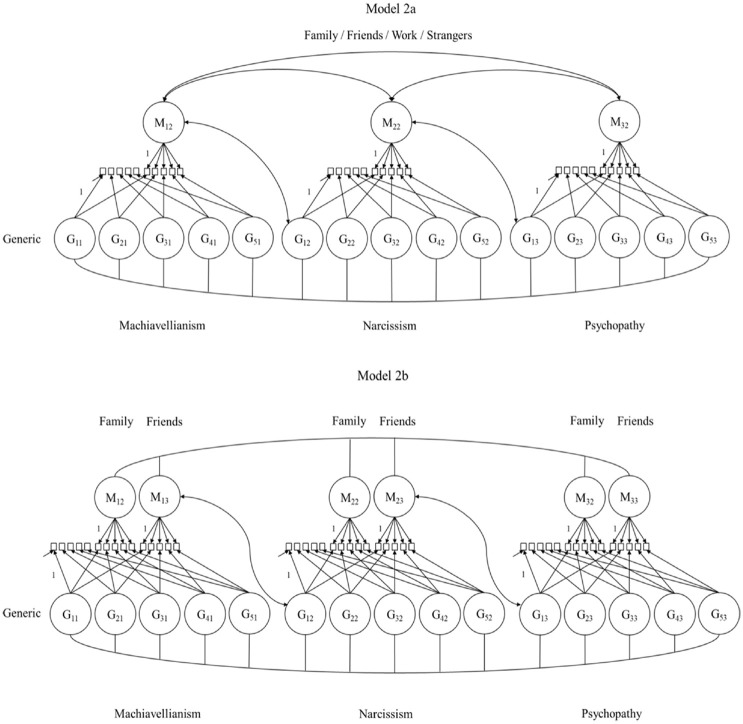 Figure 4
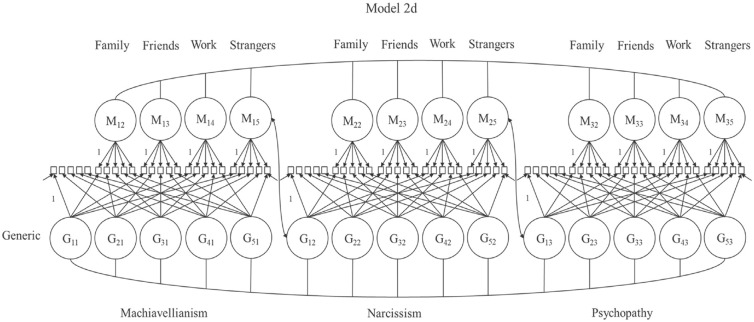 Figure 5
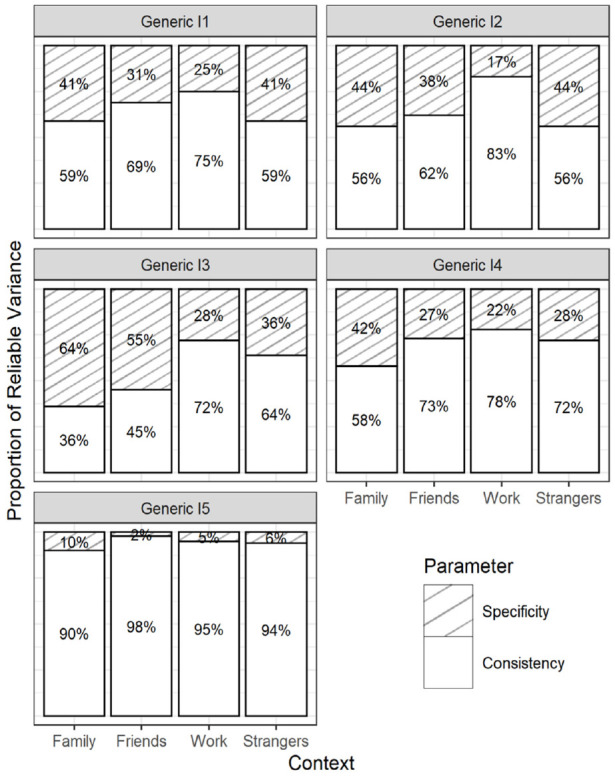 Figure 6
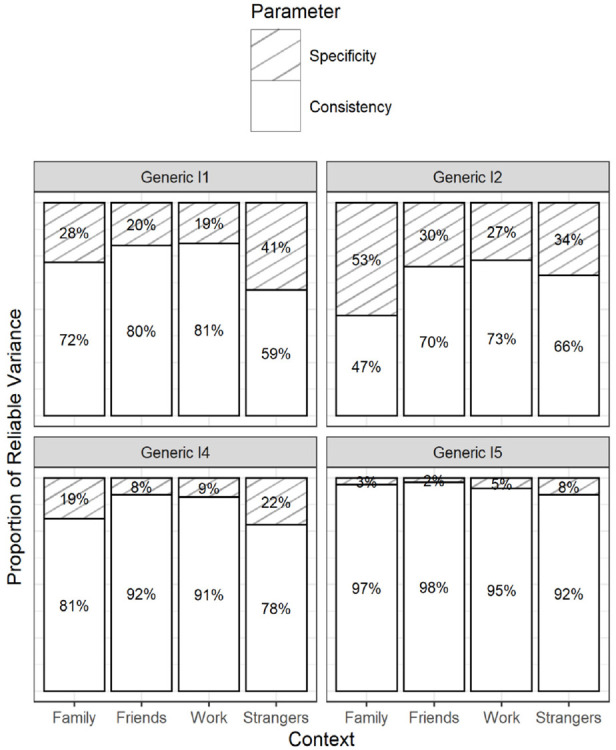 Figure 7
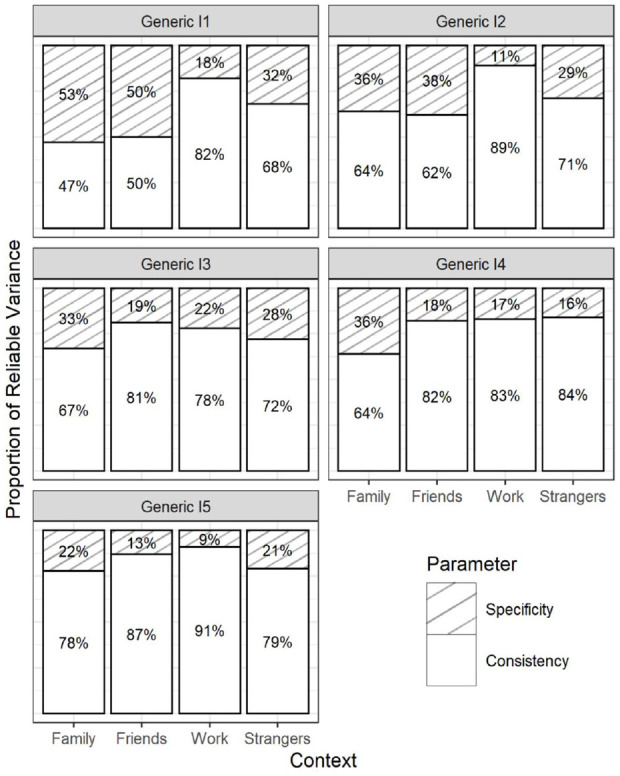 Figure 8
 Figure 9
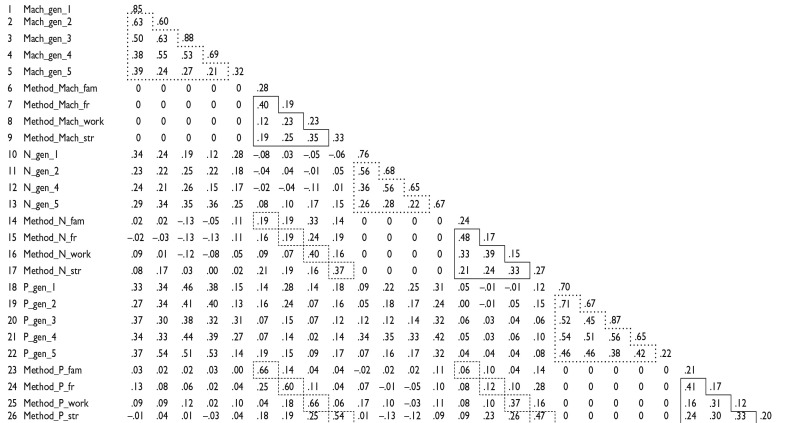 Figure 10
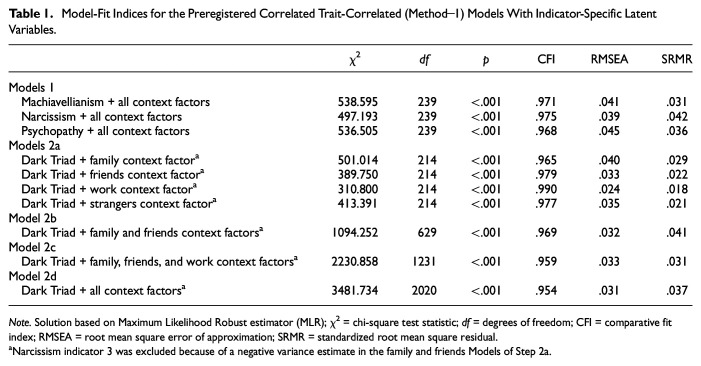 Figure 11
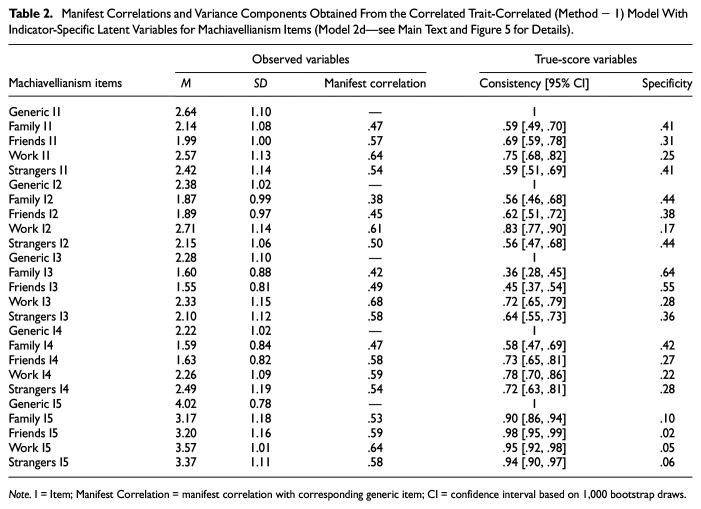 Figure 12
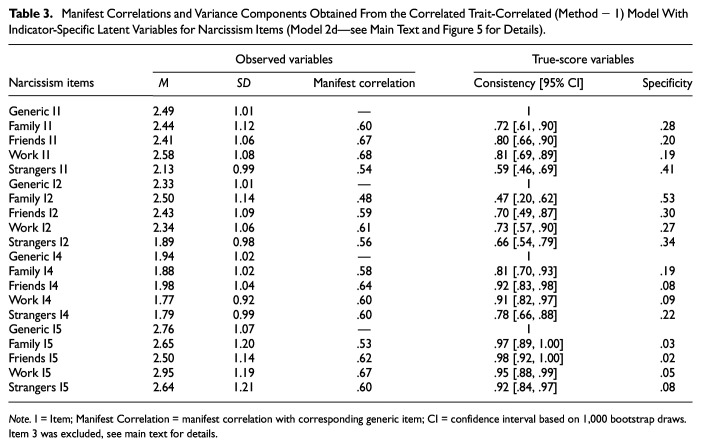 Figure 13
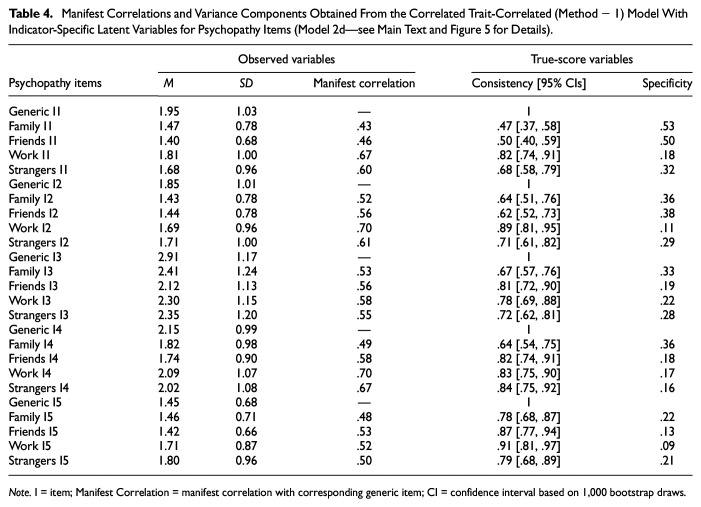 Figure 14
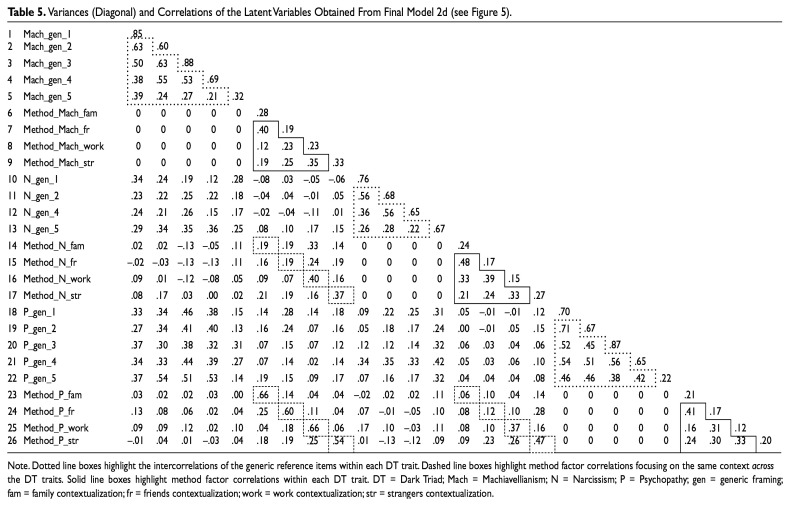 Figure 15
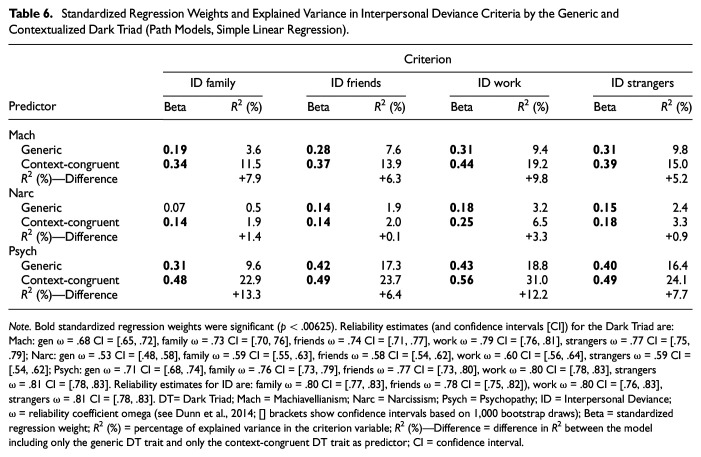 Figure 16
Peer Reviews
No public reviews on file for this paper yet. If you reviewed it on a platform where reviews are public (OpenReview, ICLR, NeurIPS, ICML), you can paste yours below so the community can read it here.
Videos
No videos yet. Explain this paper in a talk, walkthrough, or lecture? Add one.
Taxonomy
TopicsPersonality Traits and Psychology · Social and Intergroup Psychology · Optimism, Hope, and Well-being