Enhancers in T Cell development and malignant lesions
Tong Zhang, Lin Zou

TL;DR
This paper reviews how enhancers influence T cell development and how they may contribute to T cell cancers, suggesting new drug targets.
Contribution
The paper proposes that specific Mediator complex subunits could be targeted to treat T cell malignancies.
Findings
Enhancers regulate key genes in T cell development.
Dysfunctional enhancers may contribute to T cell malignancies.
Targeting Mediator complex subunits could disrupt cancer-related enhancers.
Abstract
Enhancers constitute a vital category of cis-regulatory elements with a Mediator complex within DNA sequences, orchestrating gene expression by activating promoters. In the development of T cells, some enhancers regulate the critical genes, which might also regulate T cell malignant lesions. This review is to comprehensively elucidate the contributions of enhancers in both normal T cell development and its malignant pathogenesis, proposing the idea that the precise subunits of the Mediator complex are the potential drug target for disrupting the specific gene enhancer for T cell malignant diseases.
Genes, proteins, chemicals, diseases, species, mutations and cell lines named across the full text — each resolved to its canonical identifier and authoritative record.
Click any figure to enlarge with its caption.
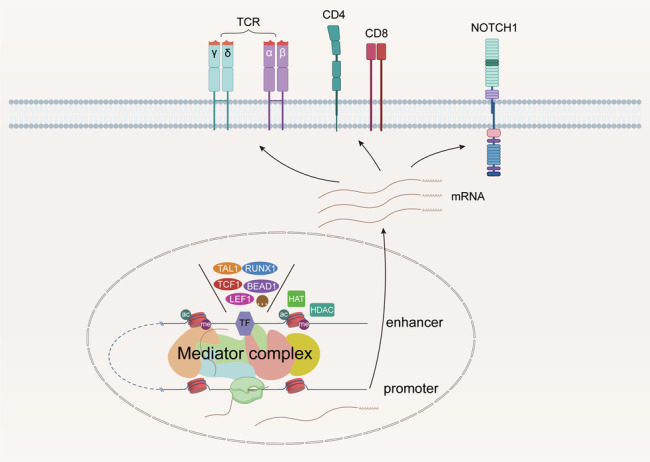 Figure 1
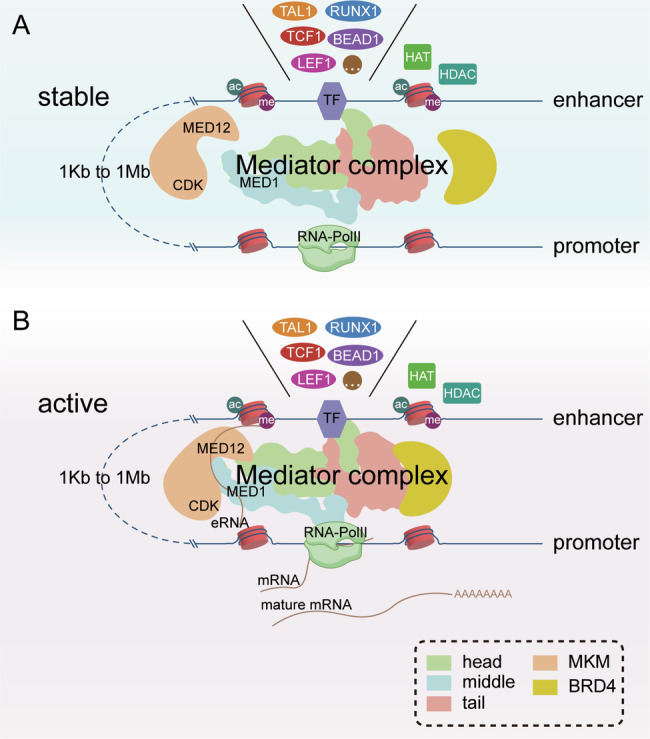 Figure 2
Peer Reviews
No public reviews on file for this paper yet. If you reviewed it on a platform where reviews are public (OpenReview, ICLR, NeurIPS, ICML), you can paste yours below so the community can read it here.
Videos
No videos yet. Explain this paper in a talk, walkthrough, or lecture? Add one.
Taxonomy
TopicsMicrobial Metabolites in Food Biotechnology · Cynara cardunculus studies · Seaweed-derived Bioactive Compounds