Establishment of a Rapid Detection Method for Cadmium Ions via a Specific Cadmium Chelator N-(2-Acetamido)-Iminodiacetic Acid Screened by a Novel Biological Method
Yali Wang, Wenxue Sun, Tinglin Ma, Joseph Brake, Shuangbo Zhang, Yanke Chen, Jing Li, Xiaobin Wu

TL;DR
This study introduces a fast, safe, and low-cost method to detect cadmium in agricultural products using a new chelator and colorimetric technique.
Contribution
A novel biological method was used to screen a specific cadmium chelator for rapid detection in agricultural products.
Findings
The method has a detection limit of 0.08 μM and a linear range of 0.1–10 μM for cadmium.
The paper strip method allows naked-eye detection in under 1 minute with a limit of 0.2 μM.
Results matched well with ICP-MS for cadmium in rice, soybean, milk, and other samples.
Abstract
Heavy metal ions such as cadmium, mercury, lead, and arsenic in the soil cannot be degraded naturally and are absorbed by crops, leading to accumulation in agricultural products, which poses a serious threat to human health. Therefore, establishing a rapid and efficient method for detecting heavy metal ions in agricultural products is of great significance to ensuring the health and safety. In this study, a novel optimized spectrometric method was developed for the rapid and specific colorimetric detection of cadmium ions based on N-(2-Acetamido)-iminodiacetic acid (ADA) and Victoria blue B (VBB) as the chromogenic unit. The safety evaluation of ADA showed extremely low biological toxicity in cultured cells and live animals. The standard curve is y = 0.0212x + 0.1723, R2 = 0.9978, and LOD = 0.08 μM (0.018 mg/kg). The liner concentrations detection range of cadmium is 0.1–10 μM. An…
Genes, proteins, chemicals, diseases, species, mutations and cell lines named across the full text — each resolved to its canonical identifier and authoritative record.
Click any figure to enlarge with its caption.
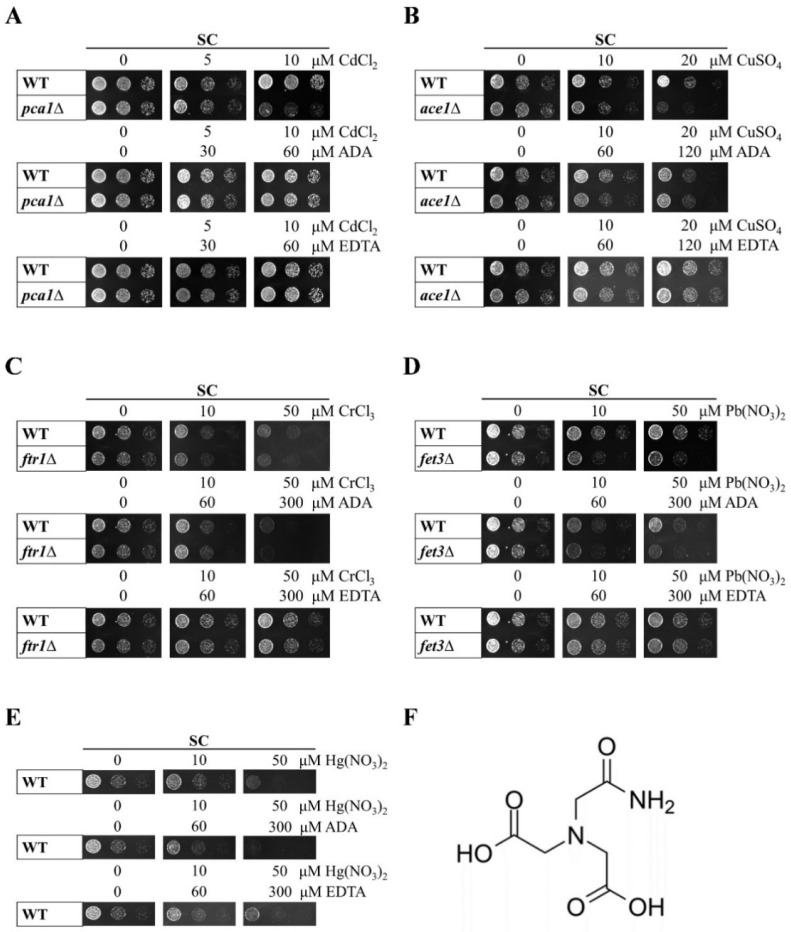 Figure 1
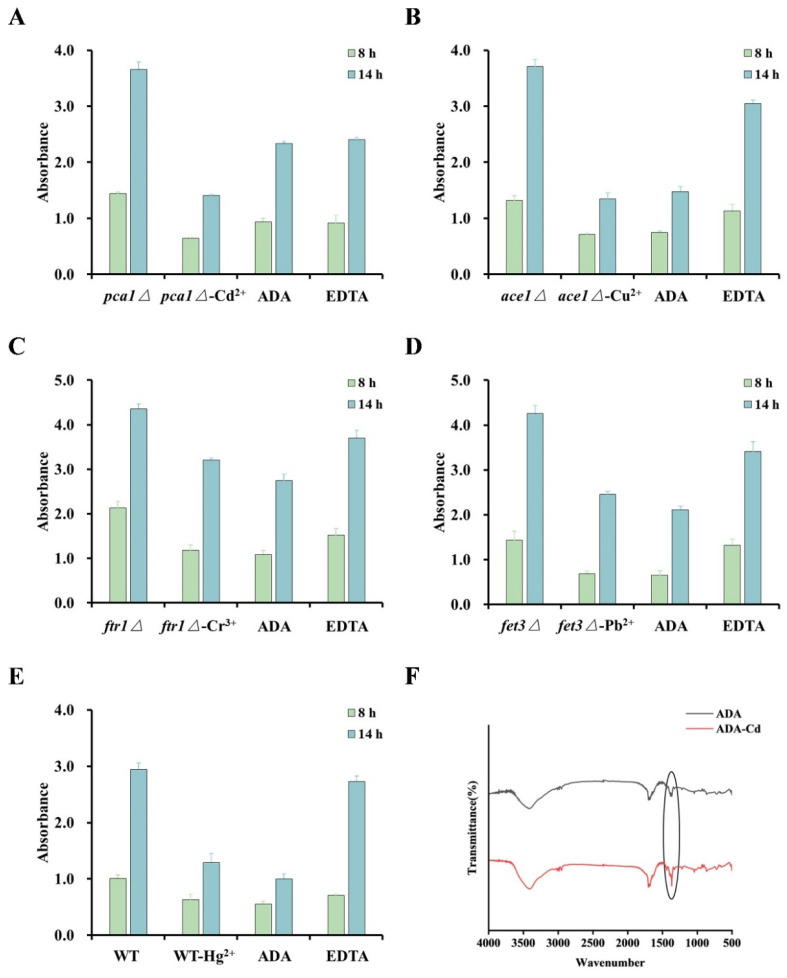 Figure 2
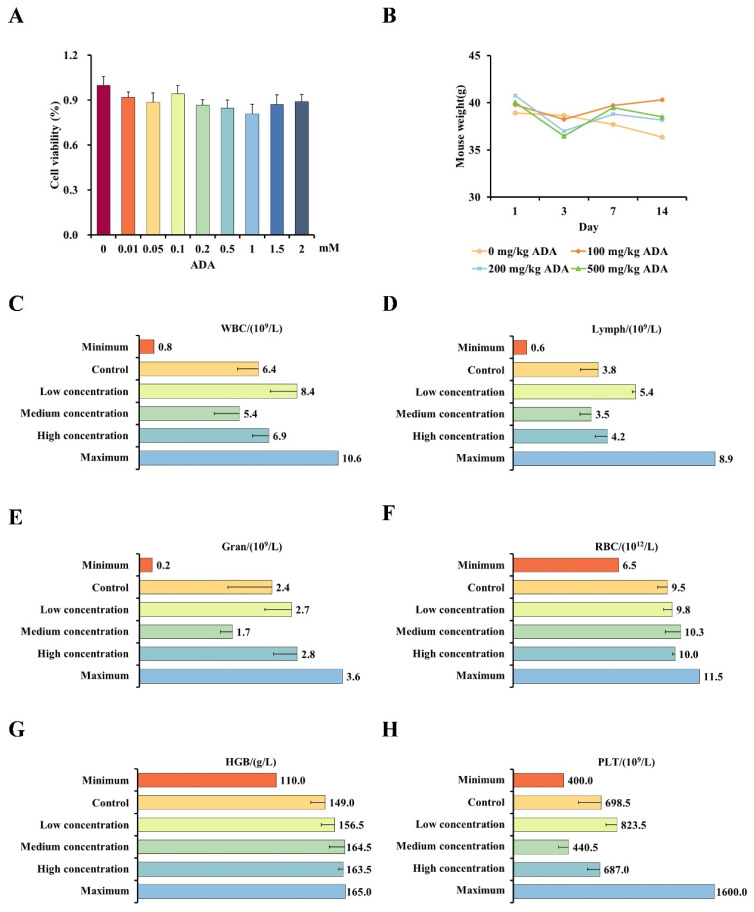 Figure 3
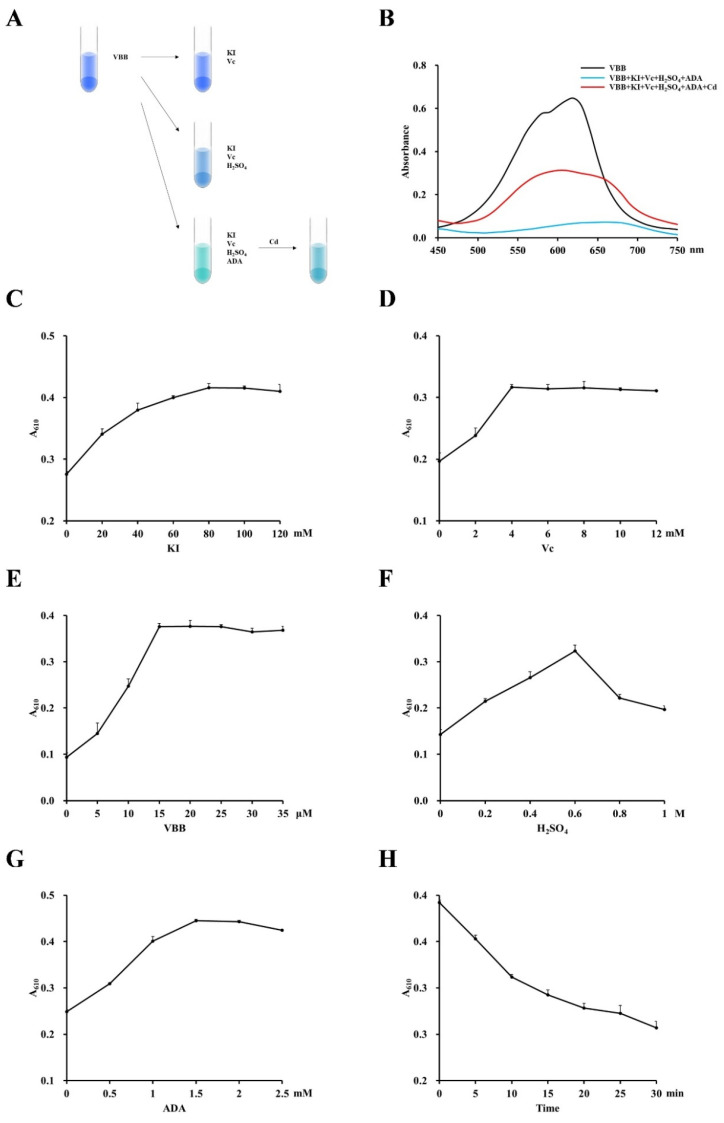 Figure 4
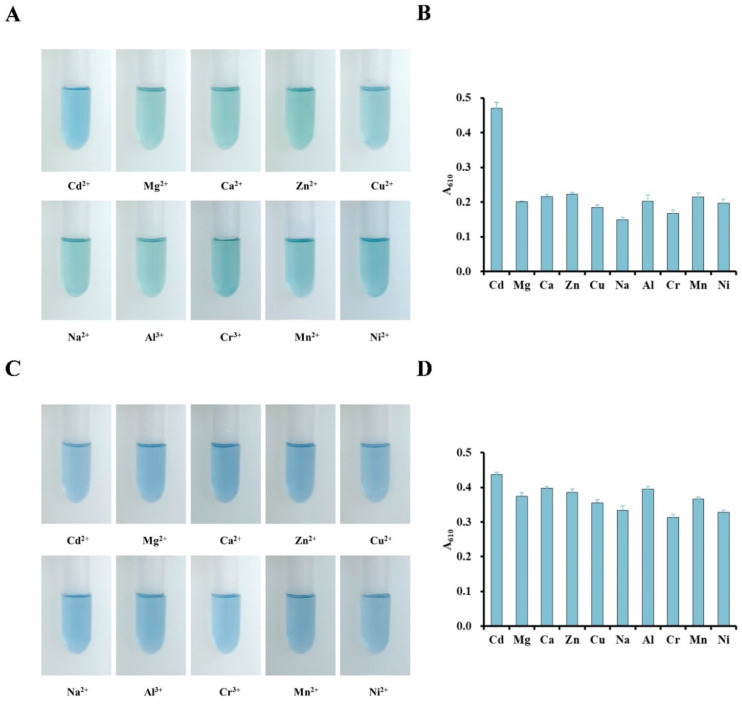 Figure 5
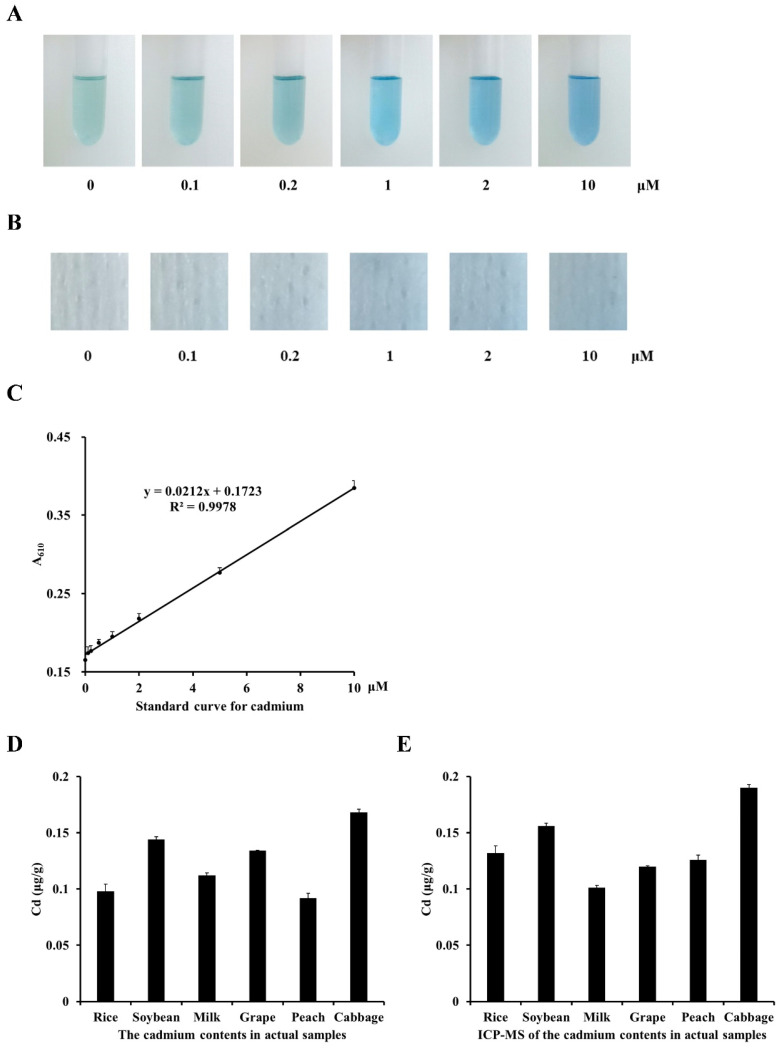 Figure 6
Peer Reviews
No public reviews on file for this paper yet. If you reviewed it on a platform where reviews are public (OpenReview, ICLR, NeurIPS, ICML), you can paste yours below so the community can read it here.
Videos
No videos yet. Explain this paper in a talk, walkthrough, or lecture? Add one.
Taxonomy
TopicsAnalytical chemistry methods development · Electrochemical Analysis and Applications · Electrochemical sensors and biosensors