Intraoperative Transient Central Diabetes Insipidus Status Post-Cerebellopontine Meningioma Resection: A Case Report
Bright O Etumuse, Stephen Arhewoh, Amit Aggarwal, Urmil Patel, Darsh S Shah, Pablo Valdez Quevedo, Daniel Arango

TL;DR
A patient developed central diabetes insipidus after a brain tumor surgery, highlighting the need for careful drug selection during such procedures.
Contribution
The paper reports a case of transient central diabetes insipidus following cerebellopontine meningioma resection and discusses anesthetic drug associations.
Findings
The patient produced 8650 mL of urine with low specific gravity despite vasopressin therapy.
Anesthetic drugs like alpha-2 agonists and sevoflurane are linked to increased CDI incidence.
Desmopressin is recommended over vasopressin for longer neurosurgical procedures.
Abstract
Central diabetes insipidus (CDI) is a neurological pathological condition in which vasopressin synthesis has been compromised. A 52-year-old male presented with a cerebellopontine angle mass not involving the hypothalamic-pituitary axis. Despite vasopressin therapy, the patient produced a total of 8650 mL of urine, with the urine-specific gravity measured at 1.002 near hour 8. A literature review found associations with certain anesthetic drugs that have an increased incidence of CDI, including alpha-2 agonists and sevoflurane. Reports have recommended administering desmopressin over vasopressin, especially for neurosurgery cases that warrant a more extended operative period, given that desmopressin has a longer context-sensitive half-life.
Genes, proteins, chemicals, diseases, species, mutations and cell lines named across the full text — each resolved to its canonical identifier and authoritative record.
Click any figure to enlarge with its caption.
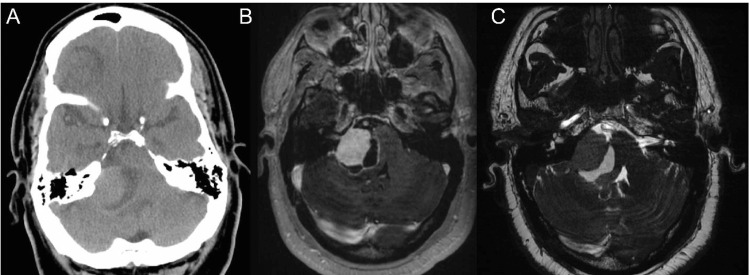 Figure 1
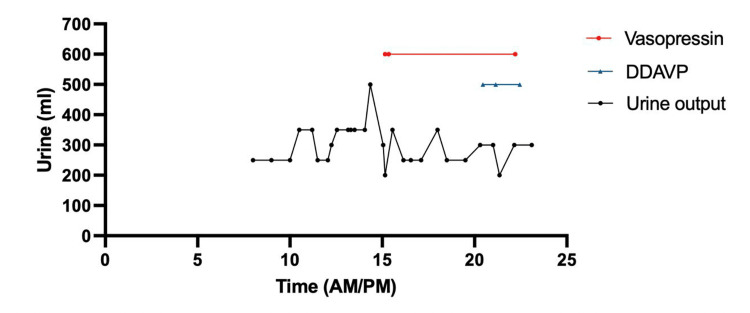 Figure 2
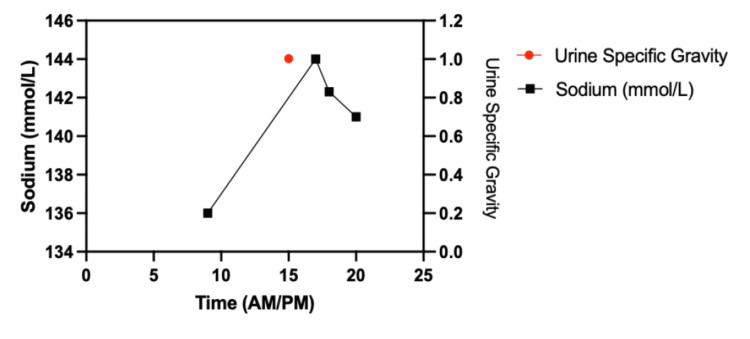 Figure 3
Peer Reviews
No public reviews on file for this paper yet. If you reviewed it on a platform where reviews are public (OpenReview, ICLR, NeurIPS, ICML), you can paste yours below so the community can read it here.
Videos
No videos yet. Explain this paper in a talk, walkthrough, or lecture? Add one.
Taxonomy
TopicsElectrolyte and hormonal disorders · Ion Transport and Channel Regulation · Neuroendocrine Tumor Research Advances