Electromicrobiological concentration cells are an overlooked potential energy conservation mechanism for subsurface microorganisms
Ian P. G. Marshall

TL;DR
This paper explores how concentration differences in chemical species can help subsurface microorganisms conserve energy through a newly proposed mechanism called ElectroMicrobiological Concentration Cells.
Contribution
The paper introduces the concept of ElectroMicrobiological Concentration Cells as a novel energy conservation mechanism for subsurface microorganisms.
Findings
Concentration differences can contribute to a net negative change in Gibbs free energy for microbial metabolism.
ElectroMicrobiological Concentration Cells allow the same redox reaction to run in both forward and reverse directions simultaneously.
The model examines oxygen, sulfide, and hydrogen concentration cells as specific examples of this mechanism.
Abstract
Thermodynamics has predicted many different kinds of microbial metabolism by determining which pairs of electron acceptors and donors will react to produce an exergonic reaction (a negative net change in Gibbs free energy). In energy-limited environments, such as the deep subsurface, such an approach can reveal the potential for unexpected or counter-intuitive energy sources for microbial metabolism. Up until recently, these thermodynamic calculations have been carried out with the assumption that chemical species appearing on the reactant and product side of a reaction formula have a constant concentration, and thus do not count towards net concentration changes and the overall direction of the reaction. This assumption is reasonable considering microorganisms are too small (~1 μm) for any significant differences in concentration to overcome diffusion. However, recent discoveries have…
Genes, proteins, chemicals, diseases, species, mutations and cell lines named across the full text — each resolved to its canonical identifier and authoritative record.
Click any figure to enlarge with its caption.
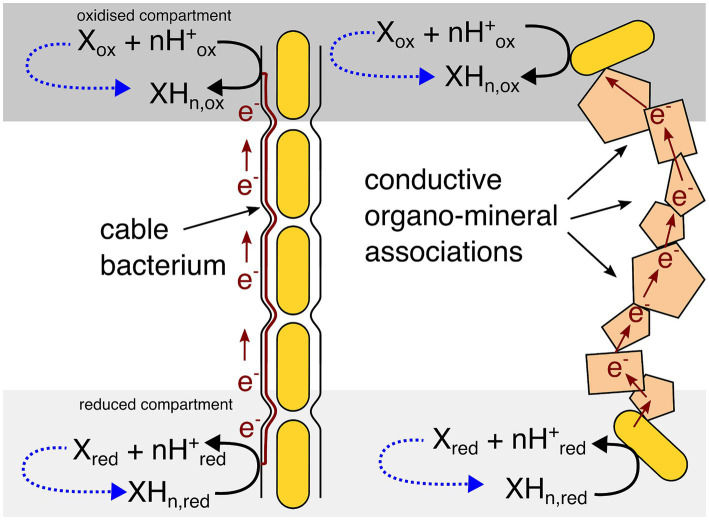 Figure 1
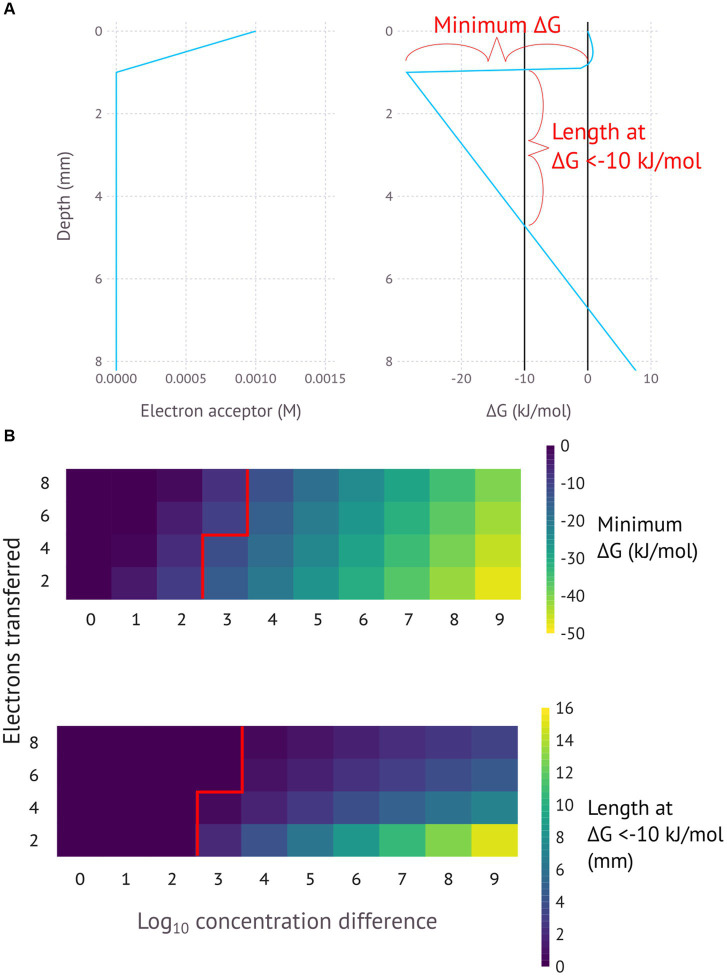 Figure 2
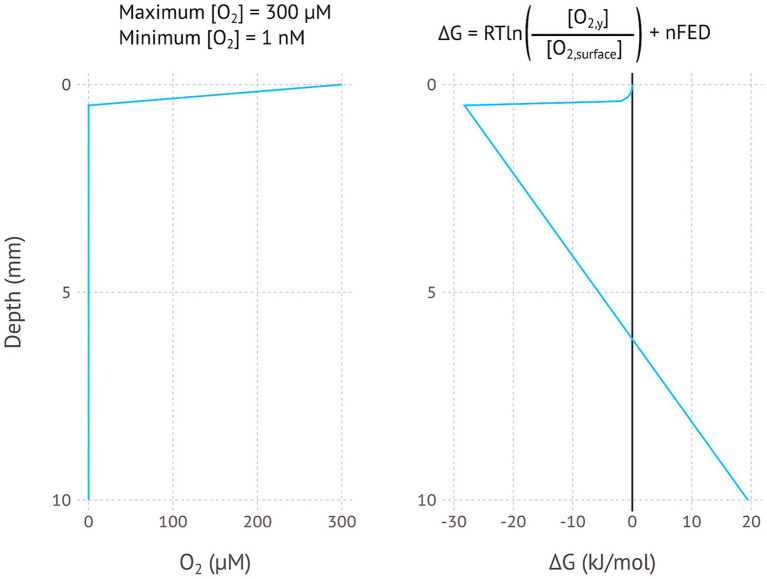 Figure 3
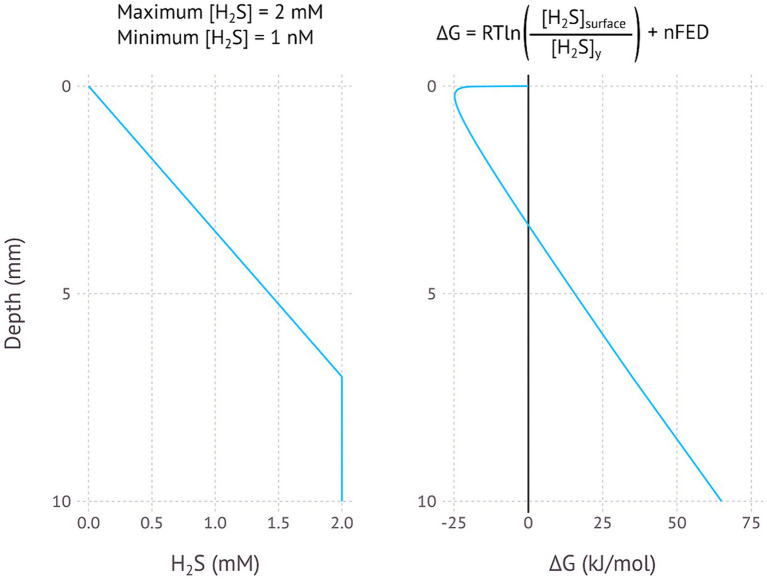 Figure 4
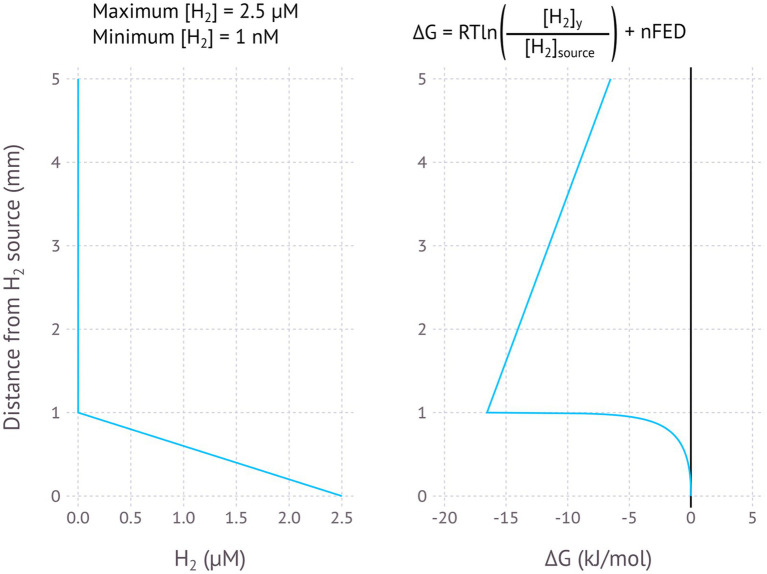 Figure 5
Peer Reviews
No public reviews on file for this paper yet. If you reviewed it on a platform where reviews are public (OpenReview, ICLR, NeurIPS, ICML), you can paste yours below so the community can read it here.
Videos
No videos yet. Explain this paper in a talk, walkthrough, or lecture? Add one.
Taxonomy
TopicsMicrobial Fuel Cells and Bioremediation · Electrochemical Analysis and Applications · Electrochemical sensors and biosensors