Genotyping single point mutations in rd1 and rd8 mice using melting curve analysis of qPCR fragments
Melanie E. Schwämmle, Felicitas Bucher, Günther Schlunck, Gottfried Martin

TL;DR
This paper introduces a simplified method for genotyping single point mutations in mice using melting curve analysis after qPCR.
Contribution
The novel approach uses MS-PCR with optimized primers to distinguish mutations via melting temperatures, avoiding gel electrophoresis.
Findings
MS-PCR with melting curve analysis successfully genotypes rd1 and rd8 mutations in mice.
Optimized primers increase melting temperature differences for easier mutation detection.
The method is simple, efficient, and suitable for single nucleotide variant detection.
Abstract
PCR is tolerant to single nucleotide mismatches. Therefore, genotyping of point mutations by PCR requires special conditions for the amplification of allele-specific PCR fragments. MS-PCR (mutagenically separated PCR) is an improved version of ARMS (amplification refractory mutation system) in which additional nucleotide mismatches near the mutation site are used to separate the wt fragments from the mutant fragments in a single-tube PCR. In the originally described procedure, the resulting fragments are resolved on agarose gels according to differences in size introduced by different lengths of the allele-specific primers. In order to evaluate the PCR fragments by melting curve analysis, we enlarged the difference in the melting temperatures of the fragments of the two alleles by increasing the GC content of the longer allele-specific primer resulting in a higher melting temperature of…
Genes, proteins, chemicals, diseases, species, mutations and cell lines named across the full text — each resolved to its canonical identifier and authoritative record.
Click any figure to enlarge with its caption.
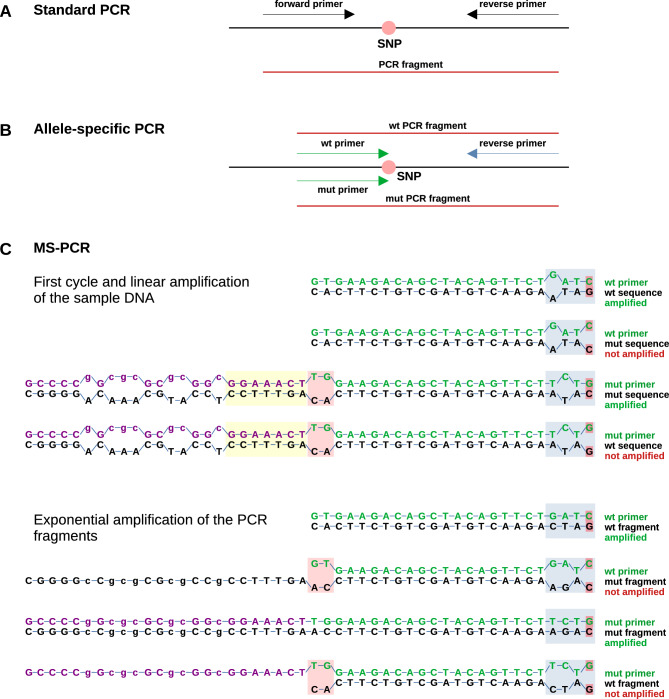 Figure 1
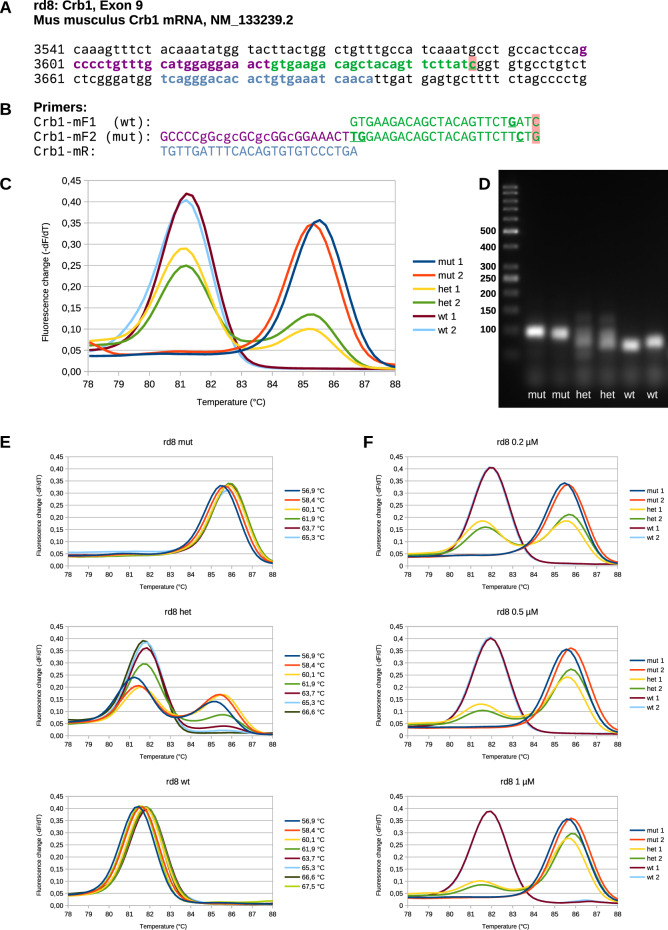 Figure 2
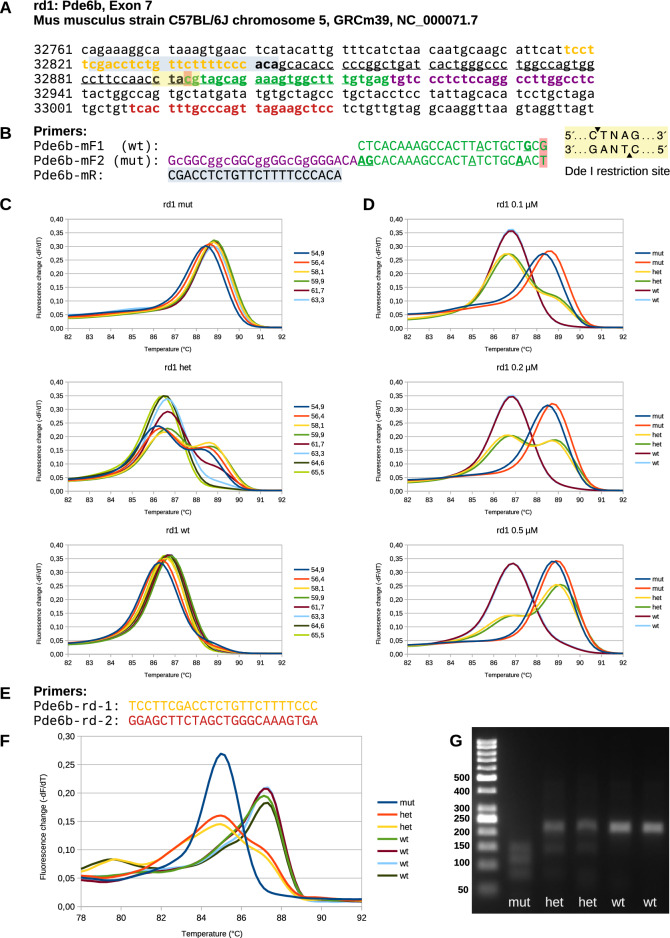 Figure 3
Peer Reviews
No public reviews on file for this paper yet. If you reviewed it on a platform where reviews are public (OpenReview, ICLR, NeurIPS, ICML), you can paste yours below so the community can read it here.
Videos
No videos yet. Explain this paper in a talk, walkthrough, or lecture? Add one.
Taxonomy
TopicsMolecular Biology Techniques and Applications · RNA Research and Splicing · RNA and protein synthesis mechanisms