Hypokalemic Quadriparesis Associated With Renal Glycosuria in Dengue Fever: A Rare Presentation
Jay Kakadiya, Kush Varsadiya, Chintan Kakadiya, Maulik Prajapati, Pritesh Patel

TL;DR
A rare case of dengue fever is reported with hypokalemic quadriparesis and renal glycosuria, suggesting a possible new mechanism for these symptoms.
Contribution
The paper proposes a novel mechanism linking hypokalemia and renal glycosuria in dengue fever.
Findings
A case of dengue fever presented with hypokalemia and renal glycosuria.
The proposed mechanism may explain both hypokalemia and renal glycosuria in dengue patients.
Abstract
Dengue fever is a viral hemorrhagic fever mainly transmitted by Aedes mosquitoes and is especially prevalent in equatorial regions. The presentation of dengue fever can range from mild symptoms, such as fever and body aches, to severe symptoms, such as hemorrhagic bleeding and shock. Although it is a non-neurotropic virus, it rarely manifests as a neurological abnormality. Previous data suggests that the incidence of electrolyte disturbance is increasing in patients with dengue. Here, we have described a case of dengue fever with hypokalemia and renal glycosuria. Studies show that the probable mechanism of developing hypokalemia is increased insulin and catecholamine, but it is still not well-established. We propose a mechanism that can explain both hypokalemia and renal glycosuria in our case.
Genes, proteins, chemicals, diseases, species, mutations and cell lines named across the full text — each resolved to its canonical identifier and authoritative record.
Click any figure to enlarge with its caption.
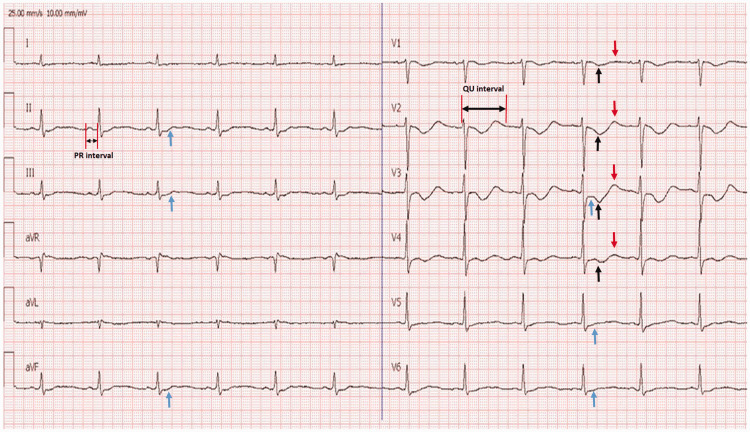 Figure 1
Peer Reviews
No public reviews on file for this paper yet. If you reviewed it on a platform where reviews are public (OpenReview, ICLR, NeurIPS, ICML), you can paste yours below so the community can read it here.
Videos
No videos yet. Explain this paper in a talk, walkthrough, or lecture? Add one.
Taxonomy
TopicsMosquito-borne diseases and control · Malaria Research and Control · Viral Infections and Vectors