7-Methylguanine Inhibits Colon Cancer Growth in Vivo
K. I. Kirsanov, T. I. Fetisov, E. E. Antoshina, T. G. Gor’kova, L. S. Trukhanova, S. I. Shram, I. Yu. Nagaev, Yu. A. Zolotarev, L. Abo Qoura, V. S. Pokrovsky, M. G. Yakubovskaya, V. K. Švedas, D. K. Nilov

TL;DR
7-Methylguanine (7-MG) was found to inhibit colon cancer growth in mice by penetrating tumor tissue and suppressing tumor development.
Contribution
The study demonstrates the in vivo efficacy of 7-MG in suppressing colon cancer in two distinct mouse models.
Findings
7-MG effectively penetrates tumor tissue in mice.
7-MG suppresses colon adenocarcinoma growth in the Akatol mouse model.
7-MG inhibits tumor growth in a xenograft model with human HCT116 cells.
Abstract
7-Methylguanine (7-MG) is a natural inhibitor of poly(ADP-ribose) polymerase 1 and tRNA-guanine transglycosylase, the enzymatic activity of which is central for the proliferation of cancer cells. Recently, a number of preclinical tests have demonstrated the safety of 7-MG and a regimen of intragastric administration was established in mice. In the present work, the pharmacological activity of 7-MG was studied in BALB/c and BALB/c nude mice with transplanted tumors. It was found that 7-MG effectively penetrates tumor tissue and suppresses colon adenocarcinoma growth in the Akatol model, as well as in a xenograft model with human HCT116 cells.
Genes, proteins, chemicals, diseases, species, mutations and cell lines named across the full text — each resolved to its canonical identifier and authoritative record.
Click any figure to enlarge with its caption.
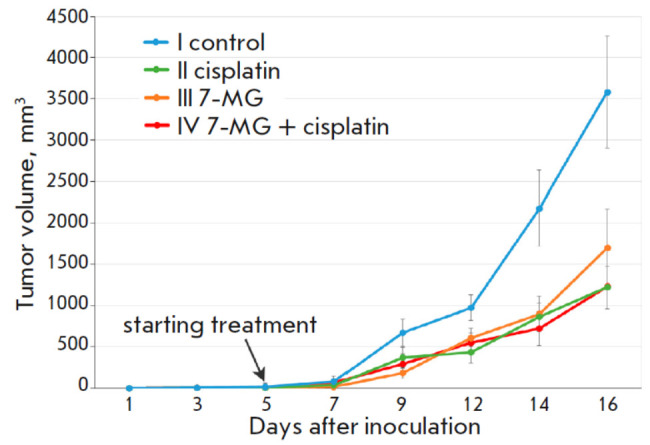 Figure 1
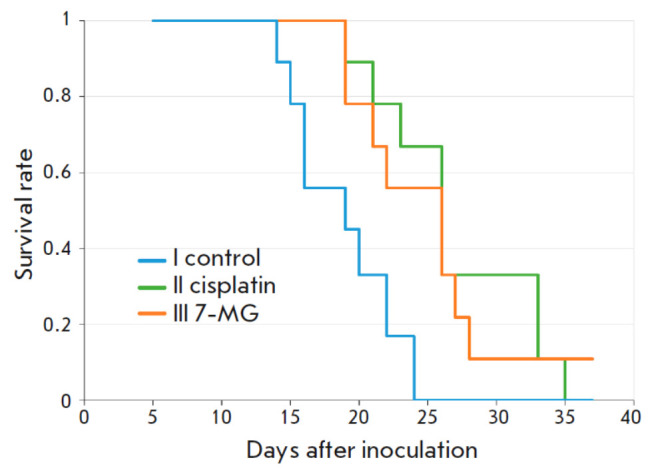 Figure 2
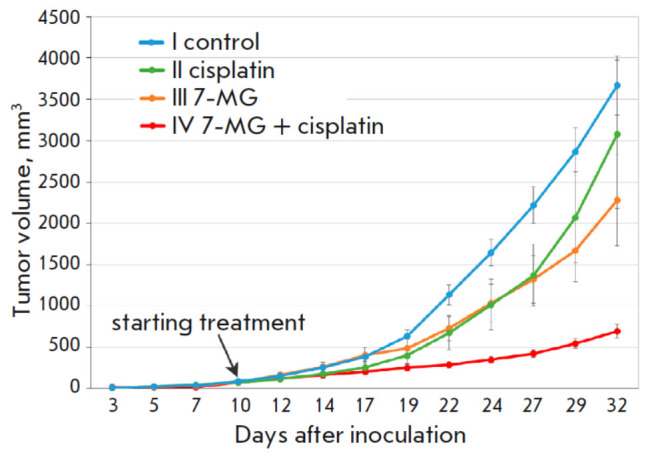 Figure 3
Peer Reviews
No public reviews on file for this paper yet. If you reviewed it on a platform where reviews are public (OpenReview, ICLR, NeurIPS, ICML), you can paste yours below so the community can read it here.
Videos
No videos yet. Explain this paper in a talk, walkthrough, or lecture? Add one.
Taxonomy
TopicsPARP inhibition in cancer therapy · DNA Repair Mechanisms · Cancer-related Molecular Pathways