Singular effect of linkage on long-term genetic gain in Fisher’s infinitesimal model
Elise Tourrette, Olivier C Martin

TL;DR
This paper shows that genetic linkage significantly changes long-term genetic gain predictions in a classic genetics model.
Contribution
The study reveals that genetic linkage leads to vanishing asymptotic gain per generation in Fisher’s infinitesimal model.
Findings
Genetic linkage changes the nature of long-term genetic gain in the infinitesimal model.
Asymptotic gain per generation vanishes under strong linkage.
Total genetic gain remains unbounded despite diminishing per-generation gains.
Abstract
During the founding of the field of quantitative genetics, Fisher formulated in 1918 his “infinitesimal model” that provided a novel mathematical framework to describe the Mendelian transmission of quantitative traits. If the infinitely many genes in that model are assumed to segregate independently during reproduction, corresponding to having no linkage, directional selection asymptotically leads to a constant genetic gain at each generation. In reality, genes are subject to strong linkage because they lie on chromosomes and thus segregate in a correlated way. Various approximations have been used in the past to study that more realistic case of the infinitesimal model with the expectation that the asymptotic gain per generation is modestly decreased. To treat this system even in the strong linkage limit, we take the genes to lie on continuous chromosomes. Surprisingly, the…
Click any figure to enlarge with its caption.
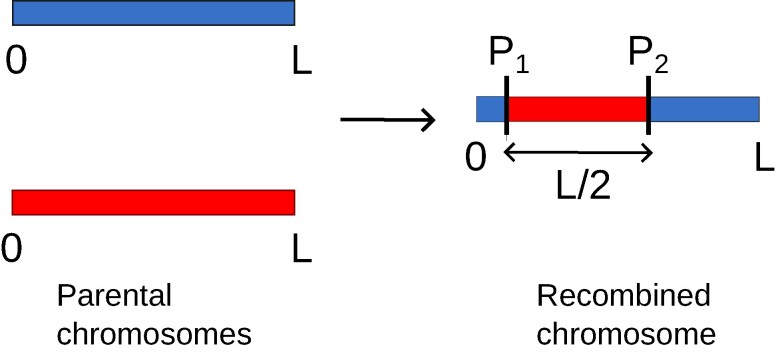 Figure 1
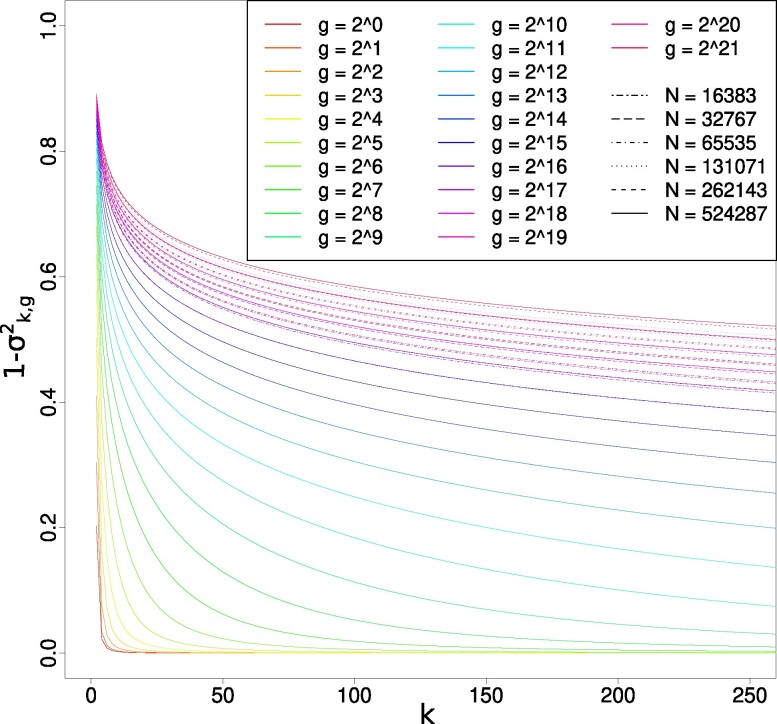 Figure 2
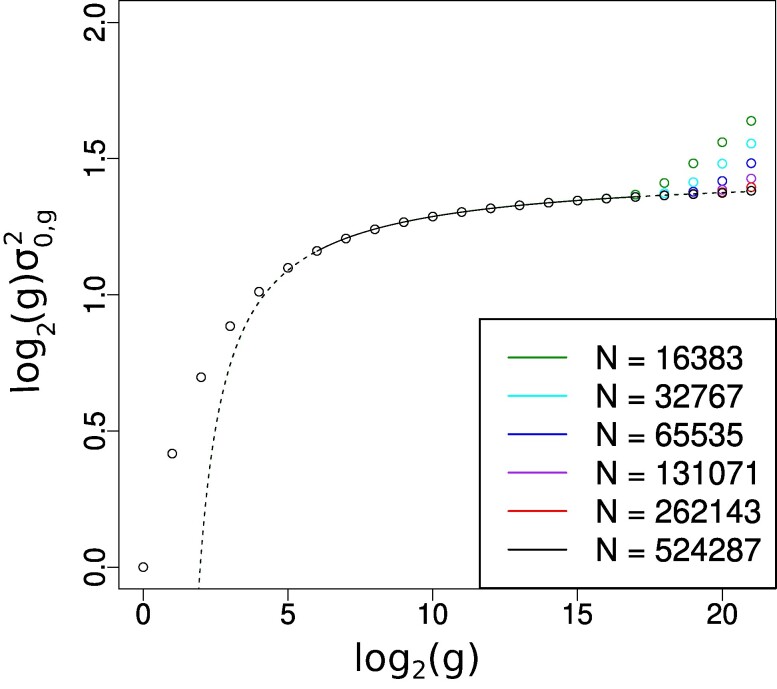 Figure 3
Peer Reviews
No public reviews on file for this paper yet. If you reviewed it on a platform where reviews are public (OpenReview, ICLR, NeurIPS, ICML), you can paste yours below so the community can read it here.
Videos
No videos yet. Explain this paper in a talk, walkthrough, or lecture? Add one.
Taxonomy
TopicsEvolution and Genetic Dynamics · Genetic Mapping and Diversity in Plants and Animals · Gene Regulatory Network Analysis