Association Between FADS1 Gene Polymorphism (rs174549) and Chronic Periodontitis: A Cross-Sectional Study
Johnisha Harris, Arvina Rajasekar

TL;DR
This study found no link between a specific FADS1 gene variant and chronic periodontitis in the tested population.
Contribution
The study provides new evidence that FADS1 gene polymorphism rs174549 is not associated with periodontitis in this population.
Findings
No significant difference in FADS1 genotype frequency was found between periodontitis and control groups.
Allele frequencies of G and A showed no significant difference between the groups.
The FADS1 polymorphism was not associated with periodontitis in the study population.
Abstract
Introduction FADS1 (fatty acid desaturase 1) gene polymorphism results in more susceptibility to certain metabolic diseases and chronic inflammatory diseases like periodontitis. This study aims to analyze the association between FADS1 gene polymorphism and various stages of periodontitis. Materials and methods One hundred subjects included in the study were categorized into two groups: group A (n = 50) had healthy periodontium, and group B (n = 50) had ≥stage II periodontitis. They were graded based on the clinical parameters of probing pocket depth (PPD), clinical attachment level (CAL), and bleeding on probing (BOP). Five milliliters of venous blood were collected, and DNA isolation was done. Genomic DNA was extracted. The DNA was then subjected to amplification with the help of specific primers flanking the Providencia stuartii I (PstI) polymorphic site of the FADS1 gene. A…
Genes, proteins, chemicals, diseases, species, mutations and cell lines named across the full text — each resolved to its canonical identifier and authoritative record.
Click any figure to enlarge with its caption.
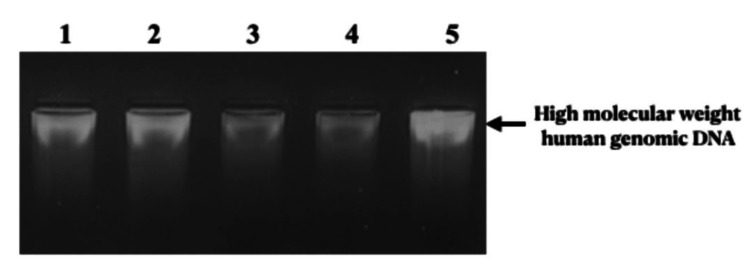 Figure 1
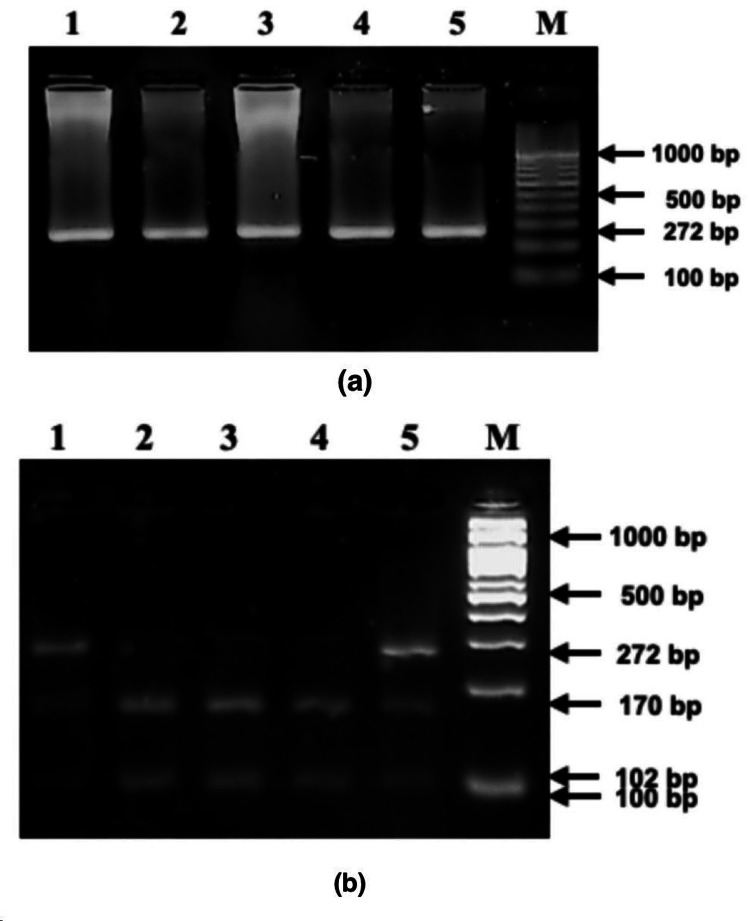 Figure 2
| Amplicon size | Primer name | Sequence |
| 272 bp | FADS1-F | 5'-CTCTT CCTC TCCTC CAGCAG-3’ |
| FADS1-R | 5’-GAGCCATGGTCCTGGCAGATT-3’ |
| SN | Groups | No. of subjects | Mean age | CAL | PPD | GI | ||
| Male | Female | Total | ||||||
| 1 | Periodontitis | 26 | 24 | 50 | 39.02 ± 8.22 | 6.13±1.29 | 5.48 ± 1.15 | 1.74 ± 0.22 |
| 2 | Control | 26 | 24 | 50 | 41.34 ± 7.488 | - | 1.60 ± 0.57 | 0.76 ± 0.16 |
| Groups (n = 50) | AA | AG | GG | G | A | p Value* |
| Case | 5 | 14 | 31 | 0.77 | 0.23 | 0.100 |
| Control | 6 | 15 | 29 | 0.73 | 0.27 | 0.091 |
| Genotype | Case | Control | Unadjusted OR (95% CI) | p Value |
| Dominant | ||||
| AA | 5 | 6 | 0.8148 | 0.7496 |
| AG+GG | 45 | 44 | (0.2317-2.86530) | |
| Recessive | ||||
| AG+AA | 19 | 21 | 0.8464 | 0.6832 |
| GG | 31 | 29 | (0.3799-1.8855) | |
| Allele | ||||
| A | 23 | 27 | 0.8076 | 0.5140 |
| G | 77 | 73 | (0.4516-1.5343) | |
Peer Reviews
No public reviews on file for this paper yet. If you reviewed it on a platform where reviews are public (OpenReview, ICLR, NeurIPS, ICML), you can paste yours below so the community can read it here.
Videos
No videos yet. Explain this paper in a talk, walkthrough, or lecture? Add one.
Taxonomy
TopicsOral microbiology and periodontitis research · Oral Health Pathology and Treatment · Machine Learning in Bioinformatics
Introduction
Periodontitis is an inflammatory disease of the periodontium primarily caused by gram-negative anaerobic bacteria, but the spread of the disease is also influenced by environmental and genetic variables [1]. The host’s susceptibility to periodontitis is mainly influenced by the individual’s genetics. The search to find the genetic factors responsible for periodontal disease is ongoing. Various studies have been conducted to identify the genetic factors responsible for this.
Single nucleotide polymorphism (SNP) is a genetic variation that occurs when a single nucleotide at a specific position in the DNA sequence differs among individuals. SNPs are the most common genetic variation in the human genome and are responsible for much of the genetic diversity between individuals [2]. SNPs in the fatty acid desaturase (FADS) gene cluster (FADS 1-2-3) have been identified frequently across cardiovascular diseases, obesity, and diabetes mellitus. However, the relationship linking the FADS 1-2-3 gene polymorphism and various grades of periodontitis is not given much attention [3].
The FADS1 gene, also known as fatty acid desaturase 1, is located on chromosome 11q12.2. It encodes an enzyme called delta-5 desaturase, which is involved in the conversion of certain fatty acids in the body. The delta-5 desaturase enzyme catalyzes the change from dihomo-gamma-linolenic acid (DGLA) to arachidonic acid (AA), an essential omega-6 polyunsaturated fatty acid [4]. Genetic variations in the FADS1 gene have been extensively studied, particularly SNPs, which can affect the enzyme’s activity and subsequent fatty acid metabolism [5]. One of the most well-known SNPs in the FADS1 gene is rs174549. The amount of total cholesterol and high-density lipoprotein are influenced by FADS1 and FADS2 genes, which leads to more susceptible metabolic and chronic inflammatory diseases like periodontitis [6]. Although some literature has mentioned it, the relationship between FADS1 gene polymorphism and periodontitis has not been extensively explored. This study aimed to examine the association between FADS1 gene polymorphism and various stages of periodontitis.
Materials and methods
In this cross-sectional study, 100 outpatient subjects were recruited from the Department of Periodontics at Saveetha Dental College, Chennai. The sample size was calculated using G*power. The study population was divided into two groups based on the following clinical parameters: probing pocket depth (PPD), clinical attachment loss (CAL), and bleeding on probing (BOP). Group A (n = 50) was the control group with healthy periodontium and a mean age of 41.34 ± 7.49 years. Group B (n = 50) was the test group with stage II periodontitis and above, with a mean age of 39.02 ± 8.22 years. They were graded according to the clinical parameters of PPD, CAL, and BOP. The periodontitis patients were recruited based on the criteria of the American Academy of Periodontology 2018.
A detailed history regarding general health conditions, history of dental treatment, familial history of periodontitis, and other habits were obtained from the subjects. Pregnant and lactating women, patients with smoking habits, systemically compromised patients, those under medication, and patients who had undergone periodontal therapy in the past six months were excluded from the study [7]. The study was done after receiving approval from the Institutional Human Ethical Committee (IHEC/SDC/PERIO-2103/23/075).
Sample collection and DNA extraction
Five milliliters of venous blood were collected, dispersed in a sterile tube containing ethylenediaminetetraacetic acid (EDTA), and mixed well to prevent clotting of the collected blood. DNA isolation was done in accordance with the modified Miller et al. 1998 protocol [8].
Polymerase chain reaction and restriction endonuclease digestion
By using restriction digestion and polymerase chain reaction (PCR) amplification, the polymorphisms of the FADS1 receptor gene were evaluated. Using the forward primer 5′‐CTCTTCCTCTCCTC CAGCAG‐3′ and the reverse primer 5′‐GAGCCATGGTCCTGGCAGATT‐3′, DNA spanning the FADS1 gene’s Providencia stuartii I (PstI) polymorphism site was amplified. DNA amplification was carried out in 20 μL of PCR Master Mix (Takara, Shiga, Japan), 5 pmol/μL forward and reverse primers, and 10 ng of genomic DNA. The cycle parameters were as follows: five minutes of initial denaturation at 94°C, 35 seconds of denaturation at 94°C, 35 seconds of annealing at 60°C, 35 seconds of extension at 72°C, and five minutes of final extension at 72°C. Next, 15 μL of the PCR product was digested with a PstI restriction enzyme (New England Biolabs, Hitchin, UK), after which a 5 μL portion of the product was examined on a 1% agarose gel. The digestion process lasted two hours at 37°C [8]. The digested product was seen on a 2% agarose gel, and the outcomes were recorded as shown in Figures 1-2.
High molecular weight human genomic DNA isolated from peripheral blood samples.
(a) Agarose gel electrophoretogram of FADS1 (rs174549) showing 272 bp amplicon in lanes 2-6 (lane 7 (M): 100 bp DNA ladder). Lane 1: negative control. (b) PstI digestion of PCR amplified product (lanes 1 - AA wild type; lanes 2-4 - GG-homozygous variant; lane 5-AG - heterozygous; lane 6 - 100 bp DNA ladder).
Primers
Table 1 shows the forward and reverse primers used for amplification of DNA spanning the PstI polymorphic site of the FADS1 gene.
Statistical analysis
Statistical analysis was done using SPSS version 23.0, which revealed that the frequency of the genotype of FADS1 polymorphism showed no statistically significant difference (p = 0.91). With a p-value of 0.7764, our study’s findings demonstrated no significant difference in the prevalence of homozygous and heterozygous variant genotypes (AA vs. AG+GG) between the two groups. There was no difference in the detected frequency of the AG (28% vs. 30%) and GG (62% vs. 58%) genotypes between the participants with periodontitis and the healthy control group. The G allele (77% vs. 73%) and the A allele (23% vs. 27%) did not significantly differ between the groups.
Results
Table 2 shows the clinical parameters of the subjects in the control group and periodontitis groups.
Tables 3-4 show the group distributions and genotype frequencies. There was no statistically significant difference in the genotype frequency of FADS1 polymorphism (p = 0.91). With a p-value of 0.7764, our study's findings demonstrated that there was no significant difference in the prevalence of homozygous and heterozygous variant genotypes (AA vs. AG+GG) between the periodontitis and control groups (Table 3).
There was no discernible difference in the detected frequency of the AG (28% vs. 30%) and GG (62% vs. 58%) genotypes between the participants with periodontitis and the healthy control group. The G allele (77% vs. 73%) and the A allele (23% vs. 27%) did not significantly differ between the group with periodontitis and the healthy control group (Table 4).
Discussion
Periodontitis is primarily caused by bacterial plaque but can also be influenced by genetic and environmental factors [9]. Genetic polymorphism can influence illness susceptibility and progression in a multitude of intricate ways by interacting with other genetic variants and environmental factors [10]. Genetic variants in the FADS gene cluster have recently been linked to the deposition of substrates and decreased desaturase reaction products, which may have consequences for cardiovascular disease [11]. SNPs in the FADS1 and FADS2 group of genes have been known to be strongly linked to an increased risk of cardiovascular disease. Association between FADS1 and FADS2 variations and the concentration of lipid levels in the plasma have also been identified in other investigations. Literature research has established that the FADS gene variation is linked to numerous chronic illnesses [3]. However, its correlation with periodontitis has not been investigated.
Studies investigating the connection between FADS1 and susceptibility to periodontitis are scarce. Our investigation revealed that the frequency of the genotype in FADS1 polymorphism did not change significantly (p = 0.937). There was no significant difference between the chronic periodontitis and control groups (AA vs. AG + GG) in the frequency of both homozygous and heterozygous genotypes (p = 0.7764). The frequency of G and A genotypes (PRP2) showed no significant statistical difference between the CP and control groups, respectively. When compared to the periodontally healthy control group, the GG genotype and G allele were found to be expressed at a higher frequency in the periodontitis population. This suggests that the presence of genotype GG may be a risk indicator for periodontitis. The study also showed that the detection rate of genotype GG in the group with periodontitis was greater than in the group with healthy periodontium.
FADS1 rs174537 polymorphism has been linked to aggressive periodontitis, according to the study by Song et al. [12]. In group AgP, the patients carrying the GG genotype had comparatively reduce total protein (TP), globulin (GLB), and higher albumin/globulin (A/G). Because genotype GG lowers host defense capacity and promotes an inflammatory response in the occurrence and development of aggressive periodontitis, it may be an indicator of the disease.
Henry et al. discovered that patients with severe periodontitis had a considerably higher frequency of TNF−σ+308 allele 1 than those with gingivitis associated with plaque [13]. The severity of periodontal destruction was reported to be associated with periodontitis by Galbraith et al. [14] and with the R-allele by Grobe et al. [15] and Lopez et al. [16]. According to Moreira et al. [17] and Wagner et al. [18], chronic periodontitis is linked to the IL1B +3954 R-allele. Nevertheless, in chronic periodontitis, Rogers et al. found an association with the N-allele rather than the R-allele [19]. According to a study conducted among South Indians, Murthykumar et al. found no significant connection between the VDR gene FokI (rs10735810) polymorphism and chronic periodontitis [20]. Another study by Karthikeyan et al. revealed that TaqI DR gene polymorphism is linked to chronic periodontitis and that the Tt and tt genotypes had a greater probability of occurring in chronic periodontitis [21]. A distinct allele of an SNP may be a genetic risk factor for disease susceptibility in one community but not in another, according to Heidari et al. [22]. Görgün et al. discovered no correlation between the IL-13 -1112 C/T and -1512 A/C gene polymorphisms and generalized aggressive periodontitis [23]. Karthikeyan et al. found that the MMP8 (-799C/T) (rs11225395) polymorphism had no significant connection with chronic periodontitis [24]. However, the FADS1 gene and chronic periodontitis did not significantly correlate in the current study.
Limitations
Small research sample and homogeneous subject population are the main limitations of the study. Therefore, future research should concentrate on determining the expression of the FADS1 gene in the gingiva to gather additional evidence supporting the hypothesis that any genetic variation or mutation in the FADS1 receptors is linked to periodontitis. Periodontal disease treatment strategies can be based on this, which can provide compelling evidence of a link between periodontitis and the FADS1 gene polymorphism.
Conclusions
The study concluded that FADS1 receptor polymorphism is not associated with periodontitis stage II and above in the study group analyzed. More research is needed to explore the interaction of the FADS1 receptor gene with microbial and environmental factors in the pathogenesis of periodontitis, as well as the association between the FADS1 receptor gene and systemic diseases in periodontitis patients. Future research endeavors ought to concentrate on associating the polymorphism of the FADS1 receptor gene with periodontitis and other systemic diseases such as diabetes mellitus and cardiovascular disease.
The reference list from the paper itself. Each links out to its DOI / PubMed record.
- 1Current concepts in the management of periodontitis Int Dent J Kwon T Lamster IB Levin L 4624767120213483988910.1111/idj.12630 PMC 9275292 · doi ↗ · pubmed ↗
- 2Chronic periodontitis and immunity, towards the implementation of a personalized medicine: a translational research on gene single nucleotide polymorphisms (SN Ps) linked to chronic oral dysbiosis in 96 Caucasian patients Biomedicines Inchingolo F Martelli FS Gargiulo Isacco C 115110820203239755510.3390/biomedicines 8050115 PMC 7277173 · doi ↗ · pubmed ↗
- 3FADS 1 and FADS 2 polymorphisms modulate fatty acid metabolism and dietary impact on health Annu Rev Nutr Koletzko B Reischl E Tanjung C 21443920193143374010.1146/annurev-nutr-082018-124250 · doi ↗ · pubmed ↗
- 4FADS 1 gene polymorphism(s) and fatty acid composition of serum lipids in adolescents Lipids MetelcováT VaňkováM ZamrazilováH 4995085620213418974010.1002/lipd.12317 · doi ↗ · pubmed ↗
- 5FADS 1-FADS 2 genetic polymorphisms are associated with fatty acid metabolism through changes in DNA methylation and gene expression Clin Epigenetics He Z Zhang R Jiang F 1131020183015793610.1186/s 13148-018-0545-5PMC 6114248 · doi ↗ · pubmed ↗
- 6Role of FADS 1 and FADS 2 polymorphisms in polyunsaturated fatty acid metabolism Metabolism Glaser C Heinrich J Koletzko B 9939995920102004514410.1016/j.metabol.2009.10.022 · doi ↗ · pubmed ↗
- 7Genetic susceptibility of common polymorphisms in NIN and SIGLEC 5 to chronic periodontitis Sci Rep Tong H Wei Z Yin J 2088920193076578910.1038/s 41598-019-38632-5PMC 6376118 · doi ↗ · pubmed ↗
- 8Polymorphisms in FADS 1 and FADS 2 alter desaturase activity in young Caucasian and Asian adults Mol Genet Metab Merino DM Johnston H Clarke S 17117810320112141482610.1016/j.ymgme.2011.02.012 · doi ↗ · pubmed ↗