Human Papillomaviruses Genotype Distribution and Replacement by Year from 2014 to 2020 in Beijing, China
Xu Ma, Xiaoli Zeng, Hui Yuan

TL;DR
This study tracks changes in HPV types in Beijing from 2014 to 2020, showing shifts in common strains and age-related patterns.
Contribution
The study provides the first long-term analysis of HPV genotype distribution and replacement trends in Beijing, China.
Findings
HPV52 was the most prevalent genotype, followed by HPV58 and HPV16 in different years.
HPV56 increased in prevalence and replaced HPV39 in the top five genotypes after 2018.
Dual-infection HPV39/68 declined significantly after 2018, especially in the 46–60 years age group.
Abstract
Cervical cancer is one of the most common gynecological malignancies worldwide. The incidence of cervical cancer ranks second for female malignancies in China. However, human papillomavirus (HPV) prevalence and genotype replacement for a long time in Beijing were not yet evaluated. Women patients who visited clinical departments, especially the gynecology department, were included in this study from 2014 to 2020. They suffered from different kinds of cervical abnormalities even cervical cancer. Thirteen types of HPV were detected in cervical samples by using multiple fluorescence polymerase chain reactions. All patients were divided into four groups according to age (15–30, 31–45, 46–60, and >60 years old). The study included data from four certain years (2014, 2016, 2018, and 2020). Overall HPV prevalence was 18.0%, 16.7%, 21.9%, and 19.1%, respectively. Of the 13 genotypes, the top…
Genes, proteins, chemicals, diseases, species, mutations and cell lines named across the full text — each resolved to its canonical identifier and authoritative record.
Click any figure to enlarge with its caption.
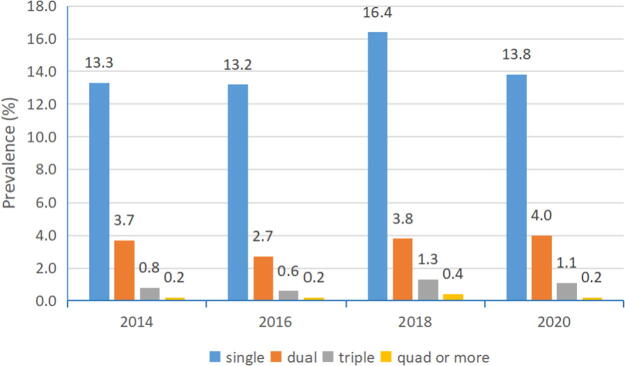 Figure 1
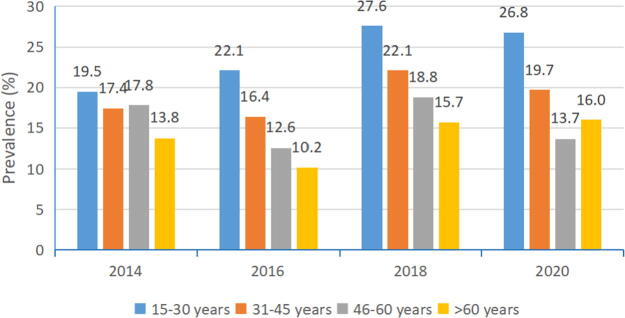 Figure 2
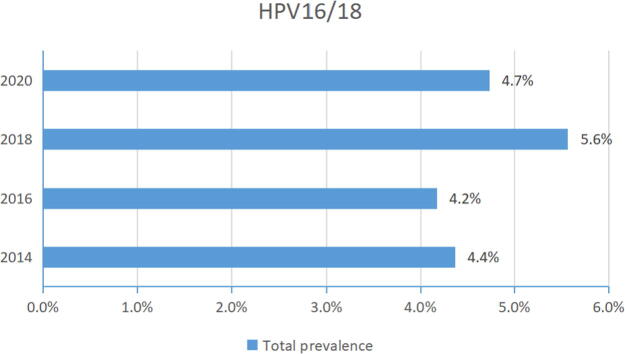 Figure 3
Peer Reviews
No public reviews on file for this paper yet. If you reviewed it on a platform where reviews are public (OpenReview, ICLR, NeurIPS, ICML), you can paste yours below so the community can read it here.
Videos
No videos yet. Explain this paper in a talk, walkthrough, or lecture? Add one.
Taxonomy
TopicsCervical Cancer and HPV Research