Hilliard Seigler, M.D. and the origins of kidney transplantation and immunology at Duke
Stuart J. Knechtle, Justin Barr

TL;DR
This paper highlights Dr. Hilliard Seigler's key role in establishing kidney transplantation and immunology at Duke University.
Contribution
It provides insights into Seigler's foundational work through interviews with him.
Findings
Dr. Seigler made significant contributions to the Duke kidney transplantation program.
His work spanned both surgical and immunological advancements.
Interviews reveal his pivotal role in the field's development at Duke.
Abstract
The contributions of Dr. Hilliard Seigler to the founding of the Duke kidney transplantation program were considerable in both surgery and immunology. Some of these highlights are summarized based upon interviews with Dr. Seigler by the authors.
Genes, proteins, chemicals, diseases, species, mutations and cell lines named across the full text — each resolved to its canonical identifier and authoritative record.
Click any figure to enlarge with its caption.
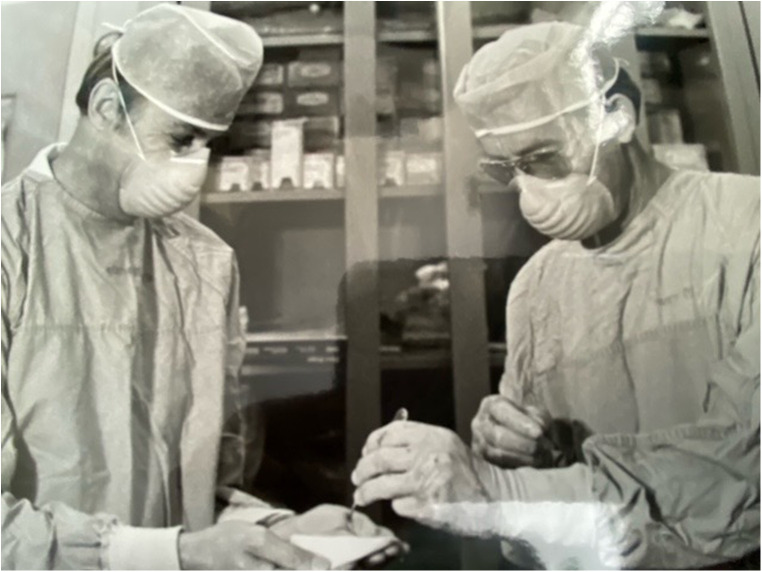 Figure 1
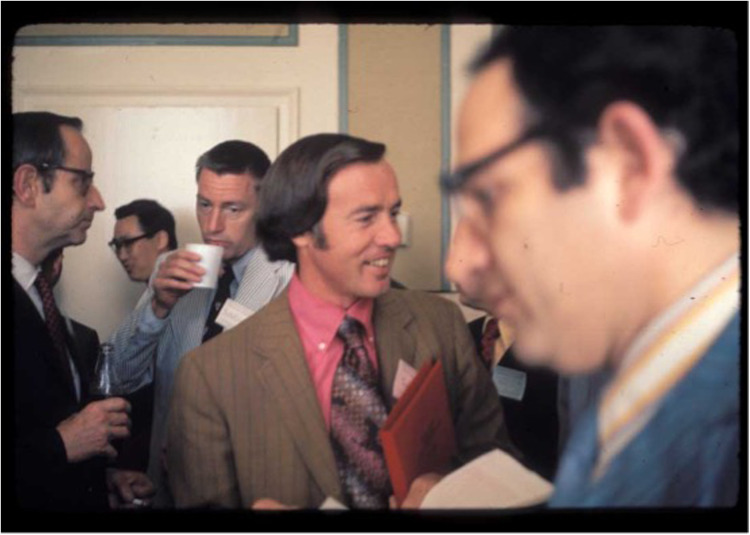 Figure 2
Peer Reviews
No public reviews on file for this paper yet. If you reviewed it on a platform where reviews are public (OpenReview, ICLR, NeurIPS, ICML), you can paste yours below so the community can read it here.
Videos
No videos yet. Explain this paper in a talk, walkthrough, or lecture? Add one.
Taxonomy
TopicsOrgan and Tissue Transplantation Research · Organ Donation and Transplantation · Medical History and Innovations
In 1962, Duke School of Medicine Dean Barnes Woodhall and Surgery Chairman Clarence Gardner recruited Dr. D. Bernard Amos as Professor of Experimental Surgery and Immunology with the intent of beginning organ transplantation at Duke on a scientific basis. Dr. Del Stickel was assigned the surgical task of developing kidney transplantation. In 1965, Dr. Hilliard Seigler completed his surgical residency at the University of North Carolina, Chapel Hill and contacted Dr. Amos to arrange a fellowship in immunogenetics as a means of pursuing a scientific platform for organ transplantation. Using Dr. Amos' background in tissue typing and serologic matching, the team decided it would be best to start with living donor kidney transplantation. Although some individuals were opposed to living donor transplantation on ethical grounds, the Duke team advocated that living donations based on tissue matching would be most successful and discussed living kidney donations with an ad hoc ethics committee at Duke, a precursor of the current system of institutional review board. While there were different opinions in the ethics committee, the final decision supported the notion of living donor kidney transplants with donor–recipient pairs matched according to objective immunologic testing methods.
Dr. Seigler was part of the group that trialed punch skin grafts as a screening tool for compatibility, placing skin grafts from prospective donors onto recipients and measuring responses (Figure 1). In addition, the investigators placed multiple skin grafts on each other in order to serve as controls and to validate methodologies. The serologic testing of recipients relied on approximately 30 panels of human lymphocytes to screen alloantibodies and became a particular focus of the group. They quickly learned that in order to make sense out of the genetics of a major histocompatibility complex (MHC), antigens that inbred patient populations would be needed as a starting point, as well as sharing such immunogenetic information across transplant groups. This prompted Dr. Amos to host the first international histocompatibility workshop at Duke in 1964 with the aim of sharing and standardizing assay methods and reagents. These workshops continued biannually until 1970. With respect to inbred patient populations, Seigler explained,
The name HLA for the human MHC was assigned at the first histocompatibility workshop in Durham in 1963. Paul Terasaki proposed that the locus be named LA for Los Angeles (his location), while others felt that this was too specific to Dr. Terasaki. Bernard Amos, borrowing from the mouse MHC nomenclature (H2), proposed that merging H with LA would blend the letters and be a satisfactory compromise as “HLA.” Amos' motion was accepted. Although subsequently others have claimed that HLA stands for human leukocyte antigen, the above story is the actual history of the name.
The ethical controversy about proceeding with clinical kidney transplantation at Duke weighed on the first pioneers of transplantation at Duke, including Del Stickel, who performed the first transplant in 1965. He and Seigler proceeded despite the negative feelings of some members of the ethics committee. A professor in the law school alleged that “Del Stickel and I were immoral and non-ethical, because we were taking normal organs out of normal people and putting them in somebody else.”
The transplant program started only with living donors. In fact, the first 7 years of kidney transplants consisted exclusively of living donor kidney transplants based on thorough immunogenetic testing. Bernard Amos, recruited to Duke as an internationally recognized mouse immunogeneticist, also developed a reliable and consistent serologic screening method in humans to detect preformed antibodies, aiming to avoid early antibody-mediated rejection. Amos attracted multiple surgeons, such as Seigler, and other clinicians and scientists interested in learning transplant immunology. Seigler completed an NIH-supported fellowship in immunogenetics with Amos, identifying tissue antigens and determining what role they did or did not play in the human immune response, specifically organ rejection. His second goal was to work toward the elusive goal of transplant tolerance.
Based on the extensive typing of donors and recipients, including placing donor candidate skin grafts pre-kidney transplant on recipient candidates, the results of the living donor program led by Del Stickel, Bernard Amos, Hilliard Seigler, and Everett Anderson (urologist) proved to be excellent, relying initially on low-dose azathioprine (50 mg/day) without steroids as immunosuppression (1) in HLA-identical donor–recipient pairs. The 50-year follow-up on those early results was recently reported by Seigler et al. and compared to national outcomes, exceeding them by a wide margin (2) and supporting the validity and impact of pretransplant immunologic optimization of donor–recipient pairing. Seigler also investigated the relative influence of haplotype mismatches using skin grafting and mixed lymphocyte reactions (3).
In addition, Seigler played an instrumental role in the establishment of the Southeast Organ Procurement Foundation (SEOPF), the precursor of the United Network for Organ Sharing (UNOS). As Seigler tells the story, it involved Dr. David Hume of Medical College of Virginia:
Another significant research activity of Seigler during those years was to collaborate with Dr. Paul Ebert, a cardiac surgeon at Duke at the time, in performing canine heart transplants and considering non-human primate heart transplants. Seigler and colleagues compared the immunogenetics of chimpanzees and humans, finding considerable similarities between the tissue antigens of chimpanzees and humans. Chimp and human cells were often totally cross-reactive with respect to eliciting identical immune responses in mixed lymphocyte reactions. At that time, chimpanzees were being considered as potential organ donors to humans, prompting the MHC typing of animals at Yerkes Primate Center in Atlanta as well as the colony at Rijwik in Holland. That work also extended into typing gorillas and orangutans for comparisons to humans. Dr. Keith Reemtsma, a transplant cardiothoracic surgeon in Louisiana, had actually performed approximately nine chimpanzee to human kidney transplants, several with a long survival of many months. Reemstma and Seigler communicated about this work because of the relevance of immune typing to the xenotransplant model. As Seigler explains, “He (Dr. Keith Reemtsma) sent me slides from a lady that he had transplanted chimp to human. This was a biopsy about 9 months out. The slides looked like it was an HLA identical transplant.” Eventually, however, a cellular immune response and severe [digoxin] toxicity occurred, so no long-term results developed because the patient succumbed to a cardiac arrest.
Seigler and his Duke colleague Paul Ebert had started canine heart transplants in the laboratory, and after achieving technical success they wanted to expand in 1967 into human heart transplants or xenotransplants, considering non-human primate donors based on the immunologic typing experience (4–7). However, this intention was not realized, although Seigler's background with non-human primate typing did prompt a clinical experiment of cross-circulation of a chimpanzee with a child in hepatorenal failure (8, 9).
Dr. Seigler's career pathway, while continuing involvement with transplantation, shifted to surgical oncology due to the clinical needs of the Duke Department of Surgery. He developed the melanoma clinic at Duke and led major innovations in clinical oncology research. He quickly became the most efficient surgeon in the Duke operating room, beginning his cases at 7 a.m. in a system where scheduled first starts began at 7:30 a.m. He was known for wheeling patients in and out of the operating room or even mopping the floor himself, charming assistants and staff with wit and enthusiasm. His mentoring in transplant immunology influenced the careers of Drs. Wayne Flye, Thalachallour Mohanakumar, Randy Bollinger, and Allan Kirk, and continues to impact scores of medical students, residents, and faculty, including the present authors (Figure 2). Through establishing the critical importance of HLA matching for successful kidney transplantation, cofounding the precursor to UNOS, making seminal discoveries in the potential of cross-species organ sharing, and pioneering canine cardiac transplant, his contributions continue to influence the field. His influence is well summarized in the words of the Chair of Surgery at Duke during Dr. Seigler's early career:
The reference list from the paper itself. Each links out to its DOI / PubMed record.
- 1Seigler HF Gunnells JC Jr Robinson RR Ward FE Amos DB Rowlands DT Renal transplantation between HL-A identical donor–recipient pairs. Functional and morphological evaluation. J Clin Invest. (1972) 51(12):3200–15. 10.1172/JCI 1071474565678 PMC 333002 · doi ↗ · pubmed ↗
- 2Shaw BI Villani V Kesseli SJ Nobuhara C Samoylova ML Moris D A historical cohort in kidney transplantation: 55-year follow-up of 72 HLA-identical, donor–recipient pairs. J Clin Med. (2021) 10(23):5505. 10.3390/jcm 1023550534884207 PMC 8658388 · doi ↗ · pubmed ↗
- 3Seigler HF Ward FE Amos DB Phaup M Stickel DL. The immunogenicity of human HLA haplotypes as measured by skin graft survival times and mixed leukocyte reactions. J Exp Med. (1971) 133:411–23. 10.1084/jem.133.3.4114939150 PMC 2138954 · doi ↗ · pubmed ↗
- 4Ward FE Seigler HF Metzgar RS Reid DM. Cross-reactivity of primate alloantigens: absorption of anti-HLA reactivity from human alloantisera by chimpanzee lymphocytes. Tissue Antigens. (1973) 3:389–401. 10.1111/j.1399-0039.1973.tb 00509.x 4797783 · doi ↗ · pubmed ↗
- 5Gilbertsen RB Metzgar RS Seigler HF. Immunological studies on T and B lymphocytes in chimpanzees: effect of thymectomy and irradiation. Transplant Proc. (1974) 4:183–8.4275461 · pubmed ↗
- 6Ward FE Seigler ED Guthrie CE. Chimpanzee families. H.F., Metzgar, R.S., Reid, D.M., Hill. Histocompatibility testing. Transplant Proc. (1974) 4:129–34.4133971 · pubmed ↗
- 7Seigler HF Ward FE Metzgar RS Phaup MD Adams BJ. Mixed lymphocyte culture responses in chimpanzee families. Transplant Proc. (1974) 4:135–9.4275459 · pubmed ↗
- 8Patterson JH Mac Donell RC Jr Zwiren GT Seigler HF Metzgar RS Keeling M. Cross-circulation between humans in hepatic coma and chimpanzees. In: Bourne GH, editor. Non-human primates and medical research. New York/London: Academic Press (1973). p. 257–68.