Simple dynamic cell culture system reduces recording noise in microelectrode array recordings
Darius Hoven, Misaki Inaoka, Reece McCoy, Aimee Withers, Róisín M. Owens, George G. Malliaras

TL;DR
A new fluidic system reduces noise in microelectrode array recordings by dynamically culturing cells under continuous flow.
Contribution
A simple, low-noise fluidic system for microelectrode arrays is introduced for improved electrophysiology measurements.
Findings
Cell cultures can be established in the fluidic compartment under continuous flow.
Chemical addition introduces minimal noise in electrophysiological recordings.
The system improves upon traditional tissue culture wells for MEA applications.
Abstract
Microelectrode arrays (MEAs) have applications in drug discovery, toxicology, and basic research. They measure the electrophysiological response of tissue cultures to quantify changes upon exposure to biochemical stimuli. Unfortunately, manual addition of chemicals introduces significant noise in the recordings. Here, we report a simple-to-fabricate fluidic system that addresses this issue. We show that cell cultures can be successfully established in the fluidic compartment under continuous flow conditions and that the addition of chemicals introduces minimal noise in the recordings. This dynamic cell culture system represents an improvement over traditional tissue culture wells used in MEAs, facilitating electrophysiology measurements.
Genes, proteins, chemicals, diseases, species, mutations and cell lines named across the full text — each resolved to its canonical identifier and authoritative record.
Click any figure to enlarge with its caption.
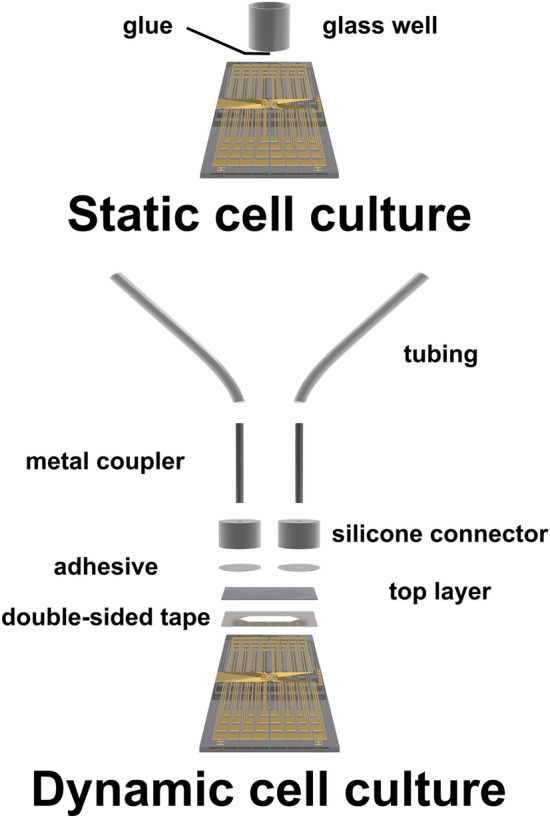 Figure 1
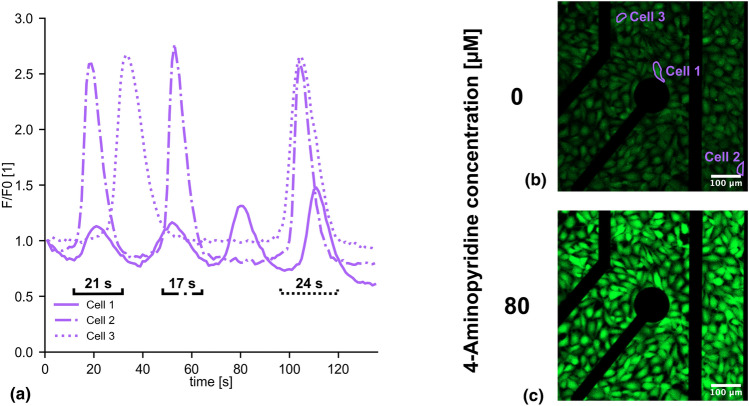 Figure 2
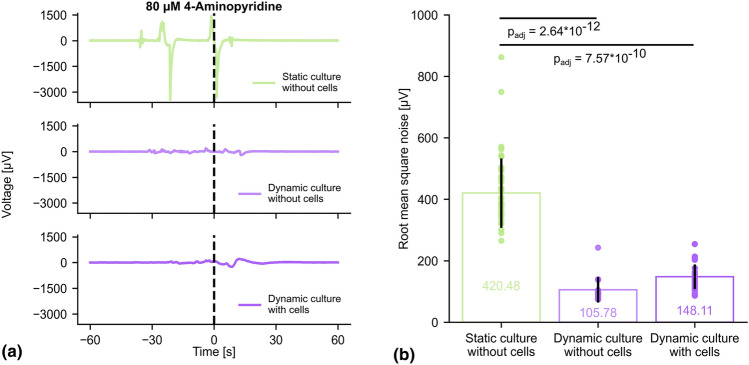 Figure 3
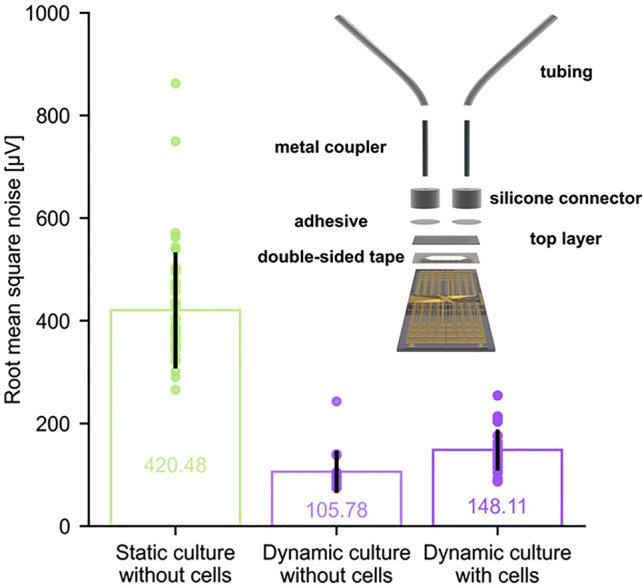 Figure 4
Peer Reviews
No public reviews on file for this paper yet. If you reviewed it on a platform where reviews are public (OpenReview, ICLR, NeurIPS, ICML), you can paste yours below so the community can read it here.
Videos
No videos yet. Explain this paper in a talk, walkthrough, or lecture? Add one.
Taxonomy
TopicsNeuroscience and Neural Engineering · 3D Printing in Biomedical Research · Microfluidic and Capillary Electrophoresis Applications