Genomic alteration discordance in the paired primary-recurrent ovarian cancers: based on the comprehensive genomic profiling (CGP) analysis
Jiayin Dong, Jing Ni, Jiahui Chen, Xuening Wang, Luxin Ye, Xia Xu, Wenwen Guo, Xiaoxiang Chen

TL;DR
This study compares the genomic profiles of primary and recurrent ovarian cancers, finding that while some genetic features remain stable, others like gLOH scores increase in recurrent tumors.
Contribution
The study reveals significant increases in gLOH scores and specific pathway alterations in recurrent ovarian cancer, suggesting the need for updated HRD testing strategies.
Findings
Genomic loss of heterozygosity (gLOH) scores were higher in recurrent tumors compared to primary tumors.
Recurrent tumors showed more copy number variations and enriched alterations in TGF-beta and Hippo signaling pathways.
Mutational signatures and driver genes were consistent between primary and recurrent tumors, aligning with HRD-related COSMI 3 signature.
Abstract
Ovarian cancer (OC) is characterized by a high recurrence rate, and homologous recombination deficiency (HRD) is an important biomarker in the clinical management of OC. We investigated the differences in clinical genomic profiles between the primary and platinum-sensitive recurrent OC (PSROC), focusing on HRD status. A total of 40 formalin-fixed paraffin-embedded (FFPE) tissues of primary tumors and their first platinum-sensitive recurrence from 20 OC patients were collected, and comprehensive genomic profiling (CGP) analysis of FoundationOne®CDx (F1CDx) was applied to explore the genetic (dis)similarities of the primary and recurrent tumors. By comparing between paired samples, we found that genomic loss of heterozygosity (gLOH) score had a high intra-patient correlation (r2 = 0.79) and that short variants (including TP53, BRCA1/2 and NOTCH1 mutations), tumor mutational burden (TMB)…
Genes, proteins, chemicals, diseases, species, mutations and cell lines named across the full text — each resolved to its canonical identifier and authoritative record.
Click any figure to enlarge with its caption.
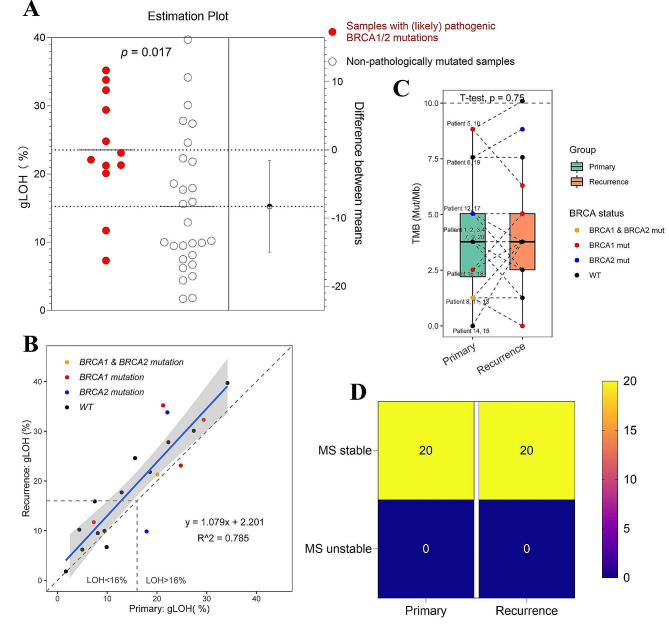 Figure 1
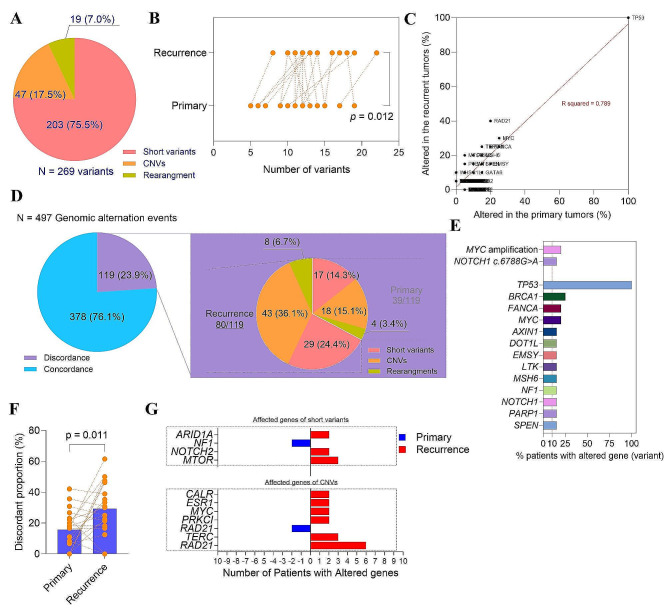 Figure 2
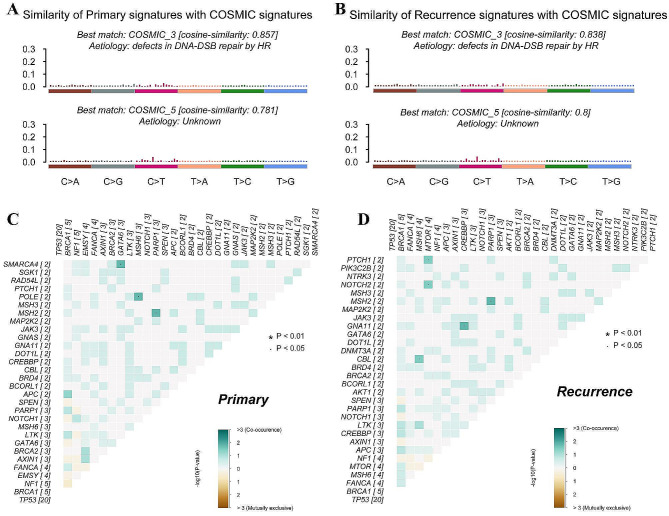 Figure 3
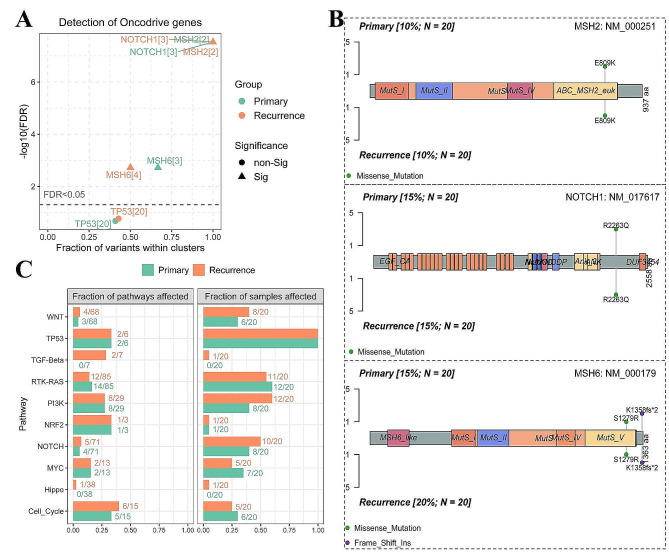 Figure 4
Peer Reviews
No public reviews on file for this paper yet. If you reviewed it on a platform where reviews are public (OpenReview, ICLR, NeurIPS, ICML), you can paste yours below so the community can read it here.
Videos
No videos yet. Explain this paper in a talk, walkthrough, or lecture? Add one.
Taxonomy
TopicsPARP inhibition in cancer therapy · Ovarian cancer diagnosis and treatment · CRISPR and Genetic Engineering