Human-annotated rationales and explainable text classification: a survey
Elize Herrewijnen, Dong Nguyen, Floris Bex, Kees van Deemter

TL;DR
This paper reviews how human explanations for classifications can improve data quality and help build more explainable AI models.
Contribution
The paper provides a survey on the collection and use of human-annotated rationales for explainable text classification.
Findings
Human-annotated rationales improve data quality and model performance.
They serve as a benchmark for evaluating model-generated explanations.
Rationales are crucial for advancing explainable artificial intelligence.
Abstract
Asking annotators to explain “why” they labeled an instance yields annotator rationales: natural language explanations that provide reasons for classifications. In this work, we survey the collection and use of annotator rationales. Human-annotated rationales can improve data quality and form a valuable resource for improving machine learning models. Moreover, human-annotated rationales can inspire the construction and evaluation of model-annotated rationales, which can play an important role in explainable artificial intelligence.
Genes, proteins, chemicals, diseases, species, mutations and cell lines named across the full text — each resolved to its canonical identifier and authoritative record.
Click any figure to enlarge with its caption.
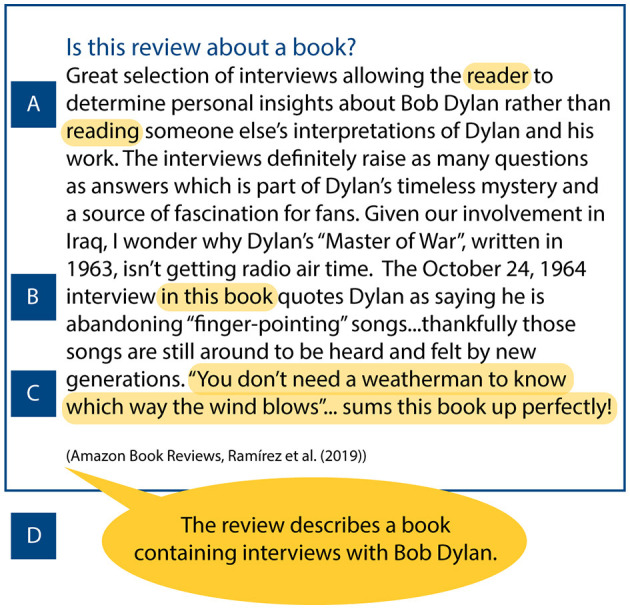 Figure 1
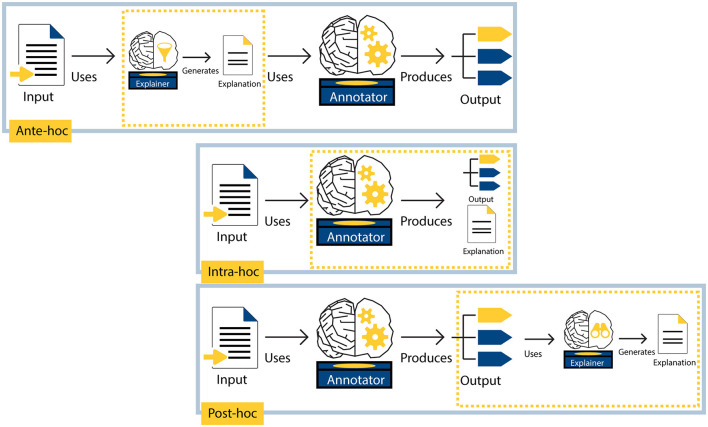 Figure 2
Peer Reviews
No public reviews on file for this paper yet. If you reviewed it on a platform where reviews are public (OpenReview, ICLR, NeurIPS, ICML), you can paste yours below so the community can read it here.
Videos
No videos yet. Explain this paper in a talk, walkthrough, or lecture? Add one.
Taxonomy
TopicsLiterary and Cultural Studies · Educational theories and practices · Spanish Philosophy and Literature