Lessons from the deployment and management of public handwashing stations in response to the COVID-19 pandemic in Kenya: A cross-sectional, observational study
Josphat Martin Muchangi, Dennis Munai, Rogers Moraro, Astrid Hasund Thorseth, Viola Tupeyia, Judy Muriithi, Jennifer Lamb, Richard Gichuki, Katie Greenland, Sheillah Simiyu, D. Daniel, D. Daniel

TL;DR
This study examines the effectiveness of public handwashing stations in Kenya during the pandemic, finding that most were functional initially but declined over time.
Contribution
The study provides insights into the long-term sustainability of public health interventions like handwashing stations.
Findings
83.9% of handwashing stations were functional initially, with paid caretakers linked to higher functionality.
Only 61% of stations remained functional 6–8 months later, often due to relocation by caretakers.
Challenges included inadequate signage and limited soap and water, especially for people with disabilities.
Abstract
During the COVID-19 pandemic in Kenya, 5,311 handwashing stations were distributed by the National Business Compact Coalition (NBCC) to help combat the virus. This study evaluated 316 of these stations across five counties, assessing functionality, usability, and accessibility. Quantitative data, including spot checks and surveys, revealed that 83.9% of the evaluated stations were functional, with paid caretakers, which is associated with higher functionality rates. Qualitative insights underscored challenges such as inadequate signage and limited soap and water availability, particularly affecting individuals with disabilities. Despite initial success, only 61% of stations remained functional 6–8 months post-distribution, often due to relocation by caretakers. Future distributions should prioritize long-term support for caretakers to sustain station functionality. This study highlights…
Genes, proteins, chemicals, diseases, species, mutations and cell lines named across the full text — each resolved to its canonical identifier and authoritative record.
Click any figure to enlarge with its caption.
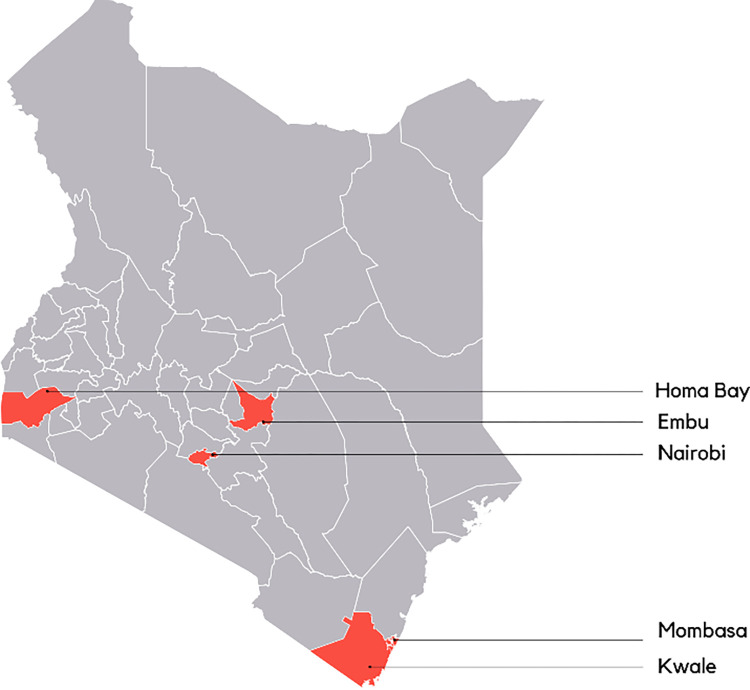 Figure 1
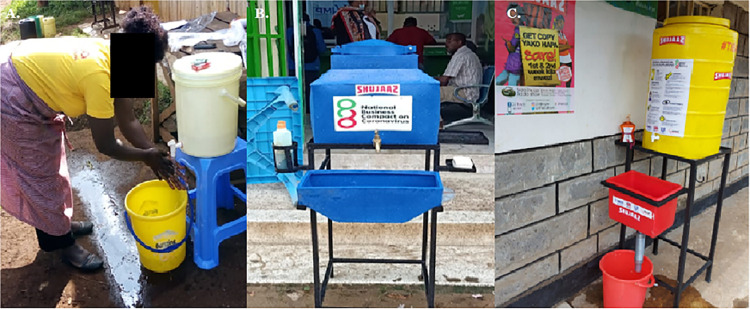 Figure 2
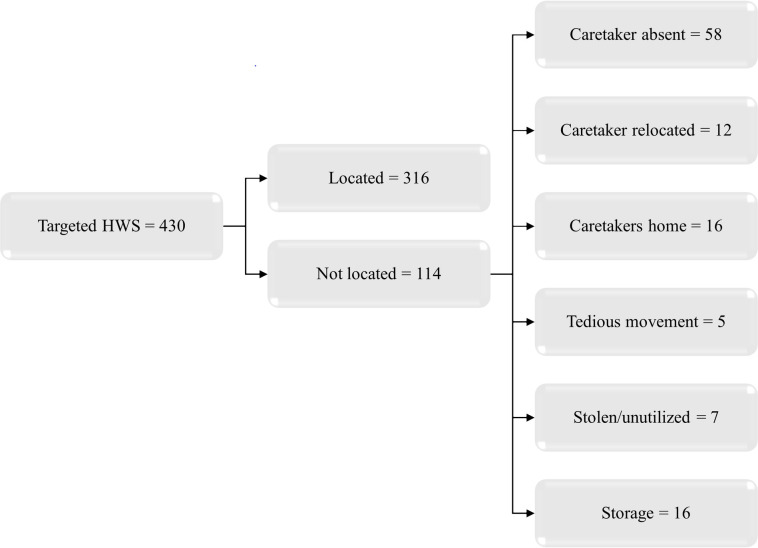 Figure 3
 Figure 4
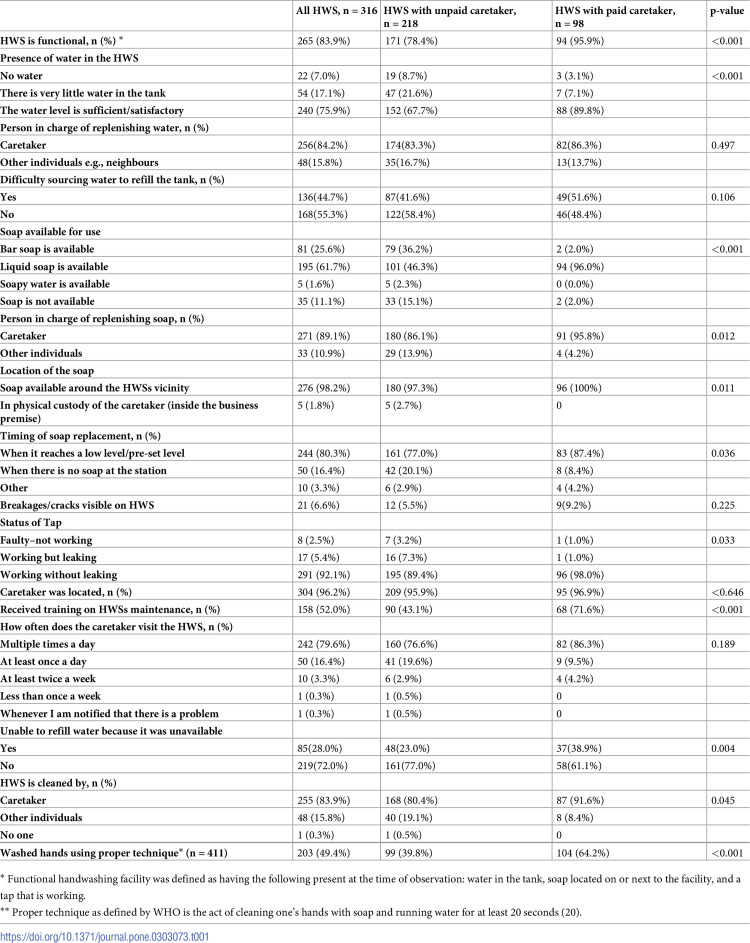 Figure 5
Peer Reviews
No public reviews on file for this paper yet. If you reviewed it on a platform where reviews are public (OpenReview, ICLR, NeurIPS, ICML), you can paste yours below so the community can read it here.
Videos
No videos yet. Explain this paper in a talk, walkthrough, or lecture? Add one.
Taxonomy
TopicsChild Nutrition and Water Access · COVID-19 epidemiological studies · COVID-19 Pandemic Impacts