Suprasellar pilocytic astrocytoma with leptomeningeal dissemination
Siti S. Mohamad Zaini, Hilwati Hashim, Emy S. Rosani, Nor S. Bakar, Suryati Mohd Yusoff

TL;DR
This paper describes a rare case of a low-grade brain tumor spreading to the meninges without becoming more aggressive over time.
Contribution
The novelty lies in documenting leptomeningeal dissemination in a WHO Grade I suprasellar pilocytic astrocytoma without tumor upgrading.
Findings
Leptomeningeal nodules progressed over time without evidence of tumor upgrading.
The tumor remained classified as WHO Grade I despite dissemination.
This case adds to the growing literature on rare manifestations of pilocytic astrocytoma.
Abstract
Leptomeningeal dissemination is a rare manifestation of pilocytic astrocytoma. It may occur with higher-grade tumours like medulloblastoma, ependymoma and high-grade glioma, but is extremely rare with low-grade glioma. There has been a growing number of reported cases documenting leptomeningeal dissemination of pilocytic astrocytoma in the medical literature. Description of a World Health Organization (WHO) Grade I suprasellar pilocytic astrocytoma with leptomeningeal dissemination in the brain and spinal cord which showed progression of the leptomeningeal nodules without tumour upgrading on long-term follow-up.
Genes, proteins, chemicals, diseases, species, mutations and cell lines named across the full text — each resolved to its canonical identifier and authoritative record.
Click any figure to enlarge with its caption.
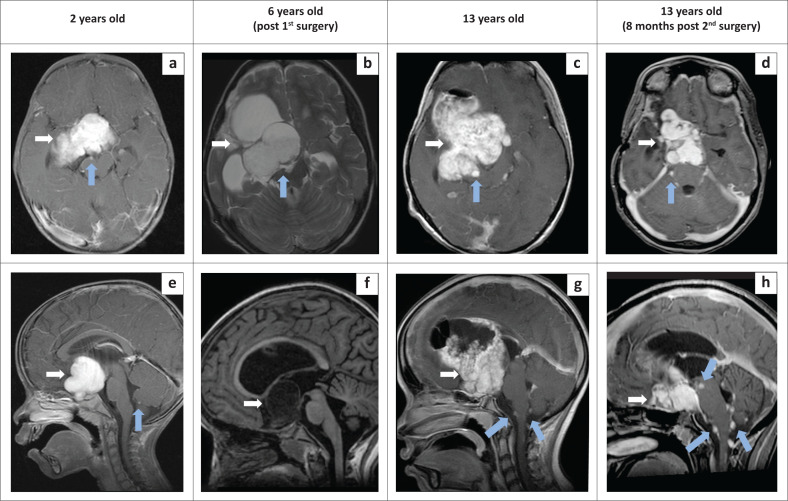 Figure 1
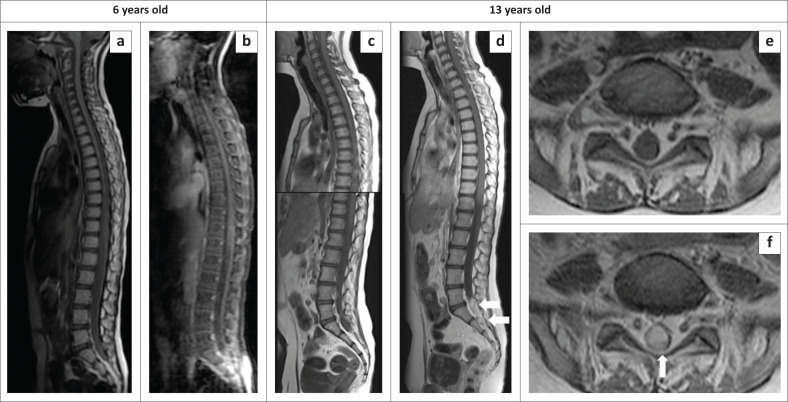 Figure 2
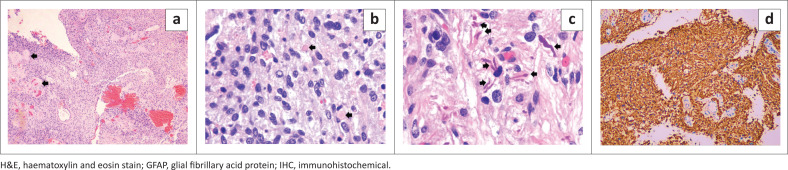 Figure 3
Peer Reviews
No public reviews on file for this paper yet. If you reviewed it on a platform where reviews are public (OpenReview, ICLR, NeurIPS, ICML), you can paste yours below so the community can read it here.
Videos
No videos yet. Explain this paper in a talk, walkthrough, or lecture? Add one.
Taxonomy
TopicsGlioma Diagnosis and Treatment · Vascular Malformations Diagnosis and Treatment · Epilepsy research and treatment