Sequencing by Binding rivals error-corrected Sequencing by Synthesis technology for accurate detection and quantification of minor (<0.1%) subpopulation variants
Christopher J. Allender, Candice Wike, Dean Ellis, Darrin Lemmer, Tanner Porter, Stephanie J.K. Pond, David M. Engelthaler

TL;DR
This paper compares two DNA sequencing methods for detecting very rare genetic variants, focusing on accuracy and reliability for applications like cancer research.
Contribution
The paper evaluates the novel 'sequencing by binding' method for detecting ultra-rare subpopulations at 0.001% levels.
Findings
Sequencing by binding rivals error-corrected sequencing by synthesis in detecting minor subpopulation variants.
The study evaluates accuracy for variant detection down to 0.001% frequency.
Results suggest potential for sequencing by binding in applications requiring high sensitivity.
Abstract
Detecting very minor (< 1%) subpopulations using next-generation sequencing is a critical need for multiple applications including detection of drug resistant pathogens and somatic variant detection in oncology. To enable these applications, wet lab enhancements and bioinformatic error correction methods have been developed for ‘sequencing by synthesis’ technology to reduce its inherent sequencing error rate. A recently available sequencing approach termed ‘sequencing by binding’ claims to have higher base calling accuracy data “out of the box.” This paper evaluates the utility of using ‘sequencing by binding’ for the detection of ultra-rare subpopulations down to 0.001%.
Genes, proteins, chemicals, diseases, species, mutations and cell lines named across the full text — each resolved to its canonical identifier and authoritative record.
Click any figure to enlarge with its caption.
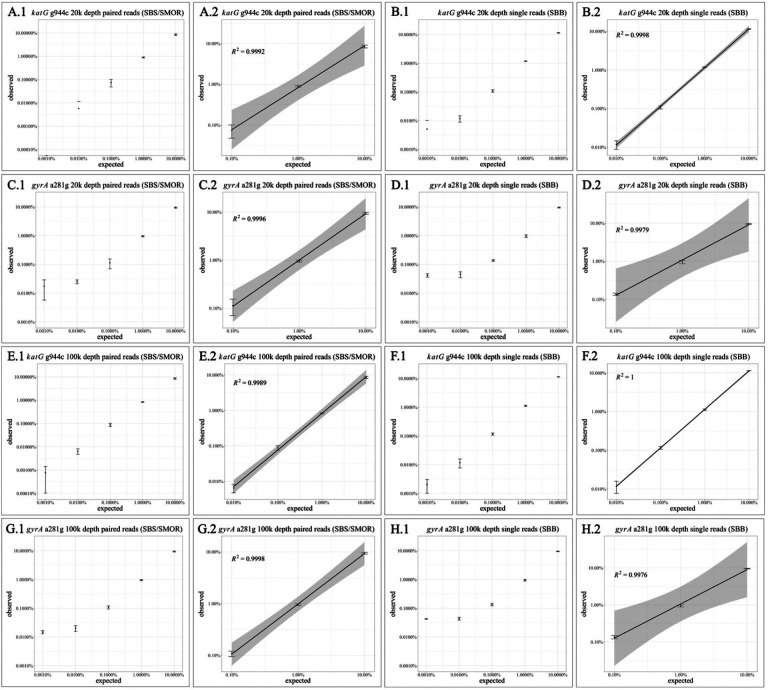 Figure 1
Peer Reviews
No public reviews on file for this paper yet. If you reviewed it on a platform where reviews are public (OpenReview, ICLR, NeurIPS, ICML), you can paste yours below so the community can read it here.
Videos
No videos yet. Explain this paper in a talk, walkthrough, or lecture? Add one.
Taxonomy
TopicsCancer Genomics and Diagnostics · Genomics and Phylogenetic Studies · Genomics and Rare Diseases