A Study on the Dilational Modulus Measurement of Polyacrylic Acid Films at Air–Water Interface by Pendant Bubble Tensiometry
Johann Eduardo Maradiaga Rivas, Li-Jen Chen, Shi-Yow Lin, Siam Hussain

TL;DR
This study measures the dilational modulus of polyacrylic acid films at the air-water interface using a new method involving natural perturbations and pendant bubble tensiometry.
Contribution
A novel approach to measure the dilational modulus of polymer films using natural perturbations and pendant bubble tensiometry is introduced.
Findings
The study found that reaching equilibrium surface tension and saturated dilational modulus takes considerable time for polyacrylic acid films.
Both equilibrium surface tension and saturated dilational modulus increase with the molecular weight of polyacrylic acid.
Lower molecular weight solutions require more time to reach equilibrium states.
Abstract
The dilational modulus (E) of polymer films has been commonly measured using the oscillating ring/bubble/drop methods with an external force, and often without specifying the state of the adsorbed film. This study explores an approach where E was determined from the relaxations of surface tension (ST) and surface area (SA) of natural perturbations, in which ST and SA were monitored using a pendant bubble tensiometer. The E of the adsorbed film of PAA (polyacrylic acid) was evaluated for aqueous solutions at CPAA = 5 × 10⁻⁴ g/cm3, [MW = 5, 25, and 250 (kDa)]. The E (=dγ/dlnA) was estimated from the surface dilational rate (dlnA/dt) and the rate of ST change (dγ/dt) of the bubble surface from the natural perturbation caused by minute variations in ambient temperature. The data revealed that (i) a considerable time is required to reach the equilibrium-ST (γeq) and to attain the saturated…
Genes, proteins, chemicals, diseases, species, mutations and cell lines named across the full text — each resolved to its canonical identifier and authoritative record.
Click any figure to enlarge with its caption.
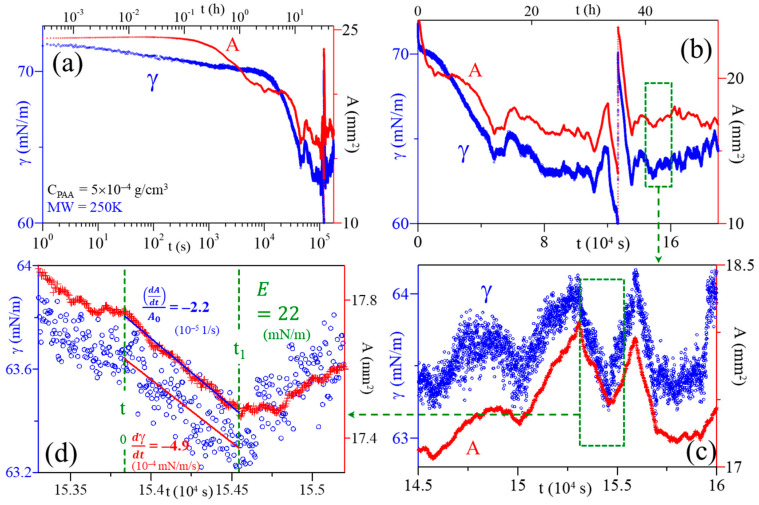 Figure 1
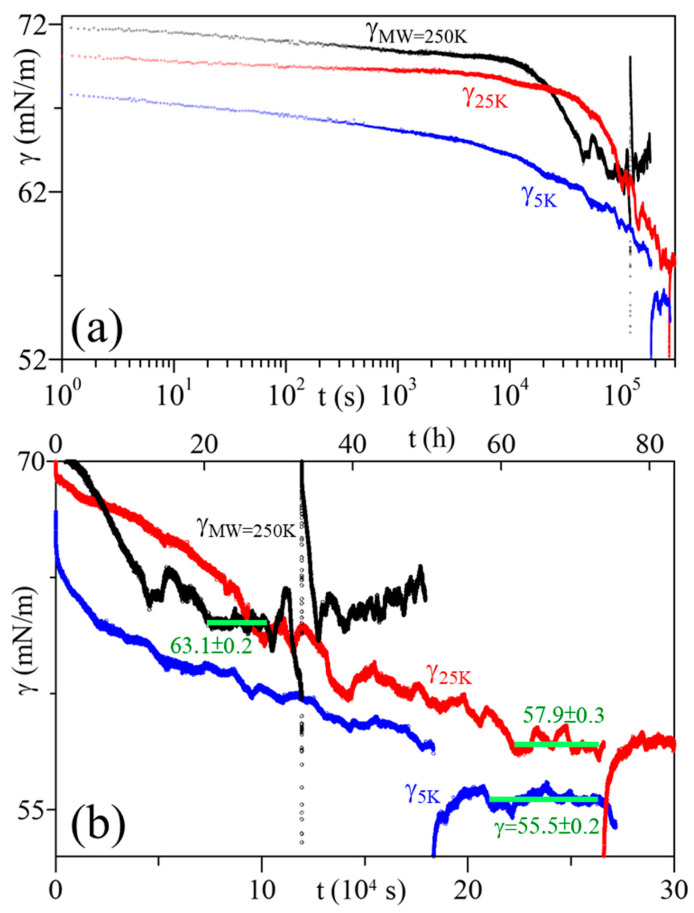 Figure 2
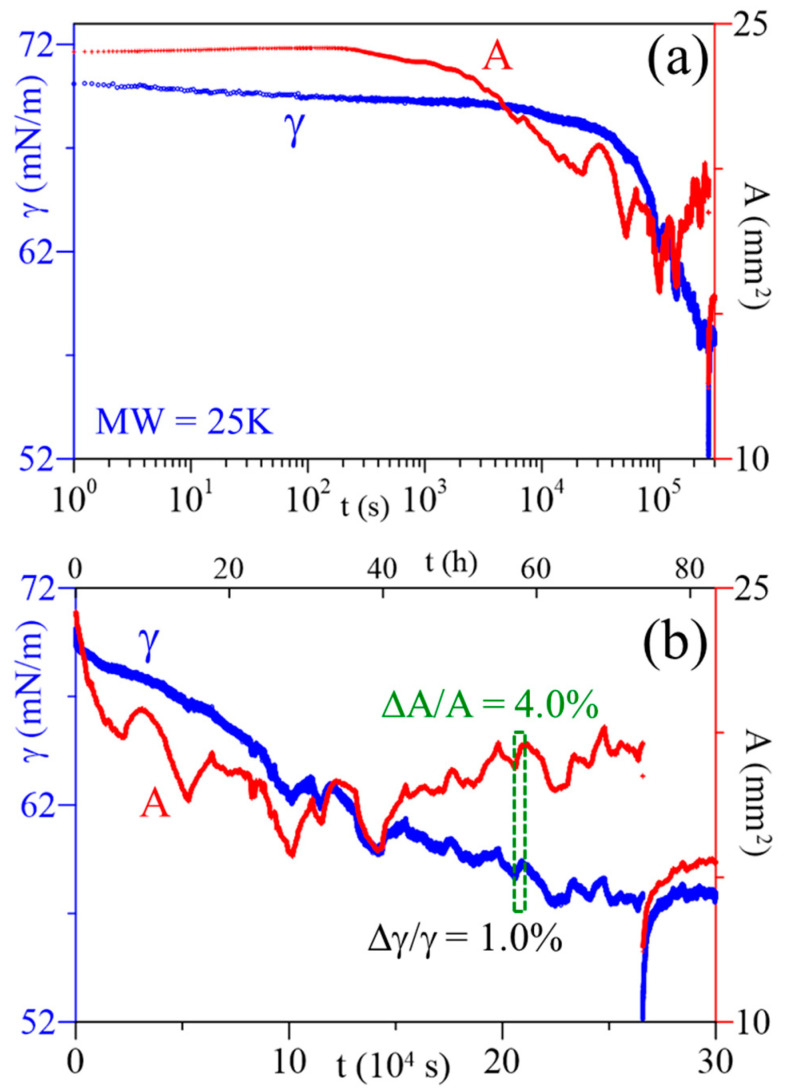 Figure 3
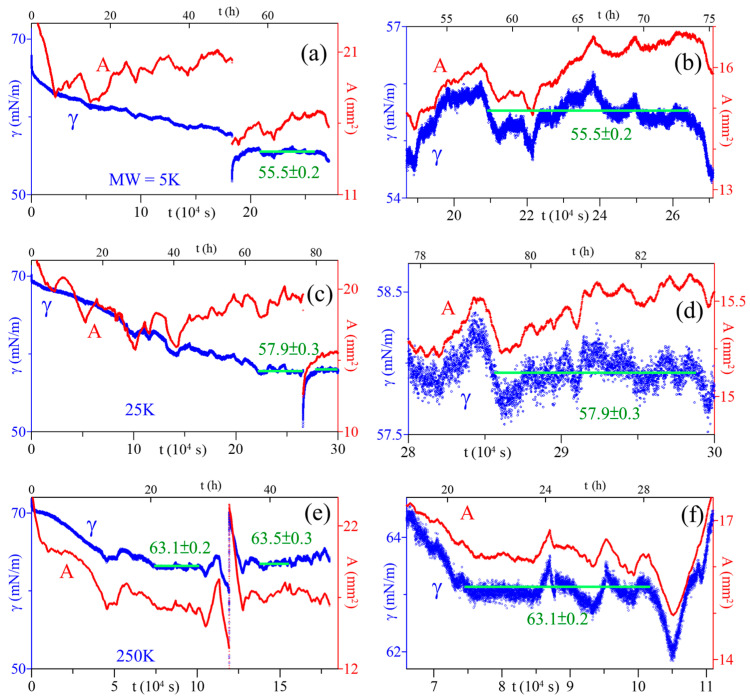 Figure 4
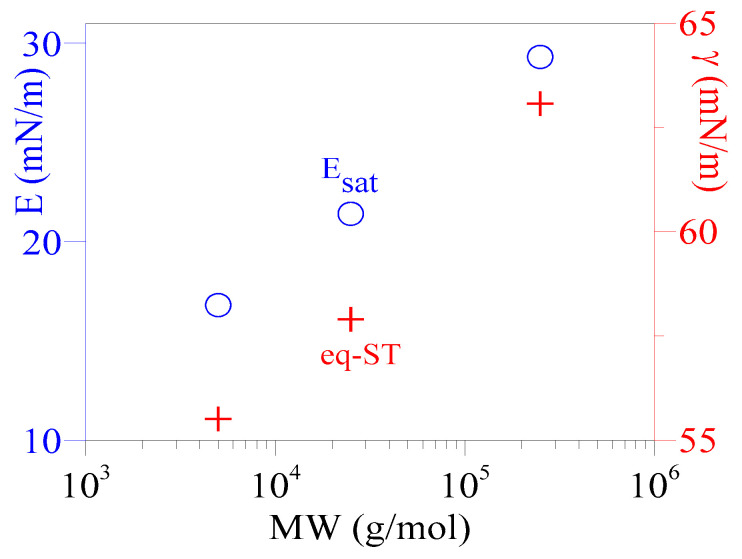 Figure 5
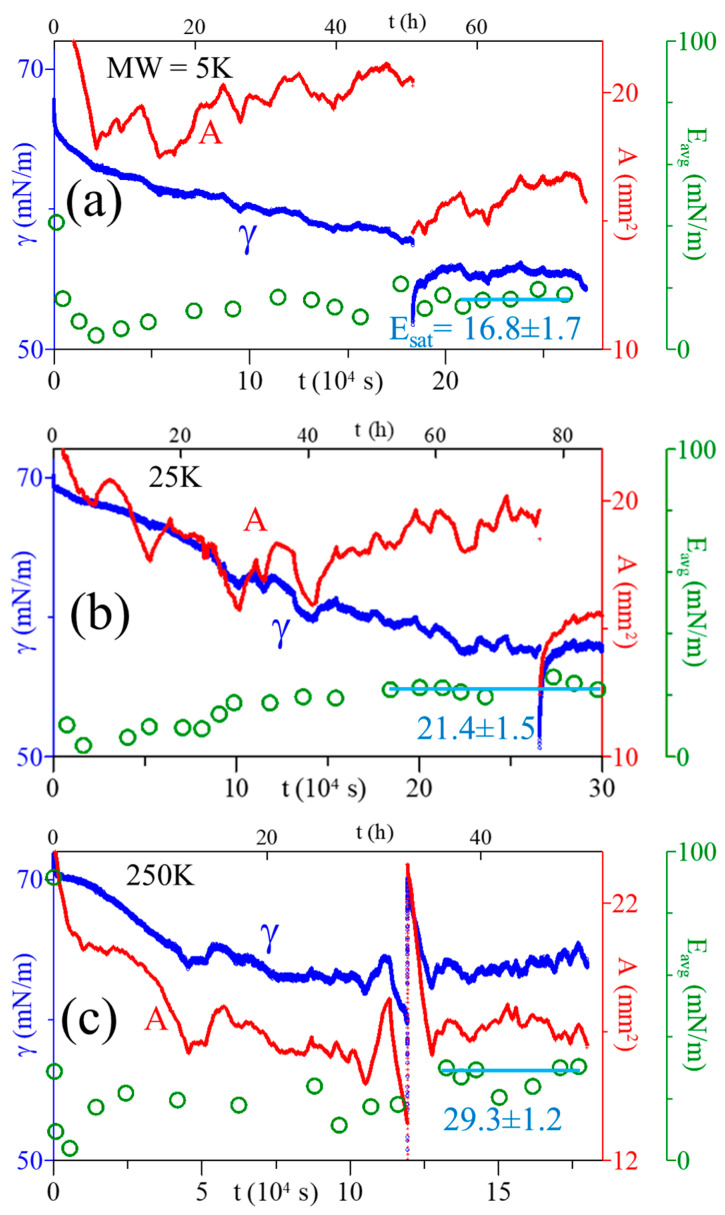 Figure 6
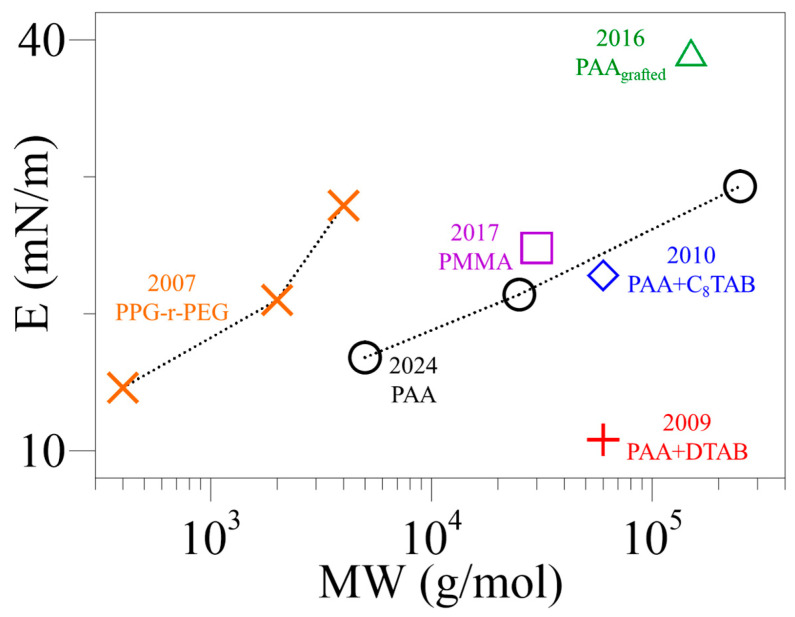 Figure 7
Peer Reviews
No public reviews on file for this paper yet. If you reviewed it on a platform where reviews are public (OpenReview, ICLR, NeurIPS, ICML), you can paste yours below so the community can read it here.
Videos
No videos yet. Explain this paper in a talk, walkthrough, or lecture? Add one.
Taxonomy
TopicsPickering emulsions and particle stabilization · Surfactants and Colloidal Systems · Surface Modification and Superhydrophobicity