Humanising research on (non-)migration decision-making: a situated framework
Asuncion Fresnoza-Flot, Saara Koikkalainen, Asuncion Fresnoza-Flot, Jørgen Carling, Asuncion Fresnoza-Flot

TL;DR
This paper introduces a new framework for studying migration decisions that emphasizes the human aspects often overlooked by traditional theories.
Contribution
The paper proposes a situated framework that humanizes migration research by incorporating context, life dimensions, and time.
Findings
The framework highlights the importance of thick contextualisation in understanding migration decisions.
It advocates for a life dimensions-focused analysis to capture the complexity of individuals' experiences.
The paper calls for methodologies that are both gender-sensitive and decolonized.
Abstract
Recent global challenges such as the COVID-19 pandemic, economic crises, and wars have not impeded transnational migration to continuously unfold. The question of why some people migrate while others choose to stay remains one of the important preoccupations in migration studies. It underlines the need to further conceptualise transnational migration to identify the drivers behind individuals’ aspiration or intention to (re)migrate or stay where they are. Drawing from several migration theories and perspectives in various disciplines, this paper proposes the situated framework of “humanising research on (non-)migration decision-making”, that is, highlighting its human aspects. This scholarly enterprise is critically important as mainstream migration theories put more emphasis on individuals’ rationality, thereby overlooking other human aspects of migration and stasis. Viewing…
Genes, proteins, chemicals, diseases, species, mutations and cell lines named across the full text — each resolved to its canonical identifier and authoritative record.
Click any figure to enlarge with its caption.
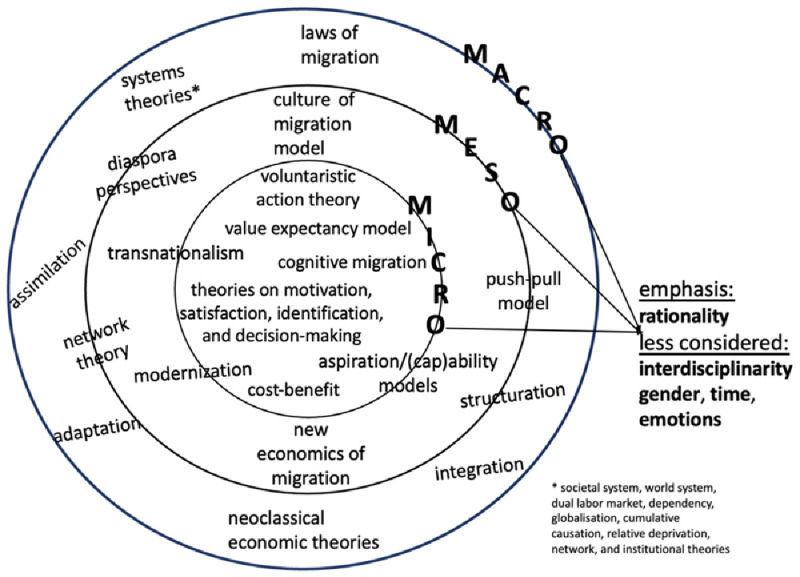 Figure 1
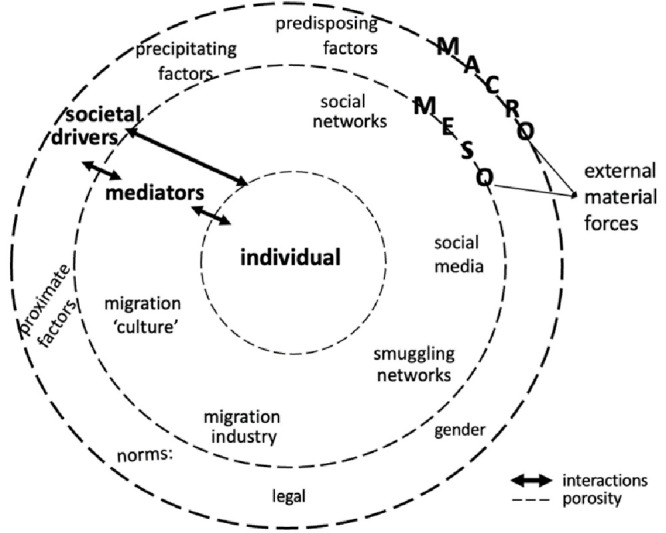 Figure 2
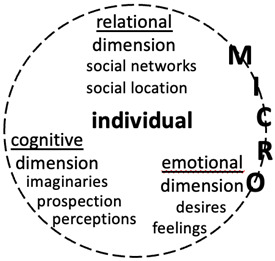 Figure 3
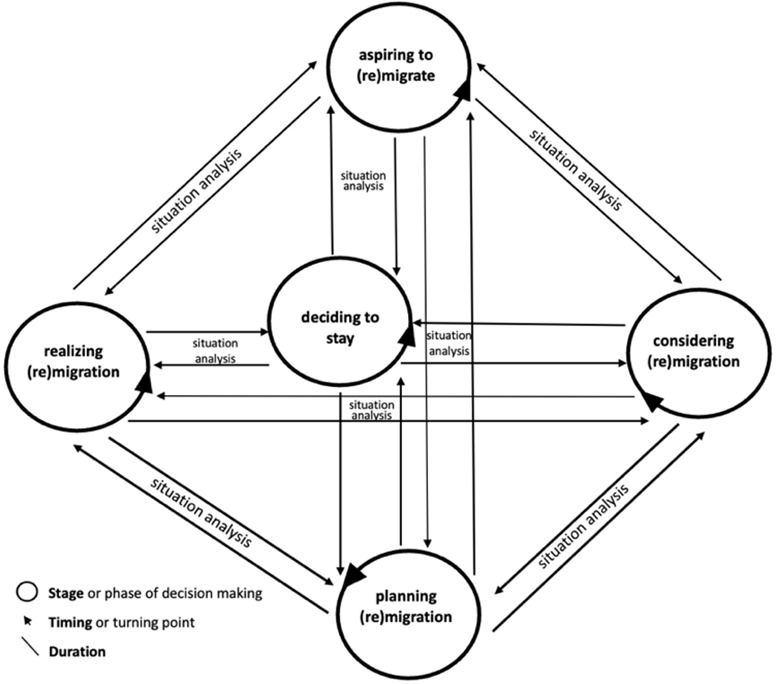 Figure 4
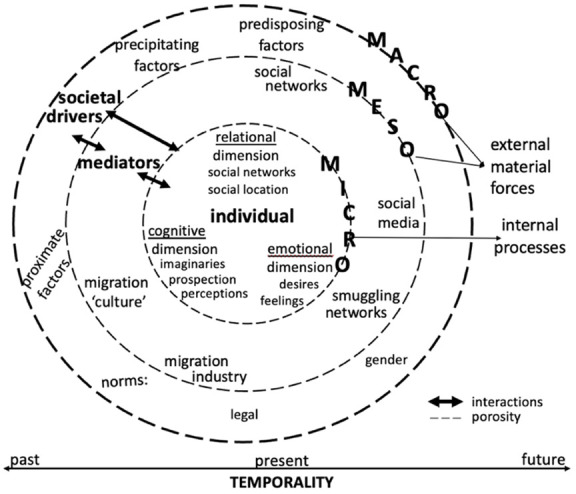 Figure 5
Peer Reviews
No public reviews on file for this paper yet. If you reviewed it on a platform where reviews are public (OpenReview, ICLR, NeurIPS, ICML), you can paste yours below so the community can read it here.
Videos
No videos yet. Explain this paper in a talk, walkthrough, or lecture? Add one.
Taxonomy
TopicsMigration and Labor Dynamics · Migration, Refugees, and Integration · Diaspora, migration, transnational identity