Data on characteristics of simplicia, phytoconstituents, and antioxidant activity of Moringa oleifera leaves ethanol extract
Fachruddin, Agik Suprayogi, Wasmen Manalu, Novriyandi Hanif, Huda Shalahuddin Darusman

TL;DR
This study provides data on the quality, chemical composition, and antioxidant activity of Moringa oleifera leaves and their ethanol extract.
Contribution
The paper presents a detailed chemical and pharmacological profile of Moringa oleifera leaves and their ethanol extract.
Findings
Moringa oleifera leaves meet quality standards except for high ash content.
The ethanol extract contains flavonoids, tannins, and steroids, with 39 phytoconstituents identified.
The extract shows significant antioxidant activity with an IC50 of 1422.45 mg/kg.
Abstract
The article reports data on the chemical and pharmacological characteristics of Moringa oleifera simplicia and ethanol extract consisting of water content, acid-insoluble ash content, microbial contamination, heavy metal contamination, phytochemical analysis, TLC analysis, chemical profiling using LC-MS/MS, and the antioxidant activity. The M. oleifera leaves simplicia meet quality standards, except for ash content that exceeds the specified standards. Qualitative phytochemistry indicates that the ethanol extract of M. oleifera leaves contains flavonoids, tannins, and steroids. In total of 39 phytoconstituents were tentatively identified; the top 10 active compounds with the highest relative abundance percentage (%) are 4-undecylbenzenesulfonic acid (4,83), apigetrin (3,34), quercetin-3β-D-glucoside (3,28), D-(-)-quinic acid (1,69), corchorifatty acid F (1,52), 4-hydroxybenzaldehyde…
Genes, proteins, chemicals, diseases, species, mutations and cell lines named across the full text — each resolved to its canonical identifier and authoritative record.
Click any figure to enlarge with its caption.
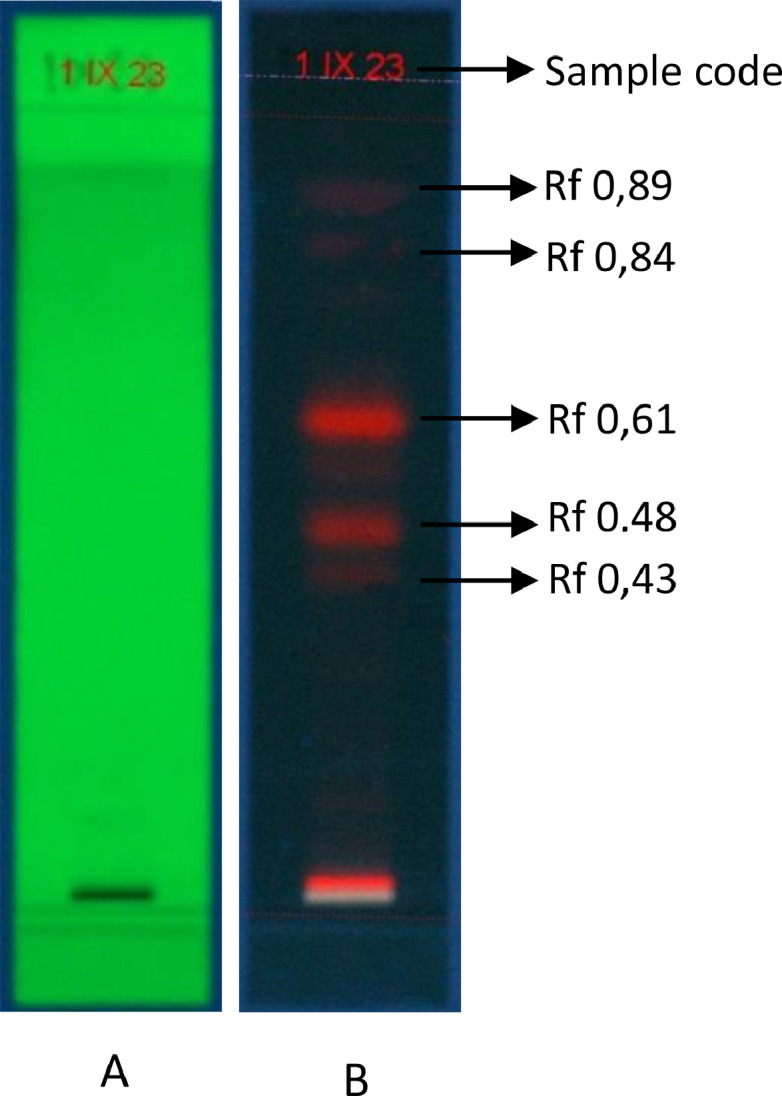 Figure 1
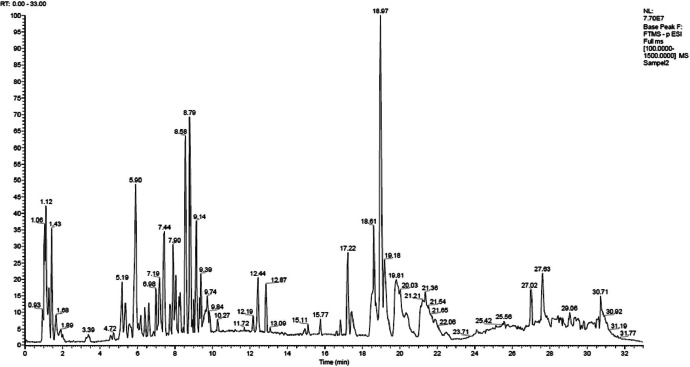 Figure 2
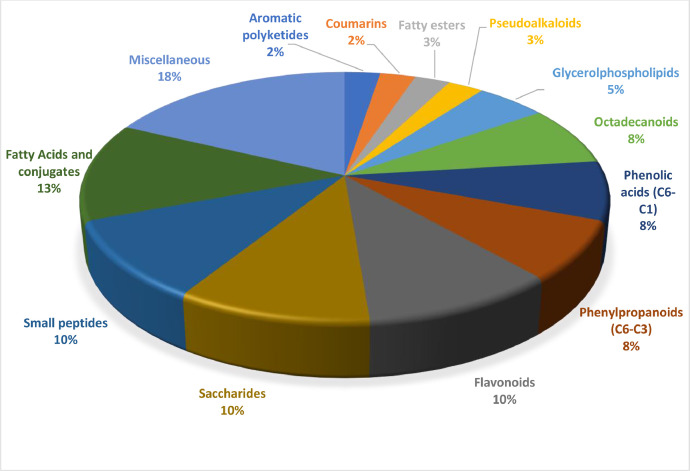 Figure 3
Peer Reviews
No public reviews on file for this paper yet. If you reviewed it on a platform where reviews are public (OpenReview, ICLR, NeurIPS, ICML), you can paste yours below so the community can read it here.
Videos
No videos yet. Explain this paper in a talk, walkthrough, or lecture? Add one.
Taxonomy
TopicsMoringa oleifera research and applications
Specifications TableSubjectBiologySpecific subject areaMedicinal Plants and PharmacologyData formatRaw and Analyzed DataType of dataTable, Figure, Chart, Chromatogram FigureData collectionCharacterizations of Moringa oleifera leaves simplicia were using gravimetric analysis techniques, pour plate method and Inductively Coupled Plasma – Optical Emission Spectrometry (ICP OES). Qualitative phytochemical data for the ethanol extract of M. oleifera leaves were obtained through color visualization. The UHPLC Vanquish Tandem Q Exactive Plus Orbitrap HRMS Thermo Scientific method was used to identify the active compounds. The total phenolic and total flavonoid as quercetin content in the ethanol extract of M. oleifera leaves were tested using UV-vis spectrophotometer, while antioxidant activity was evaluated using the 2,2-diphenyl-1-picrylhydrazyl (DPPH) method.Data source locationM. oleifera leaves collection: Kokalukuna district, Baubau city, Southeast Sulawesi. Geographical coordinates: 05^o^ 25’41.68” S 122^o^ 39’12.47” E or 51M 461611 939987.Analysis: TropBRC IPB University; Certification Agency and Integrated Laboratory IPB University; and Laboratory of Balai Pengujian Standar Instrumen Tanaman Rempah, Obat dan Aromatik (BSIP-TROA), Bogor, Indonesia.Data accessibilityRepository name: Mendeley DataData identification number: 10.17632/hgn5gwy8h3.2Direct URL to data: https://data.mendeley.com/datasets/hgn5gwy8h3/2
Value of the Data
1
- •The data of characteristics of M. oleifera leaves simplicia provide important information about the fundamental properties of the plant material including quality consistency, quality control, and the safety of M. oleifera leaves raw materials.
- •The data of phytochemical screening and active compounds in M. oleifera leaves extract, supported by growing environments data, are beneficial for comparative analysis of the chemical profiles of M. oleifera grown in different geographical conditions and may be useful in the selection of raw materials for medicinal purposes.
- •Phytoconstituents data obtanied by LC-MS/MS provide detailed information about specific chemical constituents and can be useful for enriching the chemical compound database of M. oleifera plants for further investigations.
- •Antioxidant activity data strengthens the evidence of the pharmacological activity of M. oleifera extract which is important in addressing various diseases such as inflammatory diseases, diabetic, cardiovascular diseases, cancer, neurodegenerative diseases, and various other diseases related to free radicals.
Background
2
Moringa oleifera Lam. is one of the most popular and important natural herbal plants cultivated globally [1], including in Indonesia. M. oleifera has garnered significant attention due to the remarkable benefits found in all parts of the plant including the roots, stems, leaves, flowers, fruits, and seeds [2]. It is a plant with high nutraceutical and medicinal potential being exceptionally rich in essential nutrients and phytochemicals [3,4]. Extract of M. oleifera evince diverse pharmacological activities, like antimicrobial, antioxidant, wound healing, and other pharmacological activities [5]. The purpose of compiling this dataset is to provide a proposal of comprehensive information on the characteristics of simplicia, active compounds, and antioxidant activity of M. oleifera leaves ethanol extract.
Theoretically, characterizing simplicia, determining active compounds, and testing antioxidant activity are crucial for assessing the quality and safety of raw materials [6] in developing M. oleifera leaves-based products with health benefits. The information contained in this dataset can be utilized by researchers, scientists, and healthcare professionals interested in harnessing M. oleifera leaves for therapeutic purposes. This article could benefit previous studies by offering a complete dataset that can be used for further analysis or compared with similar research.
Data Description
3
The growing environments data of the M. oleifera plant collected as sample in this study were presented in Table 1, while the characteristics of M. oleifera leaves simplicia were shown in Table 2. The data of fresh weight to dry weight conversion of M. oleifera leaves, further from simplicia to the extract until obtaining a 70% ethanol extract yield were presented in Table 3. Qualitative phytochemical screening data and thin-layer chromatography profiles of the ethanol extract of M. Oleifera leaves were shown in Table 4 and Fig. 1, respectively. The chromatogram data of LC-MS/MS for the ethanol extract of M. Oleifera leaves and corresponding phytochemical were presented in Fig. 2 and Table 5, respectively, while Table 6 displayed data on the top 10 phytoconstituents with the highest relative abundance percentage. The distribution of the percentage of compound groups based on superclasses in sample was displayed in Fig. 3. Finally, the data of total phenolic content, total flavonoid as quercetin content, and antioxidant activity test with IC_50_ percentage as a parameter were depicted in Table 7.Table 1. Growing environment of M. oleifera plant.Table 1. Environmental parametersResultAltitude (meters above sea level)42Air temperature (°C)31Air humidity (%)76Soil temperature (°C)28Soil moistureDrySoil pH6.5Light intensityLowTable 2The characteristics of M. oleifera leaves simplicia.Table 2. ParametersResultReference [3]OrganolepticShapeSmellColorPowderUniqueGreenWater content (%)9.68 ± 2,46Not mentionedAsh content (%)10.85 ± 2,53Not more than 7,55%Acid insoluble ash content (%)0.59 ± 0,04Not more than 0,9%Microbial contaminationTPC (Total Plate Count)Mold/Yeast2.5×10^4^NegativeHeavy metal contaminationPbCdNot detectedNot detectedTable 3Comparison of fresh weight, dry weight, percentage shrinkage of M. oleifera leaves, and yield of M. oleifera leaves ethanol extract.Table 3. Type of comparisonResultFresh weight (g)1000 gDry weight (g)216,54 gShrinkage percentage (%)78,34 %Simplicia weight (g)500 g70% ethanol volume (L)15 LThick ethanol extract (g)97,7 g ± 5,93Yield percentage (%)19,54 % ± 1,18Table 4Qualitative phytochemical screening of M. oleifera leaves ethanol extract.Table 4. Types of secondary metabolitesResulta^,^bFlavonoid++AlkaloidWagnerMayerDragendorf---Tanin++Saponin-Quinon-Steroid+Triterpenoid-aqualitatively observed intensity degree of secondary metabolites. The more + sign was, the more content of secondary metabolites estimated.bno corresponding secondary metabolites observed for - sign.Fig. 1. Chromatogram profile of M. oleifera leaves ethanol extract using thin layer chromatography (TLC). Mobile phase toluene:ethyl acetate (7:3), stationary phase silica gel F_254_. Captured the image in visible light (A) UV 254 nm, (B) UV 366 nm.Fig 1. Fig. 2LC-MS/MS chromatogram of M. oleifera leaves ethanol extract.Fig 2. Table 5Phytoconstituents tentatively identified based on retention time (RT) matching in the ethanol extracts of M. oleifera leaves by LC-MS/MS.Table 5RT (Min)Area SampelName of compoundMol. FormulaMol. Weight1,05888802251,032-C-Methylerythritol 4-phosphateC_5_H_13_O_7_P216,0391,06589982335,1Arabic acidC_5_H_1_O_6_166,0471,066276663923,2Gluconic acidC_6_H_12_O_7_196,0571,100177062336,6D-(-)-Quinic acidC_7_H_12_O_6_192,0621,11244054592,13Hept-2-uloseC_7_H_14_O_7_210,0731,11461165180,28TheophyllineC_7_H_8_N_4_O_2_180,0621,12135928712,162,3,4,5-TetrahydroxypentanalC_5_H_10_O_5_150,0521,135122074541,1DL-Malic acidC_4_H_6_O_5_134,0201,139104430222,2Citric acidC_6_H_8_O_7_192,0261,45569189632,424-OxoprolineC_5_H_7_NO_3_129,0411,66454781971,13Methylmalonic acidC_4_H_6_O_4_118,0253,38335362106,04Pantothenic acidC_9_H_17_NO_5_219,1105,23050791815,98Neochlorogenic acidC_16_H_18_O_9_354,0955,33137270034,91DL-TryptophanC_11_H_12_N_2_O_2_204,0895,36583488328,93VanillolosideC_14_H_20_O_8_316,1165,57956778225,83BendiocarbC_11_H_13_ NO_4_223,0845,833123412571,6Isopropylmalic acidC_7_H_12_O_5_176,0676,03438328748,89Salicylic acidC_7_H_6_O_3_138,0306,09545062739,38NP-000587C_16_H_18_O_8_338,1006,18549398908,43Methyl α-aspartylphenylalaninateC_14_H_18_N_2_O_5_294,1217,1871546395004-HydroxybenzaldehydeC_7_H_6_O_2_122,0357,38192004149,39NP-018609C_16_H_30_O_10_428,1897,40247912080,34MUDC_16_H_18_O_8_338,1007,74265174571,76(3R,5R)-1,3,5-Trihydroxy-4-{[(2E)-3-(4-hydroxy-3-methoxyphenyl)-2-propenoyl]oxy}cyclohexanecarboxylic acidC_17_H_20_O_9_368,1118,057110019839,7NimodipineC_21_H_26_N_2_O_7_418,1748,23773900976,15D-(+)-Phenyllactic acidC_9_H_10_O_3_166,0628,29577306701,694-(9H-β-Carbolin-1-yl)-1,2,4-butanetriolC_15_H_16_N_2_O_3_272,1168,564350463808,1ApigetrinC_21_H_20_O_10_432,1058,804343662266,2Quercetin-3β-D-glucosideC_21_H_20_O_12_464,0959,392103607399,6AstragalinC_21_H_20_O_11_448,1009,85859025245,09Luteolin 7-O-malonylglucosideC_24_H_22_O_14_534,10112,437159145810,6Corchorifatty acid FC_18_H_32_O_5_328,22516,72450476826,7213(S)-HpOTrEC_18_H_30_O_4_310,21417,34339694644,14Ascorbyl palmitateC_22_H_38_O_7_414,26118,575506172473,54-Undecylbenzenesulfonic acidC_17_H_28_O_3_S312,17518,71142793109,9613(S)-HOTrEC_18_H_30_O_3_294,21920,74765065882,831-Oleoyl-lysophosphatidic acidC_21_H_41_O_7_P436,25821,78853758398,971-Heptadecanoyl-sn-glycero-3-phosphateC_20_H_41_O_7_P424,25924,10537937679,3716-Hydroxyhexadecanoic acidC_16_H_32_O_3_272,235Table 6The top 10 phytoconstituents and their chemical structure with the highest relative abundance percentage (%).Table 6RT (Min)Relative abundance (%)Name of compoundMol. FormulaMol. weightChemical structure18,5754,834-Undecylbenzenesulfonic acidC_17_H_28_O_3_S312,175Image, table 68,5643,34ApigetrinC_21_H_20_O_10_432,105Image, table 68,8043,28Quercetin-3β-D-glucosideC_21_H_20_O_12_464,095Image, table 61,1001,69D-(-)-Quinic acidC_7_H_12_O_6_192,062Image, table 612,4371,52Corchorifatty acid FC_18_H_32_O_5_328,225Image, table 67,1871,474-HydroxybenzaldehydeC_7_H_6_O_2_122,035Image, table 65,8331,17Isopropylmalic acidC_7_H_12_O_5_176,067Image, table 618,7111,0813(S)-HOTrEC_18_H_30_O_3_294,219Image, table 69,3920,99AstragalinC_21_H_20_O_11_448,100Image, table 68,2370,70D(+)-Phenyllactic acidC_9_H_10_O_3_166,062Image, table 6Fig. 3Pie chart indicating the percentage distribution of the compounds based on superclass in M. oleifera leaves ethanol extract.Fig 3. Table 7Total phenolic content, total flavonoids as quercetin content, and antioxidant activity (IC_50_) in M. oleifera leaves ethanol extract.Table 7. Total phenolicTotal flavonoids as quercetinAntioxidant activity (IC_50_)7728,02 mg/Kg ± 84,451,19% ± 0,011422,45 mg/Kg ± 176,09
Experimental Design, Materials and Methods
4
Collection of plant material and preparation
4.1
The fresh leaves of M. oleifera were gathered from the Kokalukuna district, Baubau city, Southeast Sulawesi, with geographical coordinates 05° 25′41.68" S 122° 39′12.47" E or 51M 461611 939987. Before the collection, environmental parameters were measured at the moringa plant's growing location, including altitude (altimeter EXA tools), air temperature (mercury thermometer), air humidity (thermometer-hygrometer Power Star Apps), soil temperature, soil moisture, soil pH, and light intensity (all use soil survey instrument 4 in 1). Harvesting was conducted in the morning, in mid-April 2023. The collected leaves comprised a mixture of young and mature leaves. After washing with running tap water, the M. oleifera leaves were placed in a large food tray covered with thin black fabric and dried under sunlight. The dried leaves were ground using an electric blender and sieved through an 80-mesh to obtain powdered simplicia. The simplicia was characterized based on specific parameters (organoleptic test) and non-specific parameters (water content, ash content, acid-insoluble ash content, microbial contamination, and heavy metal contamination) [7]. Water content, ash content, and acid-insoluble ash content were analyzed using gravimetric analysis techniques, while microbial contamination and heavy metal contamination were evaluated using the pour plate method and ICP OES, respectively.
Plant sample extraction, phytochemical screening, and thin-layer chromatography
4.2
The dryed powdered leaves of M. oleifera were macerated with 70 ethanol, with the ratio 1:10 (ratio of simplicia powder and solvent). Duration of maceration based on the depiction in method described by Vongsak et al. [8]. Phytochemical screening test of extract conducted in accordance with Syahputra et al. [9], while profile chromatogram of TLC performed using a stationary phase of silica gel 60 F_254_ and a mobile phase of toluene:ethyl acetate (7:3), as set forth by Bata et al. [10].
Identification of phytoconstituents by liquid chromatography tandem mass spectrometry (LC-MS/MS) analysis
4.3
The qualitative analysis made reference to method developed by Umar et al. [11], with slight modifications. 5 mg of the sample was dissolved in 1 mL of MeOH, then filtered through a 0.2 µm PTFE membrane. Phytoconstituents identification was performed in a Vanquish Flex UHPLC-Q Exactive Plus Orbitrap High-Resolution Mass Spectrometer using Accucore C18, 100×2.1 mm, 1.5 µm (ThermoScientific) as the separation column. The source of MS ionization used was electrospray ionization (ESI) and Q-Orbitrap was used as the mass analyzer. The collision energy used for fragmentation was 18, 35, and 53 eV. Other conditions were as follows: spray voltage 3.8 kV, a capillary temperature of about 320°C, sheath gas and auxiliary gas flow rates of 15 and 3 mL/min, respectively.
The flow rate from the delivery system was adjusted at 0.2 mL/min, the autosampler temperature was maintained at 30°C, and the sample injection volume was 2 µL. The mobile phase consisted of (A) H2O + 0.1% formic acid and (B) acetonitrile + 0.1% formic acid. A linear gradient elution program was applied as follows: 0–1 min (5% B), 1–25 min (5–95% B), 25–28 min (95% B), 28–33 min (5% B). The total run time was 33 min, with relative abundance 0–100 and MS full-scan type (100–1500 m/z) in negative ionization mode.
Determination of total phenolic, total flavonoid, and antioxidant activity
4.4
The measurement of total phenolic content, total flavonoid content, and antioxidant activity evaluation of M. oleifera leaves ethanol extract was conducted with alluded to Sulastri et al. [12], with some adjustments. The total phenolic content and total flavonoid as quercetin content were tested using a spectrophotometer, while antioxidant activity was evaluated using the 2,2-diphenyl-1-picrylhydrazyl (DPPH) method.
Limitations
Not applicable.
Ethics Statement
We affirm that the current work excludes human subjects, animal experiments, or data from social media platforms.
CRediT authorship contribution statement
Fachruddin: Investigation, Methodology, Writing – original draft. Agik Suprayogi: Conceptualization, Writing – review & editing. Wasmen Manalu: Conceptualization, Writing – review & editing. Novriyandi Hanif: Methodology, Writing – review & editing. Huda Shalahuddin Darusman: Conceptualization, Methodology.
The reference list from the paper itself. Each links out to its DOI / PubMed record.
- 1Paikra B.K.Dhongade H.K.J.Gidwani B.Phytochemistry and pharmacology of Moringa oleifera Lam J. Pharmacopunct.203201719420010.3831/kpi.2017.20.022PMC 563367130087795 · doi ↗ · pubmed ↗
- 2Oyeyinka A.T.Oyeyinka S.A.Moringa oleifera as a food fortificant: recent trends and prospects J. Saudi Soc. Agric. Sci.172201810.1016/j.jssas.2016.02.002 · doi ↗
- 3Anzano A.Moringa oleifera Lam: a phytochemical and pharmacological overview Horticulturae 710202112510.3390/horticulturae 7100409 · doi ↗
- 4Hodas F.Zorzenon M.R.T.Milani P.G.Moringa oleifera potential as a functional food and a natural food additive: a biochemical approach An. Acad. Bras. Cienc.934202111810.1590/0001-376520212021057134706010 · doi ↗ · pubmed ↗
- 5Pareek A.Moringa oleifera: an updated comprehensive review of its pharmacological activities, ethnomedicinal, phytopharmaceutical formulation, clinical, phytochemical, and toxicological aspects Int. J. Mol. Sci.243202313610.3390/ijms 24032098 PMC 991693336768420 · doi ↗ · pubmed ↗
- 6Utami N.F.Elya B.Hayun Kusmardi Measurement of quality non-specific and specific-parameters of 70% ethanol extract and simplicia from cascara coffee robusta (Coffea canephora L.) and its potency as antioxidant IOP Conf. Ser. Earth Environ. Sci.1116120221710.1088/1755-1315/1116/1/012008 · doi ↗
- 7Vongsak B.Sithisarn P.Mangmool S.Thongpraditchote S.Wongkrajang Y.Gritsanapan W.Maximizing total phenolics, total flavonoids contents and antioxidant activity of Moringa oleifera leaf extract by the appropriate extraction method Ind. Crops Prod.44January 201356657110.1016/j.indcrop.2012.09.021 · doi ↗
- 8Syahputra R.A.Sutiani A.Silitonga P.M.Rani Z.Kudadiri A.Extraction and phytochemical screening of ethanol extract and simplicia of Moringa Leaf (Moringa oleifera Lam.) from Sidikalang, North Sumatera Int. J. Sci. Technol. Manag.2620212072207610.46729/ijstm.v 2i 6.381 · doi ↗