Peritumoral Clefts in Basal Cell Carcinoma: Matrix Metabolism and Primary Cilium
Jesús Iván Martínez-Ortega

TL;DR
This paper explores how structural changes in BCC cells may lead to the formation of peritumoral clefts, a common feature in basal cell carcinoma.
Contribution
The paper proposes a novel hypothesis linking primary cilia structural changes to matrix alterations in BCC.
Findings
Peritumoral clefts are a prominent feature in basal cell carcinoma.
Structural changes in primary cilia may contribute to matrix alterations in BCC cells.
Further research is needed to confirm the proposed mechanisms.
Abstract
The phenomenon of tissue retraction, characterized by peritumoral spaces or clefts, is prominent in basal cell carcinoma (BCC) tumors, yet its underlying mechanisms remain unclear. Proposed factors include changes in cell structures, enzymatic activity, and alterations in the Hedgehog (Hh) signaling pathway. This article discusses these factors and proposes that structural changes in BCC cells' primary cilia may contribute to matrix alterations, leading to the formation of peritumoral clefts. Further research is needed to confirm these hypotheses and understand BCC's unique growth patterns.
Genes, proteins, chemicals, diseases, species, mutations and cell lines named across the full text — each resolved to its canonical identifier and authoritative record.
Click any figure to enlarge with its caption.
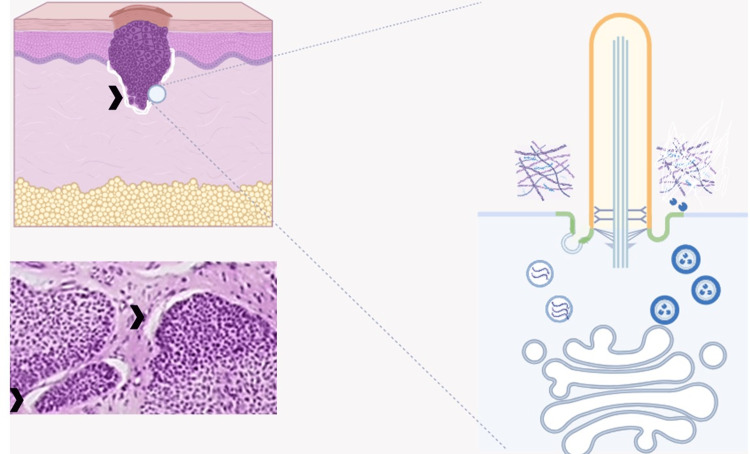 Figure 1
Peer Reviews
No public reviews on file for this paper yet. If you reviewed it on a platform where reviews are public (OpenReview, ICLR, NeurIPS, ICML), you can paste yours below so the community can read it here.
Videos
No videos yet. Explain this paper in a talk, walkthrough, or lecture? Add one.
Taxonomy
TopicsHedgehog Signaling Pathway Studies · Genetic and Kidney Cyst Diseases · Cancer and Skin Lesions