PMC · DOI:10.1038/s41392-024-01835-y·April 30, 2024
Harnessing naturally occurring mutations for T-cell therapy: a potential new avenue to enhance treatment efficacy
Michael Hiltensperger, Jürgen Ruland, Kilian Schober

Abstract
Linked entities
Genes, proteins, chemicals, diseases, species, mutations and cell lines named across the full text — each resolved to its canonical identifier and authoritative record.
Proteins18
Cell lines5
K562— Homo sapiens (Human) · Blast phase chronic myelogenous leukemia, BCR-ABL1 positive · Cancer cell linehCD19— Cricetulus griseus (Chinese hamster) · Spontaneously immortalized cell lineB16— Mus musculus (Mouse) · HybridomaNalm6— Homo sapiens (Human) · Adult B acute lymphoblastic leukemia · Cancer cell lineJurkat— Homo sapiens (Human) · Childhood T acute lymphoblastic leukemia · Cancer cell line
Chemicals1
Diseases9
Mutations1
G12D
Figures1
Click any figure to enlarge with its caption.
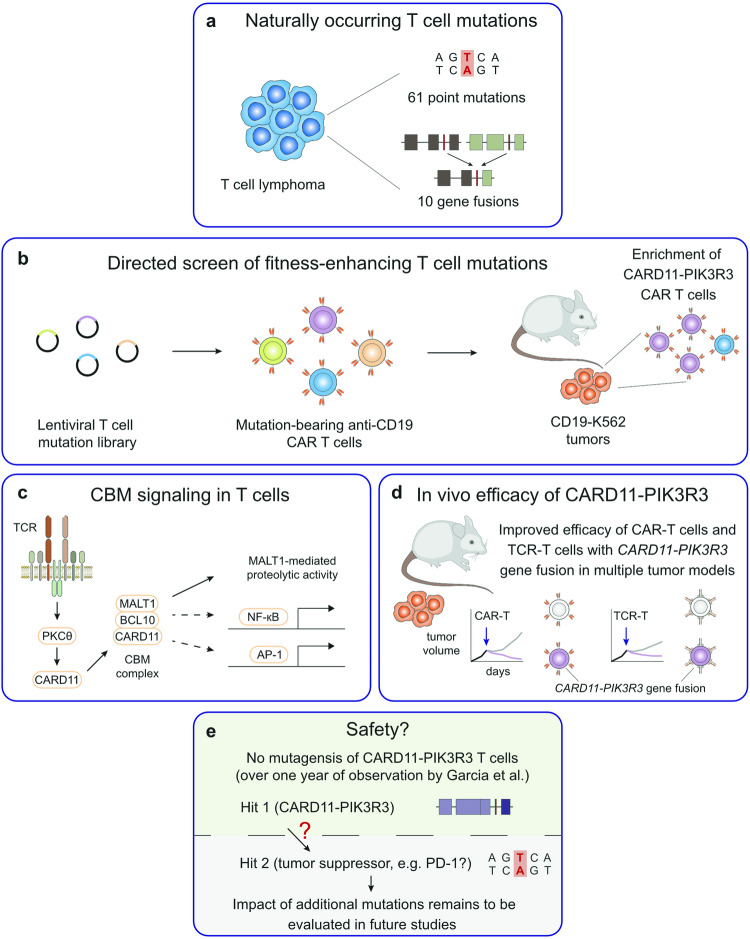 Figure 1
Peer Reviews
No public reviews on file for this paper yet. If you reviewed it on a platform where reviews are public (OpenReview, ICLR, NeurIPS, ICML), you can paste yours below so the community can read it here.
Videos
No videos yet. Explain this paper in a talk, walkthrough, or lecture? Add one.
Taxonomy
TopicsCAR-T cell therapy research · CRISPR and Genetic Engineering · Virus-based gene therapy research