A Case of Interrupted Aortic Arch in an Adult: An Unsuspected Cause of Uncontrolled Hypertension
Abdi Dandena Dibaba, Abenezer Kebede Bekele, Selam Hagos Gebrewahd

TL;DR
A 28-year-old man with uncontrolled hypertension was found to have an interrupted aortic arch, a rare condition that can cause high blood pressure.
Contribution
This case highlights interrupted aortic arch as a rare but important cause of uncontrolled hypertension in adults.
Findings
Interrupted aortic arch was diagnosed in a 28-year-old with long-standing hypertension.
Chest radiography revealed inferior rib notching, leading to further imaging confirmation.
The case suggests IAA should be considered in adults with refractory hypertension.
Abstract
In this paper, we describe an incidentally discovered case of interrupted aortic arch in a 28-year-old male patient with a history of long-standing poorly controlled hypertension. The patient presented to the hospital with a complaint of upper respiratory complaints and long-standing chest pain. A plain chest radiograph was requested to exclude a diagnosis of pneumonia, and the radiography spotted an incidental finding of inferior rib notching. A subsequent CT angiography was done for further characterization, and a diagnosis of interrupted aortic arch was confirmed. Therefore, although rare, IAA should be considered in adults with refractory hypertension or unexplained congestive heart failure.
Genes, proteins, chemicals, diseases, species, mutations and cell lines named across the full text — each resolved to its canonical identifier and authoritative record.
Click any figure to enlarge with its caption.
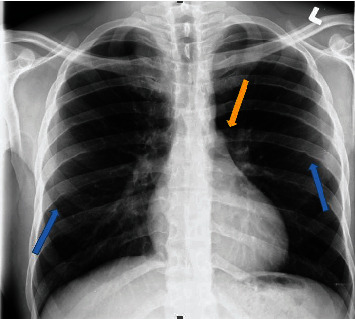 Figure 1
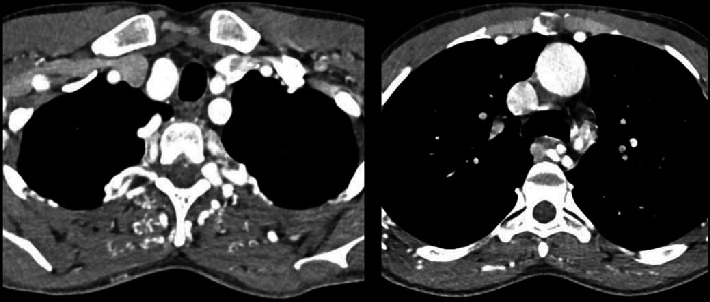 Figure 2
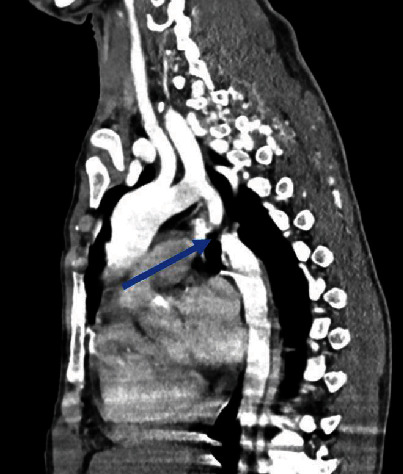 Figure 3
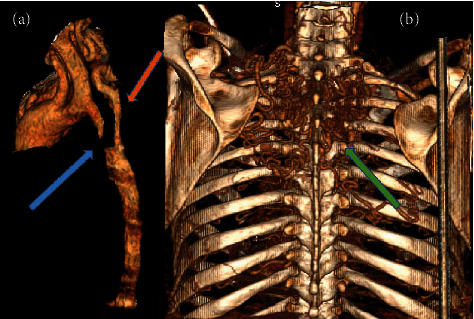 Figure 4
Peer Reviews
No public reviews on file for this paper yet. If you reviewed it on a platform where reviews are public (OpenReview, ICLR, NeurIPS, ICML), you can paste yours below so the community can read it here.
Videos
No videos yet. Explain this paper in a talk, walkthrough, or lecture? Add one.
Taxonomy
TopicsTracheal and airway disorders · Congenital Heart Disease Studies · Foreign Body Medical Cases