Patient-derived cells – an irreplaceable tool for research of reduced penetrance in movement disorders
Philip Seibler, Aleksandar Rakovic

TL;DR
This paper discusses how patient-derived cells are essential for understanding why some people with certain genes do not develop movement disorders.
Contribution
The paper highlights the use of patient-derived cells to study reduced penetrance in movement disorders.
Findings
Patient-derived cells help identify genetic modifiers of movement disorders.
These cells provide a complete genetic background for studying disease mechanisms.
Abstract
Movement disorders comprise a clinically, pathologically, and genetically heterogeneous group of diseases associated with the phenomenon of reduced penetrance. Penetrance refers to the likelihood that a clinical condition will occur when a particular genotype is present. Elucidating the cause of reduced penetrance may contribute to more personalized medicine by identifying genetic factors that may prevent individuals from developing disease. Therefore, patient material becomes an irreplaceable resource in this approach. It is needed to identify genetic modifiers of the disease in the first place and to subsequently elucidate underlying mechanisms in endogenous human cell models that provide the entire genetic background.
Genes, proteins, chemicals, diseases, species, mutations and cell lines named across the full text — each resolved to its canonical identifier and authoritative record.
Click any figure to enlarge with its caption.
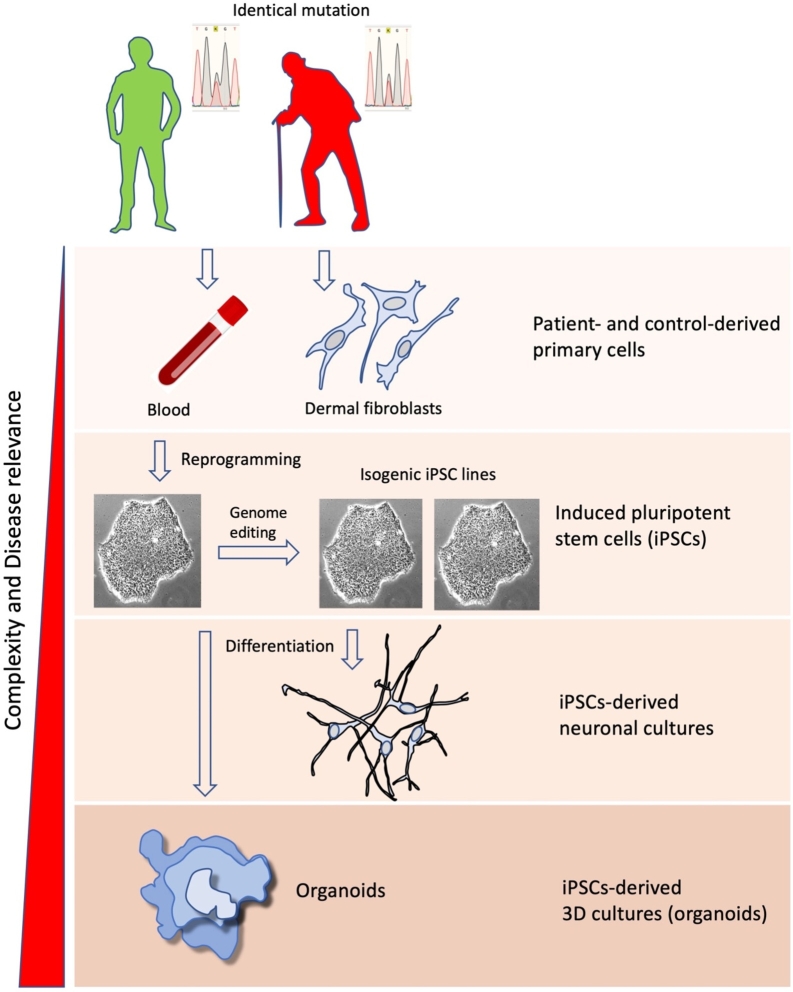 Figure 1
Peer Reviews
No public reviews on file for this paper yet. If you reviewed it on a platform where reviews are public (OpenReview, ICLR, NeurIPS, ICML), you can paste yours below so the community can read it here.
Videos
No videos yet. Explain this paper in a talk, walkthrough, or lecture? Add one.
Taxonomy
TopicsGenetic Neurodegenerative Diseases · Neurogenetic and Muscular Disorders Research · Glycogen Storage Diseases and Myoclonus