Role of 18 F-FDG-PET/CT in an AML-M5a Subtype Patient with Rare Constellation of Hemophagocytic Lymphohistiocytosis & Bilateral Multiple Breast Chloromas
Yuvan Shrinivas, Shanmuga Sundaram Palaniswamy, Padma Subramanyam

TL;DR
This case study shows how PET/CT imaging helped diagnose and monitor a rare combination of AML-M5a, HLH, and breast chloromas in a single patient.
Contribution
Highlights the role of 18F-FDG-PET/CT in diagnosing and monitoring a rare coexistence of AML-M5a, HLH, and chloromas.
Findings
18F-FDG-PET/CT identified multiple lymph nodal and marrow lesions and later detected bilateral breast chloromas.
PET/CT guided biopsy sites and monitored treatment response for both HLH and AML.
The case emphasizes the importance of nuclear medicine physicians recognizing complications in AML with poor prognostic factors.
Abstract
We report a treated case of acute myeloid leukemia (AML-M5a subtype) with monocytic differentiation (AMoL) presenting with fever and body pains. Initial 18 F-FDG-PET/CT ( 18 F-flurodeoxyglucose positron emission tomography/computed tomography) identified multiple lymph nodal, and marrow lesions. Biopsy confirmed hemophagocytic lymphohistiocytosis (HLH). Post HLH treatment, follow-up PET/CT demonstrated unsuspected FDG avid bilateral breast lesions ( n = 5), which proved to be chloromas, that is, extranodal manifestation of AML. 18 F-FDG-PET/CT has helped not only in identifying the various sites of disease involvement but also in guiding the sites for biopsy. Finally, 18 F-FDG-PET/CT was useful in monitoring therapy response for both these coexisting pathologies, which are said to be resistant to treatment based on FLT3-ITD tyrosine kinase-3 internal tandem duplication mutation…
Genes, proteins, chemicals, diseases, species, mutations and cell lines named across the full text — each resolved to its canonical identifier and authoritative record.
Click any figure to enlarge with its caption.
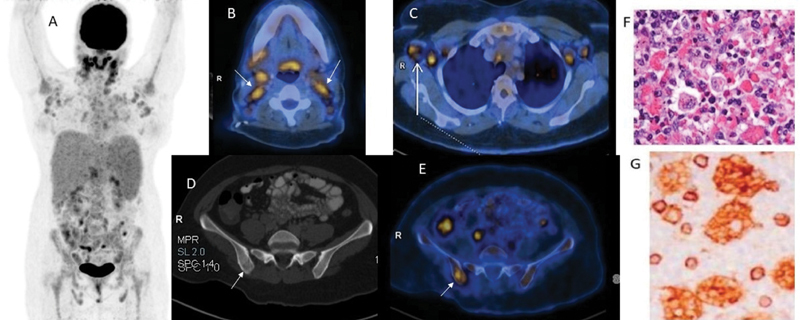 Figure 1
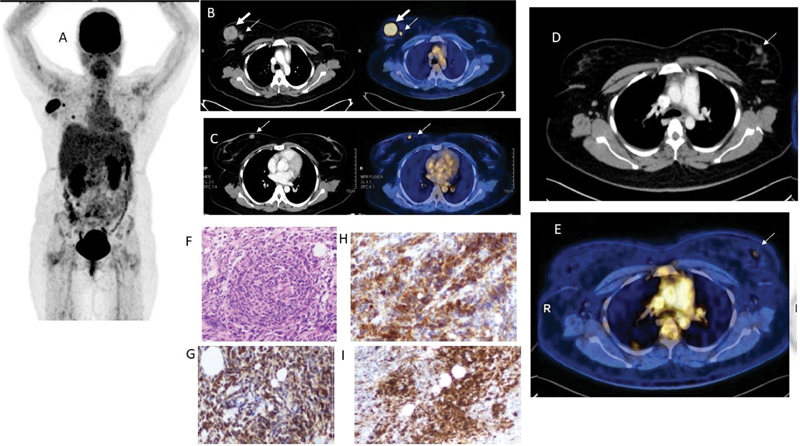 Figure 2
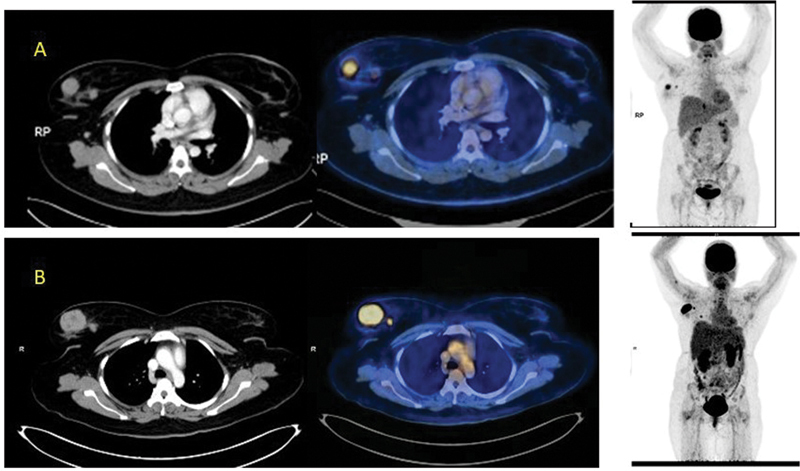 Figure 3
Peer Reviews
No public reviews on file for this paper yet. If you reviewed it on a platform where reviews are public (OpenReview, ICLR, NeurIPS, ICML), you can paste yours below so the community can read it here.
Videos
No videos yet. Explain this paper in a talk, walkthrough, or lecture? Add one.
Taxonomy
TopicsAutoimmune and Inflammatory Disorders Research · Acute Myeloid Leukemia Research · Immune Cell Function and Interaction