Adenosine Increases the Immunosuppressive Capacity of Cervical Cancer Cells by Increasing PD-L1 Expression and TGF-β Production through Its Interaction with A2AR/A2BR
Rosario García-Rocha, Alberto Monroy-García, Ana Luisa Vázquez-Cruz, Luis Antonio Marín-Aquino, Benny Weiss-Steider, Jorge Hernández-Montes, Christian Azucena Don-López, Gabriela Molina-Castillo, María de Lourdes Mora-García

TL;DR
This study shows that adenosine boosts cervical cancer cells' ability to suppress the immune system by increasing PD-L1 and TGF-β, which could be a new target for cancer therapy.
Contribution
The study identifies a novel adenosine-mediated pathway involving A2AR/A2BR and TGF-β1 that enhances immunosuppression in cervical cancer cells.
Findings
Adenosine increases PD-L1 expression in cervical cancer cells via A2AR/A2BR interaction.
TGF-β1 produced by cervical cancer cells further enhances PD-L1 expression in an autocrine manner.
Blocking A2AR/A2BR or TGF-β1 inhibits PD-L1 expression and reverses immunosuppressive effects.
Abstract
The present study provides evidence showing that adenosine (Ado) increases the expression of programmed death ligand 1 (PD-L1) in cervical cancer (CeCa) cells by interacting with A2AR/A2BR and that TGF-β1 acts in an autocrine manner to induce PD-L1 expression, enhancing the immunosuppressive effects of CeCa cells on activated T lymphocytes (ATLs) and CD8+ cytotoxic T lymphocytes (CTLs) specific for antigenic peptides derived from E6 and E7 proteins of HPV-16. Interestingly, the addition of the antagonists ZM241385 and MRS1754, which are specific for A2AR and A2BR, respectively, or SB-505124, which is a selective TGF-β1 receptor inhibitor, to CeCa cell cultures significantly inhibited PD-L1 expression. In addition, supernatants from CeCa cells that were treated with Ado (CeCa-Ado Sup) increased the expression of PD-1, TGF-β1, and IL-10 and decreased the expression of IFN-γ in ATLs.…
Genes, proteins, chemicals, diseases, species, mutations and cell lines named across the full text — each resolved to its canonical identifier and authoritative record.
Click any figure to enlarge with its caption.
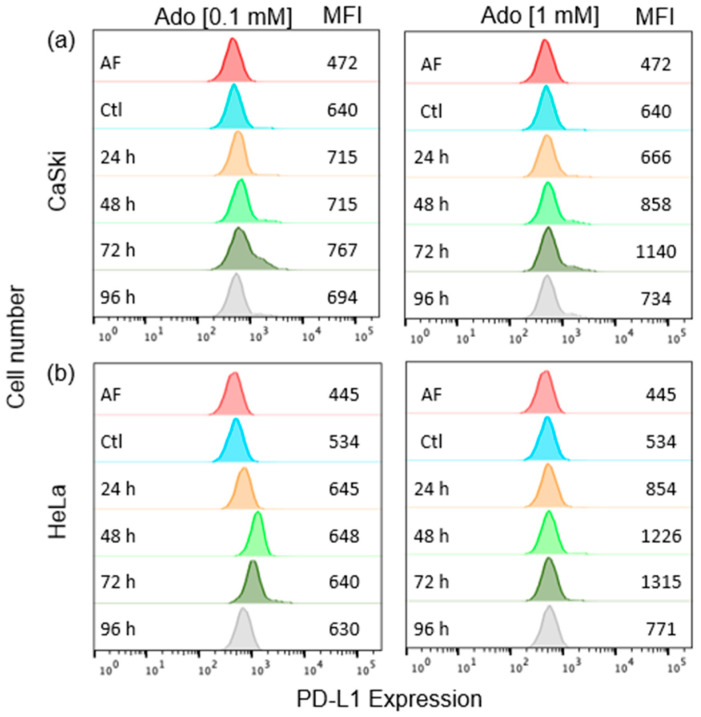 Figure 1
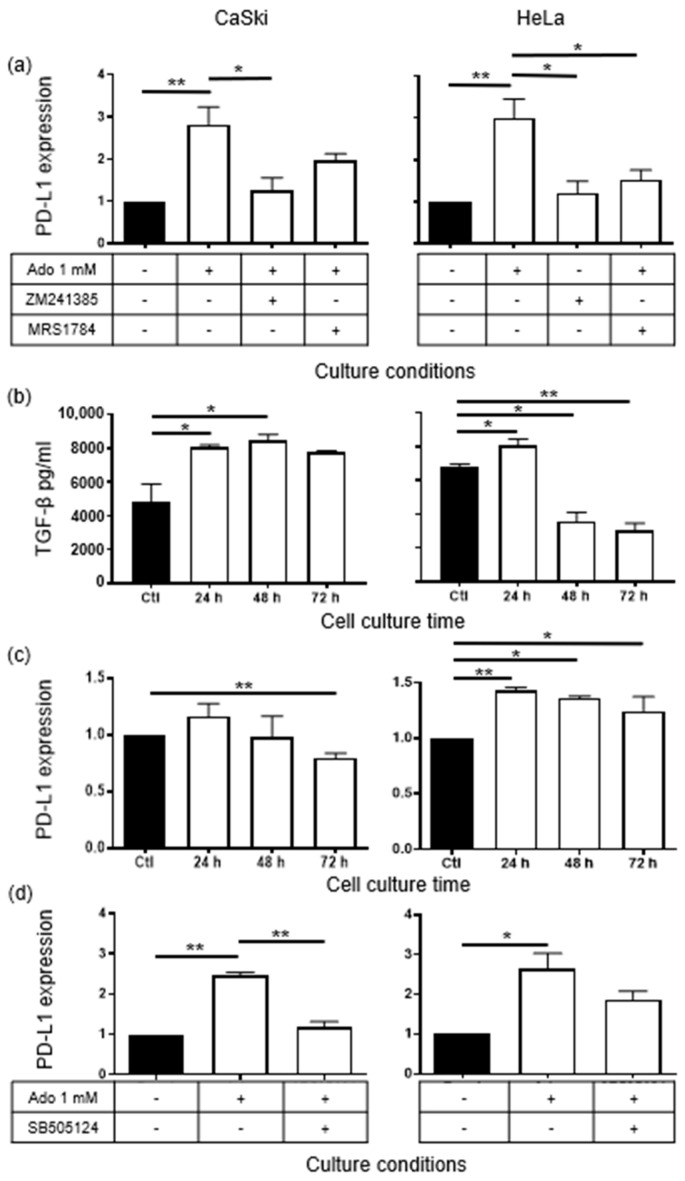 Figure 2
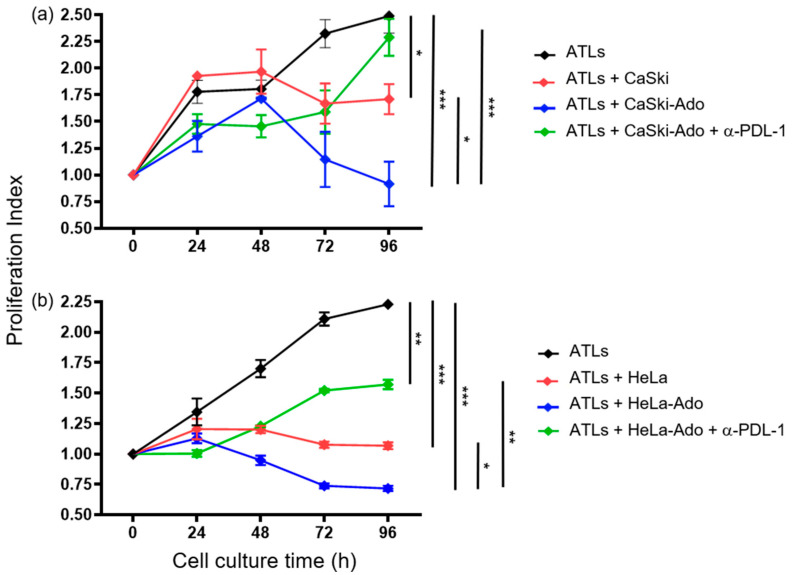 Figure 3
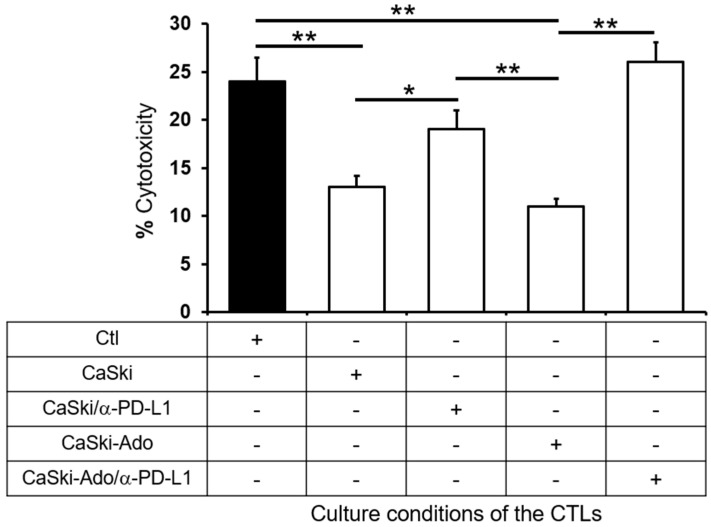 Figure 4
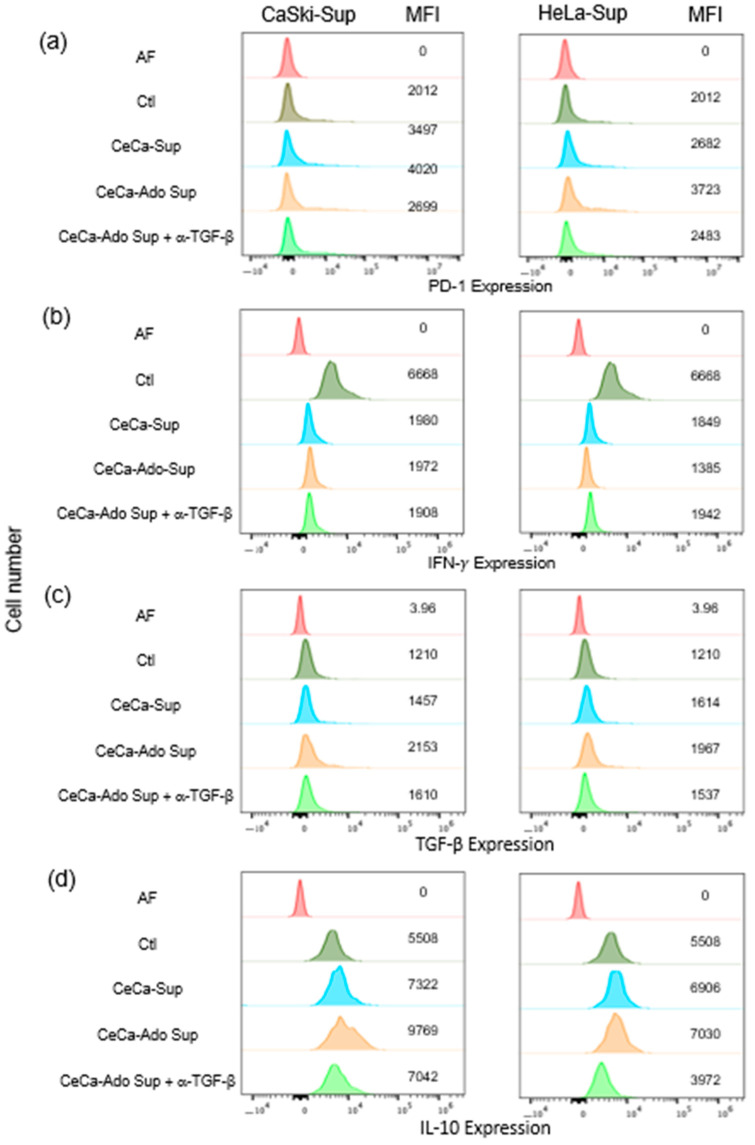 Figure 5
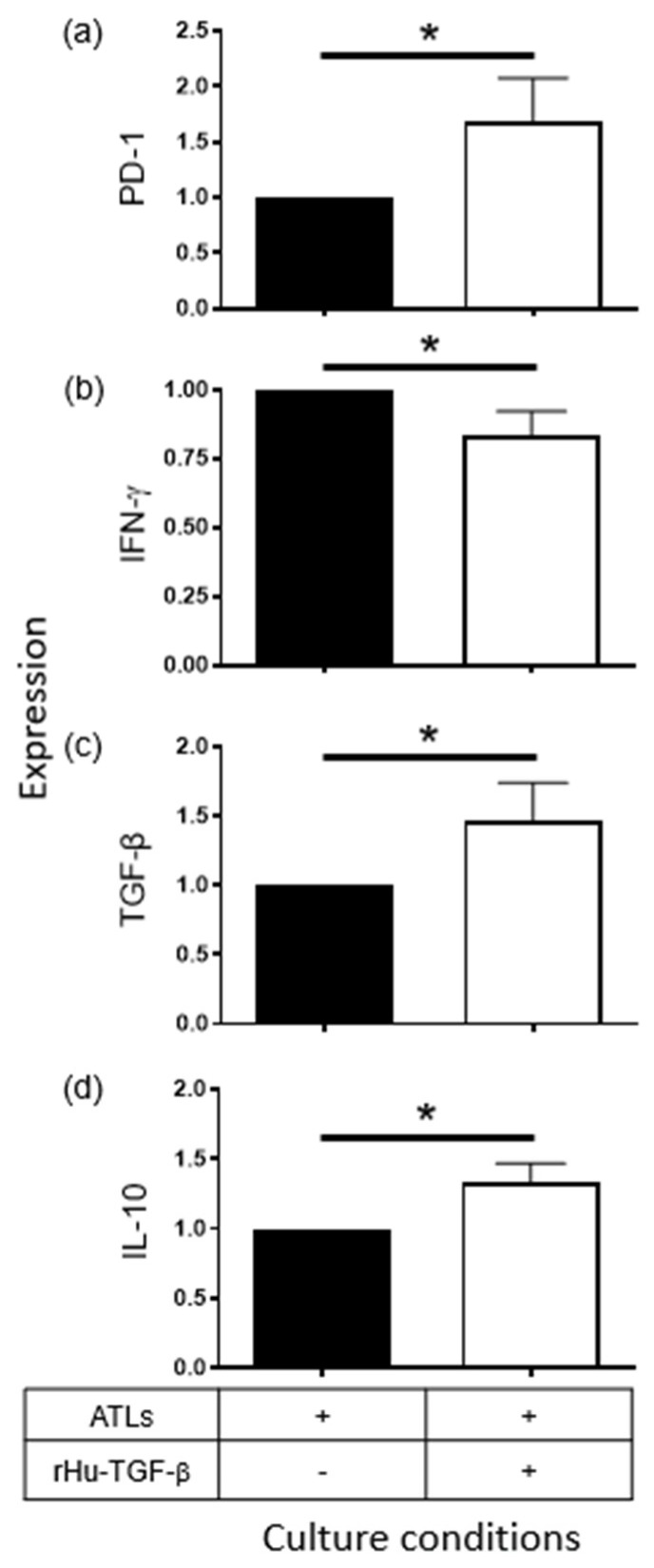 Figure 6
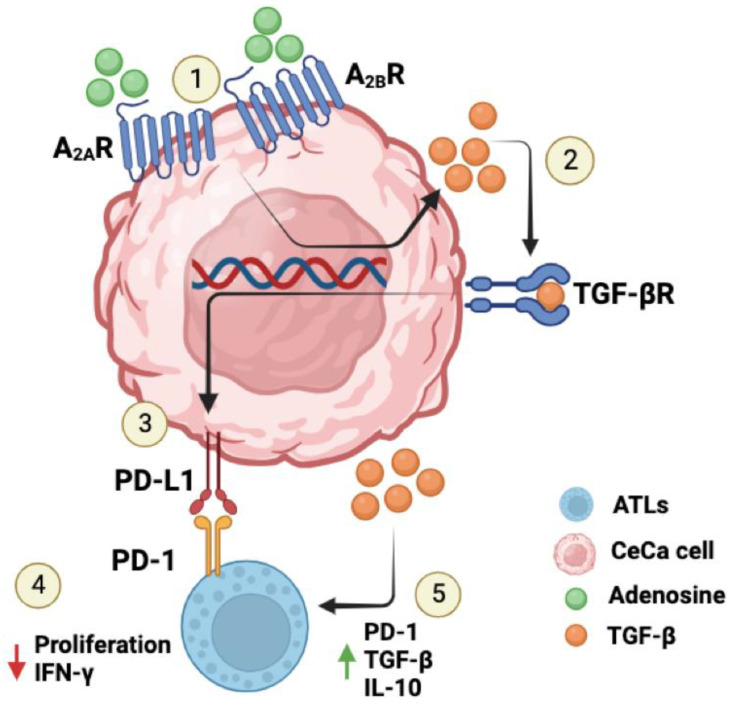 Figure 7
Peer Reviews
No public reviews on file for this paper yet. If you reviewed it on a platform where reviews are public (OpenReview, ICLR, NeurIPS, ICML), you can paste yours below so the community can read it here.
Videos
No videos yet. Explain this paper in a talk, walkthrough, or lecture? Add one.
Taxonomy
TopicsAdsorption, diffusion, and thermodynamic properties of materials