Unveiling a Rare Side Effect: A Report of a Unique Case of Second-Degree Type 2 Sinoatrial Node Exit Block Induced by Adenosine Infusion
Dibyasundar Mahanta, Anup K Budhia, Rama Chandra Barik, Debasish Das, Debasis Acharya

TL;DR
A rare case of a heart rhythm issue caused by adenosine infusion is reported in a young man.
Contribution
This paper presents a unique clinical case of a second-degree type 2 sinoatrial node exit block induced by adenosine.
Findings
Adenosine infusion in a 25-year-old male caused a second-degree type 2 sinoatrial node exit block.
The case highlights the rare but possible risk of adenosine in affecting sinoatrial node function.
Abstract
Adenosine is a widely used pharmacologic agent in the field of cardiology, predominantly for the termination of supraventricular tachycardias and diagnostic purposes. Most of the side effects are short-lasting due to its very short half-life. Fatal complications of adenosine are rare but can include ventricular fibrillation, ventricular tachycardia, and asystole. Proper medical supervision and monitoring are crucial to minimize risks. We report a unique case of a second-degree type 2 sinoatrial node exit block following intravenous adenosine administration in a 25-year-old male presenting with palpitations.
Genes, proteins, chemicals, diseases, species, mutations and cell lines named across the full text — each resolved to its canonical identifier and authoritative record.
Click any figure to enlarge with its caption.
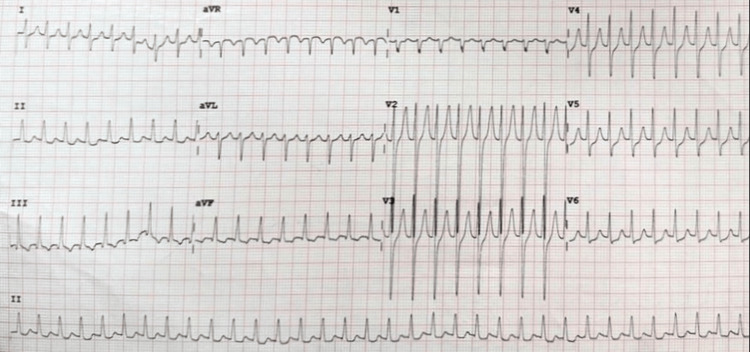 Figure 1
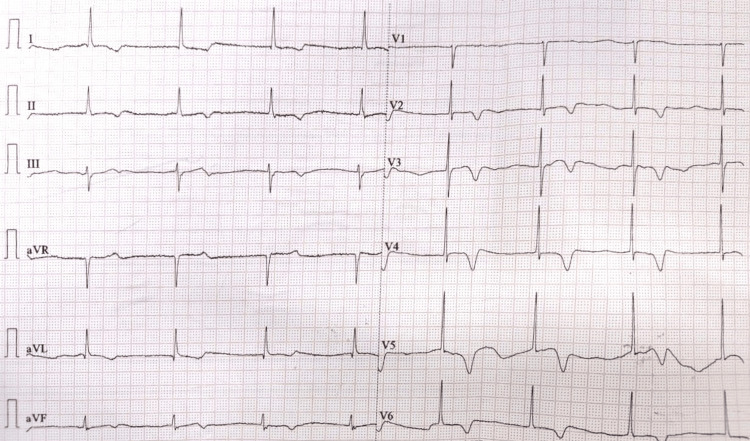 Figure 2
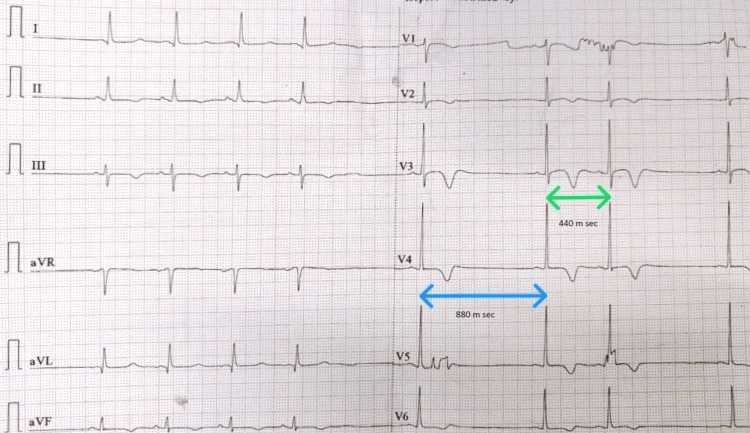 Figure 3
Peer Reviews
No public reviews on file for this paper yet. If you reviewed it on a platform where reviews are public (OpenReview, ICLR, NeurIPS, ICML), you can paste yours below so the community can read it here.
Videos
No videos yet. Explain this paper in a talk, walkthrough, or lecture? Add one.
Taxonomy
TopicsCardiac Arrhythmias and Treatments · Cardiac pacing and defibrillation studies · Atrial Fibrillation Management and Outcomes