The genome sequence of the Flame Shoulder, Ochropleura plecta (Linnaeus, 1761)
Douglas Boyes, Marianne Eagles, Camille Meslin, Yi-Ming Weng, Huai-Jun Xue

TL;DR
This paper presents the genome sequence of the Flame Shoulder moth, including its chromosomal structure and gene annotations.
Contribution
The study provides a high-quality genome assembly and gene annotation for Ochropleura plecta.
Findings
The genome assembly spans 643.9 megabases and includes 32 chromosomal pseudomolecules.
Gene annotation identified 19,016 protein-coding genes using Ensembl.
The mitochondrial genome is 15.34 kilobases in length.
Abstract
We present a genome assembly from an individual female Ochropleura plecta (the Flame Shoulder; Arthropoda; Insecta; Lepidoptera; Noctuidae). The genome sequence is 643.9 megabases in span. Most of the assembly is scaffolded into 32 chromosomal pseudomolecules, including the W and Z sex chromosomes. The mitochondrial genome has also been assembled and is 15.34 kilobases in length. Gene annotation of this assembly on Ensembl identified 19,016 protein coding genes.
Genes, proteins, chemicals, diseases, species, mutations and cell lines named across the full text — each resolved to its canonical identifier and authoritative record.
Click any figure to enlarge with its caption.
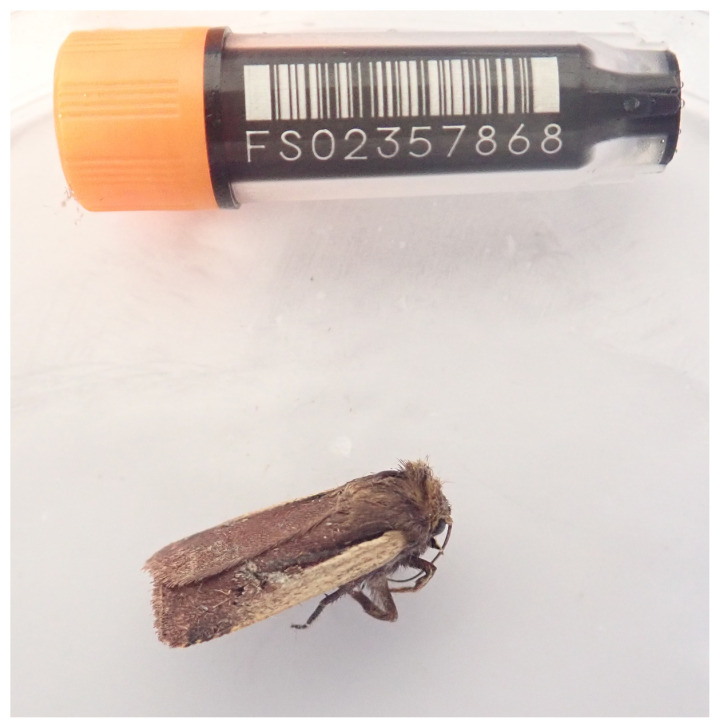 Figure 1
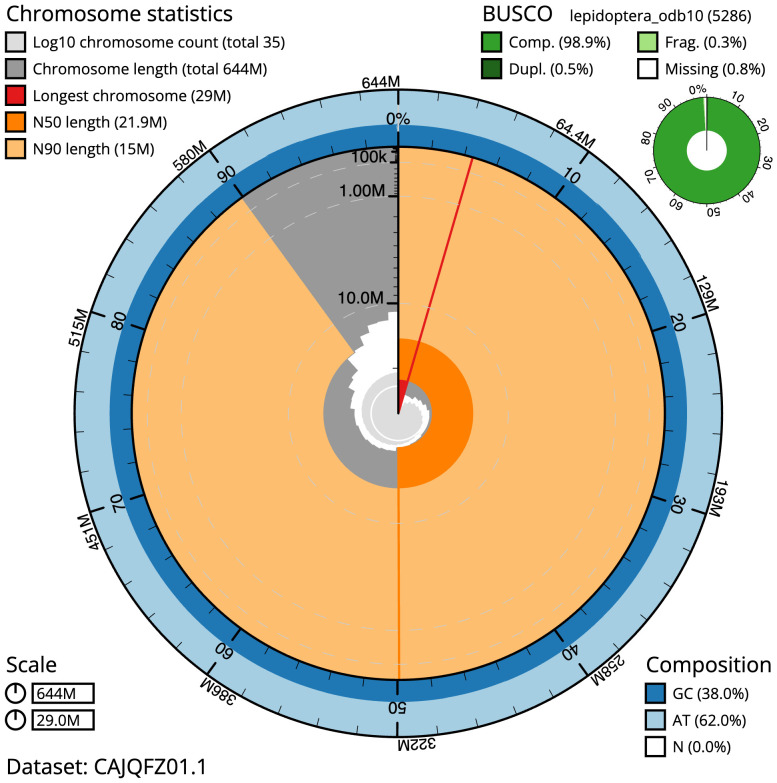 Figure 2
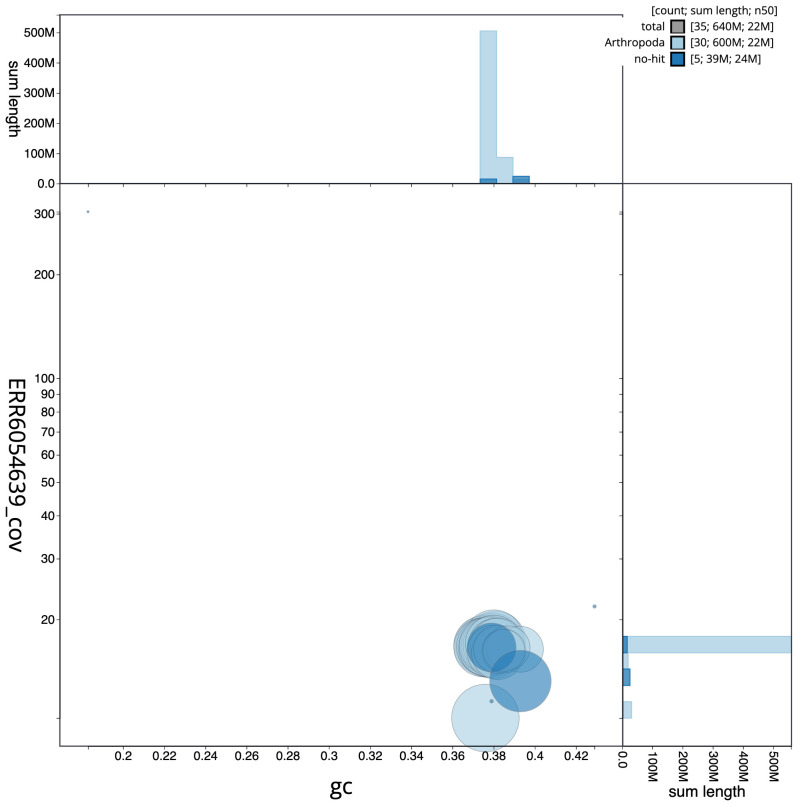 Figure 3
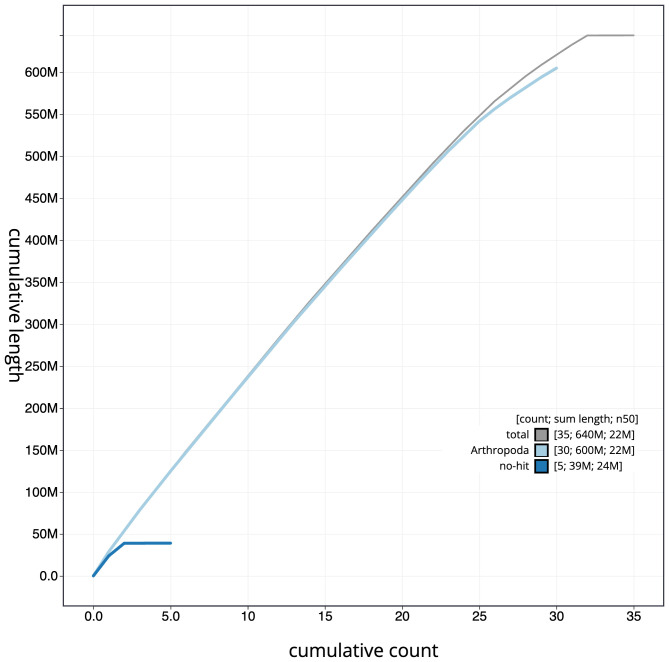 Figure 4
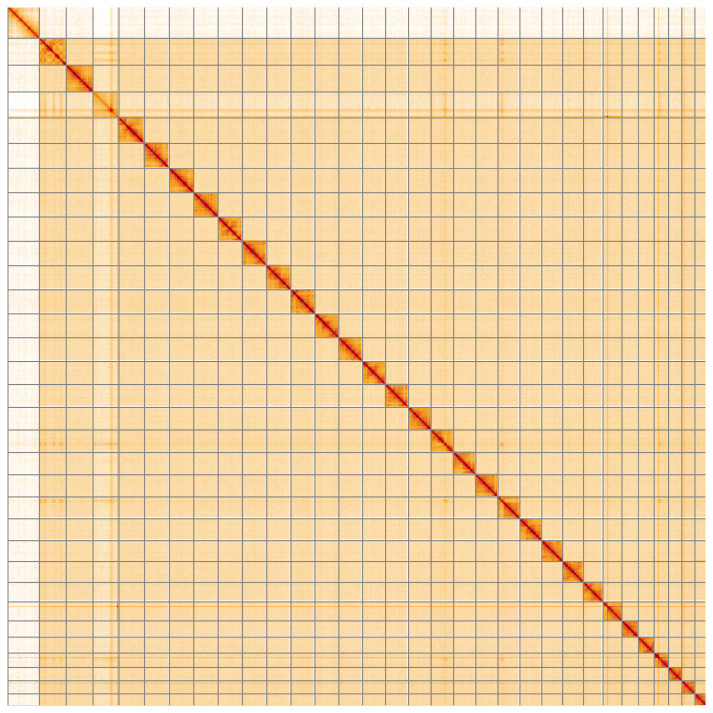 Figure 5
| Project accession data | ||
|---|---|---|
| Assembly identifier | ilOchPlec1.1 | |
| Assembly release date | 2021-04-15 | |
| Species |
| |
| Specimen | ilOchPlec1 | |
| NCBI taxonomy ID | 320037 | |
| BioProject | PRJEB43802 | |
| BioSample ID | SAMEA7520524 | |
| Isolate information | ilOchPlec1, female: abdomen (DNA sequencing); head and thorax (Hi-C scaffolding and RNA sequencing) | |
| Assembly metrics
|
| |
| Consensus quality (QV) | 58.1 |
|
|
| 100% |
|
| BUSCO
| C:98.9%[S:98.5%,D:0.5%],F:0.3%,M:0.8%,n:5,286 |
|
| Percentage of assembly mapped to chromosomes | 99.98% |
|
| Sex chromosomes | W and Z chromosome |
|
| Organelles | Mitochondrial genome assembled |
|
| Raw data accessions | ||
| PacificBiosciences SEQUEL II | ERR6406207 | |
| 10X Genomics Illumina | ERR6054637, ERR6054639, ERR6054638, ERR6054640 | |
| Hi-C Illumina | ERR6054641 | |
| PolyA RNA-Seq Illumina | ERR9434971 | |
| Genome assembly | ||
| Assembly accession | GCA_905475445.1 | |
|
| GCA_905475425.1 | |
| Span (Mb) | 643.9 | |
| Number of contigs | 122 | |
| Contig N50 length (Mb) | 9.6 | |
| Number of scaffolds | 34 | |
| Scaffold N50 length (Mb) | 21.9 | |
| Longest scaffold (Mb) | 29.0 | |
| Genome annotation | ||
| Number of protein-coding genes | 19,016 | |
| Number of gene transcripts | 19,223 | |
| INSDC
| Chromosome | Length
| GC% |
|---|---|---|---|
| 1 | 24.73 | 37.9 | |
| 2 | 24.69 | 37.9 | |
| 3 | 23.48 | 38 | |
| 4 | 22.89 | 37.6 | |
| 5 | 22.48 | 38.1 | |
| 6 | 22.43 | 37.7 | |
| 7 | 22.42 | 37.7 | |
| 8 | 22.41 | 37.7 | |
| 9 | 22.22 | 37.5 | |
| 10 | 22.13 | 38 | |
| 11 | 22 | 37.5 | |
| 12 | 21.89 | 37.9 | |
| 13 | 21.21 | 37.8 | |
| 14 | 21.1 | 37.6 | |
| 15 | 20.84 | 37.7 | |
| 16 | 20.69 | 37.9 | |
| 17 | 20.46 | 37.8 | |
| 18 | 20.46 | 37.9 | |
| 19 | 20.15 | 37.7 | |
| 20 | 20.11 | 38 | |
| 21 | 19.31 | 38.1 | |
| 22 | 19.21 | 38.2 | |
| 23 | 17.94 | 38 | |
| 24 | 17.48 | 38.2 | |
| 25 | 14.97 | 37.9 | |
| 26 | 14.66 | 38.2 | |
| 27 | 13.25 | 39.3 | |
| 28 | 12.22 | 38.5 | |
| 29 | 12.1 | 38.7 | |
| 30 | 11 | 38.5 | |
| W | 23.94 | 39.3 | |
| Z | 28.98 | 37.6 | |
| MT | 0.02 | 18.6 |
| Software tool | Version | Source |
|---|---|---|
| BlobToolKit | 4.1.7 |
|
| BUSCO | 5.3.2 |
|
| FreeBayes | 1.3.1-17-gaa2ace8 |
|
| gEVAL | N/A |
|
| HiCanu | 2.1 |
|
| HiGlass | 1.11.6 |
|
| Long Ranger ALIGN | 2.2.2 |
|
| Merqury | MerquryFK |
|
| MitoHiFi | 1 |
|
| PretextView | 0.2 |
|
| purge_dups | 1.2.3 |
|
| SALSA | 2.2 |
|
| sanger-tol/genomenote | v1.0 |
|
| sanger-tol/readmapping | 1.1.0 |
|
- —Wellcome Trust
- —Wellcome Trust
Peer Reviews
No public reviews on file for this paper yet. If you reviewed it on a platform where reviews are public (OpenReview, ICLR, NeurIPS, ICML), you can paste yours below so the community can read it here.
Videos
No videos yet. Explain this paper in a talk, walkthrough, or lecture? Add one.
Taxonomy
TopicsGenomics and Phylogenetic Studies · Insect and Arachnid Ecology and Behavior · Insect symbiosis and bacterial influences
Species taxonomy
Eukaryota; Metazoa; Eumetazoa; Bilateria; Protostomia; Ecdysozoa; Panarthropoda; Arthropoda; Mandibulata; Pancrustacea; Hexapoda; Insecta; Dicondylia; Pterygota; Neoptera; Endopterygota; Amphiesmenoptera; Lepidoptera; Glossata; Neolepidoptera; Heteroneura; Ditrysia; Obtectomera; Noctuoidea; Noctuidae; Noctuinae; Noctuini; Ochropleura; Ochropleura plecta (Linnaeus, 1761) (NCBI:txid320037).
Background
Widespread and abundant throughout Great Britain, the Isle of Man, Ireland and the Channel Islands ( Butterfly Conservation, 2023), Ochropleura plecta, of the Noctuidae family, is a resident and common species of moth found in gardens, farmland, hedgerows, moorland, woodland and wetlands. Adults may be seen between late April through to September, having two generations in southern Britain, while mainly single brooded in the north, flying in June and July. The bright straw-coloured stripe, or flame shoulder, along the leading edge of the forewing, together with the black streak from the base through the oval and kidney markings make it easily recognisable ( Waring et al., 2017). The nearest confusion species is Ochropleura leucogaster, Radford’s Flame Shoulder, a rare migrant to the south coast, first recorded in 1983 and seen regularly since then ( Lewis, 2022).
A completed genome sequence should add evidence to the discussion on evolutionary relationships that are still not completely understood in the noctuid family ( Waring et al., 2017). Research by Sisson (2022) on the phylogenetic relationships of noctuid moths from museum specimens highlighted this complexity and found a contradiction of previously documented phylogenetic relationships of Ochropleura plecta.
We present a chromosomally complete genome sequence for Ochropleura plecta based on one female specimen from Wytham Woods as part of the Darwin Tree of Life Project. This project is a collaborative effort to sequence all named eukaryotic species in the Atlantic Archipelago of Britain and Ireland
Genome sequence report
The genome was sequenced from one female Ochropleura plecta ( Figure 1) collected from Wytham Woods, Oxfordshire, UK (51.77, –1.34). A total of 46-fold coverage in Pacific Biosciences single-molecule HiFi long reads and 46-fold coverage in 10X Genomics read clouds were generated. Primary assembly contigs were scaffolded with chromosome conformation Hi-C data. Manual assembly curation corrected 138 missing joins or mis-joins and removed 34 haplotypic duplications, reducing the assembly length by 0.98% and the scaffold number by 56.41%, and increasing the scaffold N50 by 12.81%.
Photograph of the Ochropleura plecta (ilOchPlec1) specimen used for genome sequencing.
The final assembly has a total length of 643.9 Mb in 34 sequence scaffolds with a scaffold N50 of 21.9 Mb ( Table 1). A summary of the assembly statistics is shown in Figure 2, while the distribution of assembly scaffolds on GC proportion and coverage is shown in Figure 3. The cumulative assembly plot in Figure 4 shows curves for subsets of scaffolds assigned to different phyla. Most (99.98%) of the assembly sequence was assigned to 32 chromosomal-level scaffolds, representing 30 autosomes and the W and Z sex chromosomes. Chromosome-scale scaffolds confirmed by the Hi-C data are named in order of size ( Figure 5; Table 2). While not fully phased, the assembly deposited is of one haplotype. Contigs corresponding to the second haplotype have also been deposited. The mitochondrial genome was also assembled and can be found as a contig within the multifasta file of the genome submission.
Table 1.: Genome data for Ochropleura plecta, ilOchPlec1.1.
Genome assembly of Ochropleura plecta, ilOchPlec1.1: metrics.The BlobToolKit Snailplot shows N50 metrics and BUSCO gene completeness. The main plot is divided into 1,000 size-ordered bins around the circumference with each bin representing 0.1% of the 643,962,443 bp assembly. The distribution of scaffold lengths is shown in dark grey with the plot radius scaled to the longest scaffold present in the assembly (28,980,428 bp, shown in red). Orange and pale-orange arcs show the N50 and N90 scaffold lengths (21,894,754 and 14,971,023 bp), respectively. The pale grey spiral shows the cumulative scaffold count on a log scale with white scale lines showing successive orders of magnitude. The blue and pale-blue area around the outside of the plot shows the distribution of GC, AT and N percentages in the same bins as the inner plot. A summary of complete, fragmented, duplicated and missing BUSCO genes in the lepidoptera_odb10 set is shown in the top right. An interactive version of this figure is available at https://blobtoolkit.genomehubs.org/view/Ochropleura%20plecta/dataset/CAJQFZ01.1/snail.
Genome assembly of Ochropleura plecta, ilOchPlec1.1: BlobToolKit GC-coverage plot.Scaffolds are coloured by phylum. Circles are sized in proportion to scaffold length. Histograms show the distribution of scaffold length sum along each axis. An interactive version of this figure is available at https://blobtoolkit.genomehubs.org/view/Ochropleura%20plecta/dataset/CAJQFZ01.1/blob.
Genome assembly of Ochropleura plecta, ilOchPlec1.1: BlobToolKit cumulative sequence plot.The grey line shows cumulative length for all scaffolds. Coloured lines show cumulative lengths of scaffolds assigned to each phylum using the buscogenes taxrule. An interactive version of this figure is available at https://blobtoolkit.genomehubs.org/view/Ochropleura%20plecta/dataset/CAJQFZ01.1/cumulative.
Genome assembly of Ochropleura plecta, ilOchPlec1.1: Hi-C contact map of the ilOchPlec1.1 assembly, visualised using HiGlass.Chromosomes are shown in order of size from left to right and top to bottom. An interactive version of this figure may be viewed at https://genome-note-higlass.tol.sanger.ac.uk/l/?d=eAJ5-r_fT3WUaYFQcGactw.
Table 2.: Chromosomal pseudomolecules in the genome assembly of Ochropleura plecta, ilOchPlec1.
The estimated Quality Value (QV) of the final assembly is 58.1 with k-mer completeness of 100%, and the assembly has a BUSCO v5.3.2 completeness of 98.9% (single = 98.5%, duplicated = 0.5%), using the lepidoptera_odb10 reference set ( n = 5,286).
Metadata for specimens, spectral estimates, sequencing runs, contaminants and pre-curation assembly statistics can be found at https://links.tol.sanger.ac.uk/species/320037.
Genome annotation report
The Ochropleura plecta genome assembly (GCA_905475445.1) was annotated using the Ensembl rapid annotation pipeline ( Table 1; https://rapid.ensembl.org/Ochropleura_plecta_GCA_905475445.1/Info/Index). The resulting annotation includes 19,223 transcribed mRNAs from 19,016 protein-coding genes.
Methods
Sample acquisition and nucleic acid extraction
A female Ochropleura plecta (specimen ID Ox000401, ToLID ilOchPlec1) was collected from Wytham Woods, Oxfordshire (biological vice-county Berkshire), UK (latitude 51.77, longitude –1.34) on 2020-05-22 using a light trap. The specimen was collected and identified by Douglas Boyes (University of Oxford) and preserved on dry ice.
DNA was extracted at the Tree of Life laboratory, Wellcome Sanger Institute (WSI). The ilOchPlec1 sample was weighed and dissected on dry ice with tissue set aside for Hi-C sequencing. Abdomen tissue was disrupted using a Nippi Powermasher fitted with a BioMasher pestle. High molecular weight (HMW) DNA was extracted using the Qiagen MagAttract HMW DNA extraction kit. Low molecular weight DNA was removed from a 20 ng aliquot of extracted DNA using the 0.8X AMpure XP purification kit prior to 10X Chromium sequencing; a minimum of 50 ng DNA was submitted for 10X sequencing. HMW DNA was sheared into an average fragment size of 12–20 kb in a Megaruptor 3 system with speed setting 30. Sheared DNA was purified by solid-phase reversible immobilisation using AMPure PB beads with a 1.8X ratio of beads to sample to remove the shorter fragments and concentrate the DNA sample. The concentration of the sheared and purified DNA was assessed using a Nanodrop spectrophotometer and Qubit Fluorometer and Qubit dsDNA High Sensitivity Assay kit. Fragment size distribution was evaluated by running the sample on the FemtoPulse system.
RNA was extracted from head and thorax tissue of ilOchPlec1 in the Tree of Life Laboratory at the WSI using TRIzol, according to the manufacturer’s instructions. RNA was then eluted in 50 μl RNAse-free water and its concentration assessed using a Nanodrop spectrophotometer and Qubit Fluorometer using the Qubit RNA Broad-Range (BR) Assay kit. Analysis of the integrity of the RNA was done using Agilent RNA 6000 Pico Kit and Eukaryotic Total RNA assay.
Sequencing
Pacific Biosciences HiFi circular consensus and 10X Genomics read cloud DNA sequencing libraries were constructed according to the manufacturers’ instructions. Poly(A) RNA-Seq libraries were constructed using the NEB Ultra II RNA Library Prep kit. DNA and RNA sequencing was performed by the Scientific Operations core at the WSI on Pacific Biosciences SEQUEL II (HiFi), Illumina HiSeq 4000 (RNA-Seq) and HiSeq X Ten (10X) instruments. Hi-C data were also generated from remaining head and thorax tissue of ilOchPlec1 using the Arima2 kit and sequenced on the HiSeq X Ten instrument.
Genome assembly, curation and evaluation
Assembly was carried out with HiCanu ( Nurk et al., 2020), and haplotypic duplication was identified and removed with purge_dups ( Guan et al., 2020). One round of polishing was performed by aligning 10X Genomics read data to the assembly with Long Ranger ALIGN, calling variants with FreeBayes ( Garrison & Marth, 2012). The assembly was then scaffolded with Hi-C data ( Rao et al., 2014) using SALSA2 ( Ghurye et al., 2019). The assembly was checked for contamination and corrected using the gEVAL system ( Chow et al., 2016) as described previously ( Howe et al., 2021). Manual curation was performed using gEVAL, HiGlass ( Kerpedjiev et al., 2018) and Pretext ( Harry, 2022). The mitochondrial genome was assembled using MitoHiFi ( Uliano-Silva et al., 2023), which runs MitoFinder ( Allio et al., 2020) or MITOS ( Bernt et al., 2013) and uses these annotations to select the final mitochondrial contig and to ensure the general quality of the sequence.
A Hi-C map for the final assembly was produced using bwa-mem2 ( Vasimuddin et al., 2019) in the Cooler file format ( Abdennur & Mirny, 2020). To assess the assembly metrics, the k-mer completeness and QV consensus quality values were calculated in Merqury ( Rhie et al., 2020). This work was done using Nextflow ( Di Tommaso et al., 2017) DSL2 pipelines “sanger-tol/readmapping” ( Surana et al., 2023a) and “sanger-tol/genomenote” ( Surana et al., 2023b). The genome was analysed within the BlobToolKit environment ( Challis et al., 2020) and BUSCO scores ( Manni et al., 2021; Simão et al., 2015) were calculated.
Table 3 contains a list of relevant software tool versions and sources.
Genome annotation
The BRAKER2 pipeline ( Brůna et al., 2021) was used in the default protein mode to generate annotation for the Ochropleura plecta assembly (GCA_905475445.1) in Ensembl Rapid Release.
Wellcome Sanger Institute – Legal and Governance
The materials that have contributed to this genome note have been supplied by a Darwin Tree of Life Partner. The submission of materials by a Darwin Tree of Life Partner is subject to the ‘Darwin Tree of Life Project Sampling Code of Practice’, which can be found in full on the Darwin Tree of Life website here. By agreeing with and signing up to the Sampling Code of Practice, the Darwin Tree of Life Partner agrees they will meet the legal and ethical requirements and standards set out within this document in respect of all samples acquired for, and supplied to, the Darwin Tree of Life Project.
Further, the Wellcome Sanger Institute employs a process whereby due diligence is carried out proportionate to the nature of the materials themselves, and the circumstances under which they have been/are to be collected and provided for use. The purpose of this is to address and mitigate any potential legal and/or ethical implications of receipt and use of the materials as part of the research project, and to ensure that in doing so we align with best practice wherever possible. The overarching areas of consideration are:
• Ethical review of provenance and sourcing of the material
• Legality of collection, transfer and use (national and international)
Each transfer of samples is further undertaken according to a Research Collaboration Agreement or Material Transfer Agreement entered into by the Darwin Tree of Life Partner, Genome Research Limited (operating as the Wellcome Sanger Institute), and in some circumstances other Darwin Tree of Life collaborators.
The reference list from the paper itself. Each links out to its DOI / PubMed record.
- 1Abdennur N Mirny LA : Cooler: Scalable storage for Hi-C data and other genomically labeled arrays. Bioinformatics. 2020;36(1):311–316. 10.1093/bioinformatics/btz 540 31290943 PMC 8205516 · doi ↗ · pubmed ↗
- 2Allio R Schomaker‐Bastos A Romiguier J : Mito Finder: Efficient automated large‐scale extraction of mitogenomic data in target enrichment phylogenomics. Mol Ecol Resour. 2020;20(4):892–905. 10.1111/1755-0998.13160 32243090 PMC 7497042 · doi ↗ · pubmed ↗
- 3Bernt M Donath A Jühling F : MITOS: Improved de novo metazoan mitochondrial genome annotation. Mol Phylogenet Evol. 2013;69(2):313–319. 10.1016/j.ympev.2012.08.023 22982435 · doi ↗ · pubmed ↗
- 4Brůna T Hoff KJ Lomsadze A : BRAKER 2: Automatic eukaryotic genome annotation with Gene Mark-EP+ and AUGUSTUS supported by a protein database. NAR Genom Bioinform. 2021;3(1): lqaa 108. 10.1093/nargab/lqaa 108 33575650 PMC 7787252 · doi ↗ · pubmed ↗
- 5Butterfly Conservation: Flame Shoulder: Ochropleura plecta. 2023; [Accessed 6 August 2023]. Reference Source
- 6Challis R Richards E Rajan J : Blob Tool Kit - interactive quality assessment of genome assemblies. G 3 (Bethesda). 2020;10(4):1361–1374. 10.1534/g 3.119.400908 32071071 PMC 7144090 · doi ↗ · pubmed ↗
- 7Chow W Brugger K Caccamo M : g EVAL — a web-based browser for evaluating genome assemblies. Bioinformatics. 2016;32(16):2508–10. 10.1093/bioinformatics/btw 159 27153597 PMC 4978925 · doi ↗ · pubmed ↗
- 8Di Tommaso P Chatzou M Floden EW : Nextflow enables reproducible computational workflows. Nat Biotechnol. 2017;35(4):316–319. 10.1038/nbt.3820 28398311 · doi ↗ · pubmed ↗