Cardiac Mass and Cerebrovascular Accident as Primary Manifestations of Churg-Strauss Syndrome
Fariba Abbasi, Ata Abbasi, Alireza Rostamzadeh, Seyede Zohre Banihashemi, Aliakbar Rajabi

TL;DR
A rare case of EGPA presented with a heart mass and stroke, highlighting the importance of heart checks in such patients.
Contribution
Reports a rare cardiac manifestation of EGPA confirmed by echocardiography and histopathology.
Findings
A large left ventricular granuloma was detected in a patient with EGPA.
EGPA diagnosis was confirmed through paraclinical and histopathologic findings.
The case emphasizes the need for routine echocardiography in EGPA patients.
Abstract
Churg-Strauss syndrome (CSS), recently named eosinophilic granulomatosis with polyangiitis (EGPA), is a rare form of systemic vasculitis with extravascular granulomas occurring in patients with asthma and tissue eosinophilia. We represent a large left ventricular granuloma, confirmed by histopathologic evaluation, detected as a ventricular mass by echocardiography in a 45-year-old asthmatic male who was admitted for a cerebrovascular accident. Paraclinical and histopathologic findings confirmed the diagnosis of EGPA. As cardiac involvement in patients with EGPA is associated with poor prognosis, routine echocardiographic evaluation of these patients is suggested.
Genes, proteins, chemicals, diseases, species, mutations and cell lines named across the full text — each resolved to its canonical identifier and authoritative record.
Click any figure to enlarge with its caption.
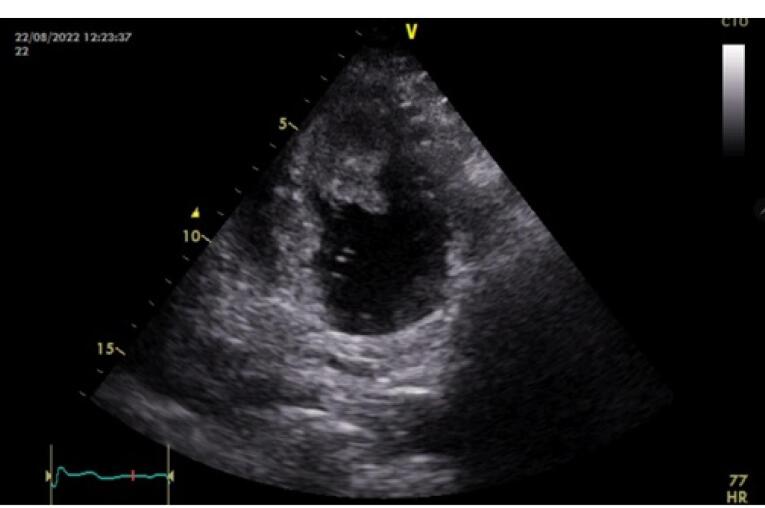 Figure 1
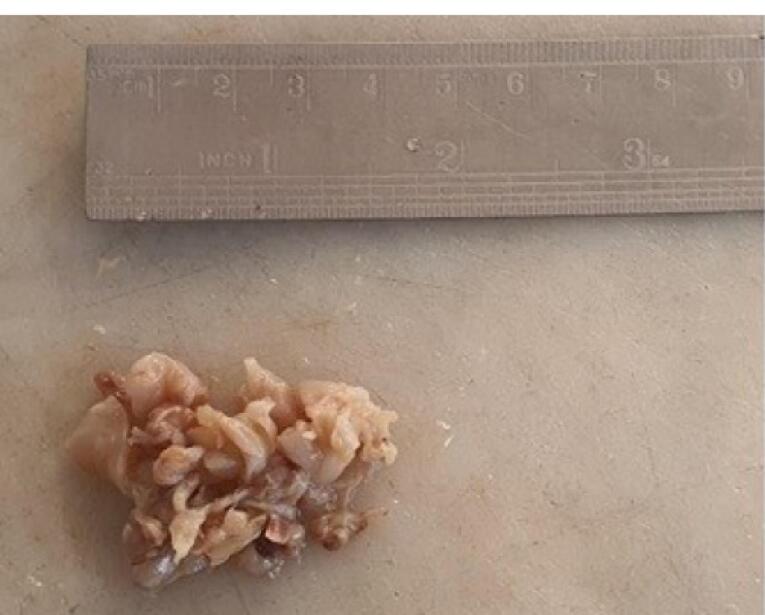 Figure 2
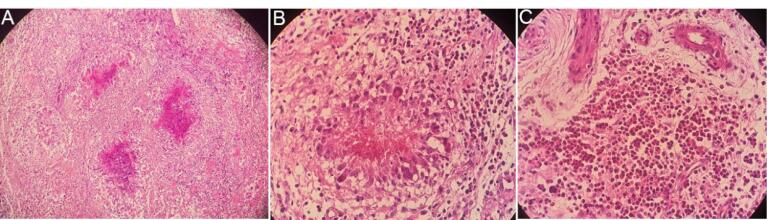 Figure 3
Peer Reviews
No public reviews on file for this paper yet. If you reviewed it on a platform where reviews are public (OpenReview, ICLR, NeurIPS, ICML), you can paste yours below so the community can read it here.
Videos
No videos yet. Explain this paper in a talk, walkthrough, or lecture? Add one.
Taxonomy
TopicsVasculitis and related conditions · Eosinophilic Disorders and Syndromes · Sarcoidosis and Beryllium Toxicity Research
Introduction
Churg-Strauss syndrome (CSS), recently named eosinophilic granulomatosis with polyangiitis (EGPA), is a rare form of necrotizing vasculitis involving small and medium-sized arteries.^1-4^ The major clinical manifestations are asthma, sinusitis, transient pulmonary infiltrate and neurologic manifestations commonly as peripheral neurologic symptoms and less commonly in the form of central nervous system involvement.^3,5,6^ Due to positive anti-neutrophil cytoplasmic antibodies (ANCA) in 40%‒60% of cases, this syndrome is classified as one of the ANCA-associated vasculitides.^3,4,7^ Histopathology examination mostly reveals extravascular granulomas, tissue eosinophilia and necrotizing vasculitis.^8^
Cardiac involvement is seen in 15%‒60% of the patients, especially in ANCA-negative cases.^3,4,9^ The manifestations are variable, including coronary vasculitis, constructive pericarditis, pericardial effusion, myocarditis, myocardial infarction and fibrosis.^1,3,10^ Generally, cardiac involvement is associated with worse outcome, accounting for approximately one-half of disease-related deaths.^2,3,8,9,11^
Here, we report a case of CSS admitted to the hospital with a cerebrovascular accident and cardiac involvement presenting as a ventricular mass which is a very rare form of cardiac involvement in this syndrome.
Case Report
The patient was a 45-year-old man with a 3-year history of sinusitis, nonproductive cough, exertional dyspnea and malaise who was under treatment for allergic asthma with symbicort, rhinocort and desloratadine.
Two months earlier, he was brought to the hospital with sudden severe headache, speech disorder and right-sided hemiparesis. Brain computed tomography (CT) scan and magnetic resonance imaging (MRI) findings were consistent with cerebrovascular accident.
Echocardiography was performed during hospitalization and showed a left ventricular echogenic semi-mobile mass measuring 5.2 × 4.5 × 1.2 cm with multiple echolucency and strand like projections which had filled the apex (Figure 1).
**
The laboratory findings were as follow: ESR: 62/h, CRP: 2 + , WBC: 9100/mL with 11.6% eosinophilia. ANA, anti dsDNA, P-ANCA and C-ANCA were negative. Other tests were in normal ranges.
The patient underwent surgery. The specimen received ed in the pathology department consisted of multiple pieces of creamy colored tissue, rubbery in consistency measuring 4 × 3 × 2 cm in aggregate (Figure 2). Microscopic examination showed fibrotic tissue with many thick-walled vessels, severe infiltration of inflammatory cells composed predominantly of eosinophils, many granulomas with central fibrinoid necrosis or basophilic appearance with palisading of histiocytes and giant cells, cell debris and extensive areas of fibrin deposition (Figure 3).
**
**
Currently, according to the American College of Rheumatology, there are six diagnostic criteria for diagnosis of CSS, namely: (1) History of wheezing or diffuse high-pitched expiratory rhonchi, (2) Eosinophilia, (3) Mono- or polyneuropathy, (4) Pulmonary infiltrates attributable to vasculitis, (5) History of paranasal sinus abnormality or pain, and (6) Extravascular eosinophils confirmed by biopsy.^12^ The main differential diagnoses of CCS are granulomatosis with polyangiitis and microscopic polyangiitis.
Our patient had 4 items of the mentioned criteria including history of wheezing and asthma, eosinophilia, history of sinusitis and a biopsy confirming the presence of eosinophilic granuloma.
The combination of laboratory findings and histologic features confirmed the diagnosis of EGPA.
Discussion
CSS is a rare systemic disorder; cardiac involvement is seen in 15%‒60% of the cases.^3,4,9^ Active asthma or a history of asthma is seen in more than 90% of patients with CSS.^8^ Our patient also had a 3-year history of asthma. Atopy in the form of sinusitis or allergic rhinitis, cough and hemoptysis, arthralgia, gastrointestinal tract involvement and skin changes are frequent in these patients.^8^ Our patient had nonproductive cough with sinusitis and rhinitis but no hemoptysis, arthralgia or skin involvement. Peripheral neurologic symptoms are seen in 55%‒75% of the patients but involvement of the central nervous system is less common.^5^ The presented patient had a history of cerebrovascular accident before the establishment of the diagnosis.
Cardiac involvement in CSS is mostly seen in ANCA-negative patients, as was the case for our patient.^3,4^ The dominant histopathologic features of the involved heart are eosinophilic infiltration and rarely necrotizing vasculitis or extravascular granuloma.^9,11^ Eosinophilic infiltration and multiple granulomas with basophilic appearance and fibrinoid necrosis, fibrosis and fibrin deposition are the histologic features observed in our samples.
After confirmation of the diagnosis of EGPA, the patient underwent treatment with prednisolone, montelukast, fexofenadine and hydroxychloroquine. One week later, eosinophilia decreased to 8.2%.
In conclusion,as cardiac involvement in CSS is associated with a poor outcome, early diagnosis of this complication is very important. This clinical presentation demonstrated the importance of echocardiography as a reliable non-invasive technique in the assessment of cardiac involvement in CSS. Also, CSS should be considered in differential diagnosis of cardiac masses in patient with blood eosinophilia.
The reference list from the paper itself. Each links out to its DOI / PubMed record.
- 1Otto S Figulla HR Goebel B Oelzner P Poerner TC Churg-Strauss syndrome presenting with cardiac mass and right ventricular obstruction Clin Cardiol 20093212 E 77910.1002/clc.2059520014201 PMC 6652959 · doi ↗ · pubmed ↗
- 2Jeong HC Kim KH Cho JY Song JE Yoon HJ Seon HJ Cardiac involvement of Churg-Strauss syndrome as a reversible cause of dilated cardiomyopathy J Cardiovasc Ultrasound 201523140310.4250/jcu.2015.23.1.4025883756 PMC 4398784 · doi ↗ · pubmed ↗
- 3Brucato A Maestroni S Masciocco G Ammirati E Bonacina E Pedrotti P [Cardiac involvement in Churg-Strauss syndrome]G Ital Cardiol (Rome)201516949350010.1714/1988.21524.[Italian]26418389 · doi ↗ · pubmed ↗
- 4Groh M Masciocco G Kirchner E Kristen A Pellegrini C Varnous S Heart transplantation in patients with eosinophilic granulomatosis with polyangiitis (Churg-Strauss syndrome)J Heart Lung Transplant 20143388425010.1016/j.healun.2014.02.02324709271 · doi ↗ · pubmed ↗
- 5Wolf J Bergner R Mutallib S Buggle F Grau AJ Neurologic complications of Churg-Strauss syndrome--a prospective monocentric study Eur J Neurol 2010174582810.1111/j.1468-1331.2009.02902.x 20050889 · doi ↗ · pubmed ↗
- 6Sairanen T Kanerva M Valanne L Lyytinen J Pekkonen E Churg-Strauss syndrome as an unusual aetiology of stroke with haemorrhagic transformation in a patient with no cardiovascular risk factors Case Rep Neurol 20113132810.1159/00032321421468361 PMC 3064863 · doi ↗ · pubmed ↗
- 7Dennert RM van Paassen P Schalla S Kuznetsova T Alzand BS Staessen JA Cardiac involvement in Churg-Strauss syndrome Arthritis Rheum 20106226273410.1002/art.2726320112390 · doi ↗ · pubmed ↗
- 8Vasandani N Isaac M Bajwa A Sheehan M Nugent E A surgical presentation of Churg-Strauss syndrome Cureus 2022144 e 2434210.7759/cureus.2434235607552 PMC 9123405 · doi ↗ · pubmed ↗