The Various Roles of PEDF in Cancer
Mitra Elmi, Joshua H. Dass, Crispin R. Dass

TL;DR
This review explores how PEDF, a versatile protein, can both prevent and promote cancer through various molecular pathways.
Contribution
The paper provides a comprehensive overview of PEDF's dual roles in cancer progression and suppression.
Findings
PEDF exhibits anti-inflammatory, anti-angiogenic, and anti-tumour properties.
PEDF can enhance tumour response but also show pro-cancerous effects under certain conditions.
Metastatic and metabolic biomarkers are key to understanding PEDF's functional activity.
Abstract
Pigment epithelium-derived factor (PEDF) is a versatile protein with potent effects against various cancers. It hinders cancer initiation and spread. This review highlights some of the molecular pathways involved in PEDF’s anticancer properties. Pigment epithelium-derived factor (PEDF) is a natural immunomodulator, anti-inflammatory, anti-angiogenic, anti-tumour growth and anti-metastasis factor, which can enhance tumour response to PEDF but can also conversely have pro-cancerous effects. Inflammation is a major cause of cancer, and it has been proven that PEDF has anti-inflammatory properties. PEDF’s functional activity can be investigated through measuring metastatic and metabolic biomarkers that will be discussed in this review.
Genes, proteins, chemicals, diseases, species, mutations and cell lines named across the full text — each resolved to its canonical identifier and authoritative record.
Click any figure to enlarge with its caption.
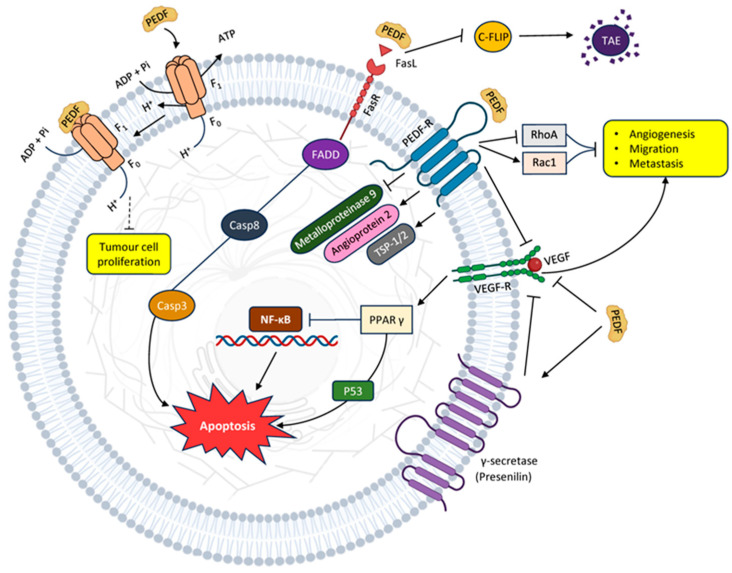 Figure 1
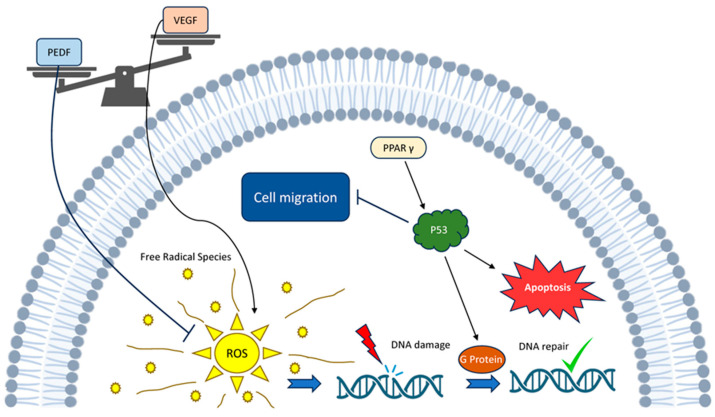 Figure 2
Peer Reviews
No public reviews on file for this paper yet. If you reviewed it on a platform where reviews are public (OpenReview, ICLR, NeurIPS, ICML), you can paste yours below so the community can read it here.
Videos
No videos yet. Explain this paper in a talk, walkthrough, or lecture? Add one.
Taxonomy
TopicsEconomic and Social Development · Regional Development and Innovation