
TL;DR
This paper explores how a deficiency in SynCAM1 in certain brain cells contributes to cognitive issues in newborns exposed to sevoflurane.
Contribution
It identifies SynCAM1's role in cognitive impairment linked to anesthetic exposure in neonates.
Findings
SynCAM1 deficiency in parvalbumin interneurons is linked to cognitive impairment.
Sevoflurane exposure exacerbates this issue in neonatal hippocampus.
The study highlights a potential target for mitigating anesthetic-related cognitive effects.
Abstract
The cover image is based on the Original Article SynCAM1 deficiency in the hippocampal parvalbumin interneurons contributes to sevoflurane‐induced cognitive impairment in neonatal by Ming‐ming Zhao et al., https://doi.org/10.1111/cns.14554.
Genes, proteins, chemicals, diseases, species, mutations and cell lines named across the full text — each resolved to its canonical identifier and authoritative record.
Click any figure to enlarge with its caption.
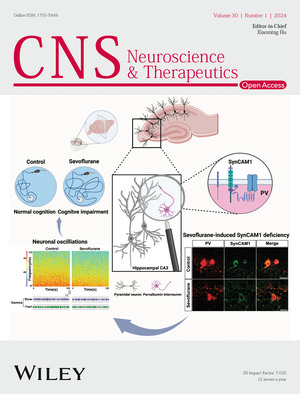 Figure 1
Peer Reviews
No public reviews on file for this paper yet. If you reviewed it on a platform where reviews are public (OpenReview, ICLR, NeurIPS, ICML), you can paste yours below so the community can read it here.
Videos
No videos yet. Explain this paper in a talk, walkthrough, or lecture? Add one.
Taxonomy
TopicsAnesthesia and Neurotoxicity Research