Prediction of Coupled Electronic and Phononic Ferroelectricity in Strained 2D h-NbN: First-principles Theoretical Analysis
Anuja Chanana, Umesh V. Waghmare

TL;DR
This paper predicts coexisting ferroelectric and semi-metallic states in strained 2D h-NbN using first-principles calculations, revealing hysteretic polarization switching and Dirac semi-metallic states, with implications for novel electronic devices.
Contribution
It introduces a first-principles analysis of coupled electronic and phononic ferroelectricity in 2D h-NbN, demonstrating strain-induced multi-state polarization switching and Dirac states, a novel insight in 2D ferroelectrics.
Findings
Hysteretic polarization response at 4.85% strain
Three-state polarization switching including Dirac semi-metallic states
Electronic ferroelectricity driven by high polarizability and electron-phonon coupling
Abstract
Using first-principles density functional theoretical analysis, we predict coexisting ferroelectric and semi-metallic states in two-dimensional monolayer of h-NbN subjected to electric field and in-plane strain (). At strains close to =4.85%, where its out-of-plane spontaneous polarization changes sign without inverting the structure, we demonstrate a hysteretic response of its structure and polarization to electric field, and uncover a three-state (P=PPo, 0) switching during which h-NbN passes through Dirac semi-metallic states. With first-principles evidence for a combination of electronic and phononic ferroelectricity, we present a simple model that captures the energetics of coupled electronic and structural polarization, and show that electronic ferroelectricity arises in a material which is highly polarizable (small bandgap) and exhibits a large…
Click any figure to enlarge with its caption.
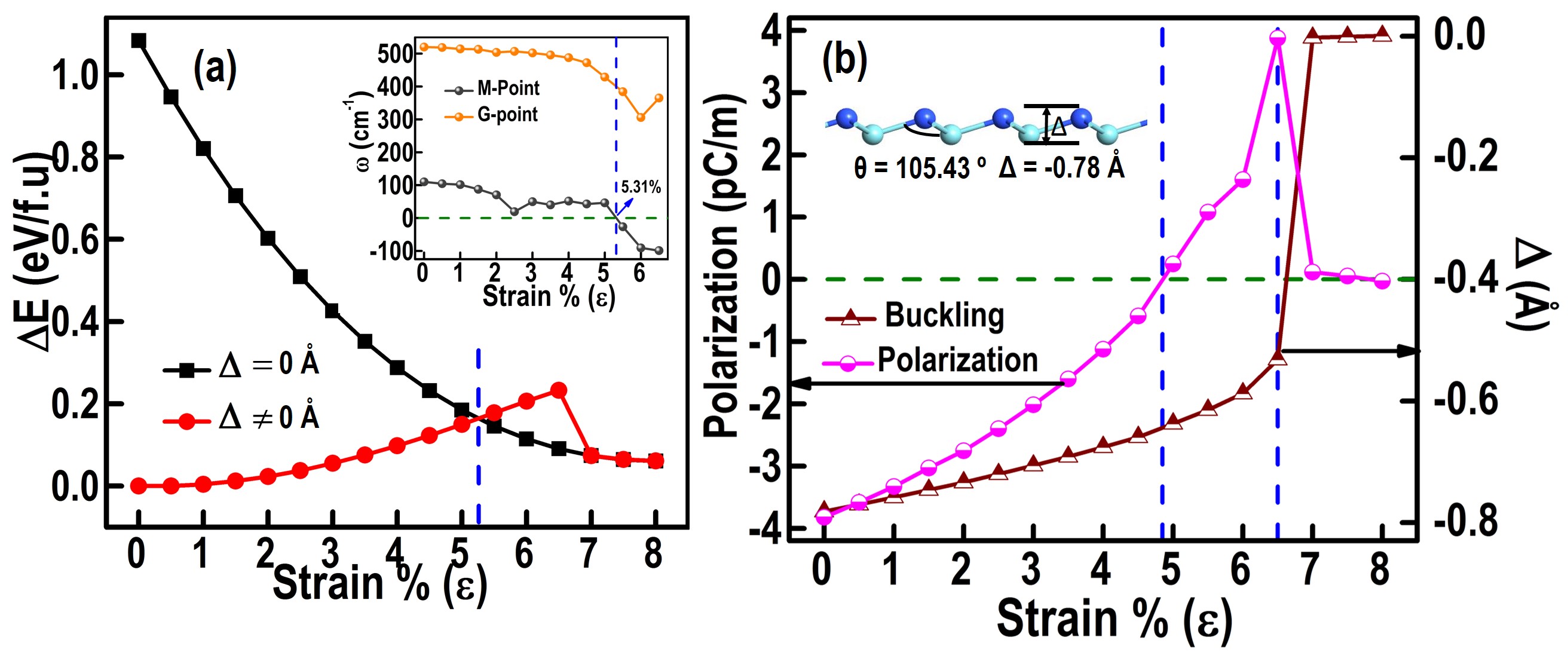 Figure 1
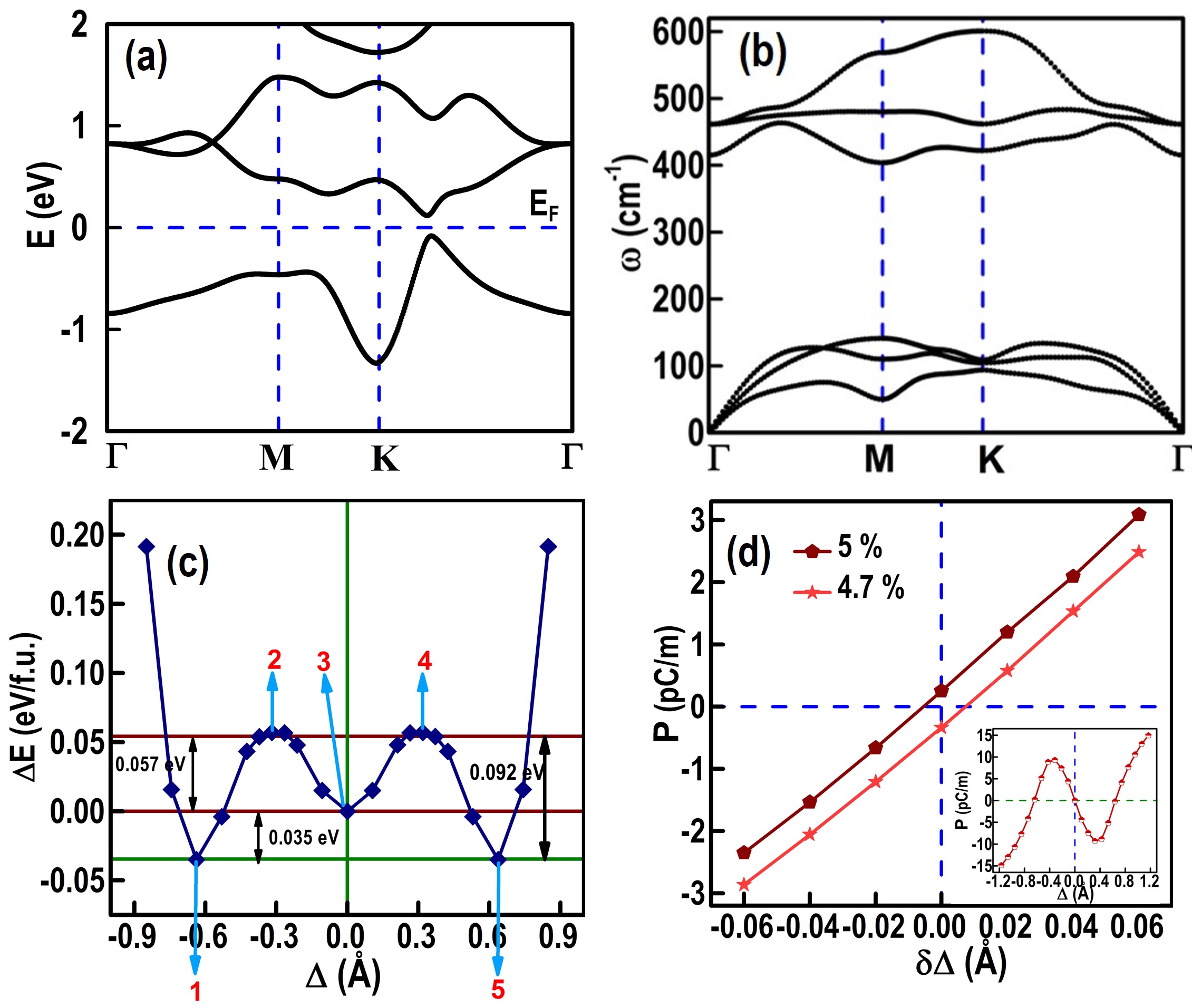 Figure 2
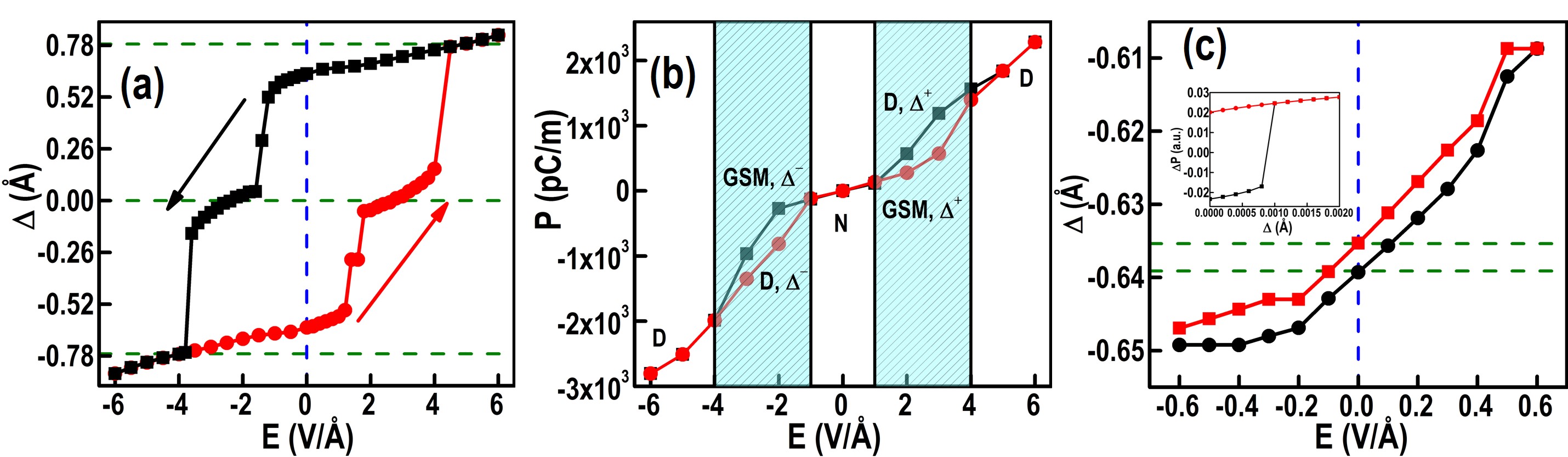 Figure 3
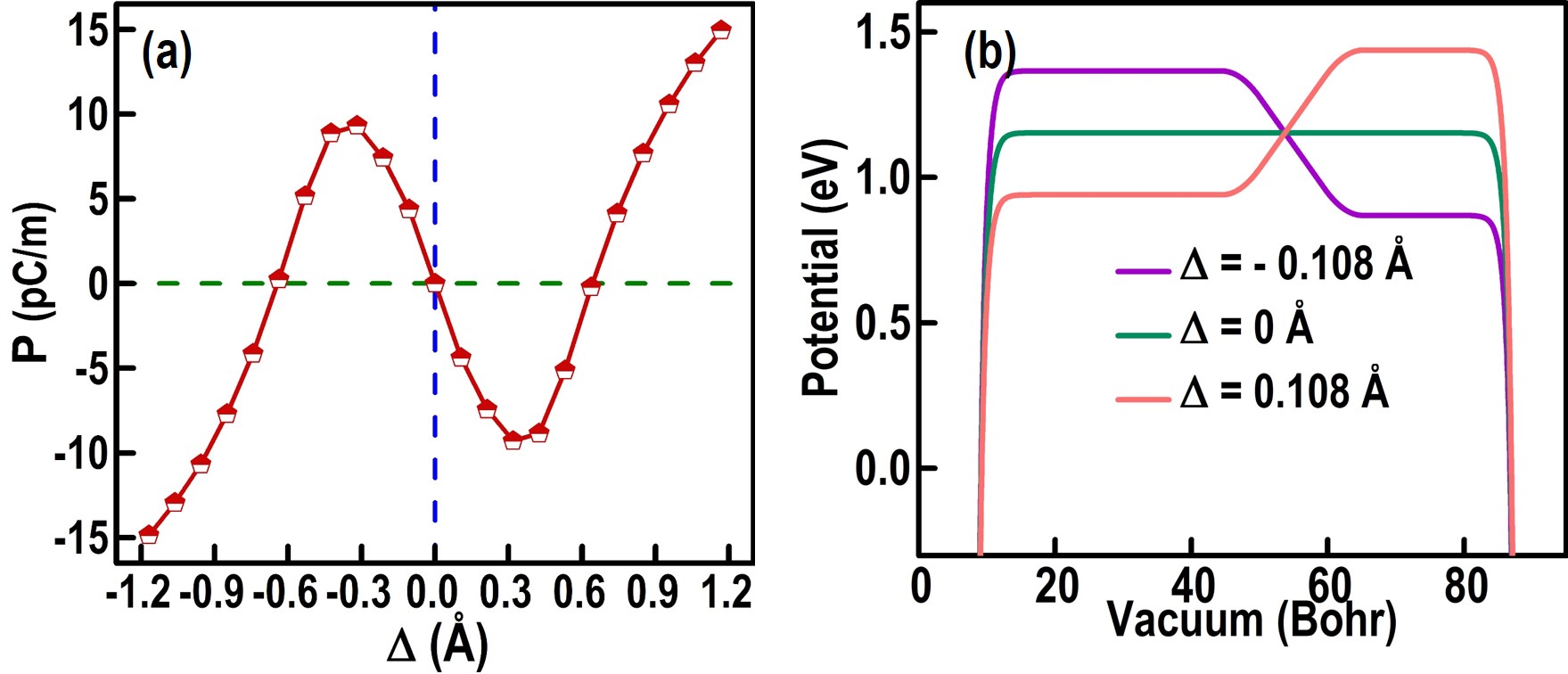 Figure 10
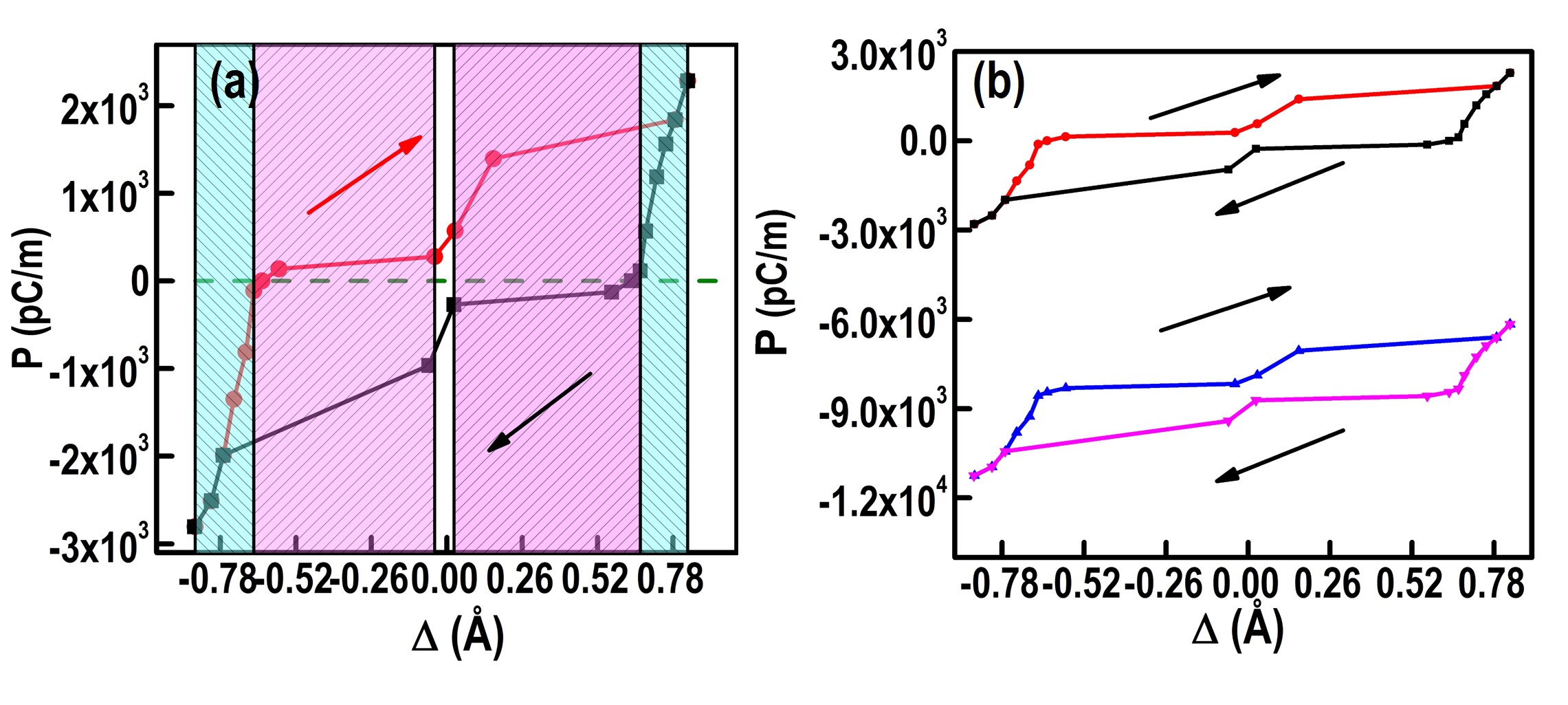 Figure 11
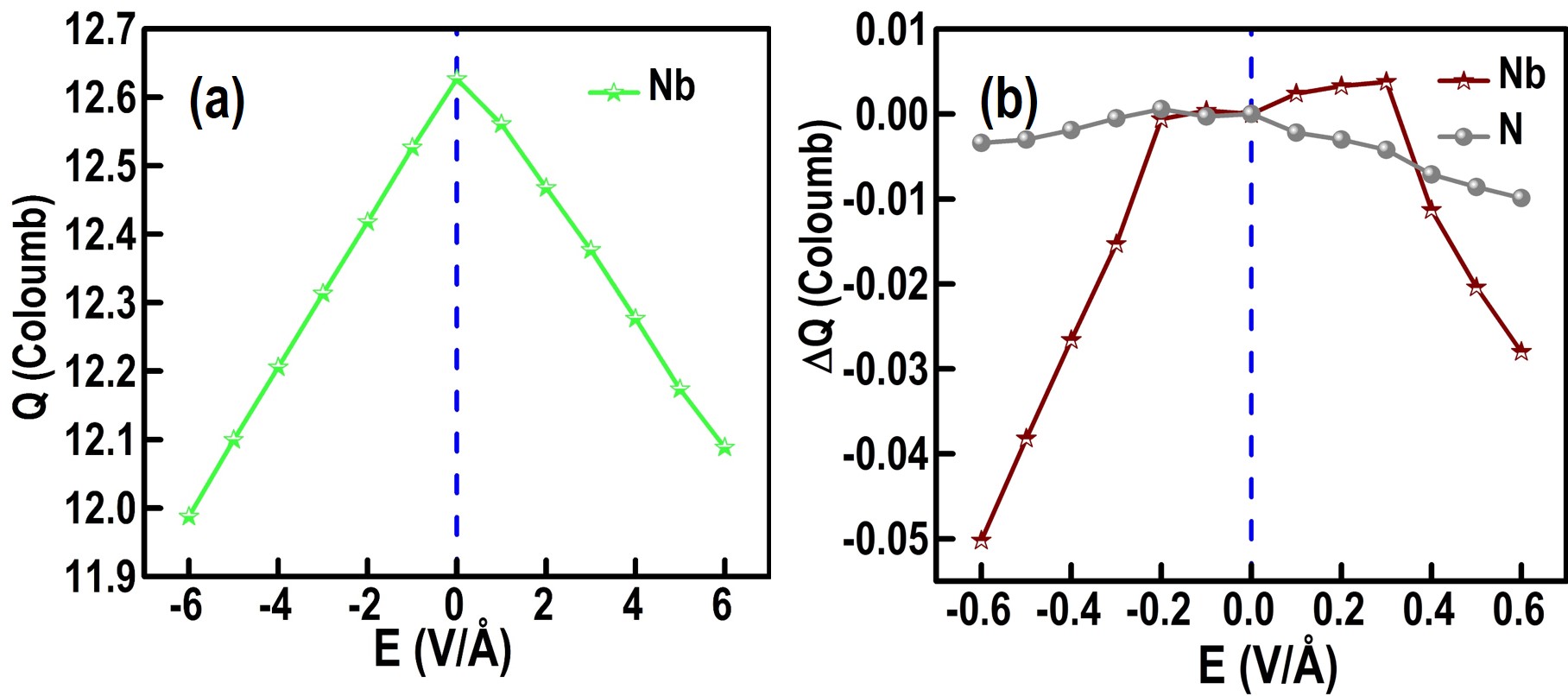 Figure 12
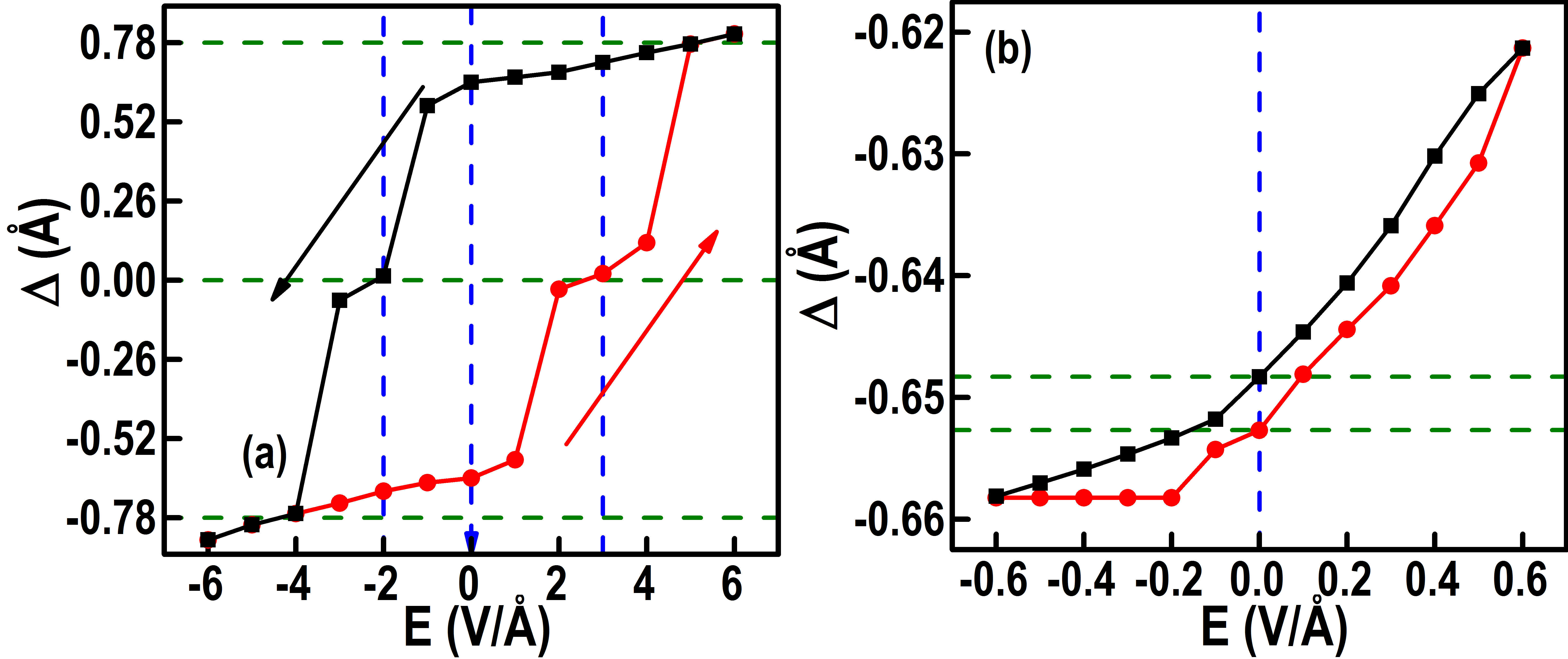 Figure 13
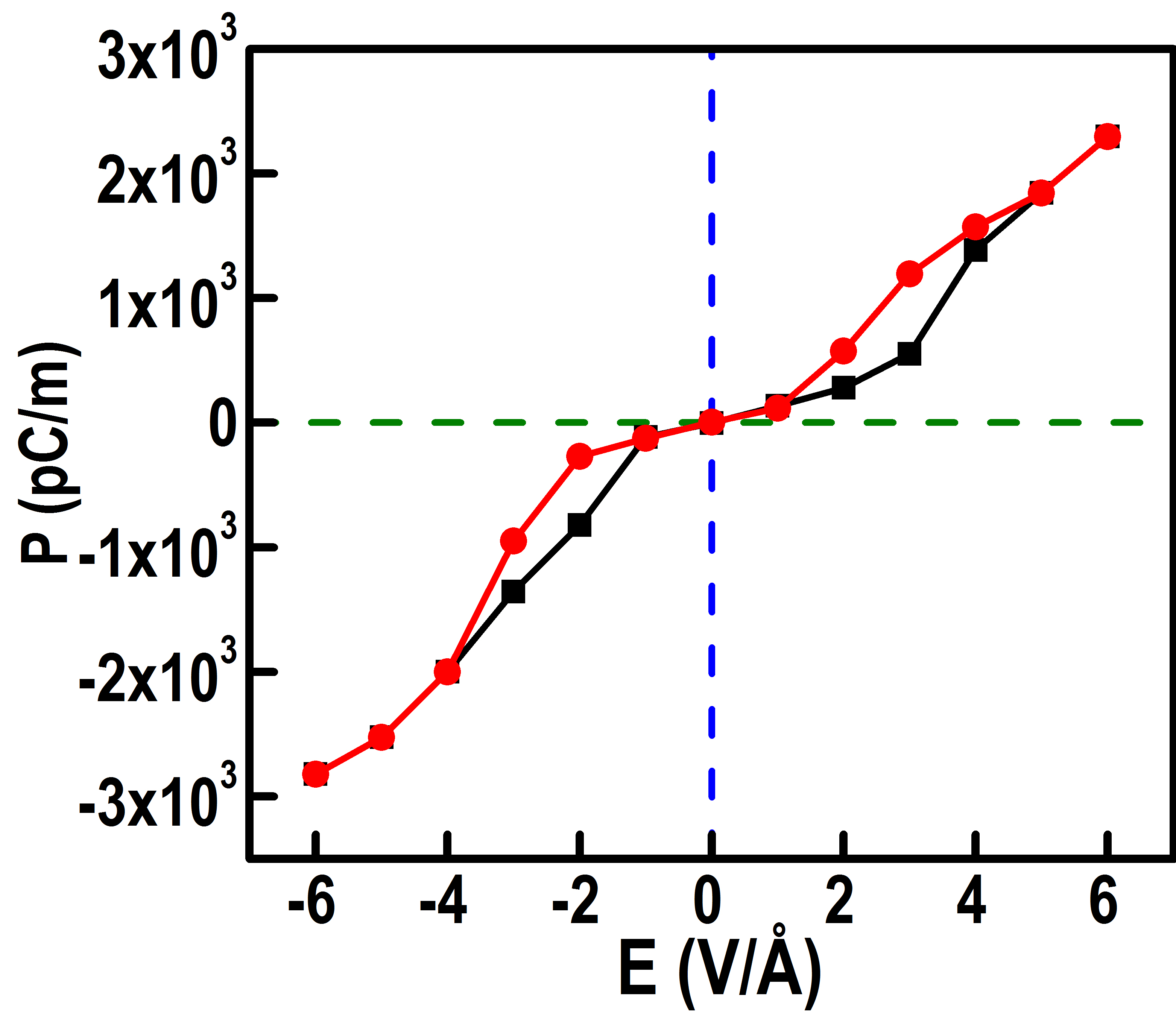 Figure 14
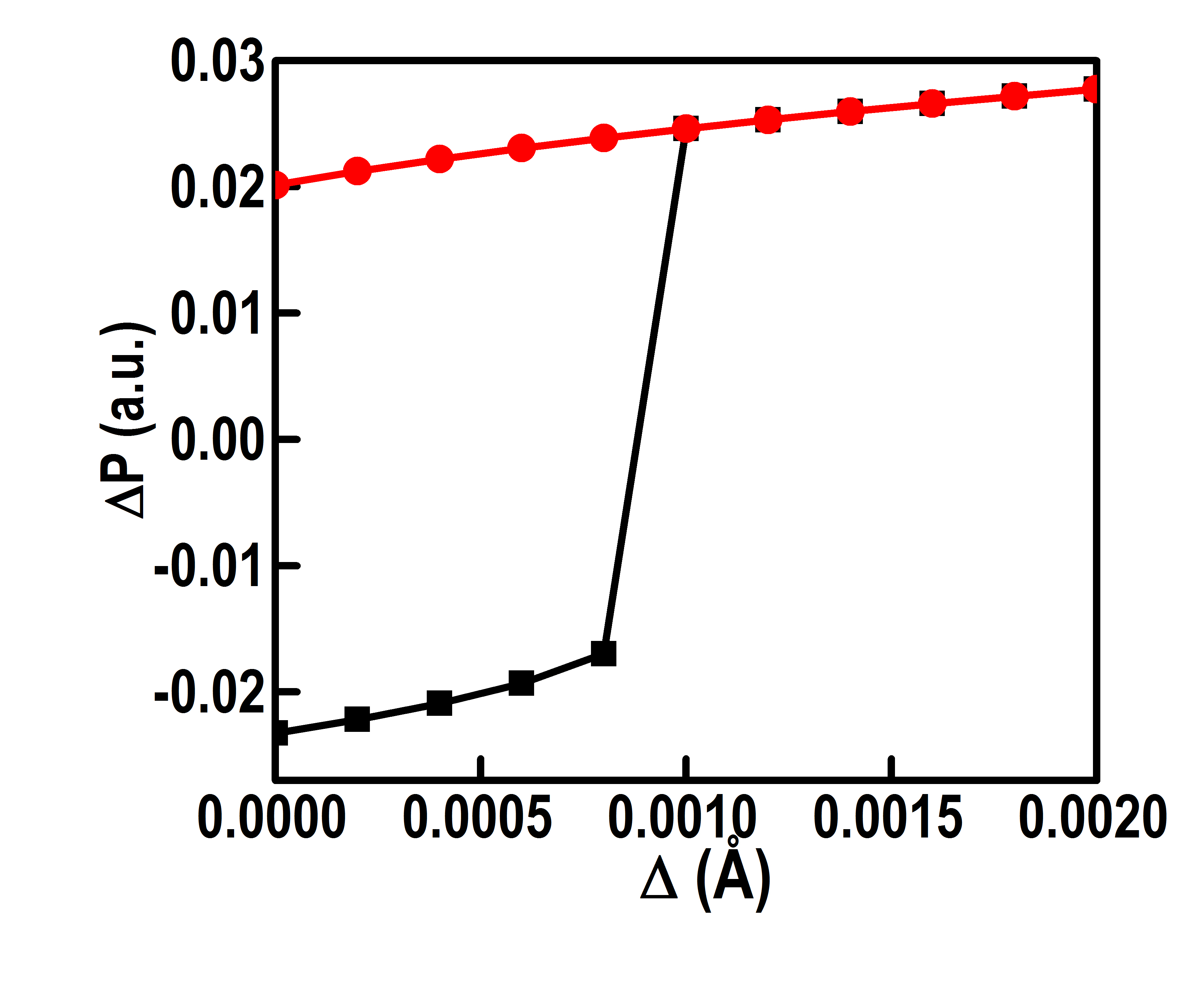 Figure 15
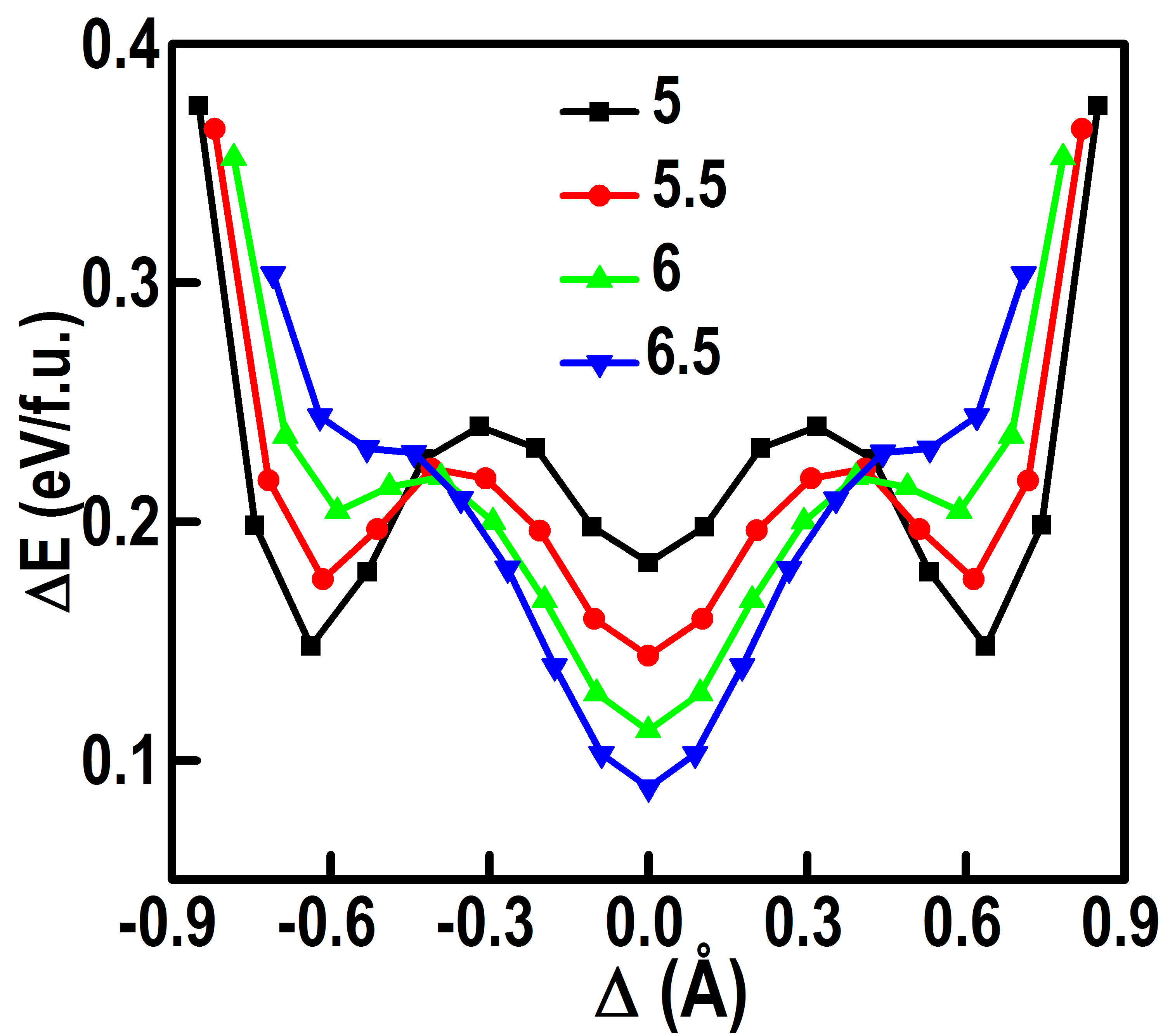 Figure 1
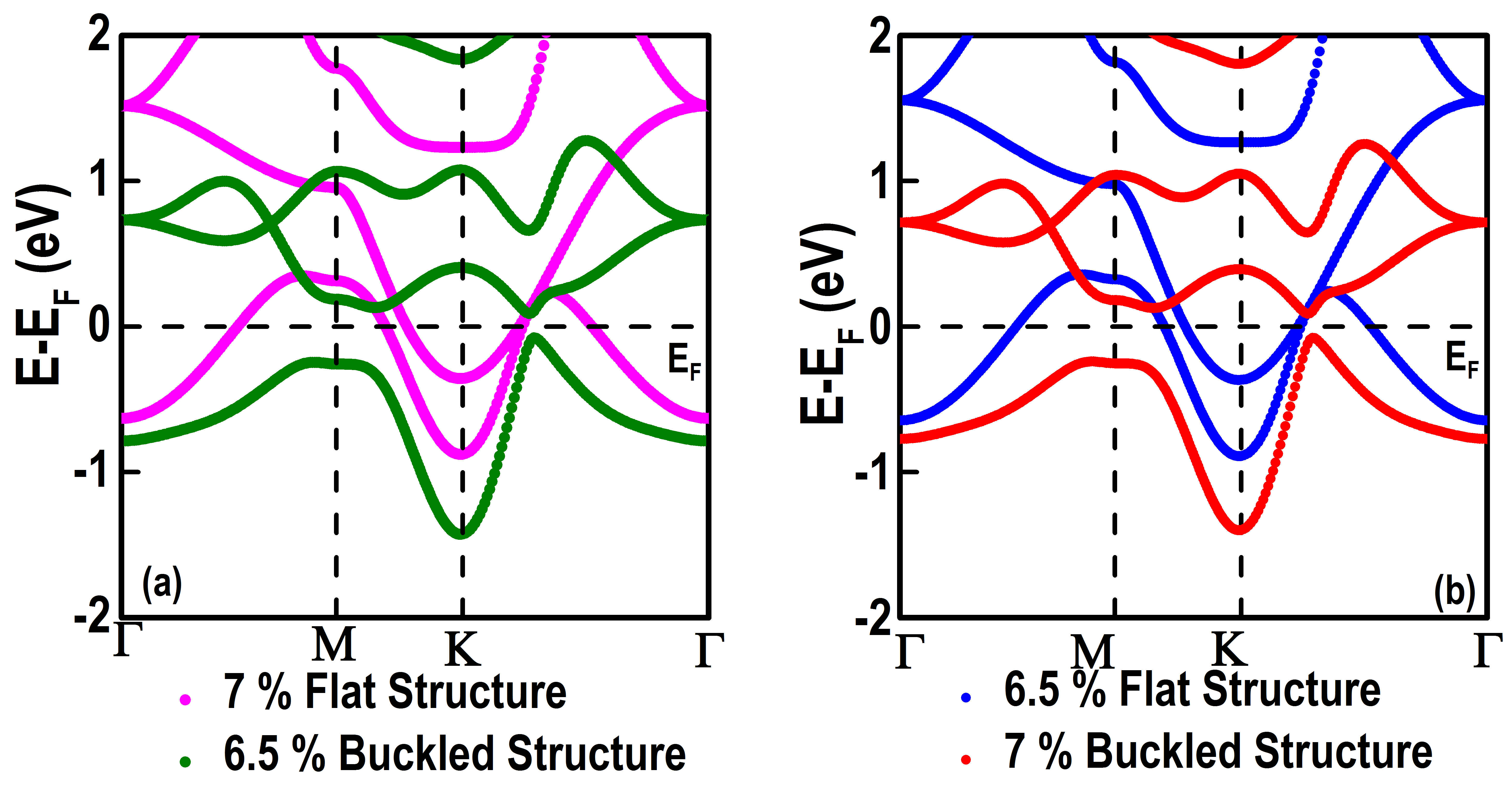 Figure 2
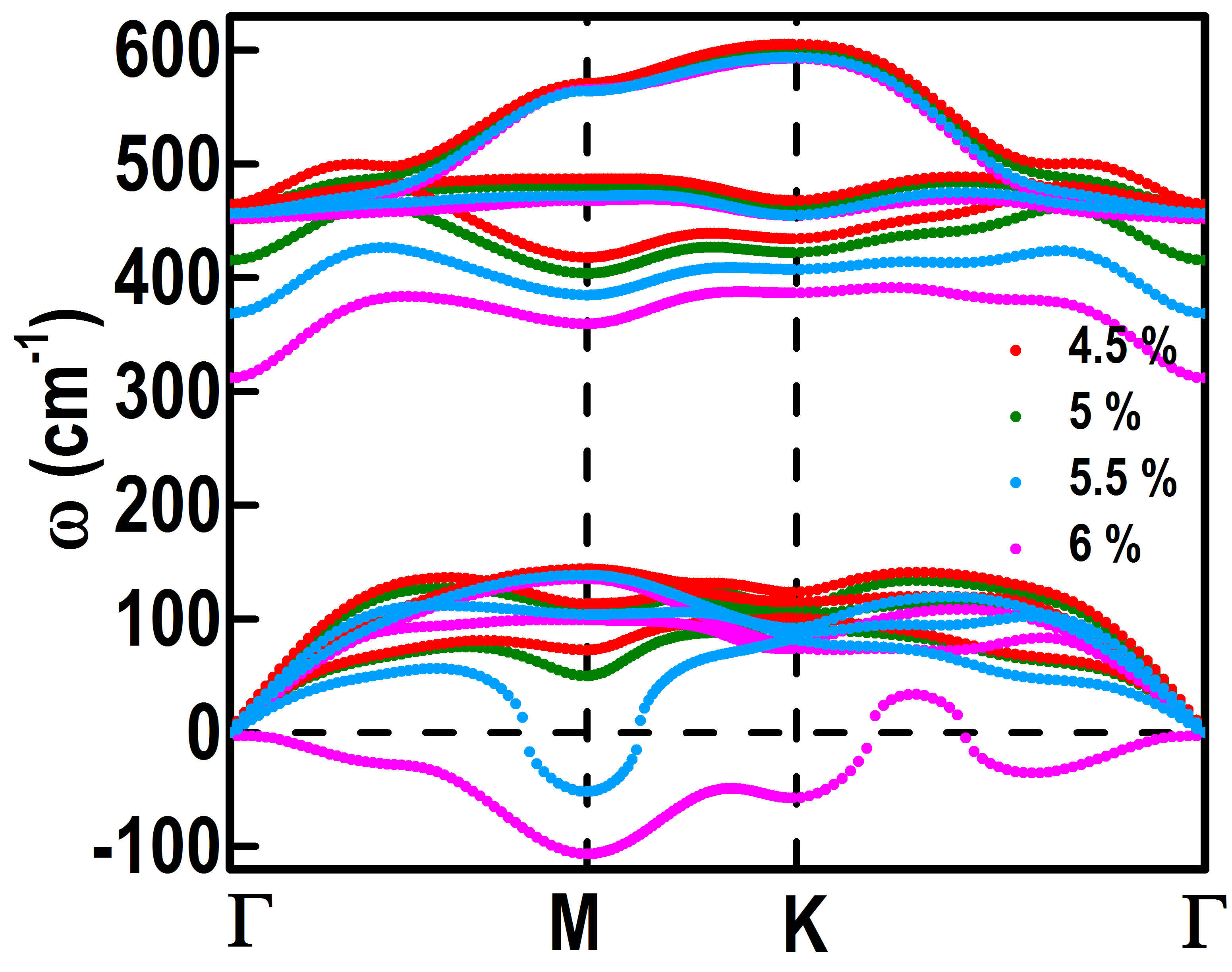 Figure 3
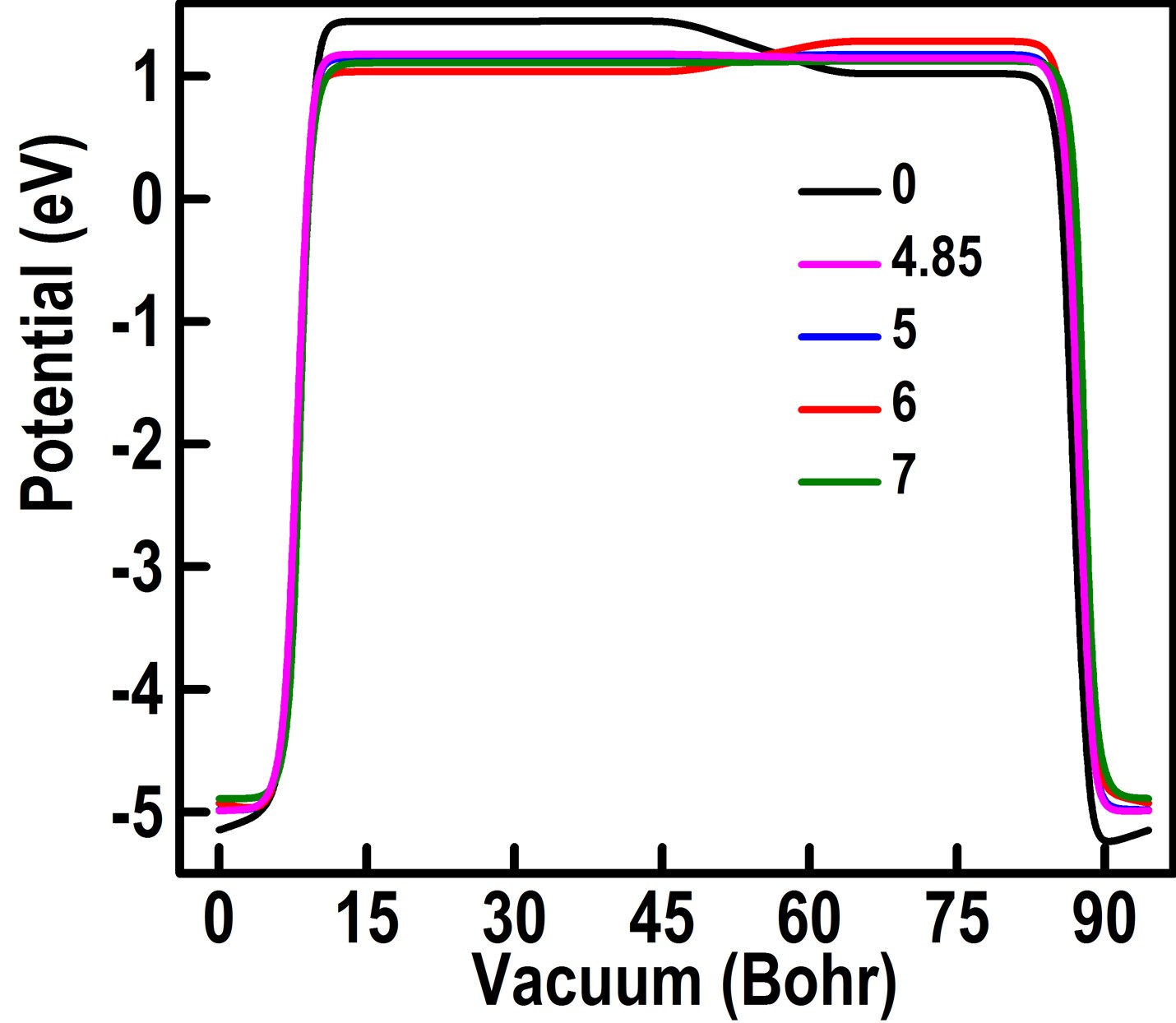 Figure 4
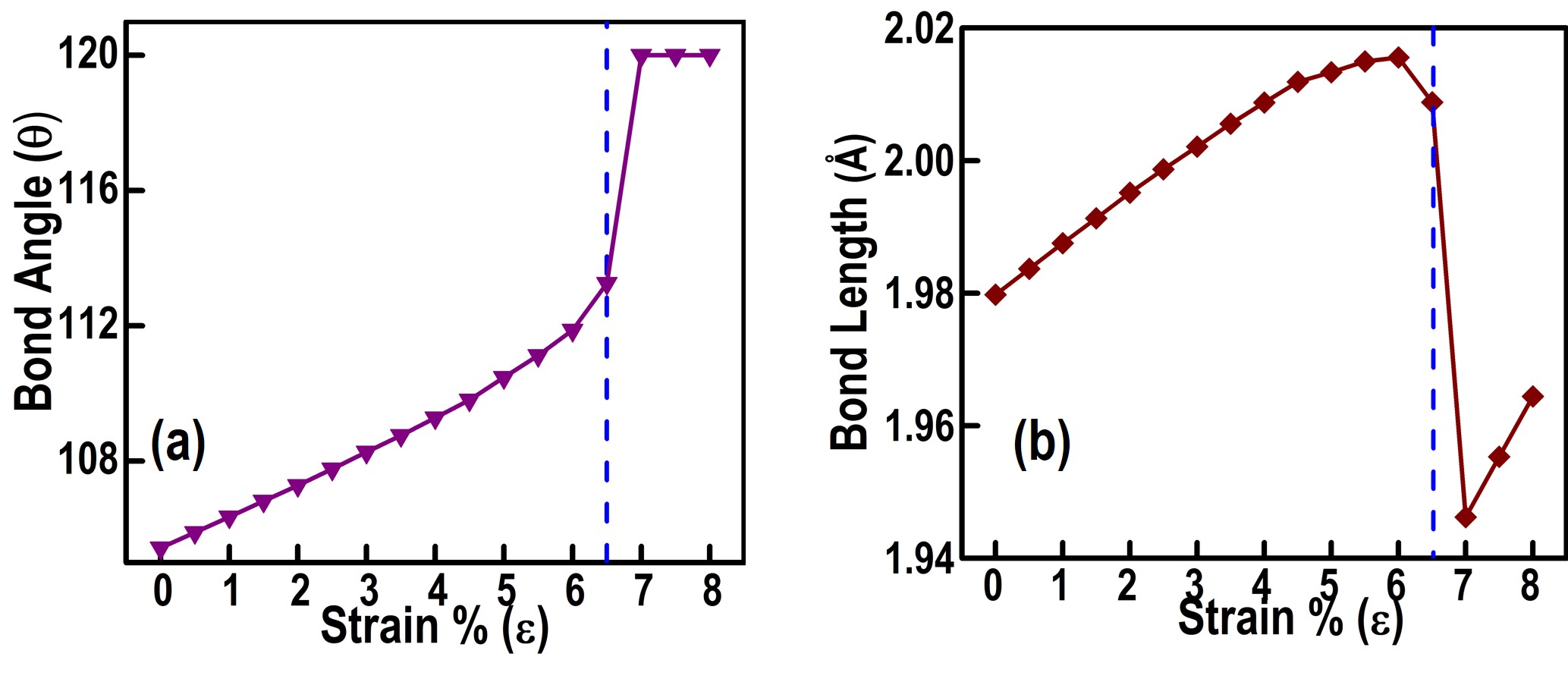 Figure 5
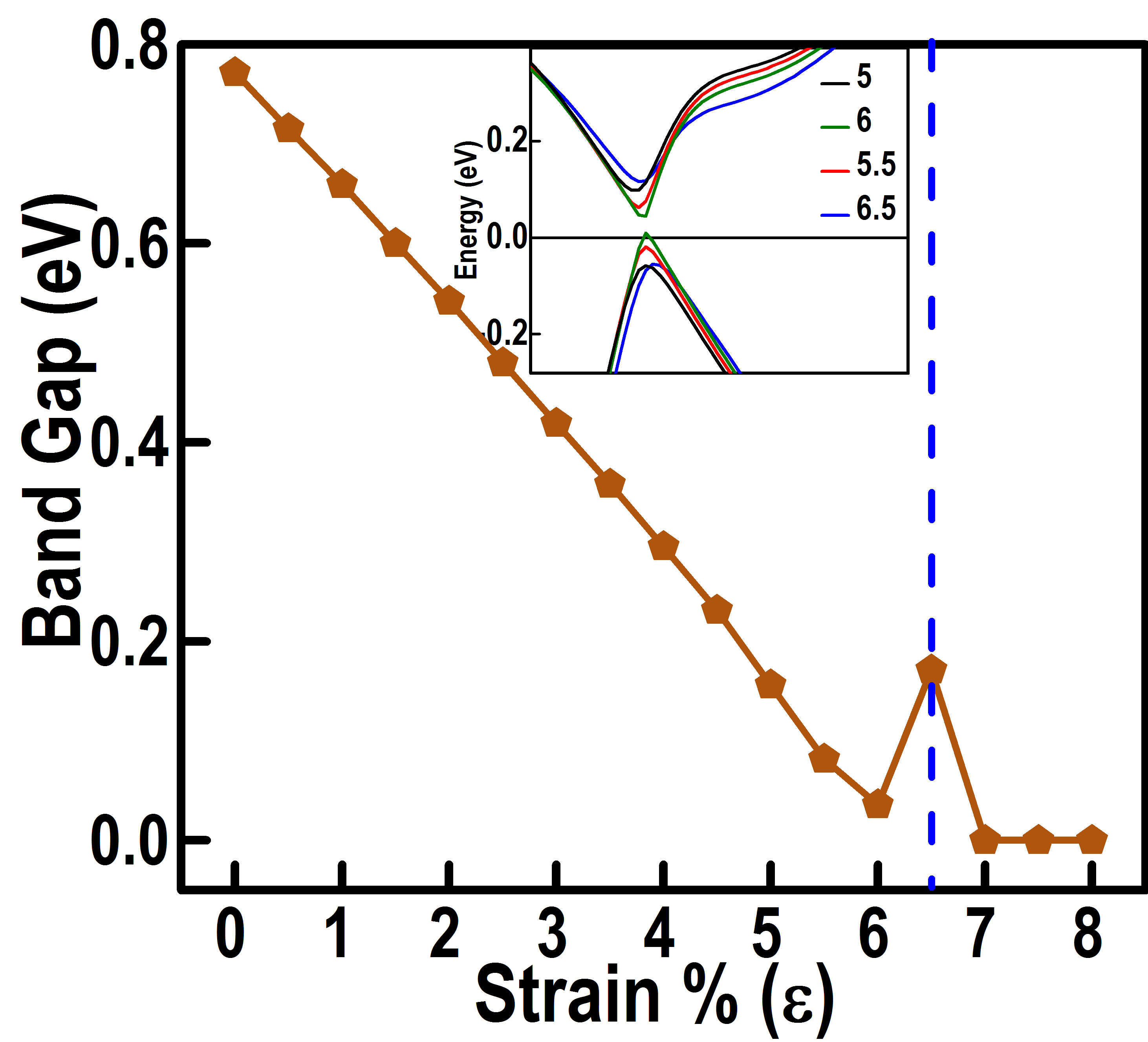 Figure 6
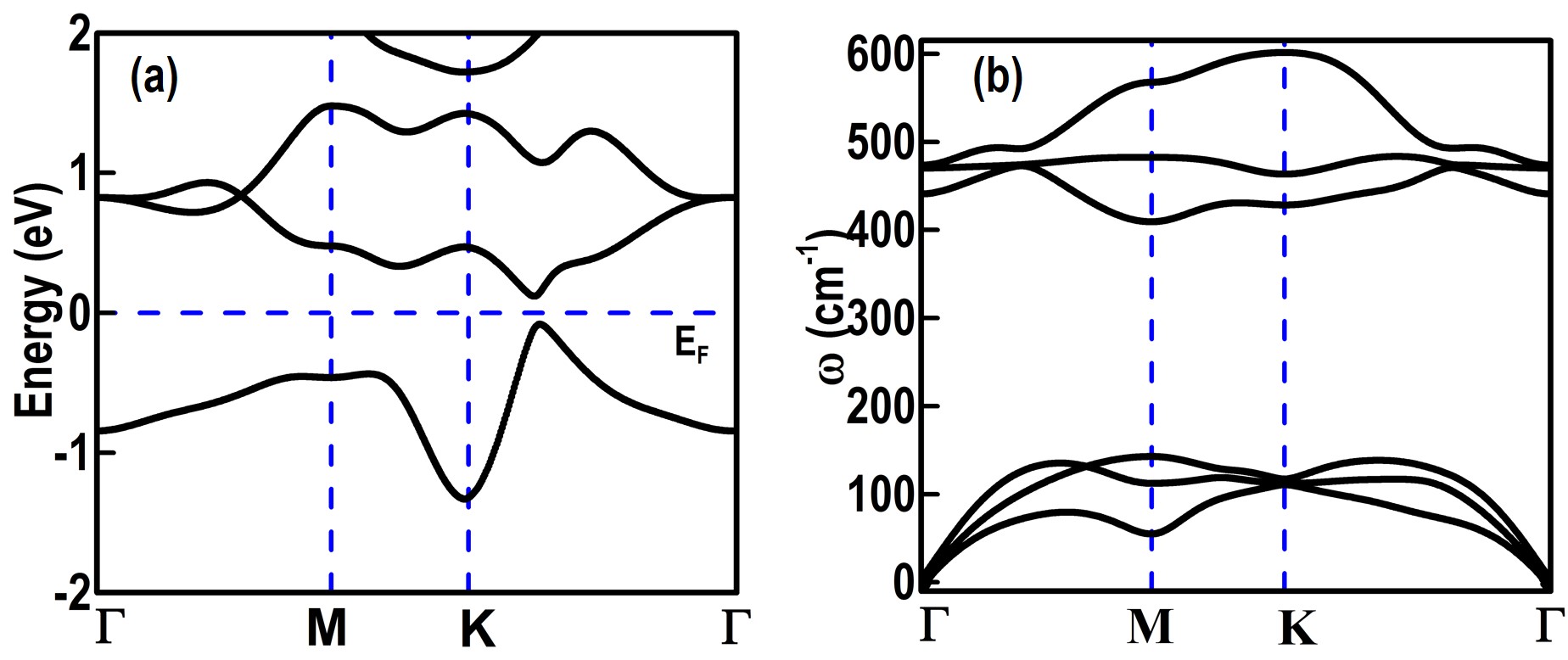 Figure 7
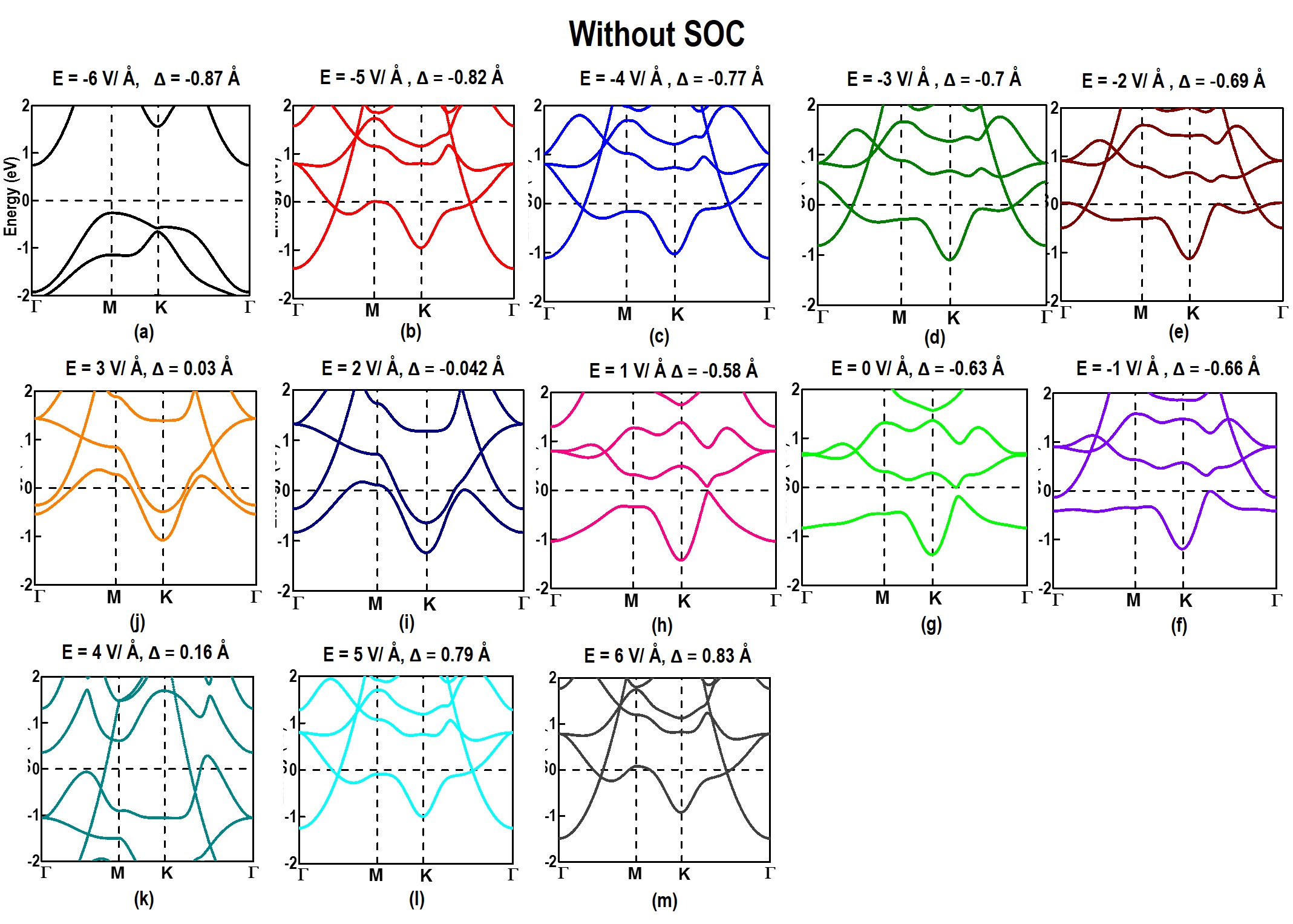 Figure 8
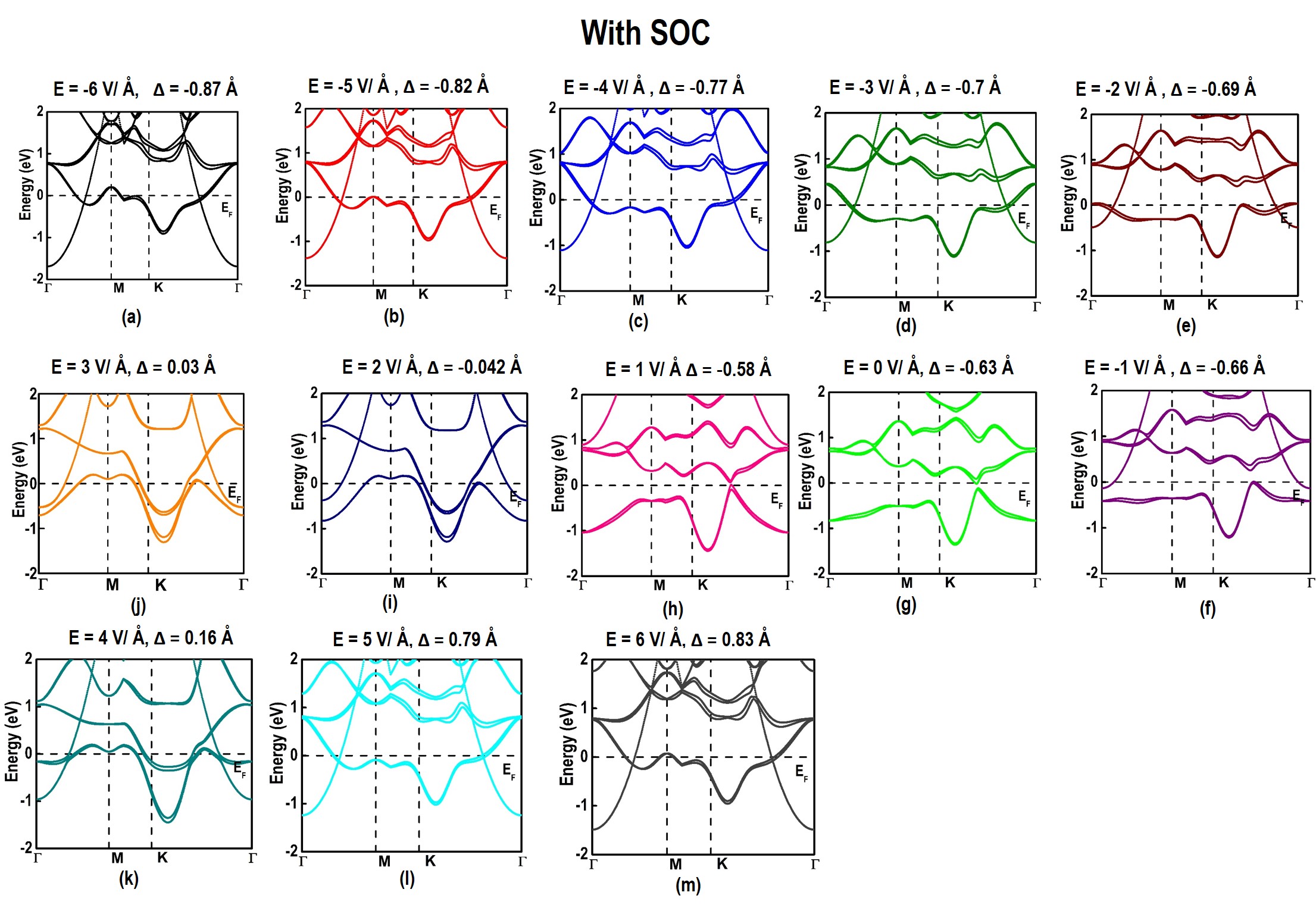 Figure 9
Peer Reviews
No public reviews on file for this paper yet. If you reviewed it on a platform where reviews are public (OpenReview, ICLR, NeurIPS, ICML), you can paste yours below so the community can read it here.
Videos
No videos yet. Explain this paper in a talk, walkthrough, or lecture? Add one.
Prediction of Coupled Electronic and Phononic Ferroelectricity in Strained 2D h-NbN: First-principles Theoretical Analysis
Anuja Chanana and Umesh V. Waghmare
Theoretical Sciences Unit, School of Advanced Materials and Sheikh Saqr Laboratory, Jawaharlal Nehru Centre for Advanced Scientific Research, Bangalore 560064, India
Abstract
Using first-principles density functional theoretical analysis, we predict coexisting ferroelectric and semi-metallic states in two-dimensional monolayer of h-NbN subjected to electric field and in-plane strain (). At strains close to =4.85%, where its out-of-plane spontaneous polarization changes sign without inverting the structure, we demonstrate a hysteretic response of its structure and polarization to electric field, and uncover a three-state (P=Po, 0) switching during which h-NbN passes through Dirac semi-metallic states. With first-principles evidence for a combination of electronic and phononic ferroelectricity, we present a simple model that captures the energetics of coupled electronic and structural polarization, and show that electronic ferroelectricity arises in a material which is highly polarizable (small bandgap) and exhibits a large electron-phonon coupling leading to anomalous dynamical charges. These insights will guide search for electronic ferroelectrics, and our results on 2D h-NbN will stimulate development of piezo-field effect transistors and devices based on the multi-level logic.
pacs:
The symmetry of a crystalline material governs its functional properties. As a consequence of broken inversion symmetry, ferroelectric insulators exhibit spontaneous polarization that responds nonlinearly to external stress or electric fields. Ferroelectric polar order in perovskite oxide films gets suppressed or changes to inhomogeneously polarized states with diminishing film thickness, making ferroelectricity in ultrathin films fundamentally interesting Junquera and Ghosez (2003); Fong et al. (2004); Gruverman et al. (2009); Lee et al. (2015); Shukla and Mukhopadhyay (2016). Recent development of a number of 2D materials has opened up new paradigm to address fundamental size limits on ferroelectricity. For example, improper ferroelectricity with out-of-plane polarization was predicted to emerge at a metal-semiconductor transition in 2D MoS2 Shirodkar and Waghmare (2014). On the other hand, ferroelectricity, with in-plane polarization has been shown to be stable in a number of 2D materials, like phosphorene Wu and Zeng (2016) and related Group V monolayers Xiao et al. (2018), SnTe Chang et al. (2016) and other Group-IV monochalcogenides Fei et al. (2016); Wan et al. (2017), -GeSe Guan et al. (2018), SbN and BiP Liu et al. (2018) and GaTeCl Zhang and Liu (2018). Recently, out-of-plane ferroelectric order was predicted in AgBiP2Se6 Xu et al. (2017) and In2Se3 Ding et al. (2017). Ferroelectricity in these 2D materials arises mostly from phonons, except in MoS2, where strongly coupled electrons and phonons are involved Shirodkar and Waghmare (2014).
Electronic ferroelectricity in 3D crystals is relatively rare Kobayashi et al. (2012), and yet to be explored in 2D materials. Many 2D materials exhibit a small electronic band-gap and a variety of centrosymmetric and non-centrosymmetric structures. Recently, 2D polymorphs of monolayered Niobium Nitride, s-NbN and h-NbN were predicted theoretically based on first-principles calculations Anand et al. (2016). While s-NbN is metallic and retains the superconducting properties of bulk NbN at low T, h-NbN is a piezoelectric semiconductor manifesting a rare sd2-sp2 hybridization with an electronic structure that is similar to that of monolayered MoS2. Structure of h-NbN is non-centrosymmetric, and it exhibits an out-of-plane polarization due to buckled structure (Nb and N atoms are in distinct planes). However, its polarization is not readily switchable with electric field as the buckling is too large. Piezoelectric coupling of h-NbN Anand et al. (2016) means that its polar buckling can be reduced with strain, and ferroelectricity could be practically achievable with in-plane strain. Secondly, the unusual hybridization in its electronic structure makes h-NbN a promising material to host electronic ferroelectricity.
In this letter, we present the exploration of ferroelectricity in monolayered h-NbN subjected to in-plane lattice strain (xx=yy=) using first-principles density functional theoretical analysis of electronic, structural and vibrational properties, polarization and associated potential discontinuity. We show that strained h-NbN is locally stable upto =5.3%, beyond which it yields to a cell doubling instability, and transforms to the planar structure with vanishing buckling (=-) for \epsilon$$\geqslant6.5%. Spontaneous polarization of h-NbN changes its sign at =4.85% without undergoing structural inversion (a change in the sign of ). Thus, the window of strain (4.85-5.3)% is rather interesting for ferroelectricity originating from electrons and phonons. We demonstrate electric field driven polarization switching in h-NbN at =5%, and present a simple model to capture the physics of its strongly coupled electronic and phononic ferroelectricity.
Our first-principles calculations are based on Density Functional Theory (DFT) within a generalized gradient approximation (GGA) Perdew et al. (1996) of the exchange-correlation energy with a functional parametrized by Perdew-Wang Perdew and Wang (1986), as implemented in Quantum Espresso package Giannozzi et al. (2009). Vanderbilt ultrasoft scalar relativistic pseudopotentials have been used to describe the interaction between ionic cores and valence electrons Vanderbilt (1990). We represent the electronic wave functions with a plane wave basis truncated at an energy cut-off of 40 Ry. Similarly, charge density is represented in the basis set truncated at energy cut-off of 400 Ry. A uniform mesh of 20x20x1 k-points was used for sampling Brillouin zone integrations. We relax each structure using Hellman-Feynman forces and Broyden Fletcher Goldfarb Shenno (BFGS) scheme till the force on each atom is less than 10*-3* Ry/Bohr. Fermi-Dirac distribution with a width of kBT=0.005 Ry is used for smearing occupation of numbers of electronic states. We use a large vacuum (thickness of 50Å) along the z-direction to ensure weak interactions between the periodic images of the monolayer. Dynamical matrices are calculated using Density Functional Perturbation Theory (DFPT) at wave vectors (q) on a mesh of 6x6x1 in the BZ, and Fourier interpolated to obtain phonon dispersion. We used finer mesh of q points in estimation of the electron-phonon couplings. We determine spontaneous polarization using Berry phase method King-Smith and Vanderbilt (1993). Using a vacuum thickness of 50Å and including dipole corrections to eliminate the effects of polar field arising from the continuity and periodicity of electrostatic potential, we check the validity of our results. To simulate the response of h-NbN to electric field, we add a saw-tooth potential as a function of z, and simulated effects of electric field varying from -0.6 to 0.6V/Å in the intervals of 0.1V/Å, and from -6 to 6V/Å in the intervals of 1V/Å . To simulate hysteresis, we monotonously increase or decrease electric field in these steps, and use the relaxed structure from the previous step as the initial structure during structural relaxation at each field.
From the energies of buckled and planar (=0Å ) structures of h-NbN (Fig. 1(a)) as a function of , we find that the energy of the planar structure decreases with tensile , and has a minimum energy at =8%. On the other hand, the energy of buckled structure increases upto =6.5% and drops sharply beyond that, transforming spontaneously to the planar structure (see Fig. S1: where the planar structure has an energy lower than the buckled structure at \epsilon$$\textgreater5%; while there is an energy barrier that separates the two upto \epsilon$$\doteq6.5%). The two energy curves of buckled and planar structures intersect at =5.26% corresponding to a lattice constant of 3.32Å marking a transition from buckled to the planar structure. To study the structural transition at >6.5% from buckled to planar structure, we analyze their electronic structures (see Fig. S2) at =6.5% and =7% by interchanging their lattice constants, but maintaining the buckling, and find that the structural transition is due to change in the buckling of the h-NbN structure. The electronic structures of the original structure and the structure with interchanged lattice constants are shown in Fig. S2.
To analyze the dynamical stability of strained h-NbN, we determine its phonon spectrum. From of the zone center optical mode and M-point acoustic modes of h-NbN as a function of (see inset of Fig. 1(a)), we see that frequencies reduce with tensile strain and drop sharply for \epsilon$$>5%, M-point mode becoming unstable at \epsilon$$\geq5.3% (see Fig. S3). In the phonon dispersion of h-NbN at from 5%-6.5% (Fig. S3), we note that the lowest frequency branches of acoustic and optical modes shift downwards with , with frequency at M-point becoming negative for >5.3%. We find that the spontaneous polarization of buckled h-NbN depends strongly on (see Fig. 1(b)): it increases upto =6.5% and drops sharply to 0 pC/m from =7%-8%, confirming its transformation from buckled to planar structure. Most notably, polarization changes its sign (indicated by a blue dashed line in Fig. 1(d)) at =4.85%, and a corresponding change is seen in the macroscopic average potential (see Fig. S4), while retains its sign, i.e. P switches its sign without inversion of h-NbN structure. This is the first hint to possible electronic ferroelectricity in h-NbN. Secondly, a rather small value of P (0.248 pC/m in comparison with the polarization of other 2D materials Wu and Zeng (2016); Xiao et al. (2018); Chang et al. (2016); Fei et al. (2016); Wan et al. (2017); Guan et al. (2018); Liu et al. (2018); Zhang and Liu (2018); Xu et al. (2017); Ding et al. (2017)) inspite of significant structural polarity evident in large buckling (-0.637Å) suggests that electronic polarization may be strongly cancelling the ionic polarization. In the strain window [4.7%-5.31%], where the spontaneous polarization switches direction and the structural stability is maintained, we choose h-NbN strained at =5% for exploration of its ferroelectricity. The strongly buckled structure of h-NbN makes it capable of sustaining large in-plane strain.
We begin by examining the electronic and vibrational structure of h-NbN at =5%. It has a direct band gap of 0.16eV along the K path (see Fig. 2(a)), noticeably lower than that of unstrained h-NbN (0.77eV) Anand et al. (2016). Its phonon dispersion (Fig. 2(b)) exhibits no unstable modes, establishing its dynamical stability. Its optical and acoustic phonon bands are well separated by a gap of 262 cm*-1*, a bit narrower than that of unstrained h-NbN (300 cm*-1*) Anand et al. (2016). Electronic and vibrational structure of h-NbN at =4.7% (see Fig. S7) are similar, with a direct electronic bandgap of 0.2 eV and a vibrational gap of 267 cm*-1*. Energy of h-NbN at =5% as a function of buckling has a shape of a triple-well (see Fig. 2(c)). The two valleys denoted by 1 and 5 correspond to energy minima of its ferroelectric states with opposite P. The transition states (2 and 4) are unstable, and give the energy barrier to be crossed during homogeneous switching of P. The 3rd valley at =0 Å corresponds to its planar structure. Buckling and energetics of triple-well potential of h-NbN at =4.7% and =5% are similar (see Table S1), and comparable to the energy barriers of other 2D materials. While the buckling is quite large ( -0.63 and -0.65 Å ) in h-NbN (at both =5% and 4.7%), its polarization see Fig. 2(d) (i) is quite small, and (ii) has a sign that is switchable with both strain () and buckling (). Since the energy profile of h-NbN describes a triple-well potential, we expect an unconventional switching of its structure.
We simulated the response of h-NbN at =5% to electric field (E) applied perpendicular to its plane. We start with E=-6V/Å and relax the structure with (-)=-0.637Å, and gradually increase E in steps of 1V/Å. We find a nonlinearity in (E), with a two-step switching (see Fig. 3(a)). Buckling (red curve) increases in magnitude as E increases (red arrow), with first switch from =-0.55Å to -0.053Å at E 1.2V/Å to 1.8V/Å, followed by the second switch from =0.16 Å to 0.76Å at E 4V/Å to 4.2V/Å. Along the reversed path (black arrow) starting with E=6V/Å, we see that the magnitude of buckling increases (black curve) linearly first. Here as well, we find a two-step switching in (E): first from =0.52Å to 0.046Å at E -1.2V/Å to -1.6V/Å and the second switch from =-0.166Å to -0.76Å at E -3.6V/Å to -3.8V/Å. At E=0V/Å, =-0.637Å (red curve) and 0.637Å (black curve), correspond to the equilibrium buckling at =5% (shown by vertical blue dashed lines). The structure at E (1.2,4.5)V/Å and E (-3.8,-1.2)V/Å corresponds to a nearly flat structure changing in response to electric field (vertical blue shaded regions).
We now discuss the correspondence between (Fig. 3(a) and Fig. 3(b)) polarization and buckling as a function of electric field. For electric fields E<-4V/Å and 5V/Å <E, polarization obtained along the two paths (red and black curves) coincide, similar to the corresponding buckling at these electric fields. For 1<|E|<4V/Å, we find a remarkable difference in P and in the electronic structure obtained along the two paths (two branches of the hysteresis curve). Along the forward path (red curve), it corresponds to =0Å , (the flat structure), with electronic structure consisting of non-crossing valence and conduction bands that overlap in energy (gapped semi-metallic state). Along the reversed path, 0.52Å, and its electronic structure is that of a Dirac semimetal (with Dirac like bands crossing from M and K ) (see Fig. S8). Thus, the two states of h-NbN at |E| (1,4)V/Å correspond to distinct electronic states (and buckling ), revealing that switching occurs between inverted states that have qualitatively different electronic structure. In the SI (Fig. S9), we show that the spin-orbit coupling results in spin-split bands, transforming the DSM into triple point semi-metallic state. Close examination of the electronic structure of such DSM/TSM shows that Dirac point involves spin split bands of h-NbN, and a parabolic band of free carriers in the "electrode" modeled with saw tooth potential. Thus we term this as an "extrinsic" DSM/TSM state of h-NbN as it depends on the electrode as well.
While the ferroelectric state of h-NbN is gapped, it passes through semi-metallic states while switching its polarization (see Fig. 3(b)), and this is possible because its sub-angstrom thickness is smaller than its screening length in metallic states, which permitting electric field induced switching, similar to metallic ferroelectrics Filippetti et al. (2016); Fei et al. (2018). Thus, ferroelectricity in h-NbN has strongly coupled electronic and phononic contributions. At E (-1V/Å , 1V/Å ), polarization is rather small (see inset of Fig. 3(c)), with in this range of electric field being 0.637Å , which is the buckling of h-NbN at =5%. Moreover, the electronic structure for E (-1V/Å , 1V/Å ) is similar to that of h-NbN at =5%. Such small magnitude of P is because the electronic and ionic contributions to P cancel each other rather effectively, and minimize the energy cost associated with depolarization field. We have resolved the ambiguity of polarization quantum, by ascertaining the P(=0)=0, using Berry phase technique as well as from the discontinuity in macroscopically averaged potentials (see Fig. S10). We note that electric fields used in our simulation are significantly higher (because they induce homogeneous switching at T=0K) than that are achievable in realistic devices. We expect heterogeneous nucleation of domains to be active and consequent switching to be possible at much lower electric fields in experimental verification of ferroelectricity in h-NbN.
To understand this, we simulated the response of h-NbN at =5% to smaller values of E (-0.6V/Å to 0.6V/Å ), and indeed see a weakly hysteretic response of buckling (see Fig. 3(c)) as a function of electric field. At 0V/Å, =-0.639Å (red curve) and -0.635Å (black curve), which bracket the buckling =-0.637Å at E=0. As the structure of h-NbN, remains in the close neighborhood of equilibrium structure (=-0.637Å ), this weak hysteresis is related to the switchable polarization shown in Fig. 2(d), and is driven primarily by electronic mechanism of ferroelectricity. Origin of electronic ferroelectric polarization can be traced to opposite changes in Lowdin charges of Nb and N in response to small electric fields (see Fig. S12(b)). We carried out a similar analysis of field-dependent hysteretic response of h-NbN at =4.7% to establish the robustness of our conclusions of electronic and phononic ferroelectricity in h-NbN (see Fig. S13 and S14).
We now present a simple model that captures the physics of coupled ferroelectric orders originating from electrons (Pe) and from phonons (Pi=Z.u, u=-0). Our model expresses energy per unit area of h-NbN (=5%) as a Taylor series expansion in these order parameters, with the ferroelectric ground state of h-NbN (with a non-zero buckling, 0) as the reference structure.
[TABLE]
where, A(>0) is the stiffness associated with electronic dipole, which is inversely proportional to electronic contribution to dielectric susceptibility (A\propto$$\frac{1}{\chi}), C is a quartic coefficient, K is the spring constant associated with change in buckling u=-0, Z is the Born charge, and is the dipolar electron-phonon coupling (EPC). We point out that the instability of electronic polarization is qualitatively unaffacted by the symmetry allowed terms in H (see Fig. S15). We first demonstrate the effect of electron-phonon coupling on the descriptors of ferroelectricity Kobayashi et al. (2012); Waghmare et al. (2003). Minimizing the energy with respect to electronic ferroelectric order, Pe, we get:
[TABLE]
where it is evident that the EPC leads to softening of phonon (reduction in K), and renormalization of the Born charge to anomalous values (deviating from the nominal charge). The former is directly relevant to the phonon-driven ferroelectricity, while the latter is known to be an indicator of electronic Kobayashi et al. (2012) as well as ionic ferroelectricity Waghmare et al. (2003). A similar analysis can be carried out by minimization of energy with respect to u, noting that phonon (u) is stable (K0). If the electronic dielectric susceptibility is large (i.e., A is small, +ve), effects of nontrivial electron-phonon coupling are significant It can be shown from the model, that electronic ferroelectricity arises (renormalized A<0), if (2/KA i.e. if the electron-phonon coupling is large and A is small. h-NbN, being a good superconductor, its electron-phonon coupling is known to be large Anand et al. (2016). Secondly, A is small when a material is close to a semiconductor to metal phase transition (vanishing bandgap), which is known here to occur in h-NbN at strain =6%. In Fig. 3(b), the hysteretic loops are indeed associated with dominantly electronic ferroelectricity (where the gap is close to zero in the nearly planar structure, see Fig. 3(a)). At smaller electric fields, the electronic hysteresis is weaker Fig. 3(c) (as A is larger in the buckled structure as seen in Fig. 3(c)). Analysis of our model reproduces the hysteresis associated with electronic ferroelectricity (see inset in Fig. 3c) at small fields.
We have established unusual ferroelectricity in strained 2D monolayer of h-NbN that originates from its electrons as well as phonons, with out-of-plane spontaneous polarization that couples with strain and electric field. At =5%, it exhibits a two-step structural switching through Dirac and other semi-metallic states that is controlled by external electric field, and governed by a triple-well energy landscape. We presented a simple model Hamiltonian based on Landau theory to study the coupled electronic and phononic ferroelectricity in h-NbN, and uncover the descriptors of electronic ferroelectricity which is rare in nature: high electronic polarizability and anomalous Born charges. These descriptors will guide search for novel electronic ferroelectric materials. Our work opens up h-NbN as a realistic model system that can be explored to understand the conflicting behavior of a semiconductor to turn into metallic or polar ferroelectric states.
I Acknowledgement
UVW acknowledges support from a JC Bose National Fellowship of DST, government of India, Sheikh Saqr fellowship and IKST-KIST, Bangalore.
The reference list from the paper itself. Each links out to its DOI / PubMed record.
- 1Junquera and Ghosez (2003) J. Junquera and P. Ghosez, Nature 422 , 506 (2003).
- 2Fong et al. (2004) D. D. Fong, G. B. Stephenson, S. K. Streiffer, J. A. Eastman, O. Auciello, P. H. Fuoss, and C. Thompson, Science 304 , 1650 (2004).
- 3Gruverman et al. (2009) A. Gruverman, D. Wu, H. Lu, Y. Wang, H. W. Jang, C. M. Folkman, M. Y. Zhuravlev, D. Felker, M. Rzchowski, C.-B. Eom, and E. Y. Tsymbal, Nano Letters 9 , 3539 (2009).
- 4Lee et al. (2015) D. Lee, H. Lu, Y. Gu, S.-Y. Choi, S.-D. Li, S. Ryu, T. R. Paudel, K. Song, E. Mikheev, S. Lee, S. Stemmer, D. A. Tenne, S. H. Oh, E. Y. Tsymbal, X. Wu, L.-Q. Chen, A. Gruverman, and C. B. Eom, Science 349 , 1314 (2015).
- 5Shukla and Mukhopadhyay (2016) V. K. Shukla and S. Mukhopadhyay, Journal of Applied Physics 120 , 154102 (2016).
- 6Shirodkar and Waghmare (2014) S. N. Shirodkar and U. V. Waghmare, Physical Review Letters 112 , 157601 (2014).
- 7Wu and Zeng (2016) M. Wu and X. C. Zeng, Nano Letters 16 , 3236 (2016).
- 8Xiao et al. (2018) C. Xiao, F. Wang, S. A. Yang, Y. Lu, Y. Feng, and S. Zhang, Advanced Functional Materials 28 , 1707383 (2018).