
TL;DR
A formaldehyde deep field (FDF) using H2CO absorption lines against the CMB can serve as a mass-limited, redshift-independent survey of molecular gas in galaxies, aiding studies of star formation and galaxy evolution.
Contribution
This paper proposes a novel formaldehyde deep field (FDF) method to map molecular gas across cosmic history using H2CO absorption lines against the CMB.
Findings
FDF can span redshifts z=0-7.
H2CO line ratios measure H2 density at z > 0.45.
Provides a mass-limited, blind survey of molecular gas.
Abstract
Formaldehyde (H2CO) is often observed at centimeter wavelengths as an absorption line against the cosmic microwave background (CMB). This is possible when energy level populations are cooled to the point where line excitation temperatures fall below the local CMB temperature. Collisions with molecular hydrogen "pump" this anti-maser excitation, and the cm line ratios of H2CO provide a measurement of the local H2 density. H2CO absorption of CMB light provides all of the benefits of absorption lines (no distance dimming) but none of the drawbacks: the CMB provides uniform illumination of all molecular gas in galaxies (no pencil beam sampling), and all galaxies lie in front of the CMB - no fortuitous alignments with background light sources are needed. A formaldehyde deep field (FDF) would therefore provide a blind, mass-limited survey of molecular gas across the history of star formation…
Click any figure to enlarge with its caption.
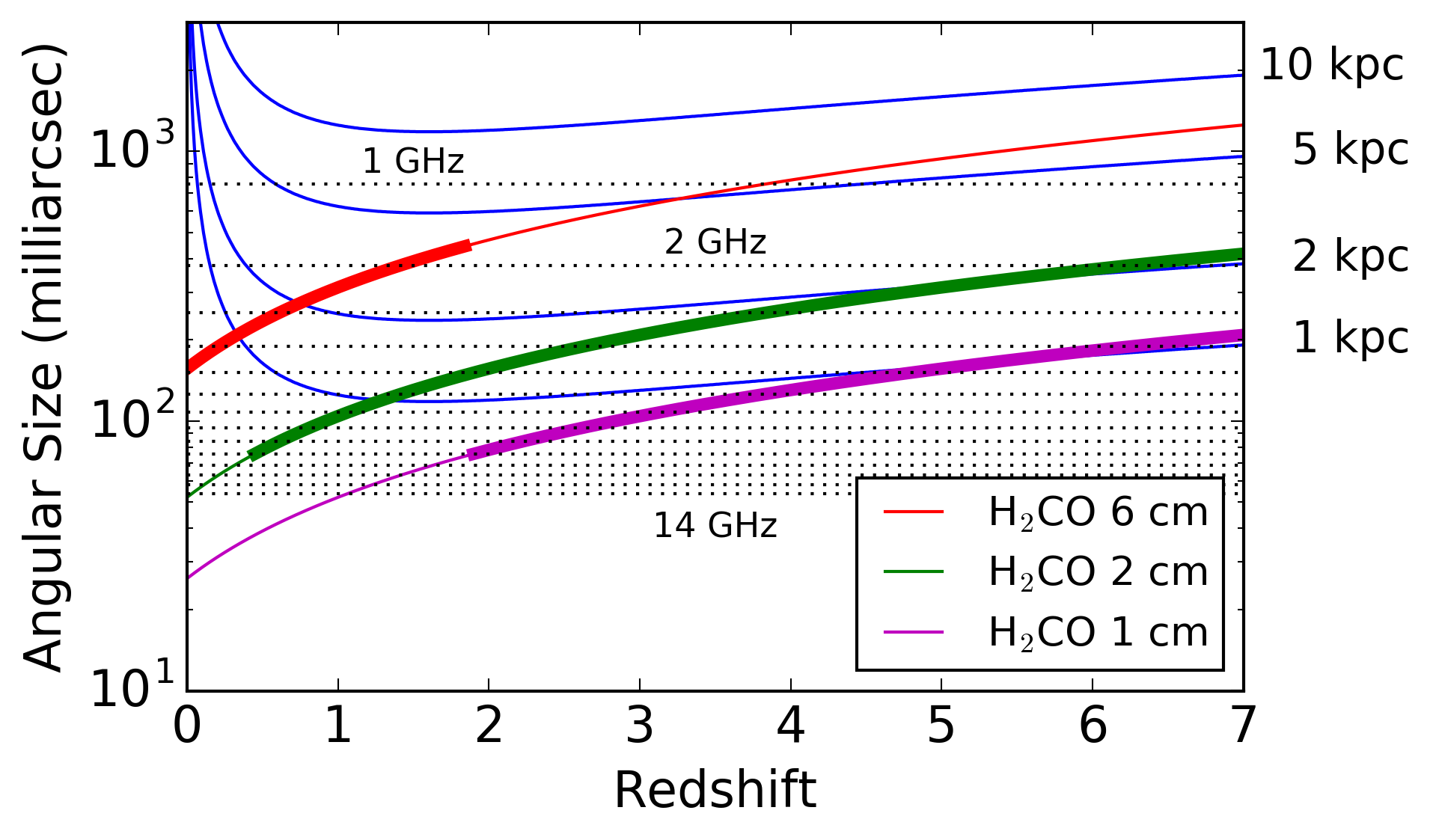 Figure 1
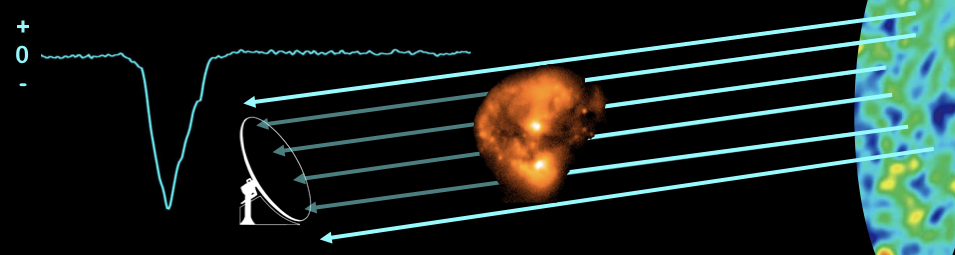 Figure 2
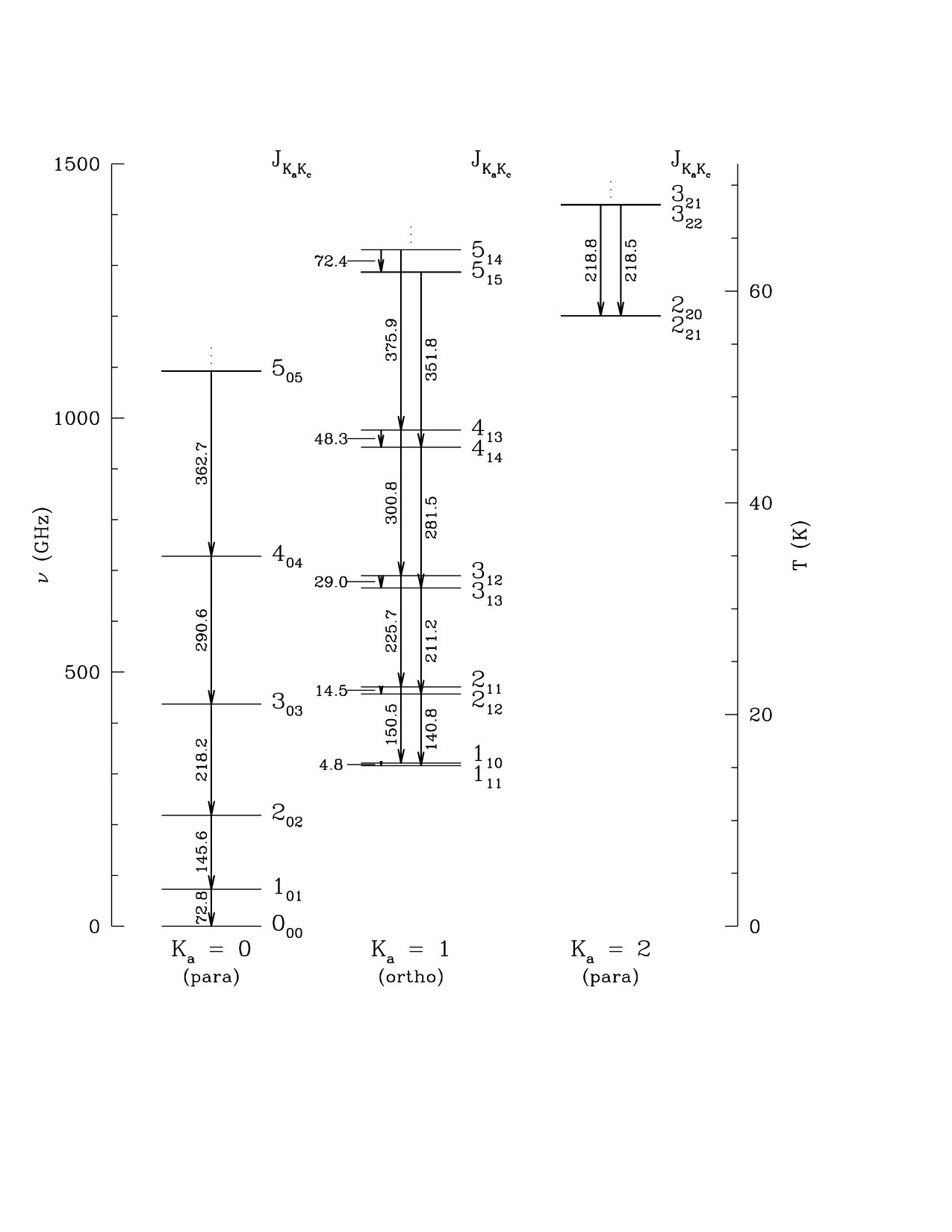 Figure 3
Peer Reviews
No public reviews on file for this paper yet. If you reviewed it on a platform where reviews are public (OpenReview, ICLR, NeurIPS, ICML), you can paste yours below so the community can read it here.
Videos
No videos yet. Explain this paper in a talk, walkthrough, or lecture? Add one.
Taxonomy
TopicsCatalysis and Oxidation Reactions
Astro2020 Science White Paper
A Formaldehyde Deep Field
Thematic Areas: Planetary Systems Star and Planet Formation Formation and Evolution of Compact Objects Cosmology and Fundamental Physics Stars and Stellar Evolution Resolved Stellar Populations and their Environments Galaxy Evolution Multi-Messenger Astronomy and Astrophysics
Principal Author:
Name: Jeremy Darling Institution: University of Colorado Email: [email protected] Phone: 303 492 4881
Abstract: Formaldehyde (H2CO) is often observed at centimeter wavelengths as an absorption line against the cosmic microwave background (CMB). This is possible when energy level populations are cooled to the point where line excitation temperatures fall below the local CMB temperature. Collisions with molecular hydrogen “pump” this anti-maser excitation, and the cm line ratios of H2CO provide a measurement of the local H2 density. H2CO absorption of CMB light provides all of the benefits of absorption lines (no distance dimming) but none of the drawbacks: the CMB provides uniform illumination of all molecular gas in galaxies (no pencil beam sampling), and all galaxies lie in front of the CMB — no fortuitous alignments with background light sources are needed. A formaldehyde deep field (FDF) would therefore provide a blind, mass-limited survey of molecular gas across the history of star formation and galaxy evolution. Moreover, the combination of column density and number density measurements may provide geometric distances in large galaxy samples and at higher redshifts than can be done using the Sunyaev Zel’dovich effect in galaxy clusters. We present a fiducial FDF that would span redshifts –7 and provide H2CO line ratios to measure for .111Portions of this science white paper were adapted from Darling (2018) with permission from the publisher.
1 Background
The formaldehyde molecule (H2CO) has peculiar non-thermal excitation properties in the physical conditions typical of star-forming regions. Similar to molecules that can be induced to form masers via population inversion through a pumping mechanism, H2CO is often “pumped” into an anti-inverted state by collisions with molecular hydrogen (H2). Anti-inversion is an over-population of a lower-energy state compared to thermal, forming a kind of ultra-cold anti-maser that can absorb cosmic microwave background (CMB) photons if the line excitation temperature drops below the local CMB temperature. Townes (1997) glibly called this effect the “dasar” — darkness amplification by stimulated absorption of radiation222Note that darkness is not in fact amplified, nor is absorption stimulated.. Unlike maser excitation, which requires special local conditions, this anti-inversion of H2CO is nearly ubiquitous in the Galaxy and in external galaxies (e.g., Ginsburg et al., 2011; Mangum et al., 2013) and seems to be the natural state of the molecule for a wide range of physical conditions (e.g., Darling & Zeiger, 2012). Moreover, H2CO is observed wherever CO is present and is not strictly a high density molecular gas tracer. The anti-inverted -doublet lines are not optically thick and their ratio is a measure of the H2 number density (via collisional pumping). The dasar effect can thus be used to make a cosmological census of molecular gas mass and gas density, independent of redshift (as described below).
In what follows we examine the feasibility of and science enabled by a formaldehyde deep field (FDF). We assume a flat cosmology with km s*-1* Mpc*-1*, , and .
1.1 Formaldehyde Anti-Inversion
H2CO is an asymmetric top molecule with three rotation quantum numbers: the total rotation and the rotation about two axes, and . Each rotation state specified by and has two possible states, known as “-doublet” splitting (the exception is the rotation ladder of para-H2CO; see Figure 1). H2 collisions overpopulate the lower energy states of these -doublet rotation states, creating excitation temperatures below the local cosmic microwave background (CMB) temperature by roughly 1–2 K. The observational signature of this anti-inversion is absorption against the CMB in the centimeter wavelength ortho-H2CO lines primarily at 1, 2, and 6 cm (29.0, 14.5, and 4.8 GHz).
This effect is strongest for the lowest energy cm lines and is insensitive to the local gas kinetic temperature. The observed line excitation temperature is also insensitive to the local CMB temperature (which scales from its value of K today as ). The anti-inversion favors a fairly wide range of H2 density, roughly – cm*-3*, and the cm line ratios indicate the local gas number density. The physics of H2CO excitation and radiative transfer has been fairly well-studied in an extragalactic and cosmological context: Mangum et al. (2008) and Mangum et al. (2013) derived physical conditions from observations of H2CO in nearby star-forming galaxies, Zeiger & Darling (2010) studied H2CO anti-inversion in the gravitational lens B0218+357 at , and Darling & Zeiger (2012) performed detailed modeling of H2CO excitation versus redshift.
1.2 Absorption of CMB Light
The absorption of CMB photons by H2CO implies that the line strength in beam-matched observations is independent of distance. And for , beam-matching is no longer a strong function of distance because angular sizes become flat for –3 and grow thereafter (Figure 2). The unusual circumstances presented by H2CO anti-inversion have some compelling consequences:
Absorption lines do not require fortuitous alignment of the object of interest with an illuminating light source. The CMB lies behind every galaxy and therefore every galaxy with molecular gas may be studied in H2CO absorption. 2. 2.
Unlike traditional absorption line studies, the illuminating “beam” is not a pencil beam that samples a subset of the intervening galaxy or gas cloud. The CMB provides an illuminating screen that is uniform to parts in in the CMB rest frame. All gas is sampled in a manner similar to emission line observations (but absorption does not diminish with distance). 3. 3.
The consequence of the above two points and the distance-independent nature of absorption lines is that it is possible to survey all H2CO gas in the universe in a mass-limited fashion, provided one can beam-match to molecular gas regions in galaxies while achieving sub-Kelvin surface brightness sensitivity. 4. 4.
H2CO absorption lines provide the column density of gas, and H2CO line ratios provide the local gas number density. This implies that Sunyaev-Zel’dovich-like distance measurements are possible using the molecular gas in galaxies (Darling & Zeiger, 2012). In contrast to S-Z measurements of the X-ray gas in clusters that extend to , the H2CO geometric distance measurement may be possible in galaxies up to . While individual gas-rich galaxies are not “spherical cows,” inclinations can be measured and ensembles of galaxies with random orientations may be combined in redshift slices to obtain reliable distances.
Given these consequences of the peculiarities of the H2CO molecule, one can therefore consider a formaldehyde deep field (FDF): a blind, gas mass-limited survey of star-forming galaxies across the history of cosmic star formation.
2 Key Observational Requirements
2.1 Angular Resolution and Redshift Coverage
In order to avoid beam dilution against the CMB light screen, observations should be beam-matched to the size of star-forming regions in galaxies. Figure 2 shows angular size tracks versus redshift for 10, 5, 2, and 1 kpc scales. It also shows the angular resolution of a fiducial 100 km radio array versus redshift for the 6, 2, and 1 cm H2CO lines. When the beam size for a given line and redshift is below an angular size track then that physical scale is resolved and can be beam-matched. Remarkably, a 100 km array can resolve or roughly beam-match 5 kpc at all redshifts in all of the cm lines. Scales of 2 kpc or greater can be resolved in the 1 and 2 cm lines up to . A 100 km array can therefore beam-match the physical scales relevant to star-forming galaxies including compact starbursts and major mergers (but see Section 2.2 for a discussion of brightness temperature sensitivity).
Figure 2 suggests that a carefully tailored frequency range will enable a formaldehyde deep field to span the full history of star formation (with uniform sensitivity to molecular gas mass, independent of gas kinetic temperature or local CMB temperature) while providing line ratios to measure the in situ molecular gas density . Observations from 0.6 GHz to 15 GHz would provide complete coverage (redshifts and line ratios) in the 6 cm and 2 cm lines, but this is problematic in implementation. Sub-GHz observations are particularly susceptible to RFI and will not be able to reach the required brightness temperature sensitivity using a reasonable collecting area (see below). Only two lines are needed at each redshift to measure , so the upper and lower frequency bounds can be adjusted to enable the 1 cm line to form a ratio with the 2 cm line when the 6 cm line is redshifted to its upper redshift bound (lowest frequency).
In Figure 2, we illustrate a FDF spanning 1.7 to 10 GHz that enables line ratios for . A low-bandwidth option could be 1–6 GHz, but line ratios would only be available for (and the 6 cm line may be difficult to detect at 1 GHz in reasonable integration times). It is also worth noting that the field of view of a homogeneous radio array will vary inversely with frequency, so line ratios will only be available in the highest frequency line’s field of view (which is smallest at 10 GHz, corresponding to for the 1 cm line and for the 2 cm line).
A FDF spanning 1.7 GHz to 10 GHz is reasonable from a radio receiver and backend correlation perspective. For example, feed horns that span an octave in frequency are now routine, and array correlators can produce more than 32,000 channels at a time. The proposed FDF would require roughly 64,000 channels.
2.2 Sensitivity
The observed line temperature depends on the line optical depth and on the difference between the line excitation temperature and the background continuum brightness temperature, redshifted to the observer’s reference frame. For the H2CO -doublet lines, the continuum is the CMB at the host galaxy’s redshift (but may also include the host galaxy continuum):
[TABLE]
Darling & Zeiger (2012) showed that the observed temperature decrement is insensitive to redshift or the local gas kinetic temperature and spans a large range in gas number density, cm cm*-3*. At low density, the temperature decrement approaches zero (the line excitation temperature equilibrates with the CMB), and at high density, the line excitation temperature thermalizes to the local gas temperature. Typical temperature decrements are 2 K for the 6 cm line and 1 K for the 1 cm line. The detection of anti-inverted cm lines will therefore rely critically on the filling factor of molecular gas and the line optical depths that will combine to manifest as an effective optical depth. For , –0.2 K.
Interferometers have poor surface brightness sensitivity compared to filled apertures. The surface brightness sensitivity scales with frequency as and with resolution as (i.e., an array is least sensitive at low frequencies and high resolution). The best FDF will therefore be a compromise between angular resolution, observed frequency, and surface brightness sensitivity. This is complicated by the fact that the lowest frequency line at 6 cm is typically the strongest anti-inverted H2CO transition.
In order to beam-match 5 kpc scales at all redshifts, the angular resolution would need to be roughly 600 mas. At this resolution, the rms brightness temperature sensitivity of an array with an effective area of 50,000 m2 (roughly 10 times the Very Large Array) is roughly 2.0 K at 1.7 GHz and 0.1 K at 10 GHz. This assumes a 100 hr integration and 100 km s*-1* channels. If one reduces the resolution to 1 arcsecond, which will resolve 10 kpc scales at all redshifts, the rms line brightness temperatures become 0.9 K (1.7 GHz) and 50 mK (10 GHz).
3 A Formaldehyde Deep Field
Given the angular resolution, redshift coverage for single lines and line ratios, and sensitivity considerations above, the best compromise FDF could be:
- •
A 100-hour deep field pointing with a 50,000 m2 array,
- •
100 km s*-1* channels to adequately sample the velocity span of molecular gas in galaxies (300 km s*-1*),
- •
Full synthesis over 1.7–10 GHz, which will include the 6, 2, and 1 cm H2CO lines spanning the molecular history of the universe, –7, and
- •
Angular resolution of 0.6 arcsec, enabling beam-matching to 5 kpc scales at all redshifts.
Line ratios will be available spanning nearly all of cosmic star formation history, for . Single-line detections at low redshift will have to be disambiguated using ancillary data such as photometric redshifts, but this will be straightforward with a carefully-selected FDF location.
4 Conclusions
The next-generation Very Large Array is a fairly good match to the above criteria and would therefore be uniquely capable of observing a formaldehyde deep field (FDF). The FDF would provide a distance-independent mass-limited census of molecular gas across the history of star formation and galaxy evolution. H2CO line ratios in the FDF will provide a measurement of the local H2 gas density, and it may therefore be possible to make geometric distance measurements over a large redshift range based on the H2CO -doublet line depths and line ratios (Darling & Zeiger, 2012). An FDF would complement flux-limited “blind” molecular emission line surveys (e.g., Pavesi et al., 2018) and could break the usual degeneracy between molecular gas temperature and density encountered in line excitation studies.
The reference list from the paper itself. Each links out to its DOI / PubMed record.
- 1Darling & Zeiger (2012) Darling, J. & Zeiger, B. 2012, Ap J, 749, L 33
- 2Darling (2018) Darling, J. 2018, ASP Conf. Ser., “Science with a Next Generation Very Large Array,” eds. E. Murphy and the ng VLA Science Advisory Council, 517, 669
- 3Ginsburg et al. (2011) Ginsburg, A., Darling, J., Battersby, C., Zeiger, B., & Bally, J. 2011, Ap J, 736, 149
- 4Mangum et al. (2008) Mangum, J. G., Darling, J., Menten, K. M., & Henkel, C. 2008, Ap J, 673, 832
- 5Mangum et al. (2013) Mangum, J. G., Darling, J., Henkel, C., & Menten, K. M. 2013, Ap J, 766, 108
- 6Pavesi et al. (2018) Pavesi, R. Sharon, C. E., Riechers, D. A., et al. 2018, Ap J, 864, 49
- 7Townes (1997) Townes, C. H. 1997, Quantum Electronics, 27(12), 1031
- 8Zeiger & Darling (2010) Zeiger, B., & Darling, J. 2010, Ap J, 709, 386