Isospin-phonon coupling and Fano-interference in spin-orbit Mott insulator Sr2IrO4
Kousik Samanta, Danilo Rigitano, Pascoal Jose Giglio Pagliuso, Eduardo, Granado

TL;DR
This study investigates how lattice vibrations interact with electronic and magnetic properties in Sr2IrO4, revealing isospin-phonon coupling and Fano interference effects that are sensitive to magnetic ordering.
Contribution
It provides new insights into the coupling between phonons, electronic excitations, and magnetic order in the spin-orbit Mott insulator Sr2IrO4 using Raman scattering.
Findings
Anomalous phonon behavior below TN ~240 K.
Fano lineshape in A1g mode at 560 cm-1 indicating electronic excitations.
Strong isospin-phonon coupling related to Ir-O-Ir bond modulation.
Abstract
The isospin-phonon coupling in Sr2IrO4 is investigated by temperature dependent phonon Raman scattering. Anomalous behavior in the frequency of all studied optical phonons is observed below the magnetic transition temperature TN ~240 K. The strongest effect is detected for the A1g mode at 272 cm-1 associated with the modulation of the Ir-O-Ir bond angle. Additionally, the A1g mode at 560 cm-1 shows a Fano asymmetric lineshape sensitive to TN, supporting the existence of low-energy (~70 meV) electronic excitations that are renormalized by the magnetic order. These results reveal new aspects of the interaction between the crystal lattice and electronic degrees of freedom in this spin-orbit entangled Mott insulator.
Click any figure to enlarge with its caption.
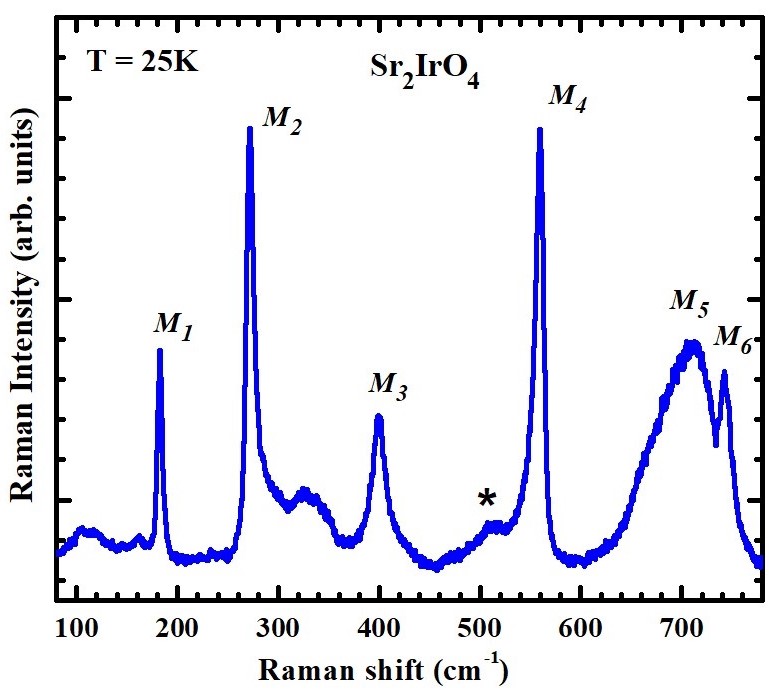 Figure 1
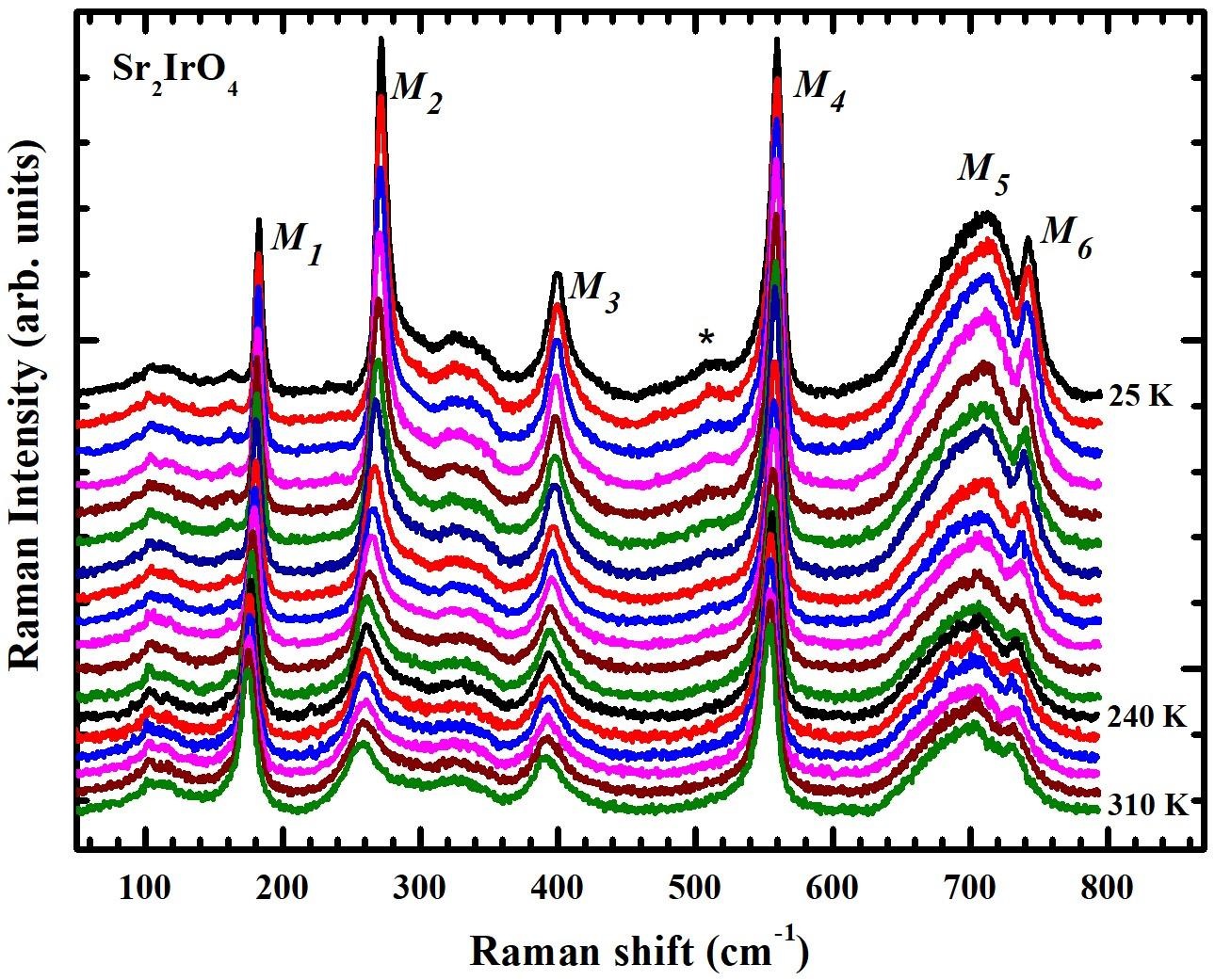 Figure 2
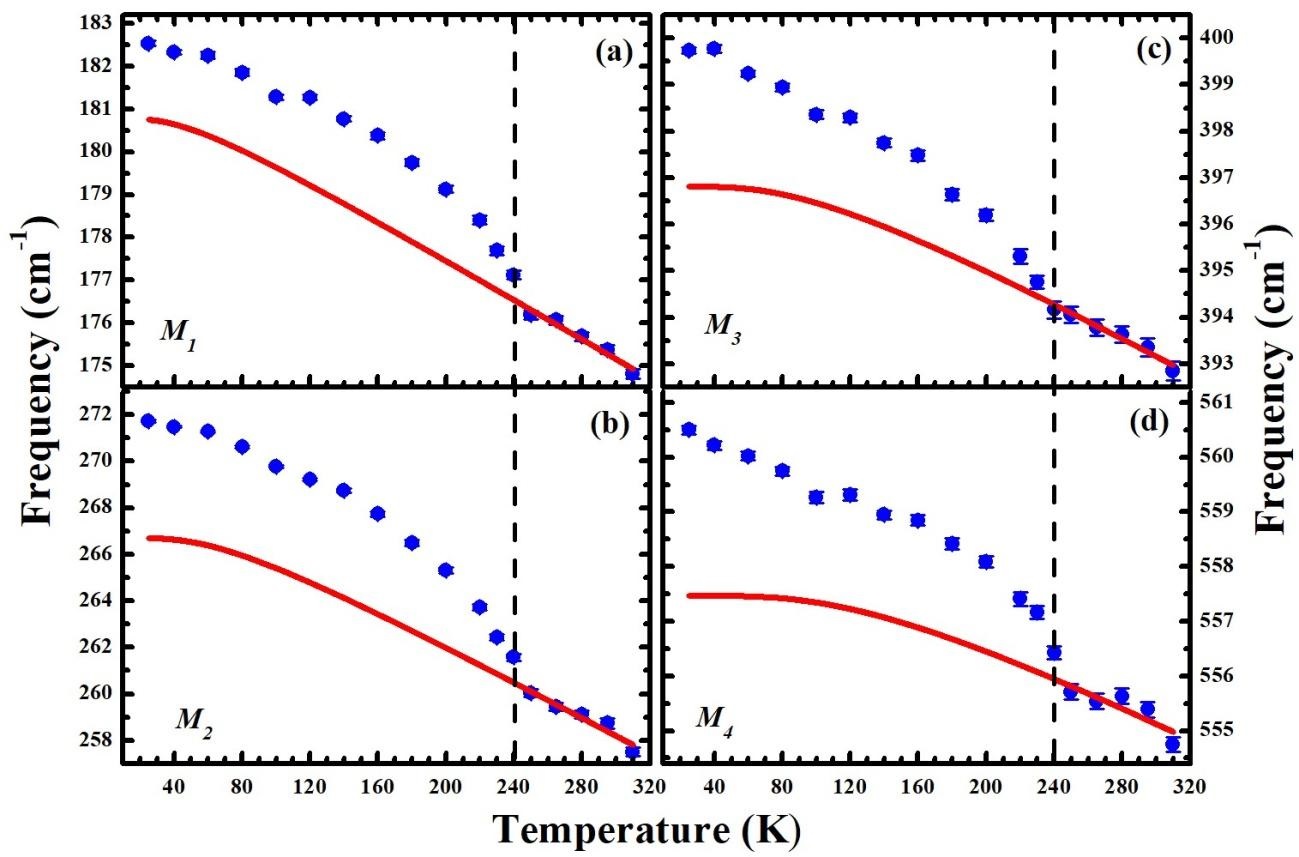 Figure 3
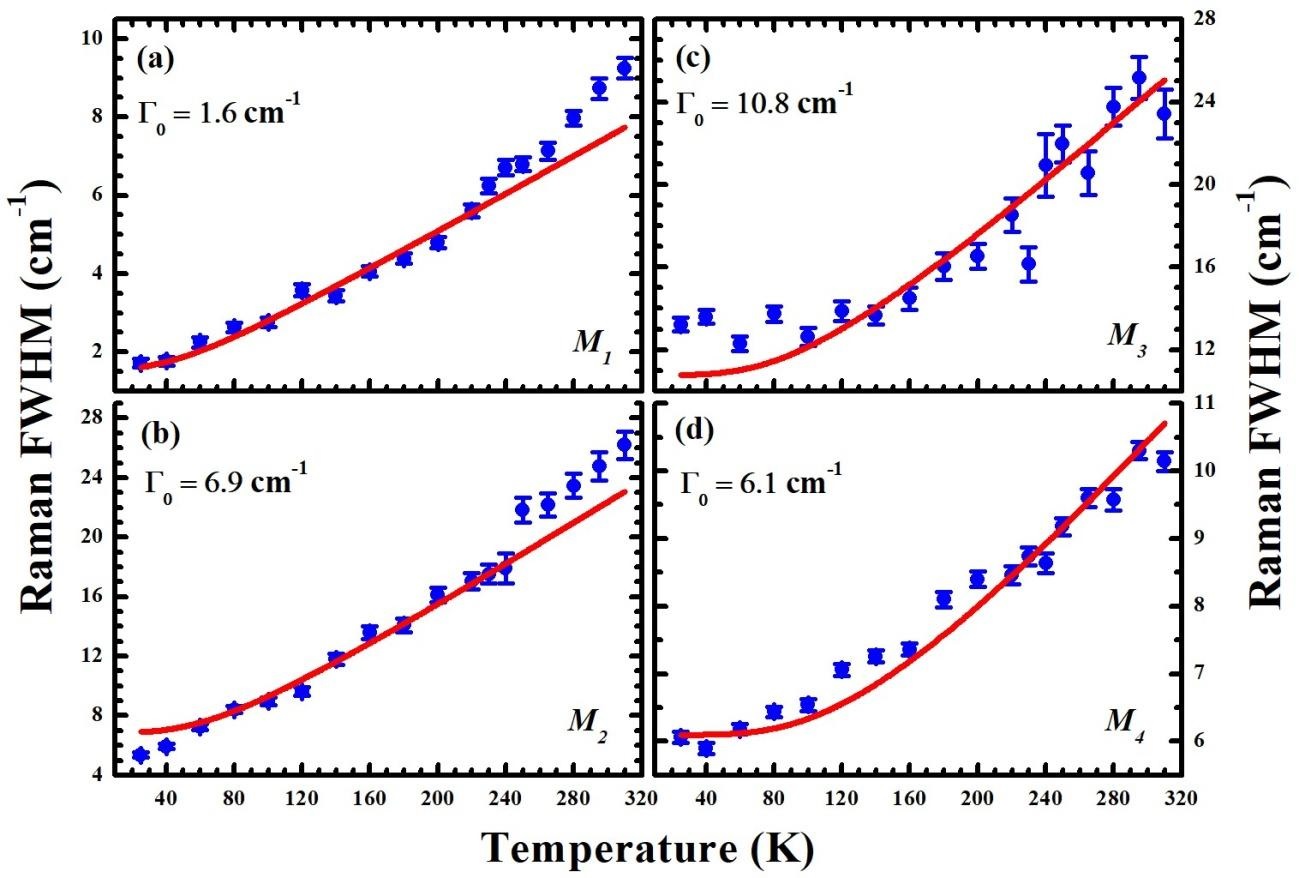 Figure 4
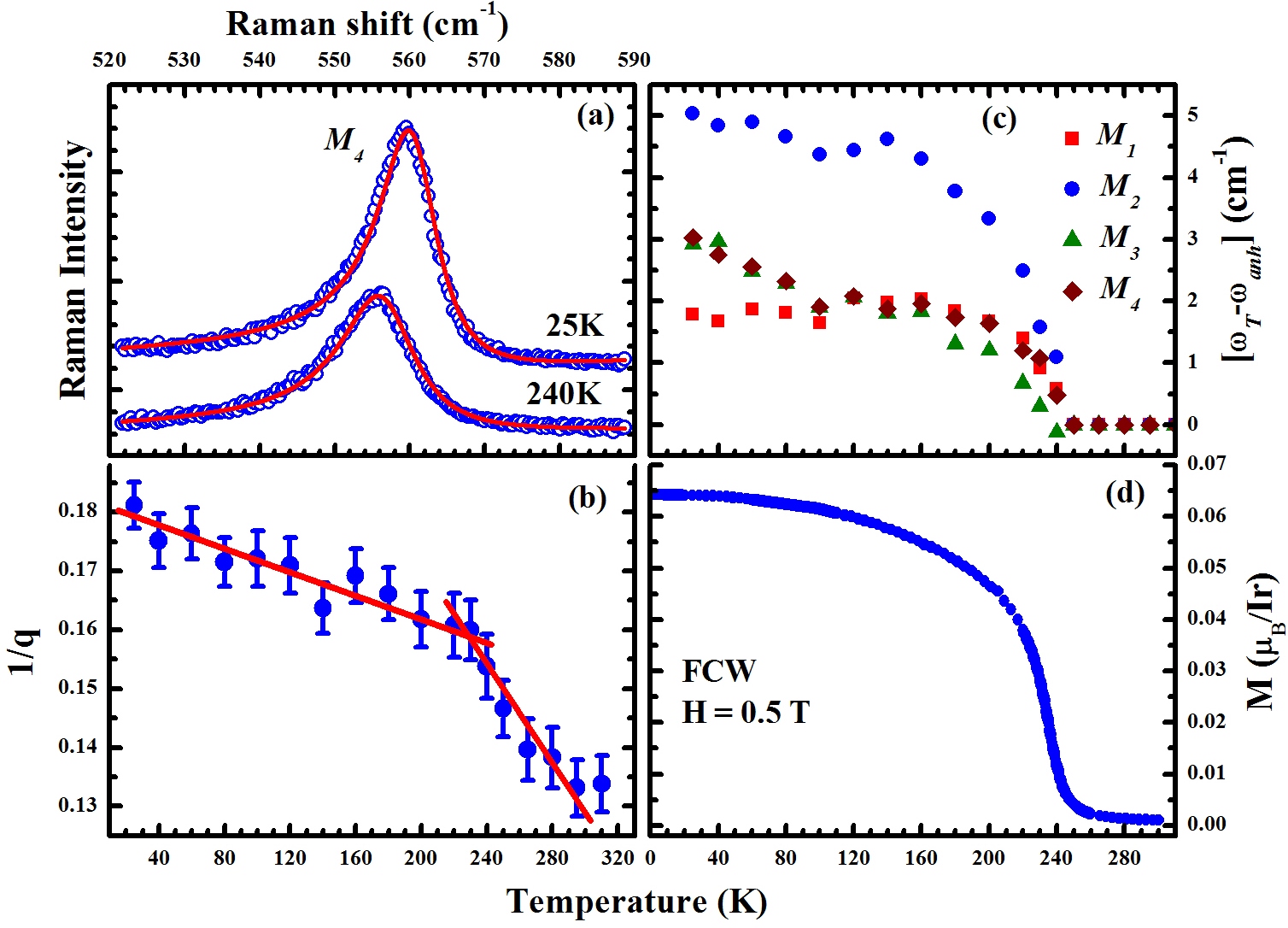 Figure 5
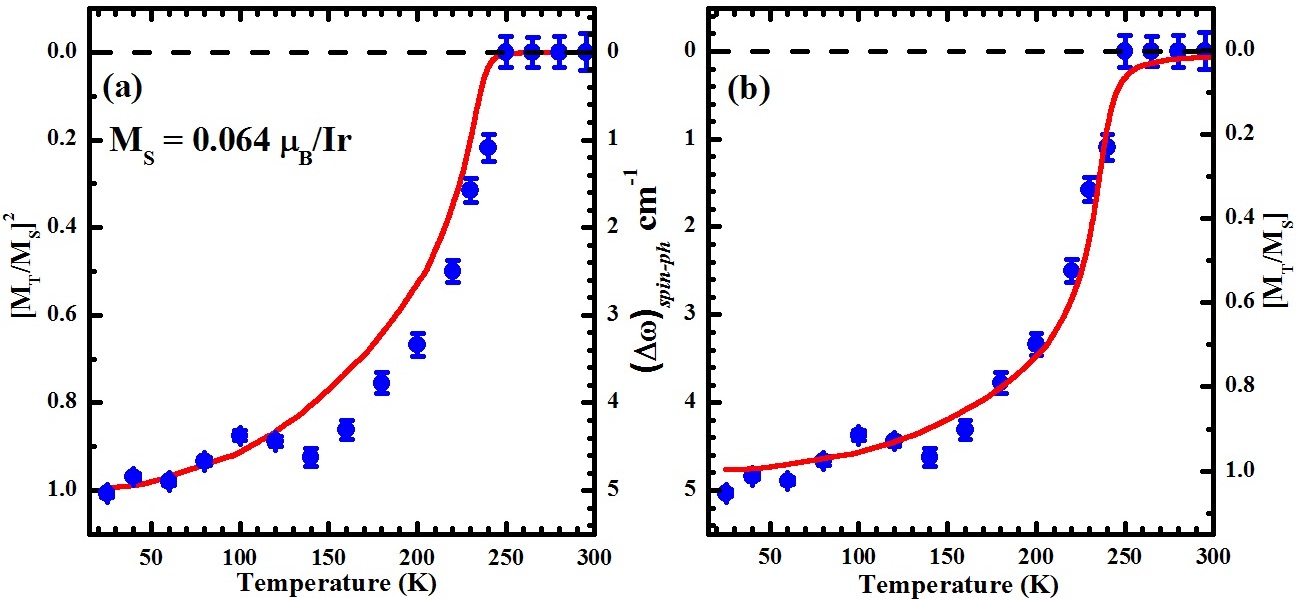 Figure 6
Peer Reviews
No public reviews on file for this paper yet. If you reviewed it on a platform where reviews are public (OpenReview, ICLR, NeurIPS, ICML), you can paste yours below so the community can read it here.
Videos
No videos yet. Explain this paper in a talk, walkthrough, or lecture? Add one.
Isospin-phonon coupling and Fano-interference in spin-orbit Mott insulator Sr2IrO4
K. Samanta
D. Rigitano
P. G. Pagliuso
E. Granado
“Gleb Wataghin” Institute of Physics, University of Campinas - UNICAMP, Campinas, São Paulo 13083-859, Brazil
Abstract
The isospin-phonon coupling in Sr2IrO4 is investigated by temperature dependent phonon Raman scattering. Anomalous behavior in the frequency of all studied optical phonons is observed below the magnetic transition temperature T 240 K. The strongest effect is detected for the A1g mode at 272 cm*-1* associated with the modulation of the Ir-O-Ir bond angle. Additionally, the A1g mode at 560 cm*-1* shows a Fano asymmetric lineshape sensitive to TN, supporting the existence of low-energy (70 meV) electronic excitations that are renormalized by the magnetic order. These results reveal new aspects of the interaction between the crystal lattice and electronic degrees of freedom in this spin-orbit entangled Mott insulator.
Suggested keywords
Materials with unique combination of spin-orbit coupling (SOC) and electron correlations offer opportunities for the discovery of novel quantum states of matterPesin2010 . The Ruddlesden-Popper series of layered perovskite strontium iridates (Srn+1IrnO3n+1, n = 1, 2) are the key materials in this class. Mutual cooperation of strong SOC ( 0.5 eV) and moderate electron correlation (U 1.5 - 2 eV) energies give rise to the emergence of the spin-orbit entangled insulating state in Sr2IrO4. The SOC creates a half filled band of isospins (Jeff = 1/2), which is further split by the on-site Coulomb interaction and opens up a Mott-like insulating gapKim2008 ; Kim1329 ; Jackeli2009 ; Pesin2010 ; Arita2012 ; Kim2012 . The parent Sr2IrO4 crystallizes in a tetragonal phase with space group I41/acd, showing a rotation of the IrO6 octahedra by 11*∘* along the c-axisCrawford1994 ; HUANG1994355 . The presence of a significant Dzyaloshinskii-Moriya-type (DM) exchange interaction leads to a canted magnetic structure for the isospins with a weak ferromagnetic moment of 0.06-0.14 /Ir below TN 240 KKim1329 ; Cao1998 ; Chikara2009 ; Liu2015 .
The effect of cross-coupling between collective spin and orbital ordering with the lattice degrees of freedom has an important role on the fundamental properties of correlated materials. Particularly, the spin-lattice coupling strongly depends on spin-orbit interaction, and it is important to stabilize the uncommon magnetic behavior of Sr2IrO4Porras2019 . The external influences like temperature, application of pressure, and chemical doping can change the bond length and/or bond angle, which leads to a change in magnetic ordering and consequently to the spin-lattice couplingLee2011 . In Sr2IrO4, the strong SOC plays a crucial role in the realization of the magnetic behavior, and its presence is expected to bring a strong coupling between the Jeff = 1/2 pseudospins and the lattice degrees of freedomPorras2019 . For instance, the Jeff = 1/2 isospin directions are nearly locked to the rotation of IrO6 octahedra along the c-axisSamanta2018 .
In general, the coupling of magnetism to the ionic displacements in second order leads to a spin-phonon coupling in magnetic materials, which may provide useful information on the microscopic exchange coupling mechanismGranado1999 ; Calder2015 ; Sohn2017 . In this letter, we investigate the temperature-dependent phonon Raman scattering of Sr2IrO4 single crystal. Our results reveal the existence of an isospin-phonon coupling effect below the magnetic ordering temperature. We have also observed an asymmetric phonon lineshape of apical O stretching A1g mode, which is ascribed to the coupling of this phonon with a low-energy continuum of electronic excitations.
The Sr2IrO4 single crystal was grown by the flux method. The base materials SrCO3, IrO2, and SrCl2 (flux) were mixed in molar ratio 2:1:7, respectively; melted at 1280*∘C in a platinum crucible, and then cooled down to 880∘C at the rate of 6∘C/hour. Finally, the crystals were free cooled to room temperature in a programmable furnace. The crystals were in sub-mm size (0.5-0.8 mm) with shiny surfaces. Raman scattering experiments were performed in a quasi-backscattering geometry using the 488.0 nm line of Ar+* laser with focus spot size 50 m. A Jobin-Yvon T64000 triple-mate spectrometer with 1800 mm*-1* gratings was employed. A LN2-cooled multichannel CCD was used to collect and process the scattered data. The sample was mounted on a cold finger of closed-cycle He cryostat with base temperature 25K. The dc-magnetization measurements as a function of temperature were performed with a Superconducting Quantum Interference Device (SQUID) magnetometer. The measurements were carried out under warming after field cooling (FCW, H = 0.5 T).
Unpolarized Raman spectra of Sr2IrO4 single crystal at 25K are shown in Fig. 1. Six Raman-active optical modes have been detected and labeled as M1 to M6 at 183, 272, 399, 559, 715, and 742 cm*-1*, respectively. These modes were identified in previous worksSamanta2018 ; Gretarsson2017 . The most intense modes M2 and M4 at 25 K correspond to the A1g symmetry, where M2 is a rotational mode of IrO6 octahedra around the tetragonal c-axis, and M4 is a stretching of apical oxygen atoms along the c-axis.
The M3 vibration with B2g symmetry is a bending mode of oxygen squares in the ab-planeSamanta2018 . Peak M1 is a superposition of A1g and B2g phonons with closely spaced frequencies. The A1g mode corresponds to a rotation of IrO6 octahedra combined with an in-phase Sr displacement along c-axis; while B2g is associated with the out-of-phase Sr vibrationsSamanta2018 . The broad M5 mode at 715 cm*-1* originates most likely from the two-phonon scatteringGretarsson2017 ; while M6 at 742 cm*-1* is a breathing mode of in-plane oxygen atoms with B1g symmetrySamanta2018 ; Cetin2012 . The observed modes are in good agreement with the previous symmetry-resolved single crystal Raman studyGretarsson2017 ; Cetin2012 and our ab-initio lattice dynamics calculations and powder measurementsSamanta2018 . The broad shoulder type peak ( 334 cm*-1*) at the high energy tail of M2 was assigned as an A1g modeGretarsson2017 , however we do not observe any change in frequency or intensity of this peak with temperature. The same type feature at 335 cm*-1* was also observed in Sr2IrO4 single crystal Raman scattering measurementsGlamazda2014 .
Temperature dependent Raman scattering of Sr2IrO4 is shown in Fig. 2. All the phonon modes are shifted towards lower frequency with increasing temperature. M4 (A1g) shows an asymmetric lineshape throughout the temperature range under study, and the asymmetry decreases with increasing temperature. In addition to these phonon modes (M1 to M6), we have detected a shoulder-type peak () at 510 cm-1*, which gradually decreases its intensity and disappear at 240 K; interestingly, the frequency of this peak does not change with temperature.
Figures 3 (a-d) show the change in M1-M4 phonon frequencies with temperature. For modes M1-M3, the phonon frequency and linewidth are obtained by fitting the phonon Raman profiles using a damped harmonic oscillator (DHO) functionMenendez1984 , where is the phonon occupation number, , , and are the phonon frequency, linewidth, and intensity, respectively. The asymmetric phonon profile of M4 mode is fitted with a Fano lineshape (see below). The solid lines represent the fitting of the experimental data using two phonon decay equation , where is the harmonic frequency of the mode when temperature approaches close to 0 K, and is the frequency shift due to the variation of self-energy induced by phonon-phonon interaction. Considering the two-phonon decay, the can be represented as Balkanski1983 . All the mode frequencies show an upturn below 240K, and deviate from the conventional anharmonic behavior of two-phonon decay process. We have also observed a fluctuation of phonon mode frequencies at 100 K.
Figures 4(a-d) represent the temperature dependent damping constant of the modes M1-M4. The solid lines represent the expected curves of the modes according to the two-phonon decay Balkanski1983 . The inclusion of three or more phonon decay are expected to add only minor corrections in both frequency and damping constant with respect to the two-phonon decay in the temperature interval under study. For M1 and M2, an increased broadening is observed above TN 240 K, indicating that isospin disorder contribute to the damping of these modes.
Remarkably, M4 shows an asymmetric lineshape in the whole temperature range (25-310K); Fig. 5(a) illustrates the phonon profile of M4 at 25K and 240K at selected temperatures. The solid lines represent the fitting of asymmetric phonon profile using Fano line-shape , where is the intensity, q is the asymmetry parameter, and , with and being the phonon frequency and linewidth, respectivelyFano1961 . The inverse of asymmetry parameter (1/q) is a measure of the electronic continuum-phonon coupling strength. It is interesting to note that the (1/q) decreases slowly with increasing temperature up to TN, and decrease steeply afterward (Fig. 5(b)). The anomalous phonon frequency change () of modes M1-M4, obtained after subtraction of the expected anharmonic contribution, is shown in Fig. 5(c). The mode M2 shows the maximum anomalous change ( 5 cm*-1*) at 25 K; whereas, all other modes this value is 2-3 cm*-1*. The temperature-dependent bulk magnetization of Sr2IrO4 is shown in Fig. 5(d).
It is well known that the phonon frequencies may be sensitive to spin correlations in magnetic materials. Anomalous phonon behavior below the magnetic ordering temperature is often interpreted as a manifestation of spin-phonon coupling. This coupling occurs when the magnetic exchange energy is sensitive to a phonon normal coordinate, leading to the magnetic contribution to the harmonic energy of the latticeGarcia-Flores2012 . In Jeff = 1/2 systems the magnetic Hamiltonian is written in terms of isospins rather than pure spinsJackeli2009 , and therefore the observed phonon anomalies may be ascribed to an isospin-phonon coupling. Earlier, Gretarsson et al. identified the pseudospin-lattice coupling in Sr2IrO4 by analyzing the asymmetric lineshape of the lowest energy phonon mode ( 187 cm*-1*) above TN, however, it was not possible to identify in their data anomalies in phonon frequency at TN, that characterizes the spin-phonon coupling mechanismGretarsson2016 . An experimental signature of the spin-phonon coupling in antiferromagnetic materials in general is a scaling of the anomalous phonon frequency changes to the square of the sublattice magnetization below TNGranado1999 , which in turn is proportional to the antiferromagnetic Bragg peak intensities obtained in magnetic diffraction measurements. In the present case, a complication arises from the non-collinear canted magnetic structure so that the dominant antiferromagnetic and the ferromagnetic sublattices may show different order parameters. In fact, a resonant x-ray scattering study shows that the temperature-dependence of the intensities of the antiferromagnetic Bragg peaks scales linearly rather than quadratically to the weak ferromagnetic moment obtained by bulk measurementsKim1329 , indicating a temperature-dependent spin canting angle. Thus, the anomalous phonon frequency changes due to the isospin-phonon coupling in Sr2IrO4 may be also expected to scale linearly to the bulk magnetic moment. Indeed, Figs. 6 (a) and 6(b) shows that ()spin-ph scales better to the linear bulk magnetization M than to M2. This analysis provide strong evidence that the anomalous phonon shifts reported here are due to an isospin-phonon coupling mechanism. The additional anomaly of ()spin-ph observed at 100K for the M2 - M4 modes (see Figs. 3 and 5) may be due to a reorientation or change of the stacking pattern of the magnetic moments at this temperatureKim1329 ; Chikara2009 ; Ge2011 ; Franke2011 .
A careful account of which normal modes of vibration show spin-phonon couplings may provide valuable microscopic information on the magnetic coupling mechanisms. In our case, all studied modes M1-M4 show anomalous hardenings characteristic of spin-phonon coupling. Modes M1-M3 are assigned to vibrations involving modulation of the Ir-O-Ir angleSamanta2018 , therefore isospin-phonon anomalies are not too surprising to be observed for such modes. On the other hand, mode M4 corresponds to a stretching of the apical oxygen against the Ir ions along the c-directionSamanta2018 , and this mode might not be expected at first sight to modulate the magnetic coupling energy within the IrO2 planes. We speculate that the isospin-phonon coupling in this case takes place through an indirect mechanism involving a modulation of the tetragonal crystal-field splitting induced by this phonon, which in turn modulates the relative occupancy of the t2g orbitals and as a consequence the overall magnetic exchange energy.
As mentioned above the M4 (A1g) mode at 560 cm*-1* is a stretching mode of apical O along the c-axis of IrO6 octahedra; this phonon mode shows an asymmetric lineshape throughout the investigated temperature range. Such asymmetry is a signature of the coupling of the phonon with the underlying electronic charge and/or spin continuum excitationGretarsson2017 . Earlier reports showed no indication of Fano-interference for the M4 (560 cm*-1*) in either Sr2IrO4 or La-doped Sr2IrO4 single crystalsGretarsson2017 . On the other hand, an asymmetric phonon lineshape of M1 (185 cm*-1*) mode was detected in Sr2IrO4 single crystal above TN (240 K) and in La-doped Sr2IrO4 single crystal above 50 KGretarsson2017 , which is not observed in our single crystal. In short, these results indicate low energy electronic excitations that are strongly sample dependent, and may be sensitive to the magnetic ordering temperature [see Fig. 5(b)]. Such effects are likely associated with the possible presence of charge carriers induced by intrinsic impurities in these samples. The macroscopic electrical properties of Sr2IrO4, including the non-ohmic I-V response, is the subject of great interest in this fieldGCao2018 , and is most likely dominated by low energy electronic excitations such as those revealed by our spectroscopic data. Further theoretical and more systematic experimental studies are necessary to clarify this possible connection.
In summary, temperature dependent Raman scattering of Sr2IrO4 single crystals was investigated, revealing new aspects of the interaction between the crystal lattice and electronic degrees of freedom. The anomalous phonon hardening observed below the magnetic transition temperature is a signature of isospin-phonon coupling in this antiferromagnetic square lattice. The strongest effect is detected for the A1g ( 272 cm*-1*) mode associated with the modulation of in-plane Ir-O-Ir bond angle. The asymmetric lineshape of M4 mode at 560 cm*-1* ( 70 meV) originates from the coupling of this phonon with the underlying electronic continuum excitation, and this excitation is sensitive to the magnetic ordering temperature.
We thank Jean Souza for experimental support. This work was financially supported by FAPESP Grants No. 2016/00756-6 and No. 2017/10581-1, Brazil.
The reference list from the paper itself. Each links out to its DOI / PubMed record.
- 1(1) D. Pesin and L. Balents, Nature Phys. 6 , 376 (2010).
- 2(2) B.J. Kim, H. Jin, S.J. Moon, J.-Y. Kim, B.-G. Park, C.S. Leem, J. Yu, T.W. Noh, C. Kim, S.-J. Oh, J.-H. Park, V. Durairaj, G. Cao, and E. Rotenberg, Phys. Rev. Lett. 101 , 076402 (2008).
- 3(3) B.J. Kim, H. Ohsumi, T. Komesu, S. Sakai, T. Morita, H. Takagi, and T. Arima, Science 323 , 1329 (2009).
- 4(4) G. Jackeli and G. Khaliullin, Phys. Rev. Lett. 102 , 017205 (2009).
- 5(5) R. Arita, J. Kunes, A.V. Kozhevnikov, A.G. Eguiluz, and M. Imada, Phys. Rev. Lett. 108 , 086403 (2012).
- 6(6) B.H. Kim, G. Khaliullin, and B.I. Min, Phys. Rev. Lett. 109 , 167205 (2012).
- 7(7) M.K. Crawford, M.A. Subramanian, R.L. Harlow, J.A. Fernandez-Baca, Z.R. Wang, and D.C. Johnston, Phys. Rev. B 49 , 9198 (1994).
- 8(8) Q. Huang, J.L. Soubeyroux, O. Chmaissem, I. Natali Sora, A. Santoro, R.J. Cava, J.J. Karjewski, and W.F. Peck, Jr., J. Solid State Chem. 112 , 355 (1994).