Optimal charge-to-spin conversion in graphene on transition metal dichalcogenides
Manuel Offidani, Mirco Milletar\'i, Roberto Raimondi, Aires, Ferreira

TL;DR
This paper demonstrates that graphene on transition metal dichalcogenides exhibits a highly efficient, robust charge-to-spin conversion via the inverse spin galvanic effect, especially near the spin minority band, with potential room temperature applications.
Contribution
It introduces a figure of merit for charge-to-spin conversion efficiency and shows near-unity efficiency close to the spin minority band in graphene on TMD monolayers.
Findings
Charge-to-spin conversion efficiency approaches unity near the spin minority band.
Efficiency remains large and robust against disorder at room temperature.
Efficiency decays algebraically at high electronic densities despite opposite spin helicities.
Abstract
When graphene is placed on a monolayer of semiconducting transition metal dichalcogenide (TMD) its band structure develops rich spin textures due to proximity spin-orbital effects with interfacial breaking of inversion symmetry. In this work, we show that the characteristic spin winding of low-energy states in graphene on TMD monolayer enables current-driven spin polarization known as the inverse spin galvanic effect (ISGE). By introducing a proper figure of merit, we quantify the efficiency of charge-to-spin conversion and show it is close to unity when the Fermi level approaches the spin minority band. Remarkably, at high electronic density, even though sub-bands with opposite spin helicities are occupied, the efficiency decays only algebraically. The giant ISGE predicted for graphene on TMD monolayer is robust against disorder and remains large at room temperature.
Click any figure to enlarge with its caption.
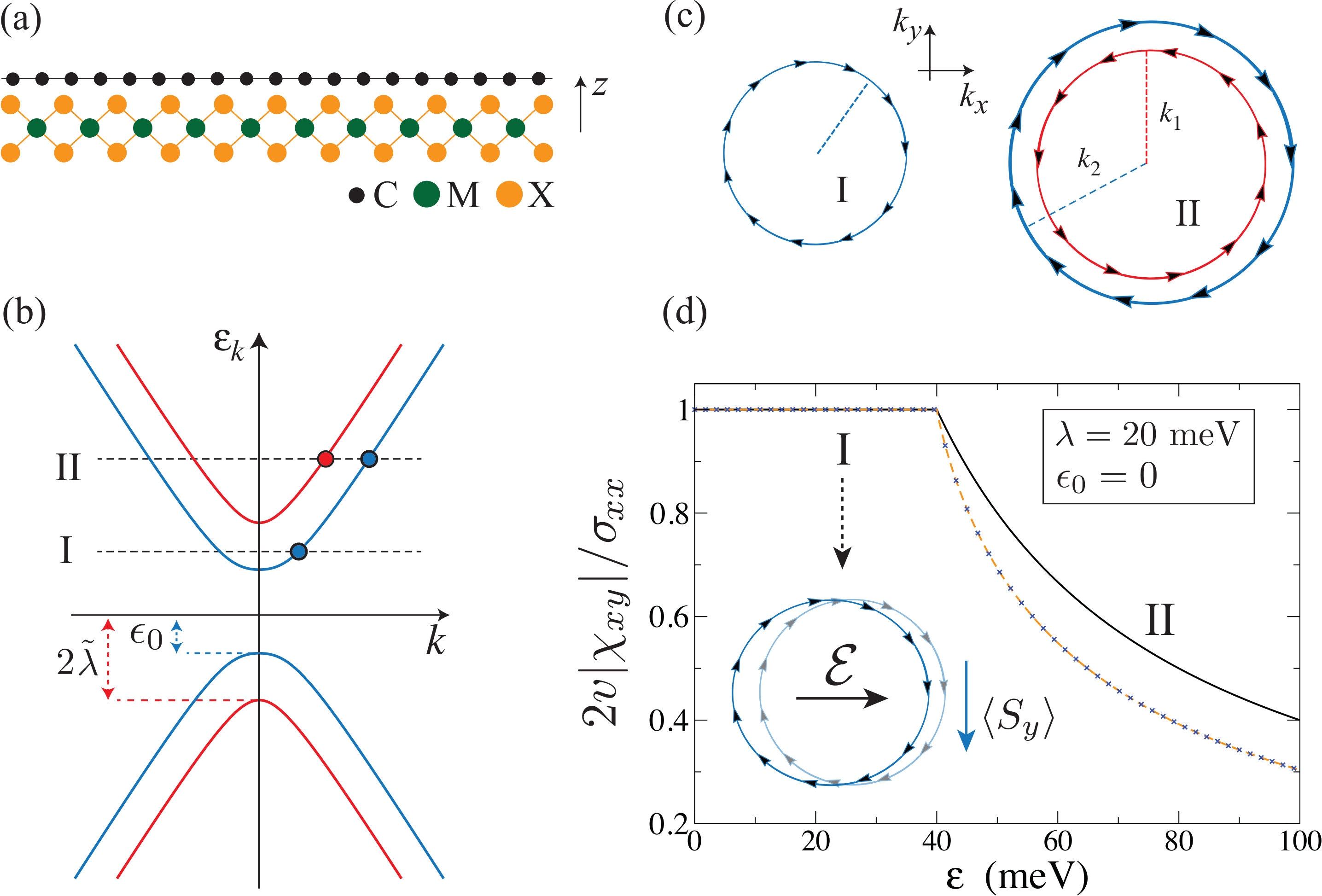 Figure 1
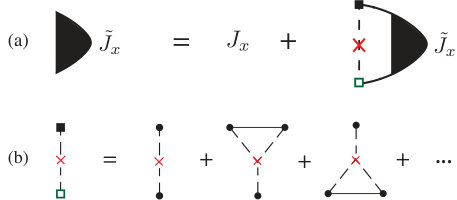 Figure 2
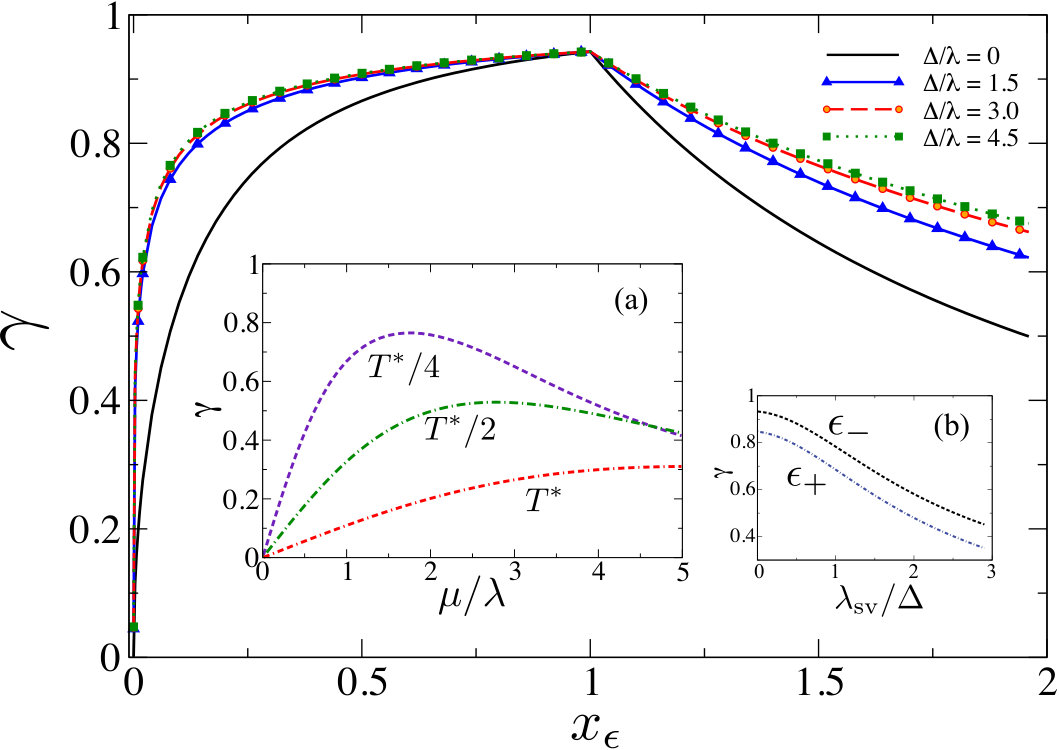 Figure 3
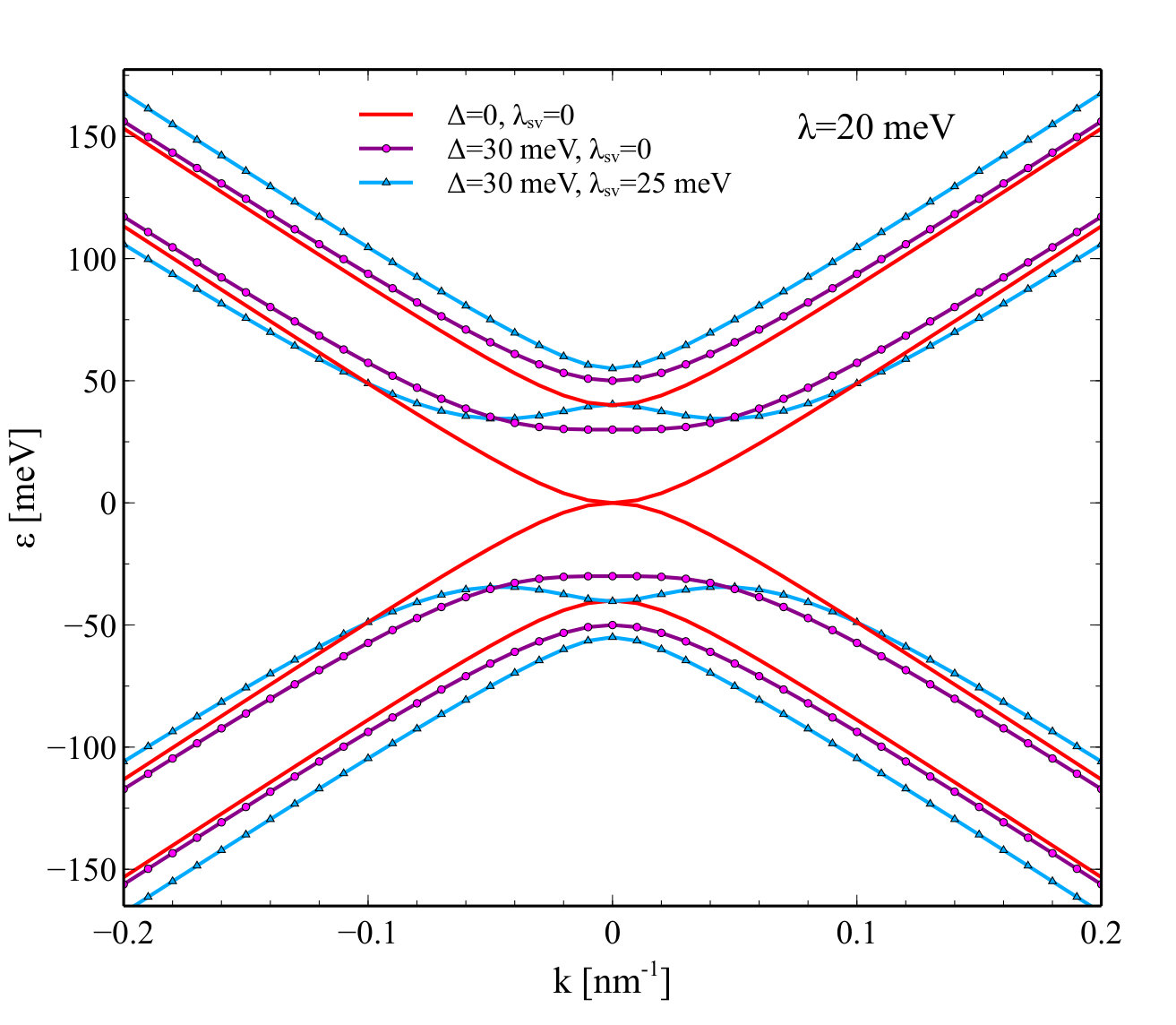 Figure 4
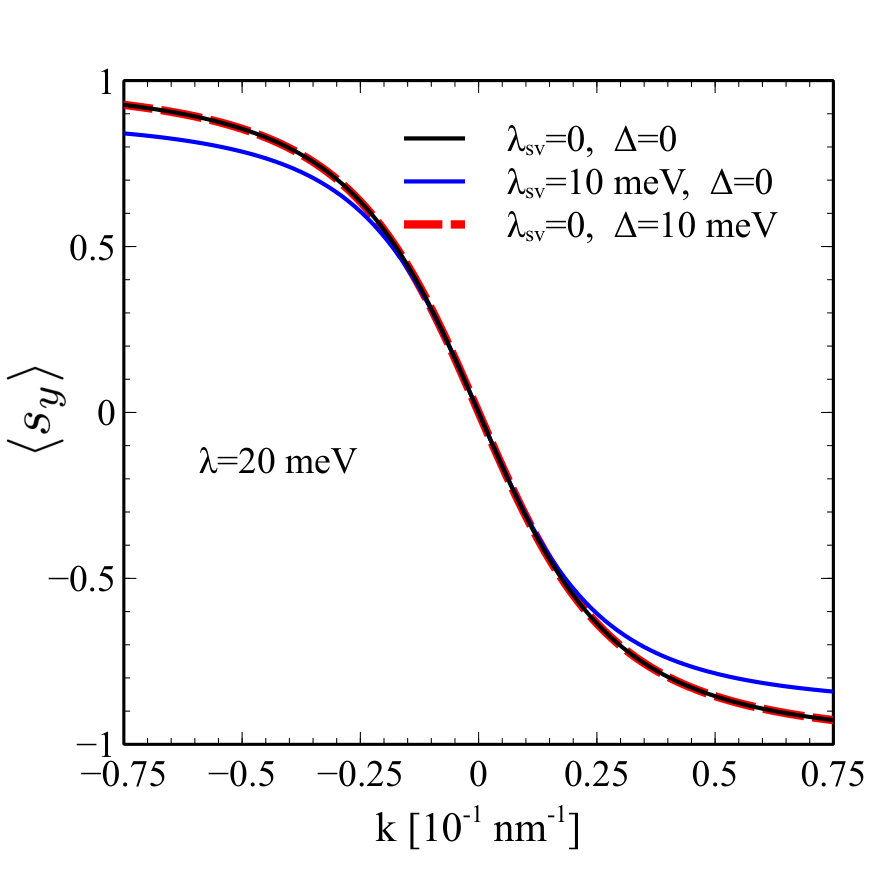 Figure 5
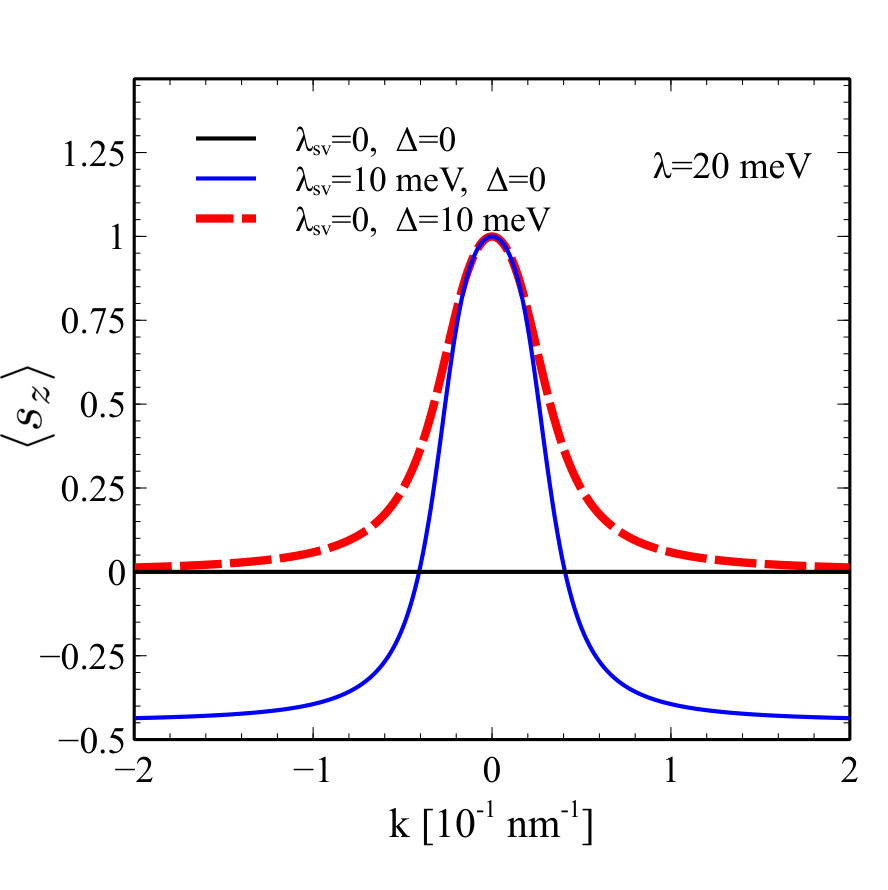 Figure 6
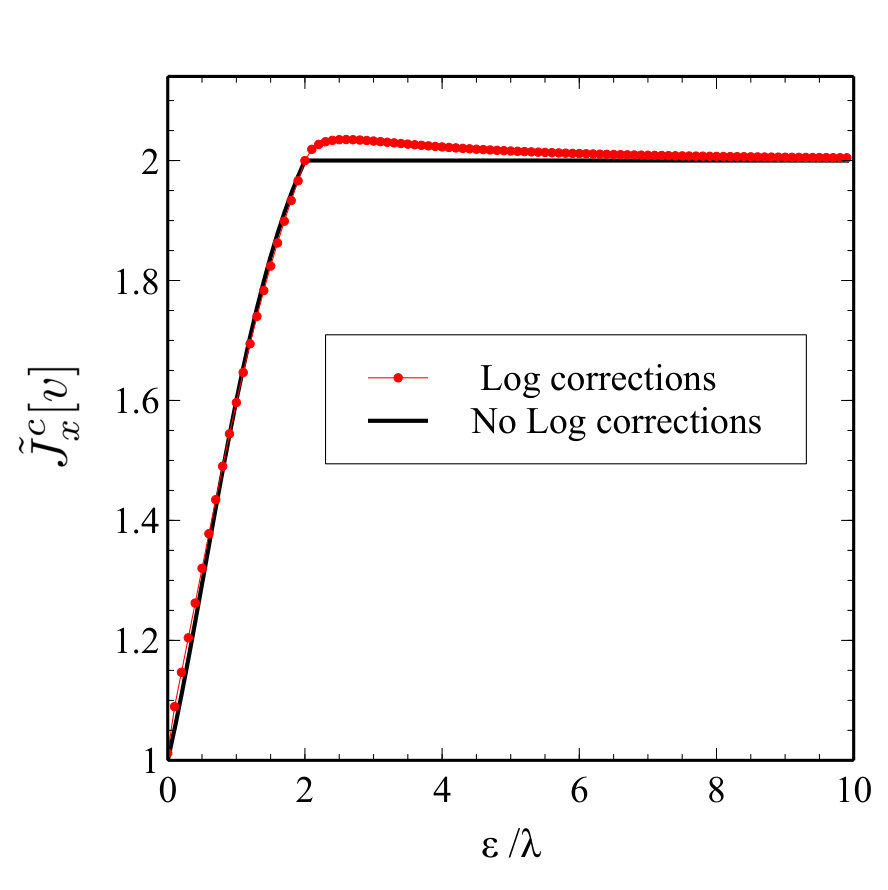 Figure 7
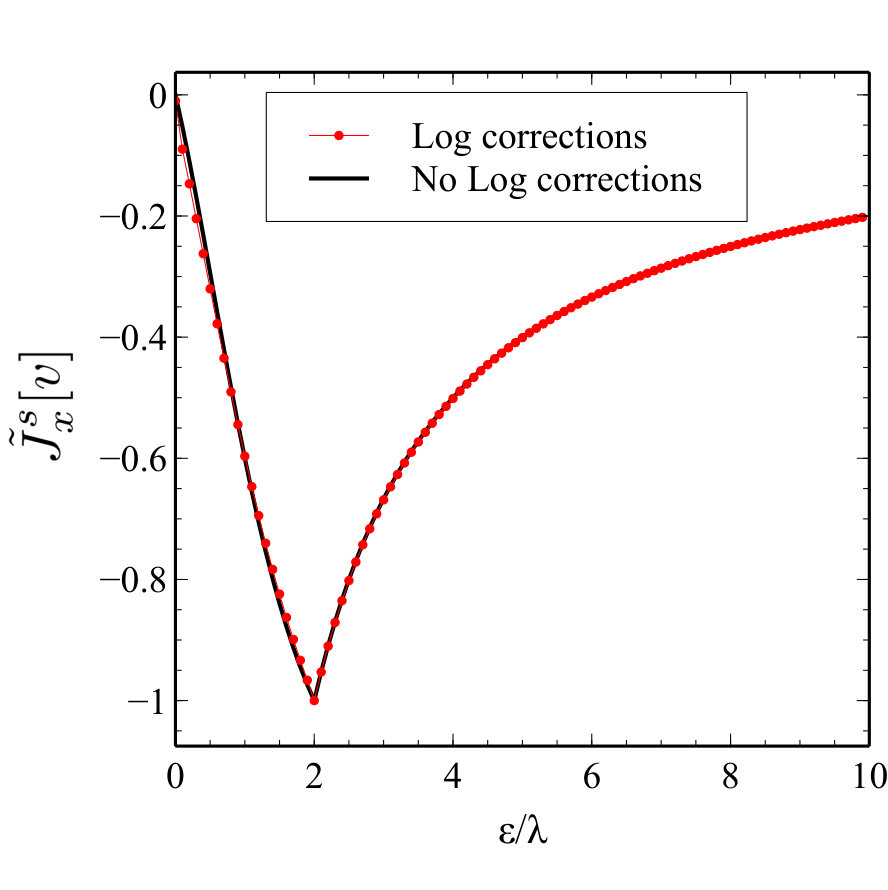 Figure 8
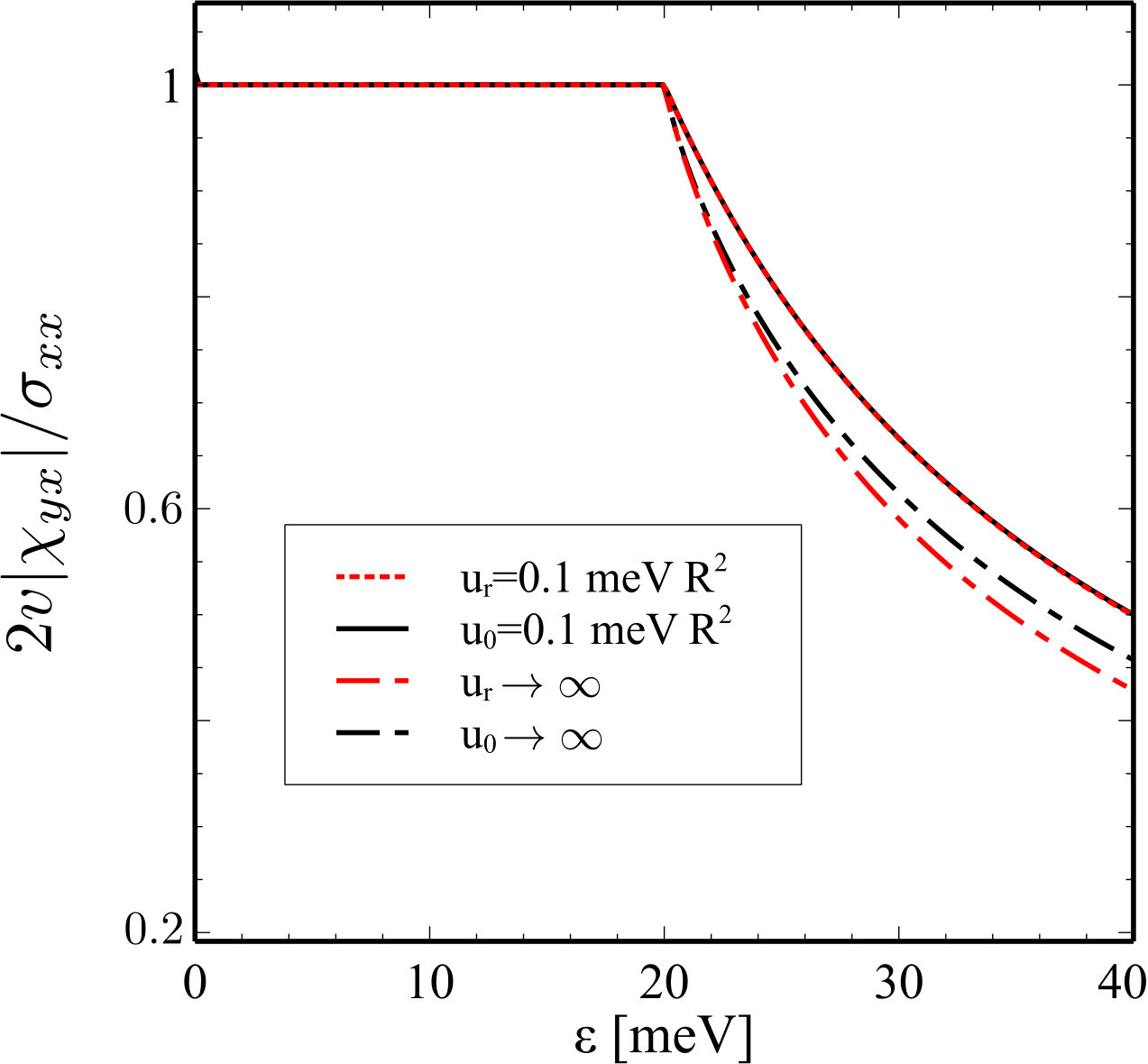 Figure 9
Peer Reviews
No public reviews on file for this paper yet. If you reviewed it on a platform where reviews are public (OpenReview, ICLR, NeurIPS, ICML), you can paste yours below so the community can read it here.
Videos
No videos yet. Explain this paper in a talk, walkthrough, or lecture? Add one.
Optimal charge-to-spin conversion in graphene on transition metal
dichalcogenides
Manuel Offidani
Department of Physics, University of York, York YO10 5DD, United Kingdom
Mirco Milletarì
Dipartimento di Matematica e Fisica, Università Roma Tre, 00146 Rome, Italy
Bioinformatics Institute, Agency for Science, Technology and Research (A*STAR), Singapore 138671, Singapore
Roberto Raimondi
Dipartimento di Matematica e Fisica, Università Roma Tre, 00146 Rome, Italy
Aires Ferreira
Department of Physics, University of York, York YO10 5DD, United Kingdom
Abstract
When graphene is placed on a monolayer of semiconducting transition metal dichalcogenide (TMD) its band structure develops rich spin textures due to proximity spin–orbital effects with interfacial breaking of inversion symmetry. In this work, we show that the characteristic spin winding of low-energy states in graphene on TMD monolayer enables current-driven spin polarization, a phenomenon known as the inverse spin galvanic effect (ISGE). By introducing a proper figure of merit, we quantify the efficiency of charge-to-spin conversion and show it is close to unity* *when the Fermi level approaches the spin minority band. Remarkably, at high electronic density, even though sub-bands with opposite spin helicities are occupied, the efficiency decays only algebraically. The giant ISGE predicted for graphene on TMD monolayers is robust against disorder and remains large at room temperature.
In the past decade, graphene has emerged as a strong contender for next-generation spintronic devices due to its long spin diffusion lengths at room temperature and gate tunable spin transport G_spintronics_review . However, the lack of a band gap and its weak spin–orbit coupling (SOC) pose major limitations for injection and control of spin currents. In this regard, van der Waals heterostructures 2D_materials_review built from stacks of graphene and other two-dimensional (2D) materials hold great promise Spinorbitronics_review . The widely tunable electronic properties in vertically-stacked 2D crystals offer a practical route to overcome the weaknesses of graphene 2D_band_engineering . An ideal match to graphene are group-VI dichalcogenides (e.g., ; ). The lack of inversion symmetry in TMD monolayers enable spin- and valley-selective light absorption TMD , thus providing all-optical methods for manipulation of internal degrees of freedom Muniz_2015 . The optical injection of spin currents across graphene–TMD interfaces has been recently reported G-TMD_Exp_Luo_17 ; G-TMD_Exp-Avsar_17 , following a theoretical proposal gmitra2015 . Furthermore, electronic structure calculations show that spin–orbital effects in graphene on TMD are greatly enhanced gmitra2016 ; wang2015 , consistently with the SOC fingerprints in transport measurements avsar2014 ; wang2015 ; wang2016 ; Volkl16 , pointing to Rashba-Bychkov (RB) SOC in the range of 1–10 meV.
In this Letter, we show that the SOC enhancement in graphene on a TMD monolayer allows for current-induced spin polarization, a relativistic transport phenomenon commonly known as ISGE or the Edelstein effect ISGE . In the search for novel spintronic materials, the role of the ISGE, together with its Onsager reciprocal—the spin-galvanic effect—is gaining strength, with experimental reports in spin-split 2D electron gases formed in Bi/Ag and \text{LaAlO}_{3}\text{/\text{SrTiO}_{3}}, as well as in topological insulator (TI) -Sn thin films sanchez2013 ; lesne2016 ; sanchez2016 . In addition, the enhancement of non-equilibrium spin polarization has been proposed in ferromagnetic TMD and magnetically-doped TI/graphene magnetic_ISGE . The robust ISGE in nonmagnetic graphene/TMD heterostructures predicted here promises unique advantages for low-power charge-to-spin conversion (CSC), including the tuning of spin polarization by a gate voltage. Moreover, owing to the Dirac character of interfacial states in graphene on TMD monolayer, the ISGE shows striking similarities to CSC mediated by ideal topologically protected surface states Schwab11 , allowing nearly optimal CSC. We quantify the CSC efficiency as function of the scattering strength, and show it can be as great as % at room temperature (for typical spin–orbit energy scale smaller than ).
*The model.—*The electronic structure of graphene on a TMD monolayer (G/TMD) is well described at low energies by a Dirac model in two spatial dimensions (wang2015, ; gmitra2016, )
[TABLE]
where is the 2D wavevector around a Dirac point, is the Fermi velocity of massless Dirac electrons ( m/s) and are Pauli matrices associated with the sublattice, spin, and valley subspaces, respectively. The momentum-independent terms in Eq. (1) describe a RB effect resulting from interfacial breaking of inversion symmetry (), and staggered () and spin–valley () interactions due to broken sublattice symmetry [see Fig. 1 (a)]. The Dirac Hamiltonian contains all substrate-induced terms (to lowest order in ) that are compatible with time-reversal symmetry and the point group Kochan17 , except for a Kane–Mele SOC term (), which is too weak (Hernando06, ; Fabian09, ) to manifest in transport and can be safely neglected. The dispersion relation associated with for each valley consists of two pairs of spin split Dirac bands (omitting )
[TABLE]
where , is the spin-helicity index and
[TABLE]
A typical spectrum is shown in Fig. 1(b). The spin texture associated with each band reads
[TABLE]
where . The first term describes the spin winding generated by the RB effect [Fig. 1(c)] and the second its out-of-plane tilting due to the broken sublattice symmetry. The entanglement between spin and sublattice degrees of freedom generates a nontrivial dependence in the spin texture. For example, in the minimal model with only RB interaction, coincides with the band velocity (in units of ), while , i.e., the spin texture is fully in plane (rashba2009, ). When all interactions in Eq. (1) are included, we find
[TABLE]
The breaking of sublattice symmetry modifies the spin texture, with both valleys acquiring a spin polarization in the direction, consistently with first-principles studies (gmitra2016, ). The explicit form of is too cumbersome to be presented. Here, it is sufficient to note that , with decaying to zero away from the Dirac point SM . Finally, due to time-reversal symmetry the polarizations at inequivalent valleys are opposite. For energies within the Rashba pseudo gap (RPG), that is, , the Fermi surface is simply connected. Hence, at low energies, the electronic states have well-defined spin helicity [Fig. 1(b-c)]. This feature of G/TMD interfacial states is reminiscent of spin–momentum locking in topologically protected surface states Schwab11 , hinting at efficient CSC.
*Semiclassical argument.—*The efficiency of CSC can be demonstrated using a simple semiclassical argument. For ease of notation, hereafter we employ natural units (). Under a dc electric field, say , the -polarization spin density in the steady state reads , where is the deviation of the quasiparticle distribution function with respect to equilibrium and . Owing to the tangential winding of the in-plane spin texture, only the longitudinal component of the quasiparticle distribution function contributes to the integral. At zero temperature, where is the band velocity, is the longitudinal transport time and is the Fermi energy ( for electron/holes). For energies inside the RPG (regime I), one easily finds
[TABLE]
where is the Fermi momentum and (assumed valley-independent for simplicity). The charge current density, , can be computed following identical steps. We obtain
[TABLE]
where . The implications of our results are best illustrated by considering the minimal model, for which and thus . Figure 1 (d) shows the ratio of in the linear response regime computed according to the Kubo formula, confirming the linear proportionality . The well-defined spin winding direction in regime I, responsible for the semiclassical form of the non-equilibrium spin polarization [Eq. (6)], automatically implies a large ISGE in the clean limit. Generally, the CSC is optimal near the RPG edges, where is the largest in regime I. In this energy range, the CSC is only limited by the electronic mobility, i.e., . These considerations show that is the proper figure of merit in regime I. For models with , the efficiency is nearly saturated
[TABLE]
and is generally close to unity for not too large spin–valley coupling SM . In regime II, both spin helicities contribute to the non-equilibrium spin density, resulting into a decay of the CSC rate. Here, is not a suitable figure of merit and an alternative must be sought. As we show later, in this regime () the CSC efficiency exhibits an algebraic decay law, enabling a remarkably robust ISGE in typical experimental conditions.
Quantum treatment.— To evaluate the full energy dependence of the ISGE, we employ the self-consistent diagrammatic approach developed by two of us in Ref. (MilletariFerreira2016, ). Despite the complexity of the Hamiltonian, Eq. (1), one can solve the Bethe–Salpeter equations for the -matrix ladder. This provides accurate results in the regime . The zero-temperature spin density–charge current response function reads as
[TABLE]
where is the Green’s function in the retarded/advanced sector of disordered G/TMD. Here, Tr denotes the trace over internal and motional degrees of freedom, stands for disorder average and is the area. In the diagrammatic approach, the disorder enters as a self-energy, (), “dressing” the single-particle Green’s functions, and as vertex corrections in the electron–hole propagator [Fig. 2 (a)]. Since the response functions of interest are determined by the same relaxation time, , the CSC is expected to be little sensitive to the disorder type as long as the latter is non magnetic. For practical purposes, we use a model of short-range scalar impurities, , where are random impurity locations and parametrizes their strength. This choice will enable us to establish key analytical results across weak (Born) and strong (unitary) scattering regimes.
We first evaluate Eq. (9) for models with fully in-plane spin texture, . For ease of notation, we assume in what follows. The self-energy is given by , where and is the impurity areal density. Moreover, and is the bare Green’s function. Neglecting the real part of , we have
[TABLE]
where (identity), , and in the weak scattering limit
[TABLE]
inside the RPG and and for (see SM for full -matrix expressions). The rich matrix structure in Eq. (10) stems from the chiral (pseudo-spin) character of quasiparticles. In constrast, in the 2D electron gas with RB spin–orbit interaction, the self energy due to spin-independent impurities is a scalar in all regimes Schwab_02 . Next, we evaluate the disorder averaged Green’s function, . We define , , and , which represent an energy shift, a renormalized RB coupling and a random SOC gap, respectively. After tedious but straightforward algebra we find
[TABLE]
where with
[TABLE]
and is a -quadratic term SM . The last step consists of evaluating the vertex corrections. The renormalized charge current vertex satisfies the Bethe-Salpeter (BS) equation
[TABLE]
The infinite set of non-crossing diagrams generated by the -matrix ladder describes incoherent multiple scattering events at all orders in the scattering strength [Fig. 2(b)], yielding an accurate description of spin–orbit coupled transport phenomena in the dilute regime (MilletariFerreira2016, ). To solve Eq. (14), we decompose as , where the repeated indices are summed over. The number of nonzero components is constrained to only four by the symmetries of G/TMD note_symmetries : . Exploring the properties of the Clifford algebra, one can show that the nonzero vertex components have a one-to-one correspondence to their associated non-equilibrium response functions milletari2017 . This allows us to express in terms of the spin density component only, , i.e., , where
[TABLE]
Here, is the Heaviside step function and is a weak correction logarithmic in the ultraviolet cutoff set by the inverse of the lattice scale (ferreira2011, ). Finally, is a complicated function, which in the Gaussian and unitary scattering limits takes the form
[TABLE]
respectively. Analogously, we can determine the expression for the charge conductivity , with SM . The CSC rate can now be determined
[TABLE]
where and deviates only slightly from this value when is large and for [see Fig. 1(d)]. The central result Eq. (17) puts our earlier semiclassical argument on firm grounds, and shows that the CSC is little affected by the disorder strenght outside the RPG.
Discussions.— In realistic G/TMD heterostructures, and can be comparable to the RB coupling (gmitra2016, ), leading to major modifications in the band structure. Nevertheless, a thorough analysis, summarized in Fig. 3, shows that the ISGE remains robust. For instance, for , the dependence of the in-plane spin texture is virtually unaffected [Eq. (5)]. Thus, according to the semiclassical results the CSC efficiency should be high at the RPG edge. This is confirmed by a numerical inversion of the Bethe-Salpeter equations in the full model. The figure of merit plotted in Fig. 3 reaches its predicted optimal value [Eq. (8)]. When the spin–valley coupling is significant, the in-plane spin texture shrinks, however the CSC efficiency remains sizeable [Fig. 3(b)]. Outside the RPG, the definition of efficiency is complicated due to the coexistence of counter-rotating spins. To analyze this regime, we employ a heuristic definition satisfying: (i) for all parameters, (ii) decays for due to collapsing of spin-split Fermi rings and (iii) is continuous across the RPG. Since the band velocity saturates quickly to its upper bound (), we use its value at the RPG edge as representative for the regime II, which lead us to the following definition
[TABLE]
where . Consistently with the rate derived for the minimal model [Eq. (17)], the asymptotic behavior of is of power-law type, and thus the CSC remains robust in the accessible range of electronic densities. A relevant question is how much efficiency is lost due to thermal fluctuations. Figure 3(b) shows the CSC figure of merit at selected temperatures in the weak scattering limit (see Ref. SM for methods). Since the ratio decays slowly in regime II, the smearing caused by thermal activation is ineffective, allowing a giant ISGE at room temperature, e.g., for a chemical potential meV. We finally comment on the rippling of the graphene surface and imperfections causing local variations in the RPG Ripples . Inhomogeneities in the spin–orbit energy scales are expected to be small in samples with strong interfacial effect Yang_17 . As long as , the random spin–orbit field acts merely as an additional source of scattering SM , which according to our findings would not affect the ISGE efficiency.
In conclusion, we have presented a rigorous theory of inverse spin galvanic effect for graphene on transition metal dichalcogenide monolayers. We introduced a figure of merit for charge-to-spin conversion and show it attains values close to unity at the minority spin band edge. The effect is robust against nonmagnetic disorder and remains large at room temperature. The current-driven spin polarization is only limited by the electronic mobility, and thus it is expected to achieve unprecedentedly large values in ultra-clean samples. Our results are also relevant for group-IV honeycomb layers Honeycomb_Layers , which are described by similar Dirac models.
The codes used for numerical analyses are available from the Figshare database, under the Ref figshare .
M.M. thanks C. Verma for his hospitality at the Bioinfomatics Institute in Singapore. A.F. gratefully acknowledges the financial support from the Royal Society (U.K.) through a Royal Society University Research Fellowship. R.R. acknowledges the hospitality of CA2DM at NUS under grant R-723-000-009-281 (GL 769105). M.O. and A.F. acknowledge funding from EPSRC (Grant Ref: EP/N004817/1).
Supplementary information for “OPTIMAL CHARGE-TO-SPIN
CONVERSION IN GRAPHENE ON TRANSITION METAL DICHALCOGENIDES”
In this Supplementary Information we provide additional details on the Dirac-Rashba model and the semiclassical theory at large electronic density. We also provide the explicit form of the renormalized charge current vertex for the minimal model (i.e., , ), as well as additional details on the finite temperature calculation and the impact of random fluctuations in the spin–orbit energy scale.
I DETAILS ON THE MODEL
I.1 Spectrum
The effective Hamiltonian of graphene on TMD monolayer can be written as gmitra2016 ; wang2015
[TABLE]
where are Pauli matrices and we have used the representation for the 4-component spinors at each valley ():
[TABLE]
In the above, are graphene sublattice indexes, and denote the spin projection. The respective eigenvalues are given in Eqs. (2)-(3) of main text. The Rashba pseudo-gap at (see Fig. 1, main text) is easily computed as
[TABLE]
while the bottom of the spin majority conduction band is
[TABLE]
For energies the spectrum develops a small “Mexican hat” feature gmitra2016 . In Fig. 4 we show the evolution of the spectrum for finite Rashba effect as one turns on the proximity couplings We note that the energy spectrum is gapless in the following particular cases: (i) and (ii) .
In the minimal model () the spin texture is entirely in-plane, due to the Rashba spin-momentum locking. The additional proximity-induced couplings in Eq. (19) favor the establishment of a finite -component. In Fig. 5, we show the spin texture of the electron spin-majority band for a number of representative cases.
I.2 Semiclassical interpretation of the large energy behavior of the
spin–charge response function
We demonstrate how the asymptotic scaling of the ISGE efficiency reported in the main text [viz., Eq. (17)] can be understood within a simple semiclassical picture. For simplicity we study the pure-Rashba model, where . The argument can be easily generalized for other cases. Neglecting interband transitions, the spin- linear response to an electric field applied along axis is given by [cf. Eq. (6) of the main text]
[TABLE]
where are the Fermi radii. Substituting the expression for the equilibrium spin texture [Eq. (5); main text], we find, for large
[TABLE]
Using the form of the momentum relaxation time in the Gaussian and unitary limits, we find, respectively
[TABLE]
While the collapsing of the Fermi rings, as , tends to diminish the out-of-equilibrium spin polarization, the latter can still be finite depending on the asymptotic behavior of . In the unitary limit, one has , resulting in a monotonically increasing spin–charge response function. However, the ratio between the spin–charge response function and the charge conductivity is always , as shown in the main text. While in Eqs. (25)-(26) we have neglected the role of scattering between states with different spin helicity, the latter processes are included in the quantum-mechanical treatment in the main text. Given the agreement of Eqs. (25)-(26) with Eq. (16) of the main text, we conclude that their inclusion will not affect the above semiclassical picture.
II DETAILS ON THE DIAGRAMMATIC CALCULATION
II.1 Disorder averaged propagators
We provide the full form of the disorder averaged propagator in the pure-Rashba model. Denoting with , respectively, the retarded and advanced sector of the theory, we obtain
[TABLE]
where
[TABLE]
[TABLE]
and
[TABLE]
II.2 -matrix calculation
We report the full form of the imaginary part of the self-energy in the -matrix approximation:
[TABLE]
[TABLE]
with and as defined in the main text. The real part of the self-energy (omitted for simplicity) leads to a renormalization of the Fermi energy and of as well as a random mass term of the Kane-Mele type MilletariFerreira2016 . The Fermi energy renormalization contains a logarithmic divergence, which can be taken into account by wave function renormalization and leads to a renormalization of the Fermi velocity Vozmediano_11 .
II.3 Full form of the renormalized charge vertex
We first define the general structure of the renormalized charge current vertex in the minimal model as
[TABLE]
Below we provide the explicit form of the components to lowest order in the impurity density for the weak scattering limit. For simplicity, we assume . Outside the Rashba pseudogap, , we obtain
[TABLE]
while inside the Rashba pseudogap, , we find
[TABLE]
At leading order in , the important components are . In the strong scattering regime Eqs. (15)-(19) acquire logarithmic corrections in the ultraviolet cutoff . In Fig. 6 we show that such corrections are small for the leading terms and , so that Eqs. (15)-(17) still hold in this regime. Having performed the limit , Eqs. (18),(19) for the subleading components are no longer valid; yet we find the corrections provide a negligible contribution to the response functions (not shown).
II.4 Finite temperature calculation for the ISGE efficiency
In Fig. (3) of the main text we showed the figure of merit’s temperature-dependence. The calculation was performed numerically employing the following definition
[TABLE]
where is the Fermi–Dirac distribution function; see main text for remaining definitions.
III EFFECT OF RANDOM SOC
We analyze here the impact of random Rashba fields (RRFs) on the CSC efficiency. In graphene without proximity SOC, RRFs lead to current-driven spin polarization via asymmetric spin precession Huang_16 . In graphene on TMD, small fluctuations in the Rashba-Bychkov coupling () cannot disturb the spin helicity of eigenstates. This directly implies that the CSC rate in regime I remains unaffected (see main text). To investigate the impact of random SOC in regime II, we model the RRF as a short-range disorder potential with Rashba-Bychkov matrix structure:
[TABLE]
Neglecting its real part real, the self-energy preserves the structure of Eq. 10 of the main text
[TABLE]
where (identity), , . We report the the weak scattering limit form of the parameters appearing in Eq. (42) for positive energies
[TABLE]
We find that at leading order in the impurity areal density, Eq. (17) of the main text still holds with a slightly different functional form for In Fig. (7) we plot the ratio for Rashba-like and scalar impurities (as considered in the main text); the CSC ratio in the two cases is virtually identical in the Born scattering regime. This confirms that as long as the proximity effect is well developed in the band structure of graphene, the CSC mechanism is robust against random fluctuations in the energy scales of the model.
The reference list from the paper itself. Each links out to its DOI / PubMed record.
- 1(1) W. Han, R.K. Kawakami, M. Gmitra, and J. Fabian. Nature Nano. 9 , 794 (2014).
- 2(2) A. K. Geim, and I. V. Grigorieva. Nature 499 , 419 (2013).
- 3(3) A. Soumyanarayanan, N. Reyren, A. Fert , and C. Panagopoulos. Nature 539 , 509 (2016).
- 4(4) L. Britnell, et al . Science 340 , 1311 (2013). A. V. Kretinin, et al . Nano Lett. 14 (2014); H. Fang, et al. PNAS 111 , 6198 (2014); F. Withers, et al . Nat. Materials, 14 301 (2015). T. Shen, A.V. Penumatcha, and J. Appenzeller, ACS Nano 10 , 4712 (2016).
- 5(5) Z. Zhu et al. Physical Review B, 84 , 153402 (2011); D. Xiao, et al. Physical Review Letters 108 , 196802 (2012); K. F. Mak, et al. Nature Nanotechnology 7 , 494 (2012); H. Zeng et al. Nature Nanotechnology 7 , 490 -493 (2012).
- 6(6) R.A. Muniz, and J.E. Sipe, Phys. Rev. B 91 , 85404 (2015).
- 7(7) Y.K. Luo et al. Nanoletters 17 , 3877 (2017);
- 8(8) A. Avsar et al. pre-print: ar Xiv:1705.10267 (2017).