Role of Structural Morphology in Urban Heat Islands at Night Time
J. M. Sobstyl, T. Emig, M. J. Abdolhosseini Qomi, R. J.-M. Pellenq,, F.-J. Ulm

TL;DR
This study demonstrates that urban structural morphology, including building distribution and sky view factor, significantly influences nocturnal urban heat islands across diverse cities, surpassing population size as a key factor.
Contribution
It introduces a simple heat radiation model linking urban geometry to UHI intensity, validated with multi-year data from over 50 cities worldwide.
Findings
Structural morphology explains city-to-city UHI variations.
UHI-morphology relation is stronger than UHI-population relation.
Morphology-based model accurately predicts nocturnal UHI.
Abstract
We study the dependence of the intensity of the urban heat island (UHI) on urban geometry. UHI is a urban climate phenomenon referring to the air temperature difference between rural and urban areas. We use multi-year data for urban-rural temperature differences, combined with building footprint data and a simple heat radiation scaling model to demonstrate for more than 50 cities world-wide that structural morphology -- measured by a building distribution function and the sky view factor -- explains city-to-city variations in nocturnal UHI. Our results show that the relation between UHI and the morphology is significantly stronger than the one with population, which in the past has been considered as the dominant factor.
Click any figure to enlarge with its caption.
 Figure 1
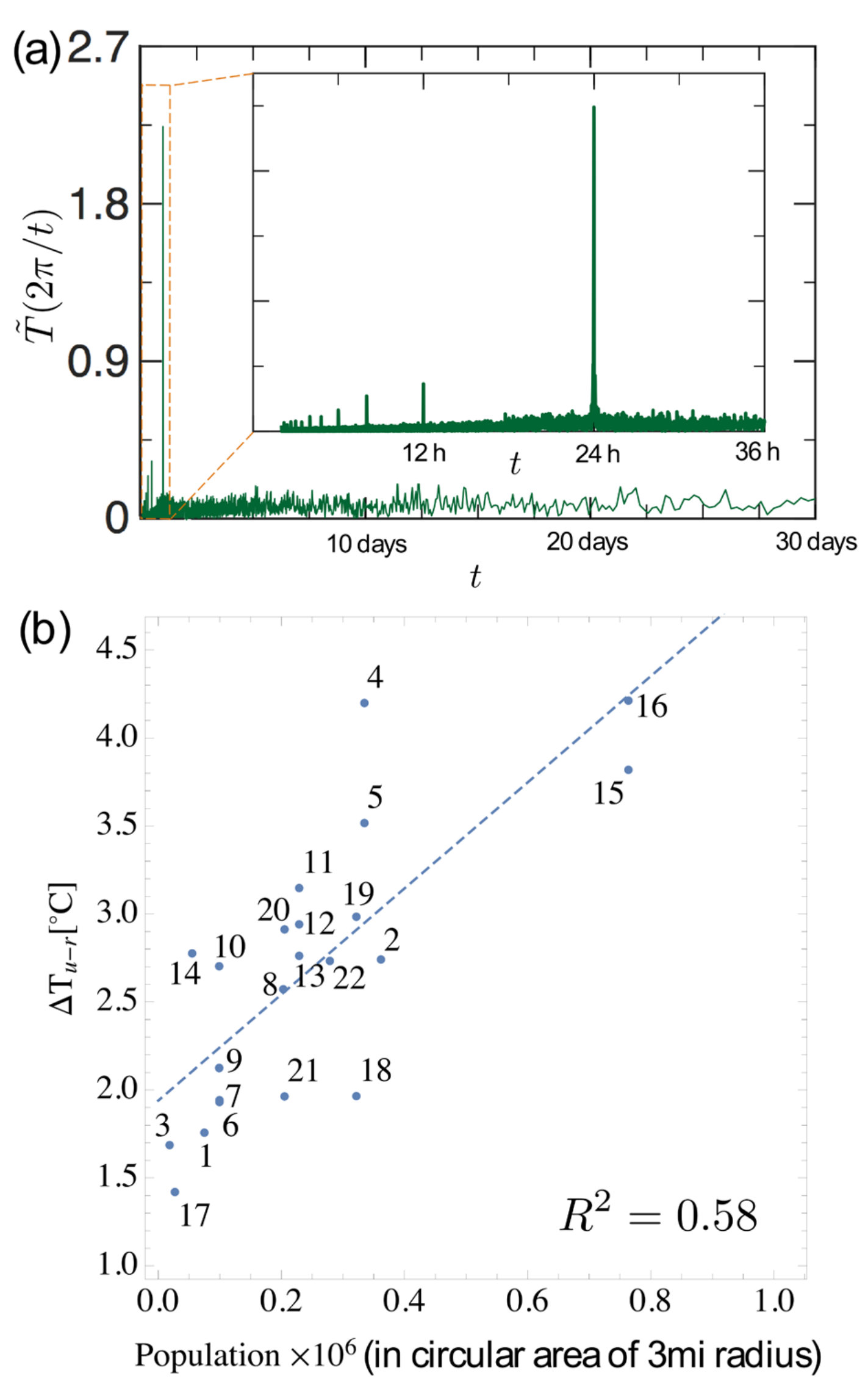 Figure 1
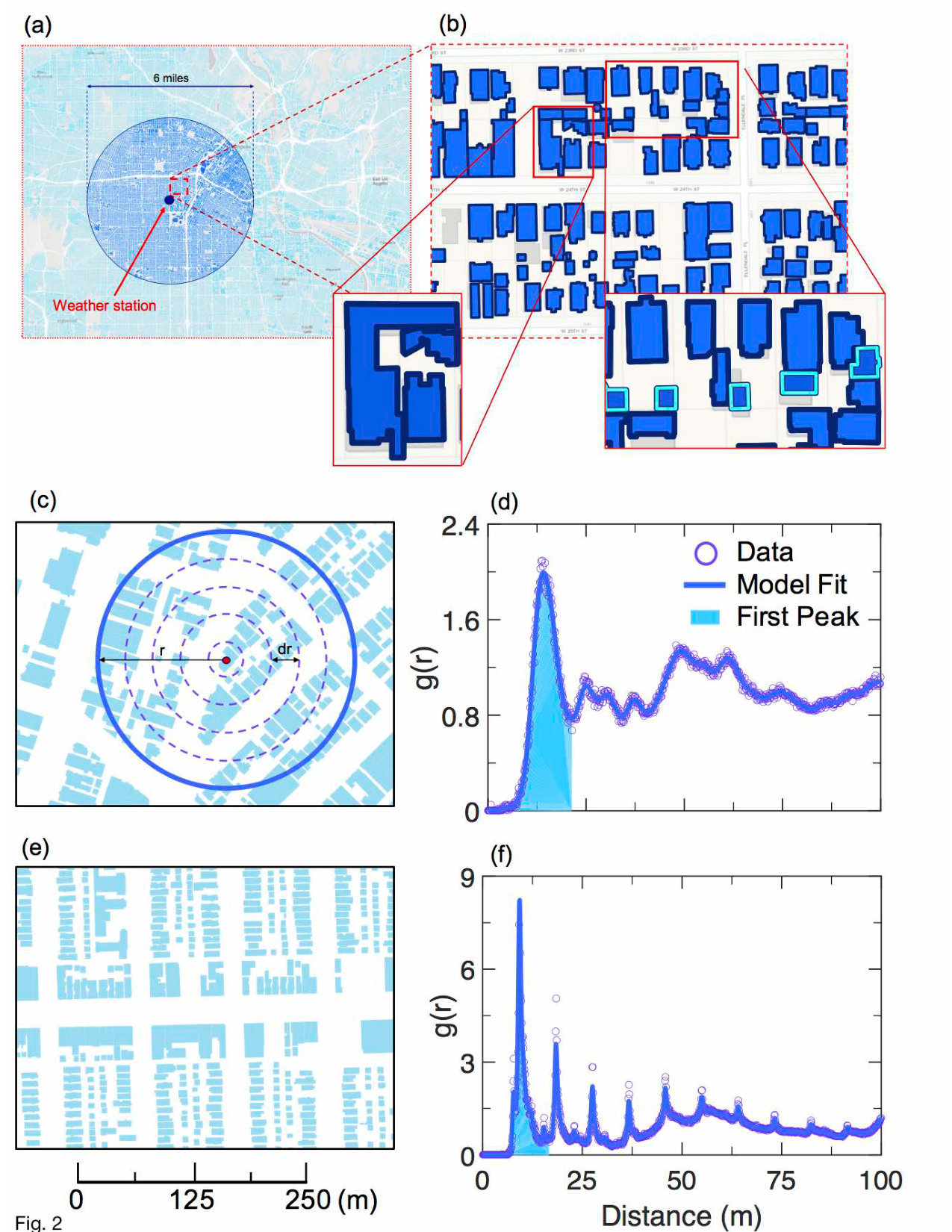 Figure 2
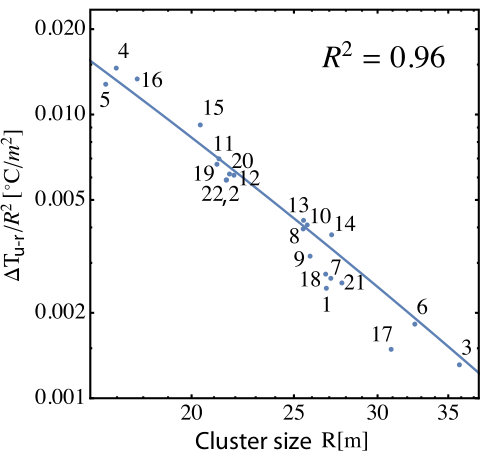 Figure 3
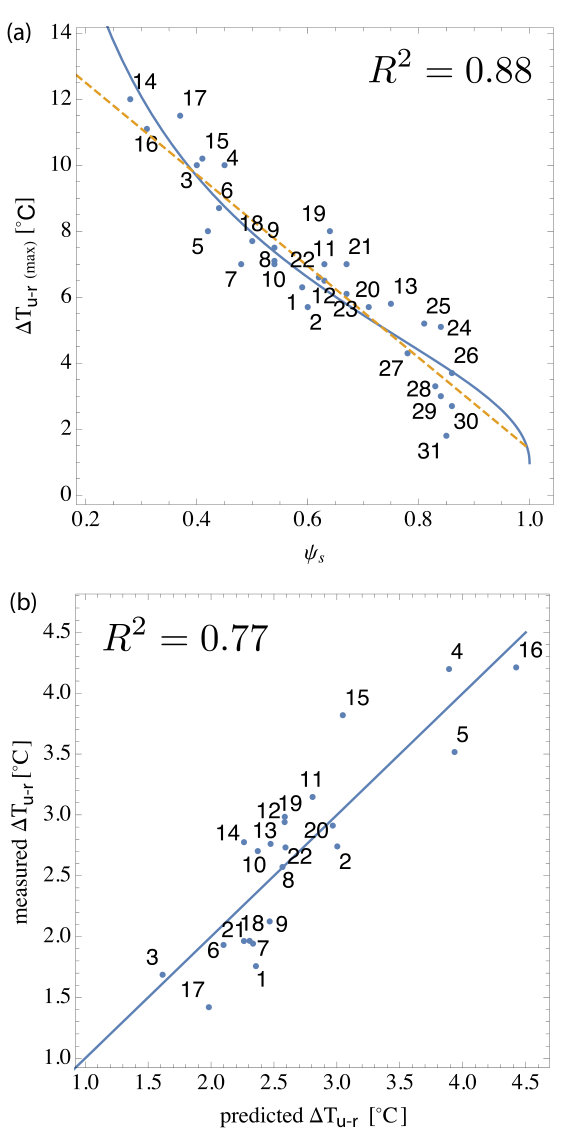 Figure 4
Peer Reviews
No public reviews on file for this paper yet. If you reviewed it on a platform where reviews are public (OpenReview, ICLR, NeurIPS, ICML), you can paste yours below so the community can read it here.
Videos
No videos yet. Explain this paper in a talk, walkthrough, or lecture? Add one.