Photospheric Emission of Gamma-Ray Bursts
A. M. Beloborodov, P. M\'esz\'aros

TL;DR
This paper reviews the physics of gamma-ray burst emission from relativistic jets, focusing on photospheric processes, radiative transfer, and how models compare with observations to estimate jet parameters.
Contribution
It provides a comprehensive review of photospheric emission mechanisms in GRBs, including recent model comparisons and predictions for polarization and neutrino signals.
Findings
Estimates of Lorentz factor and magnetization from model-observation comparisons
Predictions for GRB polarization levels
Predictions for neutrino emission from GRB jets
Abstract
We review the physics of GRB production by relativistic jets that start highly opaque near the central source and then expand to transparency. We discuss dissipative and radiative processes in the jet and how radiative transfer shapes the observed nonthermal spectrum released at the photosphere. A comparison of recent detailed models with observations gives estimates for important parameters of GRB jets, such as the Lorentz factor and magnetization. We also discuss predictions for GRB polarization and neutrino emission.
Click any figure to enlarge with its caption.
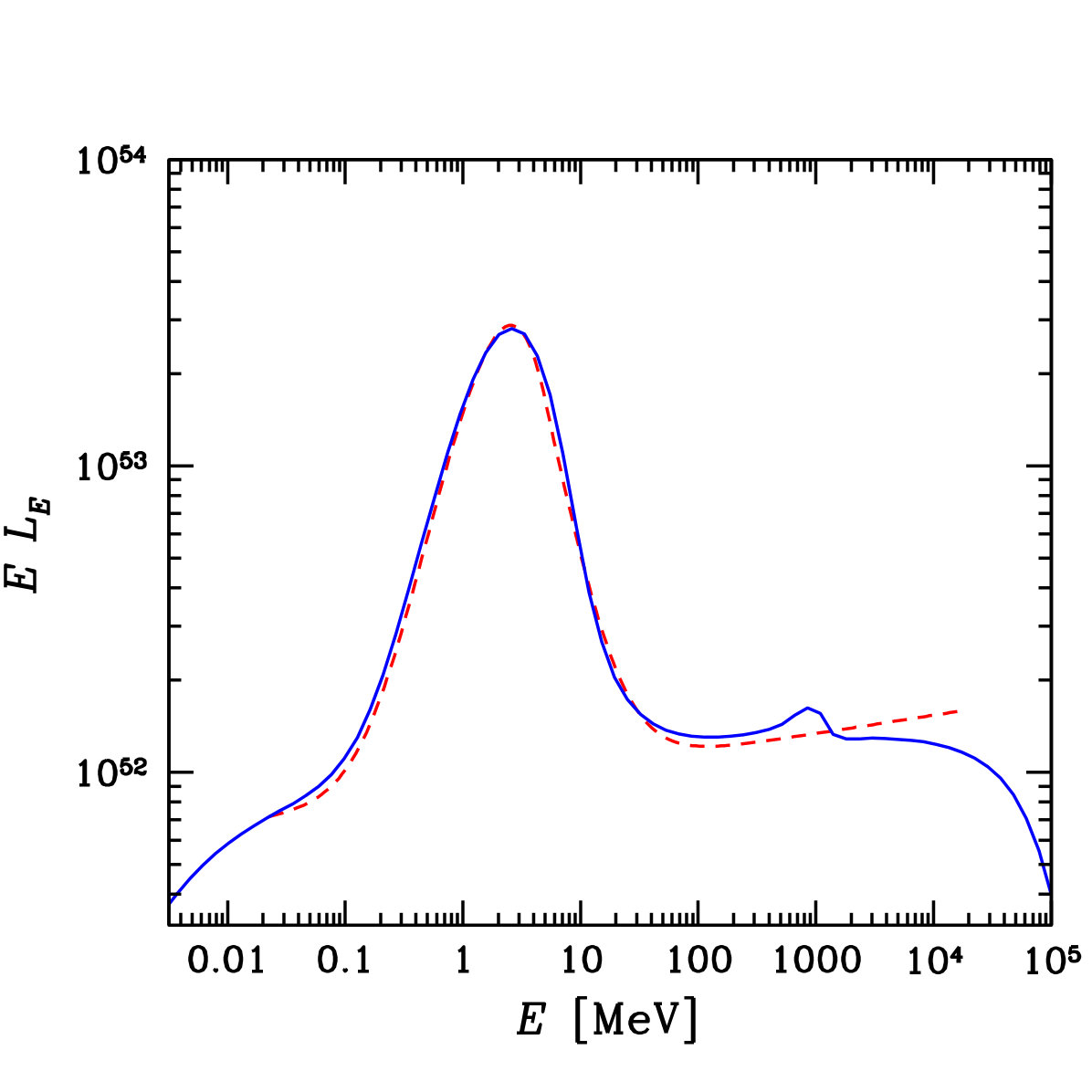 Figure 1
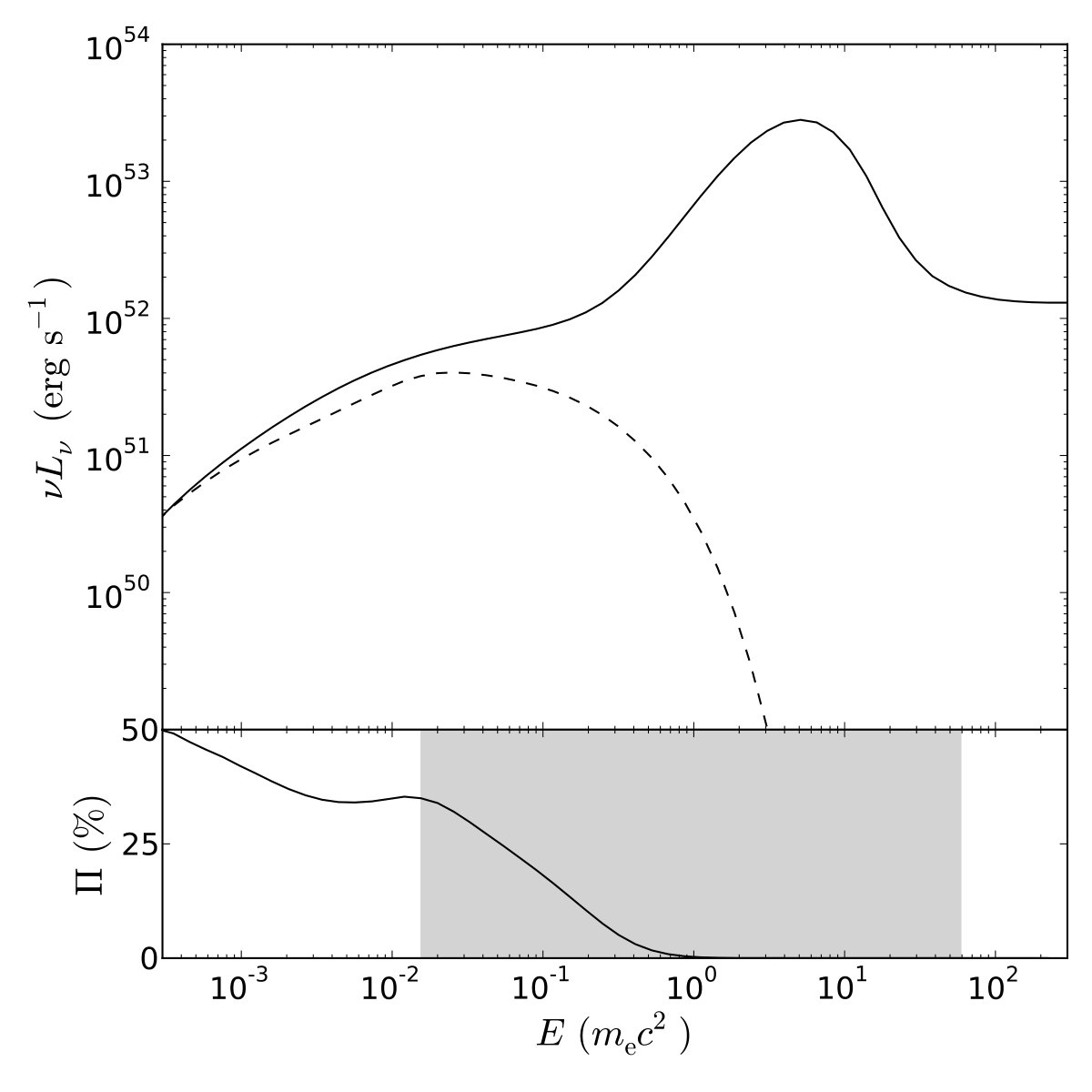 Figure 2
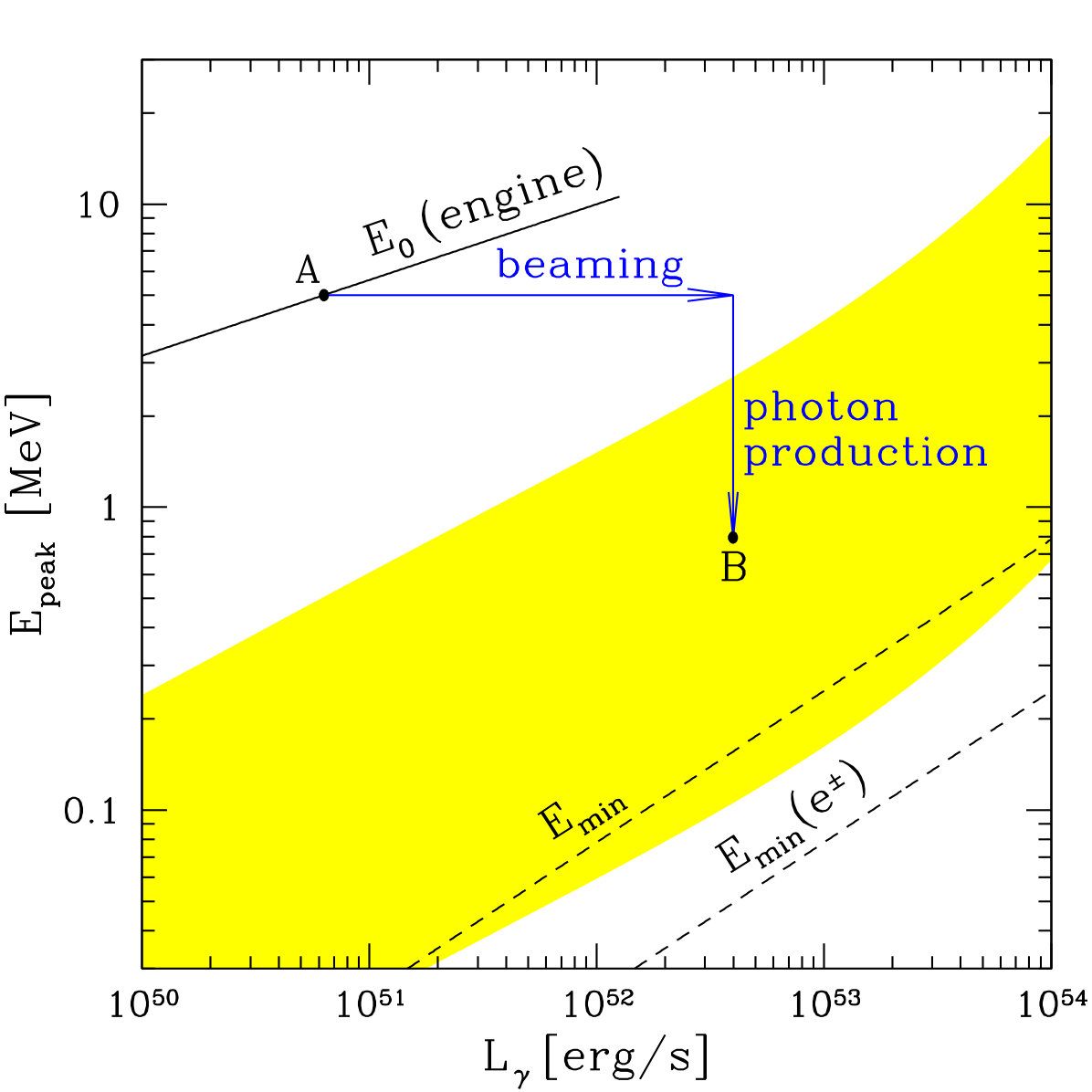 Figure 3
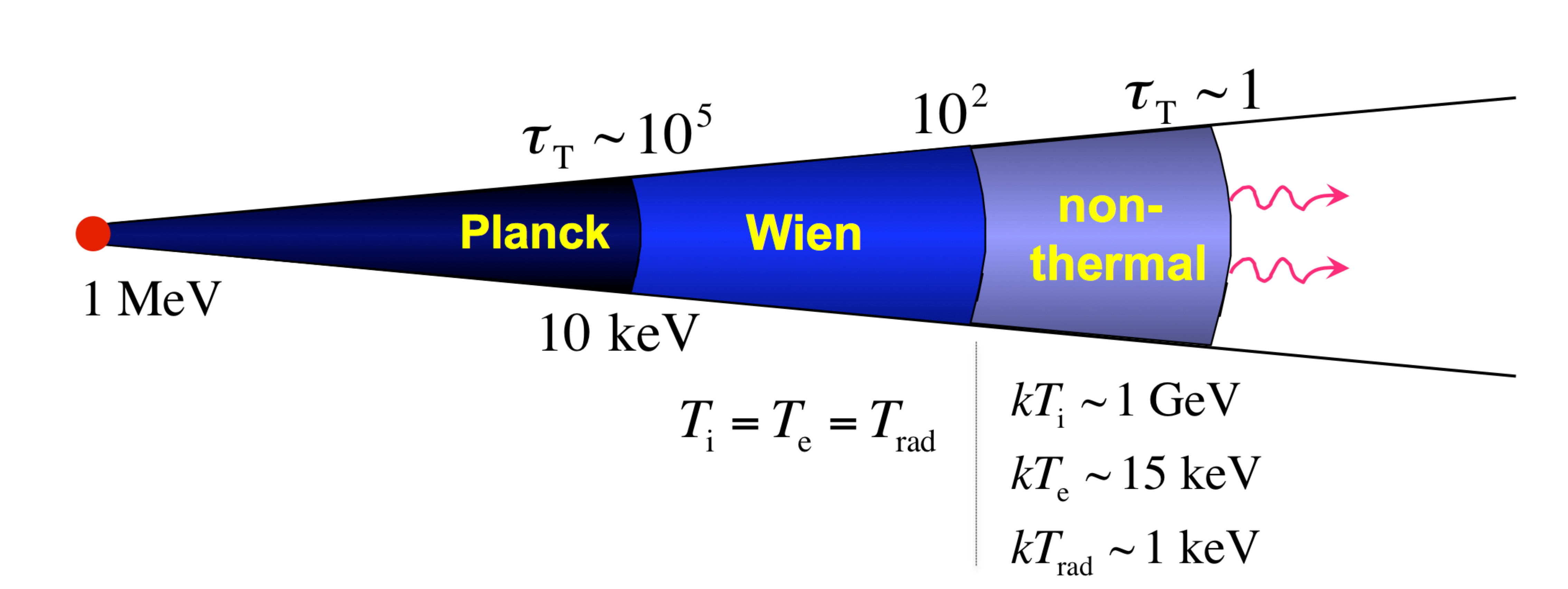 Figure 4
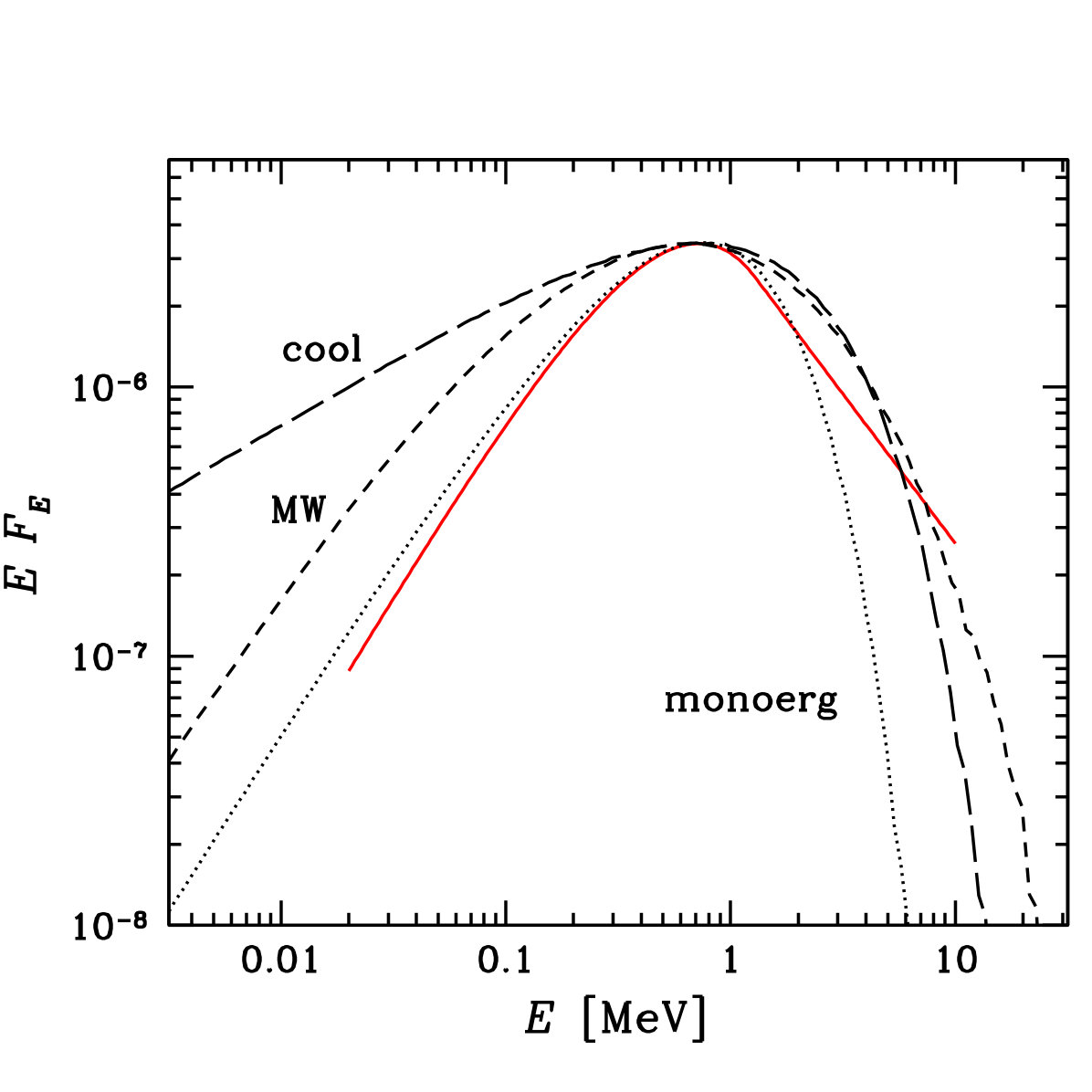 Figure 1
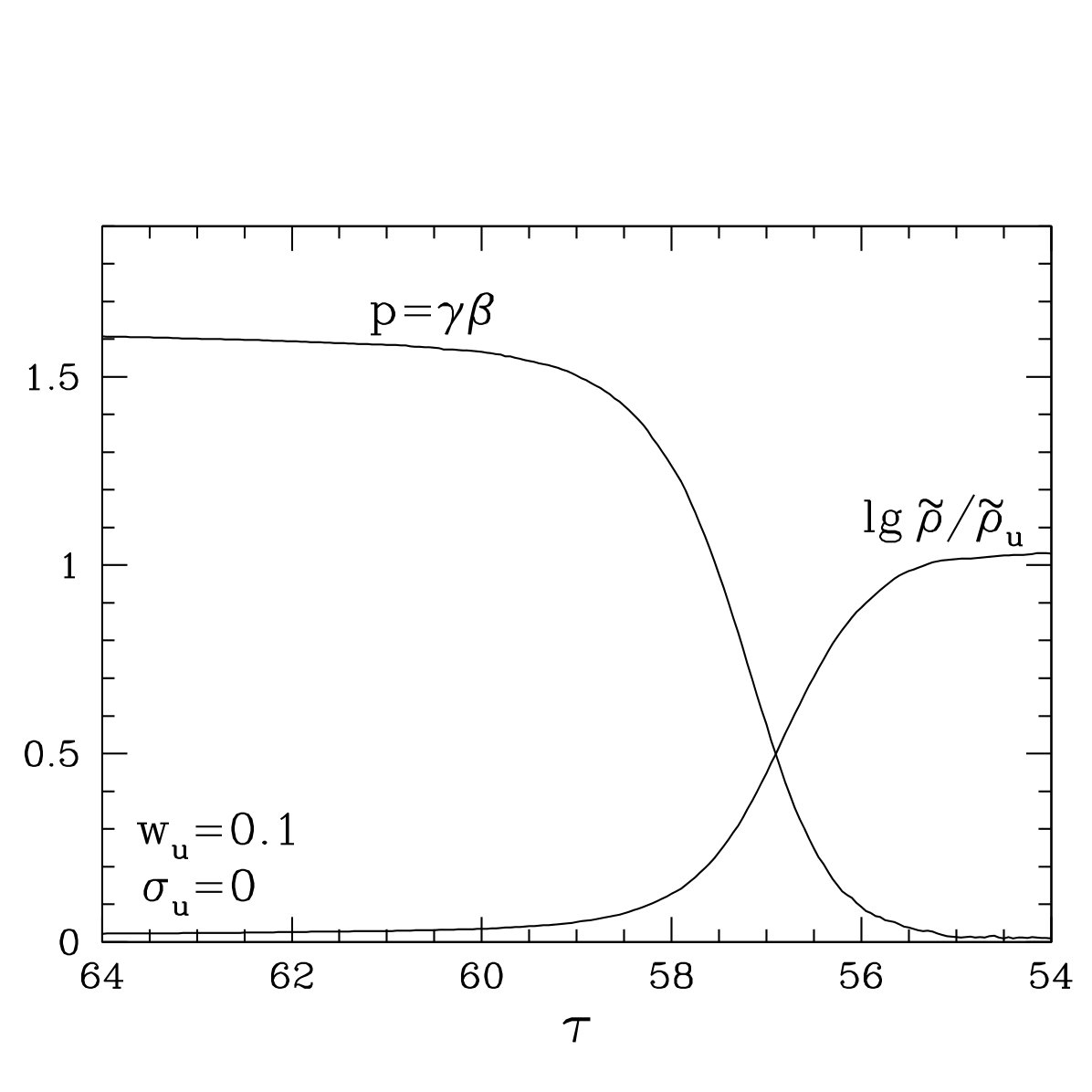 Figure 6
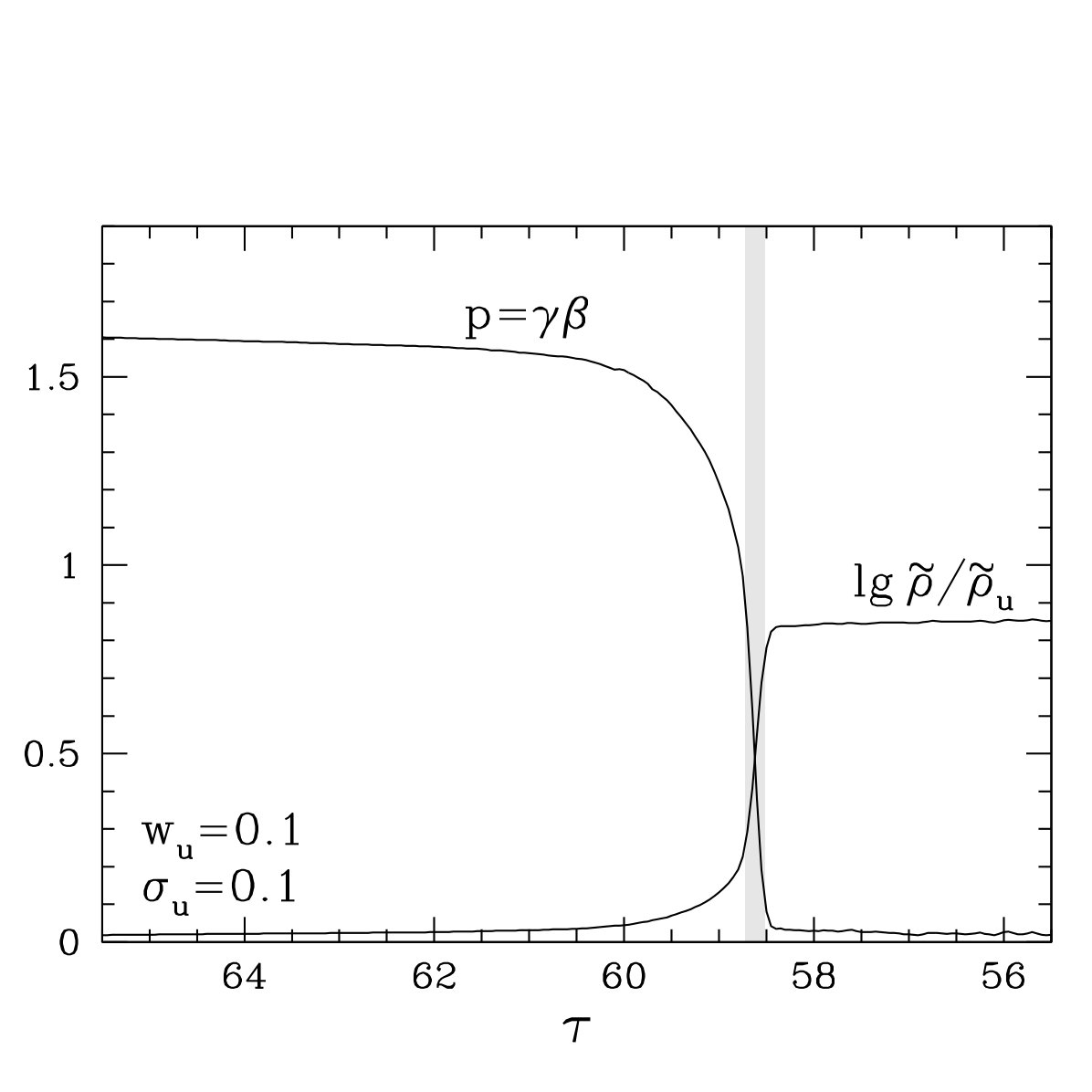 Figure 7
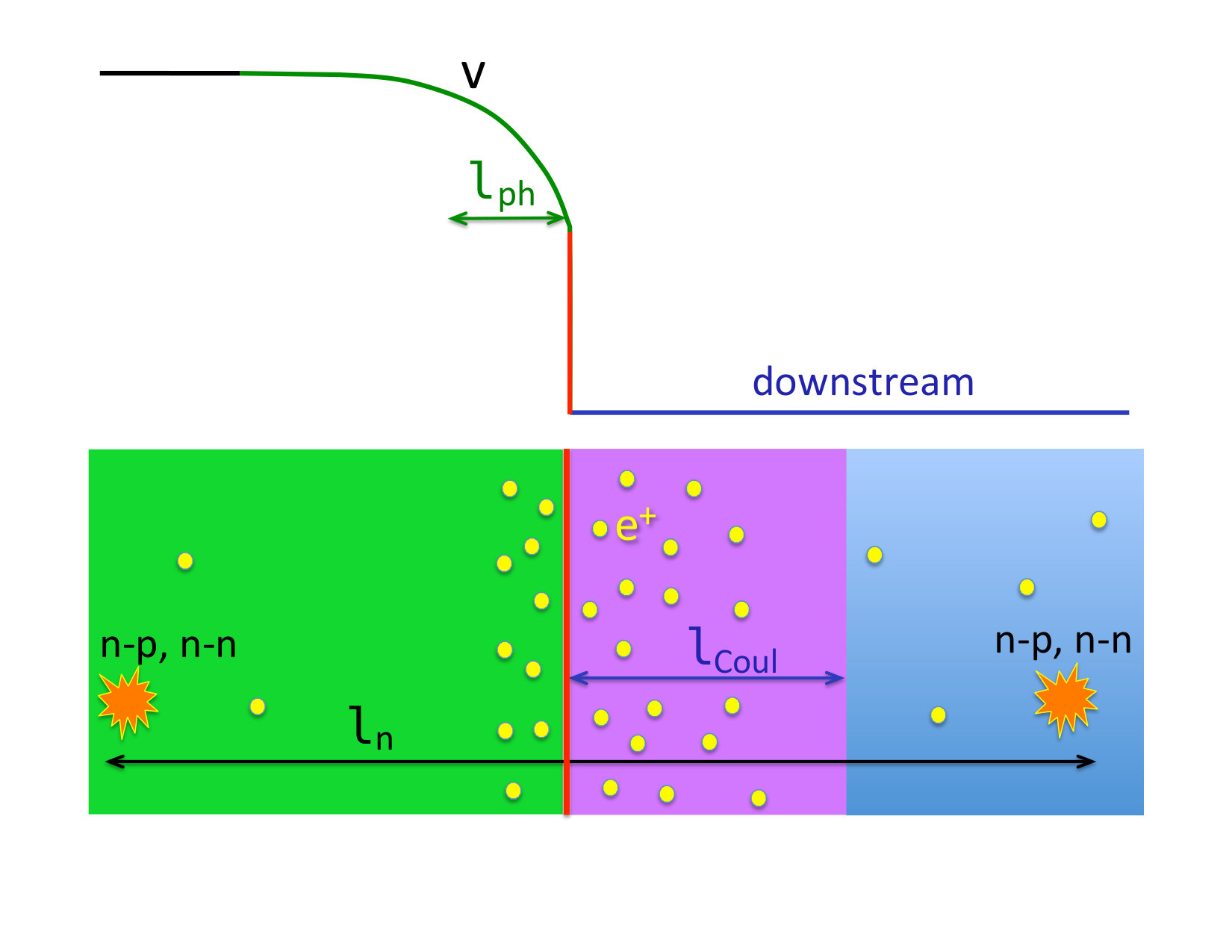 Figure 8
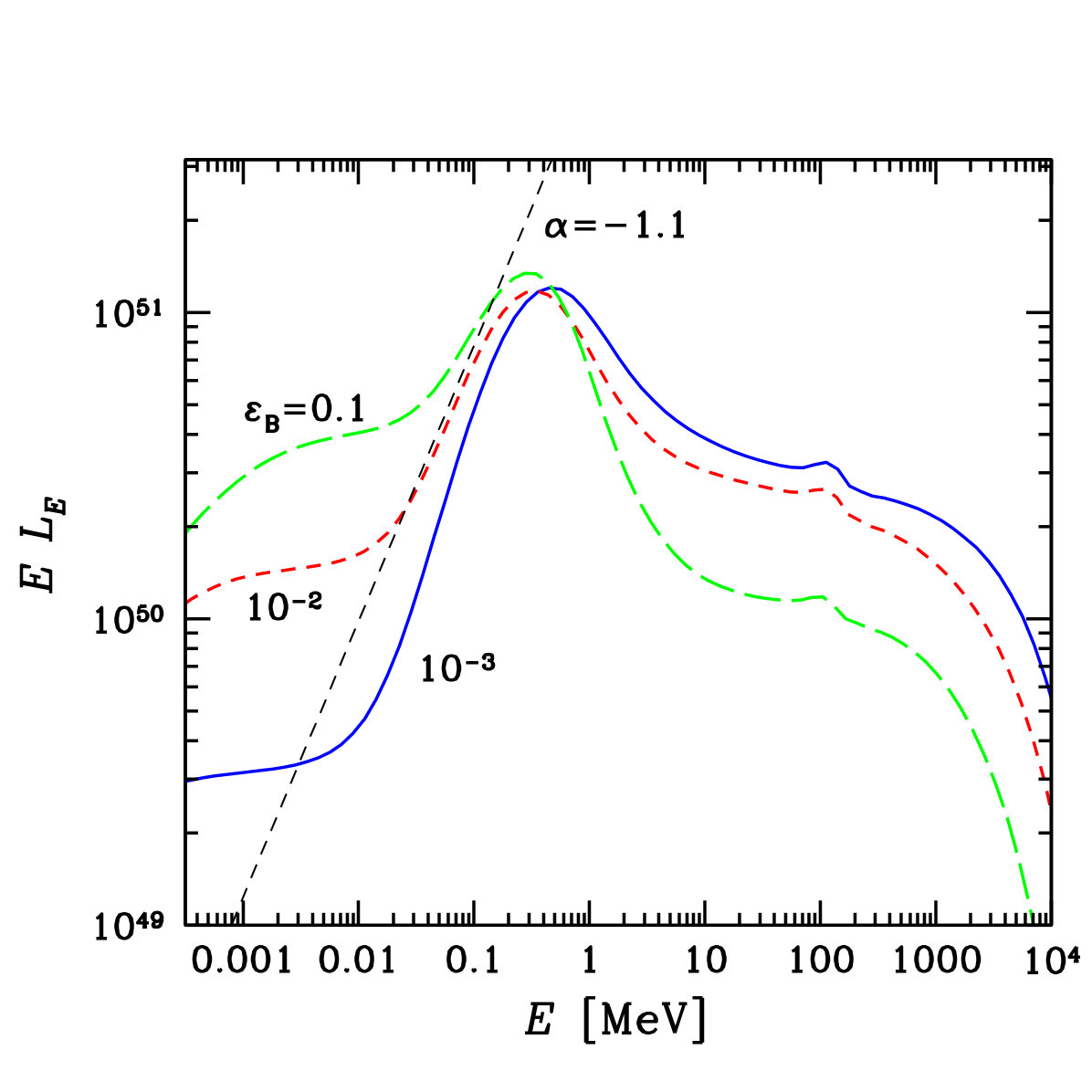 Figure 9
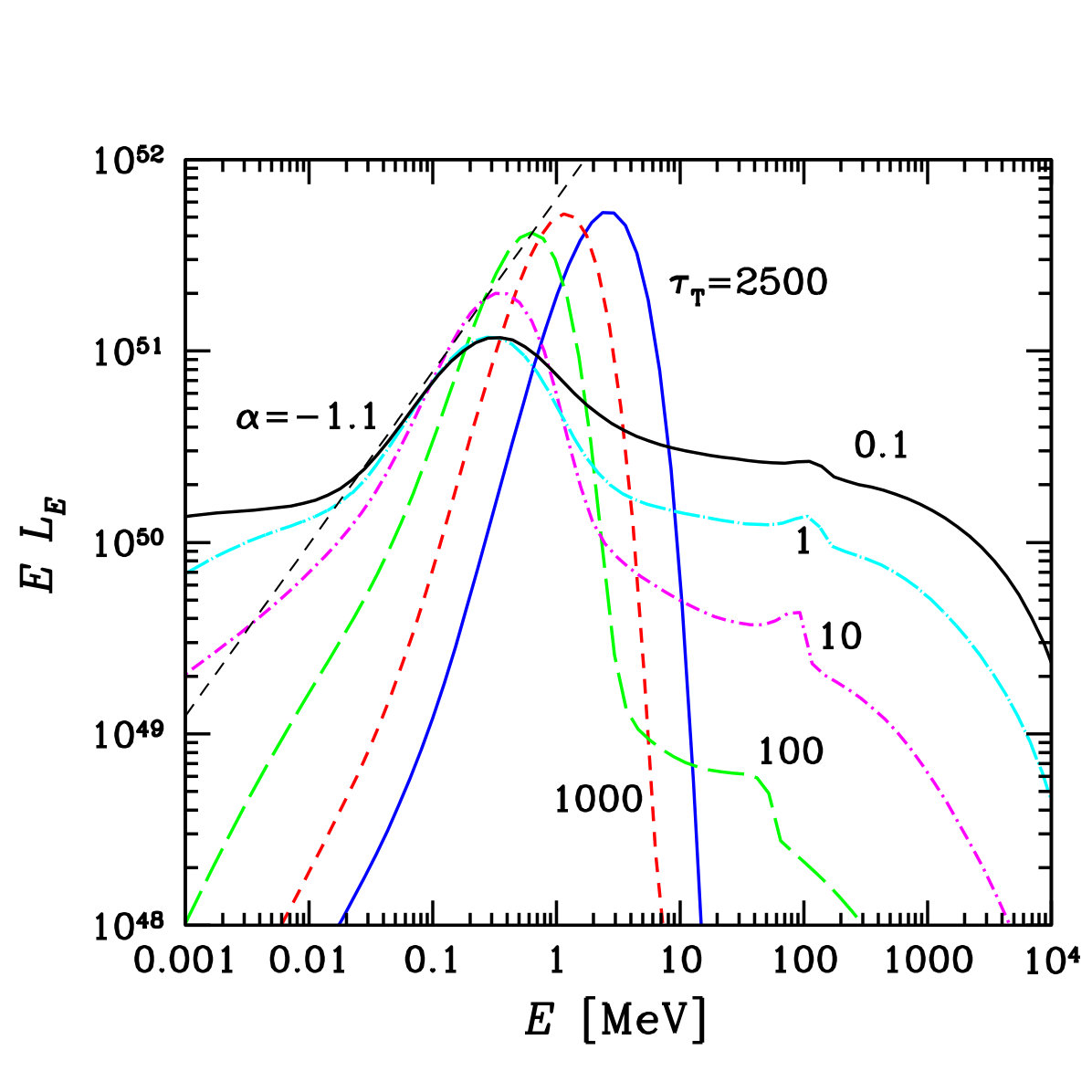 Figure 10
| GRB | ||||||
|---|---|---|---|---|---|---|
| 990123 | 0.44 | 35 | 500 | 0.018 | 0.099 | 0.021 |
| 090902B | 2.3 | 70 | 1220 | 0.012 | 0.055 | 0.065 |
| 130427A | 0.47 | 64 | 300 | 0.046 | 0.093 | 0.067 |
Peer Reviews
No public reviews on file for this paper yet. If you reviewed it on a platform where reviews are public (OpenReview, ICLR, NeurIPS, ICML), you can paste yours below so the community can read it here.
Videos
No videos yet. Explain this paper in a talk, walkthrough, or lecture? Add one.
∎
11institutetext: A. M. Beloborodov 22institutetext: Physics Department and Columbia Astrophysics Laboratory, Columbia University, 538 West 120th Street, New York, NY 10027, USA
22email: [email protected] 33institutetext: P. Mészáros 44institutetext: Center for Particle and Gravitational Astrophysics, Dept. of Astronomy & Astrophysics and Dept. of Physics, Pennsylvania State University, University Park, PA 16802, USA
44email: [email protected]
Photospheric Emission of Gamma-Ray Bursts
A. M. Beloborodov
P. Mészáros
(Received: date / Accepted: date)
Abstract
We review the physics of GRB production by relativistic jets that start highly opaque near the central source and then expand to transparency. We discuss dissipative and radiative processes in the jet and how radiative transfer shapes the observed nonthermal spectrum released at the photosphere. A comparison of recent detailed models with observations gives estimates for important parameters of GRB jets, such as the Lorentz factor and magnetization. We also discuss predictions for GRB polarization and neutrino emission.
Keywords:
Gamma-Ray Bursts Radiative processes
††journal: my journal
1 Introduction
The emission mechanism of gamma-ray bursts (GRBs) has been a puzzle since their discovery half a century ago. Following the discovery of GRB afterglows in the end of 1990s, it has been established that GRB emission arises in ultra-relativistic jets from extremely powerful cosmic explosions at cosmological distances. The existing emission models are mainly guided by the observed spectrum of the jet radiation and its fast variability.
The main phase of a GRB, usually called “prompt” emission, typically lasts seconds or minutes, with huge luminosities, sometimes reaching erg s*-1* in isotropic equivalent (before correcting for the beaming of radiation from a collimated relativistic jet). The prompt phase should be distinguished from the GRB “afterglow” — the long-lasting and weaker emission with a broad spectrum extending from gamma-rays to radio waves.
The spectrum of prompt emission has a well defined, sharp peak at an energy that varies around 1 MeV, after correcting by for the cosmological redshift (Kaneko et al., 2006; Goldstein et al., 2012). For most bursts the spectrum around the peak can be approximately described by a simple Band function (Band et al., 2009) — two power laws that are smoothly connected at . Bursts of higher luminosity are observed to have higher . An approximate correlation MeV was reported (e.g. Wei and Gao (2003); Yonetoku et al. (2004); Ghirlanda et al. (2012)), where is the burst luminosity (isotropic equivalent) in units of erg s*-1*.
The short durations of s and fast variability of GRB emission imply that it is produced by outflows or jets with Lorentz factors \Gamma\mathrel{\hbox{\raise 2.15277pt\hbox{>}\hbox to0.0pt{\hss\lower 2.15277pt\hbox{\sim}}}}10^{2}. The Doppler effect compresses the typical observed timescale of radiation released at a radius , from to . In addition, a high allows the radiation to decouple from the jet at smaller radii; typically, the jet becomes transparent to MeV radiation at radii somewhere between and cm. The characteristic scattering optical depth seen by photons propagating from a radius to infinity is given by
[TABLE]
where is the isotropic equivalent of the proton mass outflow rate, and is the number of per proton. The optically thin zone of the jet roughly corresponds to , and the sub-photospheric region is where . Strong energy dissipation must occur in the jet to generate the observed non-thermal spectra. This dissipation can occur before and after the jet becomes transparent to radiation.
1.1 Optically thin synchrotron emission?
A simple phenomenological GRB model posits that we observe Doppler-shifted synchrotron radiation, similar to blazar jets. The model assumes that a nonthermal electron population is injected in the jet by some dissipative process in an optically thin outflow. It gives a radiation spectrum that peaks at the photon energy
[TABLE]
Here is the magnetic field measured in the rest frame of the jet (“fluid frame”), is the Lorentz factor at which the injected electron distribution peaks (also measured in the fluid frame), and is the bulk Lorentz factor of the jet itself. If the electron distribution at is a power-law then the synchrotron spectrum has a high-energy power-law tail, at .
One possibility for the injection of high-energy electrons is associated with internal shocks (Rees and Mészáros, 1994; Kobayashi et al., 1997; Daigne and Mochkovitch, 1998). A mildly relativistic electron-ion shock produces an electron distribution with , where can be a significant fraction of unity. This gives
[TABLE]
where is radius in units in cm, is the isotropic equivalent of the jet power in units of erg s*-1*, and is the fraction of jet energy that is carried by the magnetic field. If the shock radius happens to be cm then would be consistent with observations. A Band-type spectrum is emitted if the electron energy distribution extends as a power law at and cuts off at , with a negligible Maxwellian component (e.g. Burgess et al. (2011)). This is a problematic requirement. In observed shocks, e.g. in the solar system or in supernovae, as well as in computer-simulated shocks, most of the dissipated energy is given to Maxwellian particles, with only a small fraction of particles populating the high-energy nonthermal tail.
Strong magnetization \varepsilon_{\rm B}\mathrel{\hbox{\raise 2.15277pt\hbox{>}\hbox to0.0pt{\hss\lower 2.15277pt\hbox{\sim}}}}0.1 offers an alternative mechanism for particle acceleration: the dissipation of magnetic energy, in particular through magnetic reconnection (Drenkhahn and Spruit, 2002). Recent dedicated numerical studies of relativistic reconnection show that it gives a broad flat electron distribution, with no cutoff at low energies (Kagan et al., 2015). Synchrotron emission from this electron distribution does not resemble the pronounced spectral peak observed in GRBs.
The synchrotron model may be viewed more broadly as a phenomenological model which does not specify how the desired electron distribution is created. In this form the model still faces a few problems:
(1) Thousands of GRBs have been observed, and most of them have near 1 MeV (Goldstein et al. 2012). Few bursts have above 10 MeV and no bursts are known with MeV. This is at odds with the naive model prediction , which should give a broad distribution of due to variations in the local , , and .
(2) High-energy electrons quickly cool to (which makes the process radiatively efficient) and should emit radiation at with a photon index . A typical low-energy index observed in GRBs is , and many bursts have even harder slopes (Kaneko et al. 2006). Such hard slopes are in conflict with the synchrotron model.
(3) The synchrotron spectrum should have a rather broad peak, even when the source is assumed to have a uniform magnetic field and the power-law electron distribution is assumed to cut off at . Attempts to reproduce GRB spectra with such idealized models gave acceptable fits for a small number of bursts (Burgess et al., 2011, 2014; Preece and the Fermi collab., 2014) and were found incompatible with observed spectra in the dominant majority of GRBs (Axelsson and Borgonovo, 2015; Yu et al., 2015).
The peak sharpness problem is illustrated in Figure 1 where a synchrotron spectrum is compared with the Band fit of a bright burst with a typical spectrum, GRB 990123. In the realistic fast-cooling regime, the minimum width of the synchrotron peak at half maximum exceeds orders in photon energy, even with a single value of in the emitting source and the narrow injected electron distribution (single-temperature Maxwellian). It is significantly broader than the Band fit to the time-average of the GRB spectrum (Briggs et al., 1999). Uncertainties in the observed spectrum due to the detector response and limited photon statistics allow some room for stretching the measured peak width; however it can hardly be made consistent with the synchrotron model, especially when the inevitable broadening due to variable magnetic fields, electron injection and the Doppler factor are taken into account. Note also that synchrotron spectra with sharp peaks consistent with a Band function are not observed in any other astrophysical objects. One example is provided by blazars — their synchrotron spectra have the half-maximum width of several orders of magnitude, broader than in GRBs (e.g. Ghisellini (2006)).
1.2 Photospheric emission
The sharp MeV spectral peak provides evidence for thermalization of radiation at early, opaque stages of the GRB explosion (Paczýnski (1986); Goodman (1986); Thompson (1994); Mészáros and Rees (2000b). The inheritance of the spectral peak from an initial thermalization stage is also supported by the observed distribution of , which cuts off above MeV in agreement with a theoretical maximum (Beloborodov, 2013).
Accepting that the MeV peak forms inside an opaque jet leads to so-called “photospheric” emission models: the GRB radiation is released where the jet becomes transparent to scattering. Several versions of the photospheric model have been discussed over the years (Thompson, 1994; Eichler and Levinson, 2000; Rees and Mészáros, 2005; Giannios and Spruit, 2007; Beloborodov, 2010; Levinson, 2012; Thompson and Gill, 2014). All share a key feature: the jet is dissipative, i.e. significantly heated as it propagates away from the central engine. This heating modifies the emitted photospheric radiation from simple blackbody emission. The resulting spectrum was investigated using dedicated numerical simulations and found to have a nonthermal shape that closely resembles the phenomenological Band function (Pe’er et al. (2006); Giannios (2008); Beloborodov (2010); Vurm et al. (2011); Gill and Thompson (2014); Vurm and Beloborodov (2016b). It was proposed that the dissipative photosphere provides the best description for the observed spectra (e.g. Ryde et al. 2011).
Previous observational search for photospheric emission mainly looked for a Planck component or its modifications, see Pe’er (2016) for a recent review. In contrast, the detailed theoretical calculations suggest that photospheric emission has a broad Band-like spectrum that dominates the prompt GRB rather than adds a blackbody component to it.
2 Sub-photospheric dissipation
Internal bulk motions and magnetic fields provide energy reservoirs available for dissipation in GRB jets. Three mechanisms can make photospheric emission nonthermal:
Dissipation of magnetic energy 2. 2.
Collisions of drifting neutrons 3. 3.
Internal shocks
The details of magnetic dissipation are complicated and still poorly understood. The other two dissipation mechanisms can be examined from first principles and give predictions that can be compared with observations; we will discuss them is some detail below.
A neutron component is expected in GRB explosions (Derishev et al., 1999; Bahcall and Mészáros, 2000; Mészáros and Rees, 2000a; Beloborodov, 2003; Rossi et al., 2006). Free neutrons enter the jet from the neutronized central engine and are also produced by spallation reactions in the jet itself. They begin to drift with respect to the proton flow in the sub-photospheric region and collide with the protons. These nuclear collisions create pions, whose decay leads to the production of pairs with Lorentz factors in the jet rest frame and to the emission of neutrinos with energy in the observer frame. These multi-GeV neutrinos are detectable with IceCube (Bartos et al., 2013; Murase et al., 2013) and can provide an important test for GRB models. The photospheric spectrum generated by neutron collisions has been calculated by Beloborodov (2010) and Vurm et al. (2011), and found to be consistent with GRB spectra.
Internal shocks are generally expected to develop in GRB jets, as the jets are highly variable. The central engine of the explosion is likely unsteady, and additional variability is induced as the jet breaks out of the progenitor star (Lazzati et al., 2009, 2013; Ito et al., 2015). This breakout is accompanied by multiple internal and recollimation shocks. Shock heating is expected to occur in an extended range of radii and in an extended range of timescales, which is consistent with the broad power spectrum of variability observed in GRB light curves (Beloborodov et al., 2000; Morsony et al., 2010).
As long as the flow is opaque and radiation dominates its energy density, photon diffusion plays a leading role in shaping the shock front. Its thickness is then comparable to the photon mean free path. The radiation-mediated shock (RMS) is not capable of electron acceleration by the standard Fermi mechanism, since the electron radiates its energy much faster than it can cross the shock. Photons can experience significant energy gains by crossing the shock back and forth multiple times (Blandford and Payne, 1981; Riffert, 1988; Levinson, 2012). This “bulk Comptonization” upscatters photons up to the MeV band (in the fluid frame). Upscattering to higher energies is hindered by the energy loss due to electron recoil in scattering. Photon upscattering beyond MeV is also stopped by the absorption reaction , and the produced mildly relativistic pairs quickly cool down due to Coulomb and inverse Compton (IC) losses.
All this would suggest that sub-photospheric shocks are inefficient in producing particles with energies in the fluid frame. However, a more realistic picture of sub-photospheric shocks differs from the simple RMS, in particular in outflows that carry magnetic fields and free neutrons in addition to the plasma and radiation. The shock wave is capable of generating ultra-relativistic electrons in two ways:
- •
A strong collisionless subshock forms in the RMS. This is inevitable (even deep below the photosphere) if the flow is sufficiently magnetized (Beloborodov, 2016). A mildly relativistic collisionless subshock heats the electrons to an ultra-relativistic temperature , as they receive a significant fraction of the ion kinetic energy (e.g. Sironi and Spitkovsky 2011). One can show that the inverse Compton (IC) emission from the heated electrons breeds pairs in the upstream, and this process regulates the subshock temperature to .
- •
Inelastic nuclear collisions inject pairs with Lorentz factors in the fluid frame. This mechanism becomes particularly efficient if the outflow carries free neutrons, as they can migrate across the RMS, making the shock wave partially mediated by neutrons (Figure 2).
The structure of sub-photospheric shocks can be studied using detailed numerical simulations. One method is to search for a steady-state propagating solution of the kinetic equations (e.g. Levinson and Bromberg (2008); Budnik et al. (2010)), which may be found by iterations. Alternatively, one can use direct time-dependent simulations of shock formation. The simulation can be set up to follow the evolution of a compressive wave in the outflow, which leads to formation of a pair of shocks and their subsequent quasi-steady propagation. Then the shock structure is obtained from first principles by calculating the time-dependent radiative transfer through the moving plasma. A detailed first-principle simulation involves tracking of a large number of individual photons and their interaction with the moving plasma (using Monte-Carlo techniques).
The shock structure obtained with this method is shown in Figure 3, for two cases — with and without magnetic fields. The simulations demonstrate the formation of a strong collisionless subshock in the magnetized RMS. In GRB jets, a moderate magnetization is sufficient to generate a strong subshock.
Electron-positron pair creation was expected in dissipative GRB jets since the early works in the 1990s (e.g. Rees and Mészáros (1994); Thompson (1994); Mészáros and Rees (2000b)). The efficiency of this process is described by the pair loading factor where is the proton density and is the density. One can show that reaches a peak of inside the shock front and decreases behind it due to pair annihilation (Beloborodov, 2016). The pairs are produced in collisions between MeV photons, which are generated by two mechanisms: (1) An RMS without a strong collisionless subshock produces MeV photons due to bulk Comptonization by a relatively cold flow (the flow is everywhere in local Compton equilibrium with radiation at ). (2) In the presence of a collisionless jump, MeV photons are produced by IC cooling of heated to the subshock temperature .
The shock “breakout” at the photosphere111The photospheric shock breakout should not be confused with the jet breakout from the progenitor star. The jet breakout occurs at smaller radii and huge optical depths. occurs through the growth of the collisionless jump in the RMS until radiation completely decouples from the plasma. Eventually the entire velocity jump becomes mediated by collective plasma processes, regardless of magnetization. This somewhat resembles the shock breakout in non-relativistic supernova explosions (Waxman and Loeb, 2001; Giacinti and Bell, 2015). However, the photospheric shock breakout in GRBs has a special feature: pair creation. The shock sustains a local optical depth \tau_{\rm T}\mathrel{\hbox{\raise 2.15277pt\hbox{>}\hbox to0.0pt{\hss\lower 2.15277pt\hbox{\sim}}}}1 even after the background electron-ion plasma becomes transparent. Effectively, the shock carries the photosphere with it until it expands by an additional factor , continually producing photospheric emission (Beloborodov, 2016). This emission should be observed as a prominent pulse of nonthermal radiation in the GRB light curve. In the observer frame, the emission from the -dressed shocks extends up to the GeV band, where - absorption shapes a break in the spectrum.
The high-energy photospheric pulses contribute to the prompt GRB emission. This emission is observed to overlap (in arrival time) with GeV afterglow, which is associated with the external blast wave from the explosion (Ackermann and The Fermi collaboration, 2013). The early peak of GeV afterglow is explained by the -loading of the blast wave (Beloborodov et al., 2014; Hascoët et al., 2015), and its overlap with the high-energy photospheric pulses can explain the observed variable component of GeV emission at early times.
Internal shocks are the main heating mechanism for jets that are not dominated by magnetic fields. This is a likely situation in GRBs, as comparison of detailed models of photospheric radiation with observed GRB spectra suggests a moderate magnetization in the sub-photospheric region, (see Section 4 below). This does not exclude a stronger magnetization closer to the central engine, allowing for magnetic dissipation that reduces as the jet expands. In this scenario, the early heating at very large optical depths may be dominated by magnetic dissipation. Constraints on the jet magnetization at small radii were recently estimated using the jet breakout time by Bromberg et al. (2015); they find that the jet is not dominated by magnetic fields.
Neutron migration across the shock front leads to nuclear collisions which generate additional pairs and produce neutrino emission. The typical observed energy of neutrinos produced by this mechanism is \sim\Gamma m_{\pi}c^{2}\mathrel{\hbox{\raise 2.15277pt\hbox{>}\hbox to0.0pt{\hss\lower 2.15277pt\hbox{\sim}}}}10 GeV. Sub-photospheric internal shocks were also proposed to emit ultra-high-energy neutrinos (Mészáros and Waxman, 2001; Razzaque et al., 2003). This proposal assumes efficient ion acceleration by the Fermi diffusive mechanism, which does not operate in an RMS and requires a collisionless (sub)shock. Diffusive acceleration is, however, suppressed in shocks with a transverse magnetic field, which advects the particles downstream before they have a chance to cross the shock many times (Sironi and Spitkovsky, 2011). Obliqueness of the magnetic field could help the ion acceleration. Another possible way to accelerate ions is the converter mechanism proposed by Derishev et al. (2003). Numerical simulations of Kashiyama et al. (2013) suggest that the converter mechanism becomes efficient for ultra-relativistic shocks, with amplitude \gamma_{0}\mathrel{\hbox{\raise 2.15277pt\hbox{>}\hbox to0.0pt{\hss\lower 2.15277pt\hbox{\sim}}}}4. This mechanism is, however, quite slow as it relies on neutron-to-proton and proton-to-neutron conversion in (inelastic) nuclear collisions, which occur with a large free path due to the modest nuclear cross section .
3 Peak position of the photospheric spectrum
Photons deep below the photosphere keep interacting with the plasma, and their spectrum forms a sharp Wien peak. The simplest model of photospheric emission assumes a freely expanding radiation-dominated outflow with no baryon loading or magnetic fields (Paczýnski, 1986; Goodman, 1986). In this case, dissipation weakly influences the radiation spectrum and it is not far from a Planck shape. The peak energy of the Planck spectrum (defined as the peak of ) is related to the average photon energy by . In the ideal radiation-dominated outflow remains constant and equal to its value near the central engine .
This simple dissipationless model, however, fails to explain the observed spectra. Although the Planck spectrum may appear in the time-resolved emission of some bursts (e.g. Ryde (2004); Ryde et al. (2011)), GRB spectra are typically nonthermal, with an extended high-energy tail.
3.1 Effects of collimation and early dissipation
The average photon energy at the explosion centre, , is a useful parameter of more general jets, which may be dissipative, magnetized, and collimated. may be expressed in terms of the jet power and an initial radius (comparable to the size of the central compact object) using the relation ,
[TABLE]
Here is the initial thermal fraction of the power (radiation-dominated jets with sub-dominant magnetic energy have ). Collimation of the flow within a small angle implies a smaller true jet power compared with its apparent isotropic equivalent ,
[TABLE]
and hence is reduced as . Achromatic breaks in GRB afterglow light curves are often interpreted as evidence for jet collimation, with a typical opening angle of 5-10o. Collimation helps explain the extremely high apparent luminosities , which reach erg s*-1* in some GRBs. This collimation can be the result of the pressure confinement of the jet by the progenitor star and the breakout cocoon, or by a dense wind from the outer regions of the central accretion disk. Collimation may also be assisted by strong magnetic fields (Komissarov et al., 2009).
If collimation is not accompanied by significant dissipation, the expanding jet can be described as an ideal relativistic flow confined by a wall that determines the cross section of the jet. Dissipationless collimation conserves entropy, and hence does not change the photon-to-baryon ratio . This implies conservation of the photon number carried by the jet and a constant energy per photon . Collimation boosts the isotropic equivalent of the luminosity and the isotropic equivalent of the photon flux by the same factor , and their ratio remains unchanged from its value at , .
In contrast, dissipative collimation (e.g. involving re-collimation shocks) generates entropy and hence increases . Then the total photon number carried by the jet is increased by a factor of and hence (jet energy per photon) is reduced as , giving a GRB with a reduced .
If there is a relation between and , it leads to a correlated variation of and (with being the varying parameter). Thompson et al. (2007) considered the possibility that always tends to its maximum value allowed by the condition of causal contact across the jet. They pointed out that this gives and hence , similar to the observed trend. This simple explanation of the 1/2 slope of the - correlation is however problematic, as it invokes huge variations in to cover the observed correlation range, not only from burst to burst but also within a single burst (e.g. Ghirlanda et al. 2011). It also assumes that GRBs of various apparent luminosities have approximately the same true power erg s*-1*, which implies a central temperature MeV. Then the brightest bursts would have the highest MeV, which falls short of the observed highest MeV.
Although the dissipative collimation is not the only process regulating the observed (as will be further discussed below), it plays an important role illustrated in Figure 4: beaming/collimation increases the apparent luminosity while photon production due to dissipation reduces the observed . Reasonable beaming factors (suggested by the burst energetics and the afterglow data analysis) together with the expected photon production in a dissipative jet naturally explains the location of observed GRBs on the - diagram.
Evidence for dissipation at small radii and large optical depths is provided by the observed photon number emitted in GRBs. In many GRBs, the blackbody central engine is unable to provide the observed photon number, so additional photons must be produced in the expanding jet.
3.2 Planck, Wien, and nonthermal zones below photosphere
Observations also require that dissipation in many GRBs continues at least to the photospheric radius, so that the released spectrum has a nonthermal tail. The effect of dissipation on differs in the following three sub-photospheric zones (Beloborodov, 2013).
Planck zone (r\mathrel{\hbox{\raise 2.15277pt\hbox{<}\hbox to0.0pt{\hss\lower 2.15277pt\hbox{\sim}}}}10^{10} cm, \tau_{\rm T}\mathrel{\hbox{\raise 2.15277pt\hbox{>}\hbox to0.0pt{\hss\lower 2.15277pt\hbox{\sim}}}}10^{5}): the density of the jet is sufficiently high to maintain blackbody radiation in detailed equilibrium with the thermalized plasma. The thermal plasma efficiently produces photons through double Compton scattering. 2. 2.
Wien zone (\tau_{\rm T}\mathrel{\hbox{\raise 2.15277pt\hbox{>}\hbox to0.0pt{\hss\lower 2.15277pt\hbox{\sim}}}}10^{2}): the dissipated heat is thermalized into a Bose-Einstein photon distribution with a finite chemical potential. Kinetic equilibrium between the photons and the plasma is maintained due to the large Kompaneets parameter of the thermal plasma, . The number of photons accumulated in the Wien peak saturates near the Wien radius where drops to and Comptonization becomes unable to bring new generated photons to the spectral peak. 3. 3.
Unsaturated Comptonization zone (1\mathrel{\hbox{\raise 2.15277pt\hbox{<}\hbox to0.0pt{\hss\lower 2.15277pt\hbox{\sim}}}}\tau_{\rm T}\mathrel{\hbox{\raise 2.15277pt\hbox{<}\hbox to0.0pt{\hss\lower 2.15277pt\hbox{\sim}}}}10^{2}): heating maintains a Compton parameter . The final non-thermal shape of the spectrum is produced in this region. Depending on the details of the dissipation mechanism, the spectrum can develop a high-energy tail up to the GeV band. In the presence of a soft photon source (synchrotron emission) unsaturated Comptonization also produces a low-energy photon index .
Dissipation in the Planck zone reduces . Dissipation in the Wien zone increases if no new photons are produced; strong synchrotron emission in the Wien zone can reduce . In the non-thermal zone remains practically unchanged.
A blackbody photosphere would have the temperature defined by
[TABLE]
The corresponding would be given by . This estimate should be viewed as a robust lower limit on rather than its true value. One could also define the effective blackbody temperature at the Wien radius, replacing with in Equation (6) (Giannios, 2012). This would still give lower than its true value. A more realistic model should not make the blackbody assumptions at any radii. Instead, it should explicitly follow the production of photons (and their Comptonization) in the expanding jet. Such simulations have been performed recently; their results are described below.
Radiative transfer simulations also give a detailed description of radiation decoupling from the expanding jet. There is no unique sphere of last scattering, and the notion of photosphere is quite fuzzy. is defined as the radius where (see Equation 1). This gives a characteristic decoupling radius, however the location of last scattering is random and surprisingly broadly distributed around (Pe’er, 2008; Beloborodov, 2011). 2/3 of photons diffusing from large optical depths are last scattered between and , and 1/3 — outside this interval. Another surprising transfer effect is the significant anisotropy of radiation (measured in the jet rest frame) developing at small radii (Beloborodov, 2011).
4 GRB spectrum from radiative transfer simulations
Radiation emerging at the photosphere carries information about the entire expansion history of the jet, and the observed spectrum may be used to reconstruct dissipative processes hidden in the opaque region behind the photosphere. This can be achieved by solving a carefully formulated radiative transfer problem, which must be solved consistently with the flow dynamics and heating. A global simulation starting at a sufficiently small radius will show how the jet radiation deviates from blackbody and becomes nonthermal, shaping the observed GRB spectrum.
The effect of subphotospheric heating on GRB radiation has been studied with four different numerical codes (Pe’er et al., 2006; Giannios, 2008; Beloborodov, 2010; Vurm et al., 2011), consistently giving Band-type spectra. These calculations explored how the spectrum develops the high-energy tail at optical depths \tau\mathrel{\hbox{\raise 2.15277pt\hbox{<}\hbox to0.0pt{\hss\lower 2.15277pt\hbox{\sim}}}}30 as a result of thermal and nonthermal Comptonization. Recently, Vurm and Beloborodov (2016b) have performed global simulations of radiative transfer starting from very high optical depths and including photon production and absorption processes.
4.1 Formulation of the transfer problem
A convenient starting point of transfer simulations is the radius where the collimation process ends and the jet begins to expand conically. The jet is still accelerating at this stage. The acceleration can be self-consistently determined using the dynamical equation (Beloborodov, 2011),
[TABLE]
where is the radiation flux measured in the plasma rest frame, and is the number of electrons and positrons per proton. Equation (7) assumes that radiation pressure dominates the jet acceleration, neglecting the effect of magnetic forces; this approximation may be reasonable even when the jet is strongly magnetized, as long as the jet is hot (Vlahakis and Königl, 2003; Russo and Thompson, 2013).
Radiation carried by the dissipative jet is influenced by electron heating. Two types of heating should be distinguished: thermal and nonthermal:
- •
Thermal heating is the energy deposition into the Maxwellian plasma. In particular, in a two-temperature plasma below the photosphere the electrons are efficiently heated by Coulomb collisions with the hot ions (Beloborodov 2010). Thermal heating tends to increase the temperature above the local Compton temperature of radiation , and the decoupling becomes significant at \tau_{\rm T}\mathrel{\hbox{\raise 2.15277pt\hbox{<}\hbox to0.0pt{\hss\lower 2.15277pt\hbox{\sim}}}}10^{2}.
- •
Nonthermal heating is the injection of ultra-relativistic particles with a Lorentz factor , e.g. by inelastic nuclear collisions () or by other dissipation mechanisms discussed in Section 2. The energetic particles can generate an inverse Compton cascade and their energy is processed into secondary pairs of lower energies (Svensson 1987). The value of is only important for synchrotron emission, which dominates the observed spectrum at (see below) and has little relevance to the main MeV peak. Like thermal heating, the main parameter of nonthermal heating is its power.
To keep the number of parameters to a minimum, Vurm and Beloborodov (2016b) employed a simple model of continuous internal dissipation, approximating the thermal and nonthermal dissipation rates as power laws of radius,
[TABLE]
where is the total energy flow rate in the jet. The power law may be a crude approximation to jet heating by multiple internal shocks or reconnection, however it allows one to study the global picture of the evolution of radiative processes with radius in the expanding jet. The formation of photospheric radiation extends over several decades in radius, and the global simulation allows one to see all stages of this process.
Radiation is described by its intensity in the fluid frame, where is the photon angle with respect to the radial direction. The radiative transfer equation in ultra-relativistic outflows () is given by (Beloborodov, 2011),
[TABLE]
where , is the opacity, is the emissivity, and
[TABLE]
Equation (9) describes a steady jet, i.e. a simplified model where variability and internal shocks are averaged out and replaced by dissipation terms. At very large optical depths below the photosphere, , the radiation is approximately isotropic in the fluid frame, which simplifies the transfer problem — it is reduced to advection of isotropic radiation by the expanding outflow. However, a new feature in this region is the importance of induced scattering. Therefore, at Equation (9) should be replaced by the Kompaneets equation (see Vurm et al. 2013; Vurm and Beloborodov 2016b). At optical depths the radiation becomes significantly anisotropic, and the full transfer Equation (9) should be used; the induced scattering rate is small at these radii and can be neglected.
The radiative transfer is coupled to the evolution of the electron/positron distribution in the expanding jet, which is described by the kinetic equation (Vurm et al., 2011),
[TABLE]
Here is the electron/positron momentum in units of , and is the momentum distribution. The terms and account for heating/cooling and diffusion in the momentum space due to radiative processes and Coulomb collisions. The emission term includes the injection of new pairs due to non-thermal dissipation and photon-photon absorption , and is the pair annihilation rate.
Thermal radiative processes include Comptonization of photons by the thermal plasma, induced Compton scattering at low frequencies, cyclotron emission/absorption, bremsstrahlung, and double Compton scattering. Nonthermal radiative processes result from the injection of relativistic leptons. This leads to the IC cascade and synchrotron emission, which is an important source of photons. All these processes have been followed in the expanding dissipative jet by Vurm and Beloborodov (2016b) using the exact cross sections and rates and solving numerically the transfer problem described by the coupled Equations (7), (9), (11).
4.2 Main features of sub-photospheric radiative transfer
Figure 6 shows the evolution of the radiation spectrum within a dissipative jet as the jet expands from the highly opaque region to transparency. There are two main stages of the spectral evolution:
(1) Generation of photons below the Wien radius (\tau_{\rm T}\mathrel{\hbox{\raise 2.15277pt\hbox{>}\hbox to0.0pt{\hss\lower 2.15277pt\hbox{\sim}}}}10^{2}) and their Comptonization to the Wien peak. A major source of photons is the synchrotron emission from nonthermal leptons. If the magnetization is relatively weak, e.g. , then the synchrotron power is modest, however the number of generated photons is substantial, because they are emitted with low energies. Below the Wien radius many of them are Comptonized to the Wien peak and eventually dominate the peak, significantly increasing its photon number and shifting to lower energies. The decrease of due to the continuing photon supply to the peak ends when is reduced below , which approximately corresponds to .
(2) Broadening of the spectrum by unsaturated Comptonization outside the Wien radius, leading to a nonthermal shape of the spectrum. The thermal Comptonization gradually switches to the unsaturated regime at and then the Compton -parameter stays near unity. The production of synchrotron photons continues at and results in the soft “excess” seen below a few keV in the emitted spectrum (Figure 6). More importantly, unsaturated Comptonization of these photons plays a key role in determining the spectral slope below the peak. The slope begins to soften near the Wien radius and attains its final value near the photosphere. The value of depends on the heating history at , in particular on the nonthermal dissipation channel, and is expected to vary, however is a characteristic signature of unsaturated Comptonization.
The high-energy tail of the spectrum develops mostly near the photosphere, due to two effects, thermal and nonthermal. Outside the Wien radius the electron temperature rises significantly above and thermal Comptonization begins to produce photons with energies . As the optical depth drops, the nonthermal high-energy component becomes increasingly prominent, especially in weakly magnetized jets with the dominant IC cooling. Then the overlapping thermal and nonthermal Comptonization components together form an extended high-energy spectrum, which may superficially appear as a single emission component.
As seen in Figure 6, the spectrum has a distinctly nonthermal shape already well below the photosphere (at \tau_{\rm T}\mathrel{\hbox{\raise 2.15277pt\hbox{>}\hbox to0.0pt{\hss\lower 2.15277pt\hbox{\sim}}}}10). In particular, the low-energy slope is significantly softer than the Planck (or Wien) spectrum. Even if dissipation stopped completely at , a thermal-looking prompt emission would not be expected; instead, the emerging spectrum would resemble an exponentially cutoff power law.
The dependence of the photospheric spectrum on the jet magnetization is shown in Figure 7. Very weak magnetization is disfavored for typical GRBs, as it leads to a hard slope at low energies — then practically the entire spectrum is dominated by the Comptonized photons advected from very large optical depths, with little photon production at moderate . The preferred magnetization is in the range , which gives varying around . At the low- end, the nonthermal cascades are particularly efficient, and the pairs outnumber protons on average by a factor of \mathrel{\hbox{\raise 2.15277pt\hbox{>}\hbox to0.0pt{\hss\lower 2.15277pt\hbox{\sim}}}}10.
A large fraction of produced pairs “freeze out” in the expanding jet, so the jet remains forever dominated by pairs. This should affect the afterglow emission produced by the reverse shock when the jet interacts with the external medium. Thus, the reverse-shock component in a GRB afterglow could serve as a probe of pair loading.
In strongly magnetized jets with \varepsilon_{\rm B}\mathrel{\hbox{\raise 2.15277pt\hbox{>}\hbox to0.0pt{\hss\lower 2.15277pt\hbox{\sim}}}}1, the pair cascade and nonthermal Comptonization are suppressed, leading to a different radiation spectrum at high energies (Vurm et al., 2011). Radiation from magnetically dominated jets was recently considered by Gill and Thompson (2014); Thompson and Gill (2014) and Bégué and Pe’er (2015). Gill and Thompson envision a two-stage evolution of a jet that starts out baryon-free and dominated by the Poynting flux. In their scenario, baryon loading occurs at a large radius, and the jet opacity is dominated by electron-positron pairs generated by dissipation, which takes place in two separate episodes. Despite the complicated details, the evolution of radiative processes in their picture resembles that shown in Figure 6 — basically, generation of synchrotron photons at large optical depths is followed by Comptonization into a Band-like spectrum.
4.3 Comparison with observed spectra
A continuously heated and moderately magnetized jet generates a Band-type photospheric spectrum, with spectral slopes , , and peak position consistent with observations. The radiative transfer simulations show a moderate dependence of on the parameters of the problem, and no fine-tuning is needed to bring the peak into the observed range around 1 MeV.
A typical burst with erg/s, a canonical Band spectrum, and E_{\rm pk}\mathrel{\hbox{\raise 2.15277pt\hbox{<}\hbox to0.0pt{\hss\lower 2.15277pt\hbox{\sim}}}}1 MeV is reproduced by the model if:
The jet magnetization is in the range . Very weak magnetization increases by suppressing synchrotron emission; strong magnetization softens the spectrum both below and above the peak, and generates a prominent soft “excess” below a few tens of keV. 2. 2.
The jet Lorentz factor at radii comparable to that of the stellar progenitor. Jets with a low are more “photon-rich” and produce GRBs with low . 3. 3.
Heating has a nonthermal component that injects relativistic leptons into the jet. The subphotopsheric nonthermal particles play a key role by providing soft synchrotron photons as seeds for Comptonization. This impacts the formation of both (at \tau_{\rm T}\mathrel{\hbox{\raise 2.15277pt\hbox{>}\hbox to0.0pt{\hss\lower 2.15277pt\hbox{\sim}}}}10^{2}) and slope (at ). The absence of nonthermal leptons would lead to hard spectra with high .
The detailed radiative transfer models have been applied to three well-studied bright bursts, GRB 990123, GRB 090902B, and GRB 130427A, which show different prompt spectra, and successful fits have been found in all three cases (Vurm and Beloborodov, 2016b). The fits gave estimates for the main parameters of the GRB jets (Table 1). In particular, the best-fit magnetization varies between 0.01 and 0.1, and the final Lorentz factor between 300 and 1200. The corresponding photospheric radius varies around cm.
The obtained can be compared with the results of another, independent method of estimating the jet Lorentz factor. This method is based on the reconstruction of the GeV+optical flash produced by the jet at much larger radii r\mathrel{\hbox{\raise 2.15277pt\hbox{>}\hbox to0.0pt{\hss\lower 2.15277pt\hbox{\sim}}}}10^{16} cm where it drives the external blast wave (Beloborodov et al., 2014; Vurm et al., 2014; Hascoët et al., 2015). Remarkably, the prompt emission fit for GRB 130427A gave , close to the ejecta Lorentz factor obtained from the GeV+optical flash reconstruction (Vurm et al. 2014). The fit to GRB 090902B gave , which is higher than used to fit the GeV flash. However, in this case there is no significant inconsistency, because the reverse shock in the blast wave from GRB 090902B is relativistic; in this case the flash modeling only gives a lower limit (Hascoët et al., 2015). A similar was proposed by Pe’Er et al. (2012) based on a different phenomenological model for GRB 090902B (a multicolor blackbody for the photosphere and nonthermal radiation from dissipation at a large radius).
Besides the values of and , the radiative transfer models of the prompt emission give insights into the heating history of the GRB jets. The fit to GRB 130427A requires that the nonthermal heating be significantly deep below the photosphere and become weak well before the jet expands to transparency; the observed Band-like spectrum is mainly shaped by thermal Comptonization. In GRB 990123, thermal heating appears to dominate at all radii, and the nonthermal synchrotron source is relatively weak. The model still predicts a moderate excess below a few tens of keV due to synchrotron emission. A hint of such excess is indeed seen in the data (Figure 2 in Briggs et al. (1999); R. Preece, private communication).
In contrast, nonthermal dissipation in GRB 090902B is found to be strong up to the photosphere and beyond. It explains the observed high-energy component and the soft excess, which were previously modeled as a power law of unknown origin (Abdo and the Fermi collaboration, 2009). The two models are compared in Figure 8. The radiative transfer model shows that the soft excess is the synchrotron emission and the high-energy component is IC emission from nonthermal electrons.222A different hadronic shock model explanation was also proposed by Asano et al. (2010) They are not parts of a single power law, however they are produced by the same nonthermal electron population. The high-energy component of the prompt emission is also expected to contaminate (at early times) the GeV flash observed in GRB 090902B by Fermi LAT.
5 Polarization
Linear polarization measurements in the hard X-ray band have been reported for GRB 041219A (Kalemci et al., 2007; McGlynn et al., 2007; Götz et al., 2009), GRB 061122 (McGlynn et al., 2009; Götz et al., 2013), GRB 100826A (Yonetoku et al., 2011), GRB 110301A, GRB 110721A (Yonetoku et al., 2012), and GRB 140206A (Götz et al., 2014). However, the detection significance for all these bursts is modest, because of a low sensitivity, and the measurements have poorly known systematic uncertainties. Future detectors can significantly improve the polarization information, which will be highly valuable for GRB modeling.
Radiative transfer in the jet occurs in two linear polarization states with different intensities, however this gives no observable polarization as long as the emission is symmetric about the line of sight (Beloborodov 2011). Due to the radial Doppler beaming of radiation, the observed GRB radiation is expected to come from a narrow region around the line of sight, of angular size . Its symmetry can be broken in two ways.
(1) A preferred direction for polarization appears if there is a strong transverse gradient in the jet parameters at the photosphere (e.g. a gradient in luminosity, Lorentz factor, etc.). Then observable polarization emerges after the last scattering around , which was investigated by Lundman et al. (2014) and Ito et al. (2014). They predicted polarization degrees up to if the jet has significant structure on angular scales . In particular, a strong transverse gradient is expected near the jet edge . If the collimation angle is not much larger than then observers detecting a bright burst (but not exactly on the jet axis) will see the jet cross section at some inclination. Then the line of sight and the jet axis form a preferred plane and a strong linear polarization should show up in the main peak of the GRB spectrum. Lundman et al. (2014) also showed that for a jet with the probability to observe its edge (and hence to break the symmetry of observed emission) is . For instance, if and the edge should be visible in roughly 10% of detected GRBs. The actual distribution of is however unknown; attempts to infer this distribution from the analysis of so-called “jet breaks” in afterglow light curves have been inconclusive.
(2) If part of the GRB spectrum is dominated by synchrotron radiation, a preferred direction for polarization can be set by the magnetic field where this radiation is produced. The transfer models discussed in Section 4 show that the main MeV peak is dominated by the Comptonized radiation advected from large optical depths. The Comptonized peak is unpolarized as long as there is no significant structure on angular scales . However, at sufficiently low energies the spectrum is dominated by synchrotron emission. This leads to a unique polarization signature: a rise in GRB polarization toward lower energies (Lundman et al. 2016).
Synchrotron emission from relativistic electrons in a uniform magnetic field is linearly polarized in the plane perpendicular to . The polarization degree for an isotropic electron distribution is , where is the slope of the electron spectrum (e.g. Rybicki and Lightman 1979). This standard result is somewhat modified when the observed region is a spherical patch in a relativistic outflow, carrying an ordered transverse magnetic field, which gives varying around 50%, depending on (Lyutikov et al., 2003). Synchrotron radiation produced well below the photosphere will lose its polarization after a few scatterings, however a significant fraction of synchrotron photons produced around and above the photosphere will escape without scattering and preserve their polarization. The observed GRB spectrum can be viewed as the sum of two contributions: photons escaping the jet after their last Compton scattering, , and photons escaping directly after their emission by the synchrotron mechanism, with no scattering, . The observed polarization is then given by
[TABLE]
Using the transfer models of Vurm and Beloborodov (2016b), Lundman et al. (2016) calculated and the expected polarization degree for GRBs 990123, 090902B, and 110721A. Their results demonstrate that strong polarization is expected in the X-ray band under two conditions: (1) significant dissipation extends to r\mathrel{\hbox{\raise 2.15277pt\hbox{>}\hbox to0.0pt{\hss\lower 2.15277pt\hbox{\sim}}}}R_{\star} and is accompanied by injection of nonthermal particles, and (2) the jet magnetization is significant, \varepsilon_{\rm B}\mathrel{\hbox{\raise 2.15277pt\hbox{>}\hbox to0.0pt{\hss\lower 2.15277pt\hbox{\sim}}}}10^{-2}. These conditions are well satisfied in GRB 090902B (Section 4). Then the GRB spectrum has a prominent soft excess emerging above the Band spectrum at low energies, and a significant fraction of this excess is formed by unscattered synchrotron photons. This leads to the strong polarization rise toward low energies (Figure 9).
6 Possible future developments
The detailed radiative transfer simulations can be systematically applied to all available spectra of prompt GRB emission, including those resolved in time. Such fits would reconstruct the jet heating and magnetization for a large sample of GRBs and may reveal important correlations. This could shed light on how the jets are produced and heated, and what role is played in this process by the magnetic field.
The analysis of prompt emission can be combined with that of GRB afterglow, especially its early phase. The GeV+optical flash predicted and observed at the onset of the afterglow (Beloborodov et al., 2014) provides particularly useful data that recently helped to disentangle the main parameters of the blast wave in seven GRBs (Hascoët et al., 2015). The initial Lorentz factor of the blast wave reconstructed by this method can be compared with the jet Lorentz factor inferred from the transfer simulations of the prompt emission, as has been done for GRB 130427A. An additional test would be provided by future detections of the predicted TeV counterpart of the GeV+optical flash, which should rise with some delay (Hascoët et al., 2015). It is detectable by current ground-based Cherenkov telescopes and should certainly be detected by the future Cherenkov Telescope Array (CTA) (Vurm and Beloborodov, 2016a).
Spectra of prompt GRB emission are poorly known at low energies, from soft X-rays to the optical band. While the main MeV peak is dominated by the Comptonized radiation advected from large optical depths, the prompt optical radiation must be dominated by synchrotron emission outside the scattering photosphere. The low-frequency emission is predicted to be affected by synchrotron self-absorption, which tends to give a flat spectral slope (Vurm et al., 2011). While prompt optical emission has been detected in some GRBs, there is currently no information on its spectral slope. A color measurement and better sampling of the optical light curve would provide useful information about dissipation outside the photosphere and inside of the external blast wave. This is a rather broad range of radii, even taking into account that the photosphere can be “carried” forward by the -dressed internal shocks up to two decades in radius (Section 2). Radiation produced outside the photosphere is expected to have a broad nonthermal spectrum with no sharp MeV peak and a slower variability on timescales .
Important developments may result from future observations of polarization of the prompt GRB emission and its variation across the burst spectrum. An unpolarized MeV peak and a rise in linear polarization toward low photon energies would confirm the synchrotron contribution at predicted by the radiative transfer simulations (Sections 4 and 5). Bursts similar to GRB 090902B are the most promising targets for such observations. Observations of polarization of the main MeV peak of photospheric emission would provide evidence for a transverse structure of the jet on angular scales .
Detection of neutrinos from GRB explosions is possible in the near future. The detection (or strong upper limits) would test the ideas for the dissipation mechanism in the relativistic jet, including that in the opaque region well below the photosphere. In particular, the expected presence of a free neutron component leads to strong nuclear collisional dissipation, which produces 10-100 GeV neutrinos detectable by IceCube DeepCore.
Acknowledgements.
AMB’s research is supported by NSF grant AST-1412485, NASA grant NNX15AE26G, and a grant from the Simons Foundation (#446228, Andrei Beloborodov). PM’s research is supported by NASA grant NNX13AH50G.
The reference list from the paper itself. Each links out to its DOI / PubMed record.
- 1Abdo and the Fermi collaboration (2009) A.A. Abdo, the Fermi collaboration, Fermi Observations of GRB 090902 B: A Distinct Spectral Component in the Prompt and Delayed Emission. Astrophys.J.Lett. 706 , 138–144 (2009). doi:10.1088/0004-637X/706/1/L 138
- 2Ackermann and The Fermi collaboration (2013) M. Ackermann, The Fermi collaboration, Multiwavelength Observations of GRB 110731 A: Ge V Emission from Onset to Afterglow. Astrophys.J. 763 , 71 (2013). doi:10.1088/0004-637X/763/2/71
- 3Asano et al. (2010) K. Asano, S. Inoue, P. Mészáros, Prompt X-ray and Optical Excess Emission Due to Hadronic Cascades in Gamma-ray Bursts. Astrophys.J.Lett. 725 , 121–125 (2010). doi:10.1088/2041-8205/725/2/L 121
- 4Axelsson and Borgonovo (2015) M. Axelsson, L. Borgonovo, The width of gamma-ray burst spectra. M.N.R.A.S. 447 , 3150–3154 (2015). doi:10.1093/mnras/stu 2675
- 5Bahcall and Mészáros (2000) J.N. Bahcall, P. Mészáros, 5-10 Ge V Neutrinos from Gamma-Ray Burst Fireballs. Physical Review Letters 85 , 1362–1365 (2000)
- 6Band et al. (2009) D.L. Band, M. Axelsson, L. Baldini, G. Barbiellini, M.G. Baring, D. Bastieri, M. Battelino, R. Bellazzini, E. Bissaldi, G. Bogaert, J. Bonnell, J. Chiang, J. Cohen-Tanugi, V. Connaughton, S. Cutini, F. de Palma, B.L. Dingus, E. do Couto e Silva, G. Fishman, A. Galli, N. Gehrels, N. Giglietto, J. Granot, S. Guiriec, R.E. Hughes, T. Kamae, N. Komin, F. Kuehn, M. Kuss, F. Longo, P. Lubrano, R.M. Kippen, M.N. Mazziotta, J.E. Mc Enery, S. Mc Glynn, E. Moretti, T. Nakamori, J.P. No
- 7Bartos et al. (2013) I. Bartos, A.M. Beloborodov, K. Hurley, S. Márka, Detection Prospects for Ge V Neutrinos from Collisionally Heated Gamma-ray Bursts with Ice Cube/Deep Core. Physical Review Letters 110 (24), 241101 (2013). doi:10.1103/Phys Rev Lett.110.241101
- 8Bégué and Pe’er (2015) D. Bégué, A. Pe’er, Poynting-flux-dominated Jets Challenged by their Photospheric Emission. Astrophys.J. 802 , 134 (2015). doi:10.1088/0004-637X/802/2/134