Up- and down-quark contributions to the nucleon electromagnetic form factors at low $Q^2$
I. A. Qattan, J. Arrington

TL;DR
This paper analyzes the up- and down-quark contributions to nucleon electromagnetic form factors at low momentum transfer, using precise experimental data to enhance understanding of nucleon structure.
Contribution
It provides an updated extraction of flavor-separated form factors from worldwide data, emphasizing new low-$Q^2$ measurements and comparing results with recent theories.
Findings
Up- and down-quark form factors are precisely extracted at low $Q^2$.
Results are compared with recent theoretical models and previous extractions.
The analysis improves understanding of the nucleon's large-scale structure.
Abstract
The spatial distribution of charge and magnetization within the nucleon (proton and neutron) is encoded in the elastic electromagnetic form factors and . These form factors have been precisely measured utilizing elastic electron scattering, and the combination of proton and neutron form factors allows for the separation of the up- and down-quark contributions to the nucleon form factors. We expand on our original analyses and extract the up- and down-quark contributions to the nucleon electromagnetic form factors from worldwide data with an emphasis on precise new data covering the low-momentum region, which is sensitive to the large-scale structure of the nucleon. From these, we construct the flavor-separated Dirac and Pauli form factors and their ratios, and compare the results to recent extractions and theoretical calculations and models.
Click any figure to enlarge with its caption.
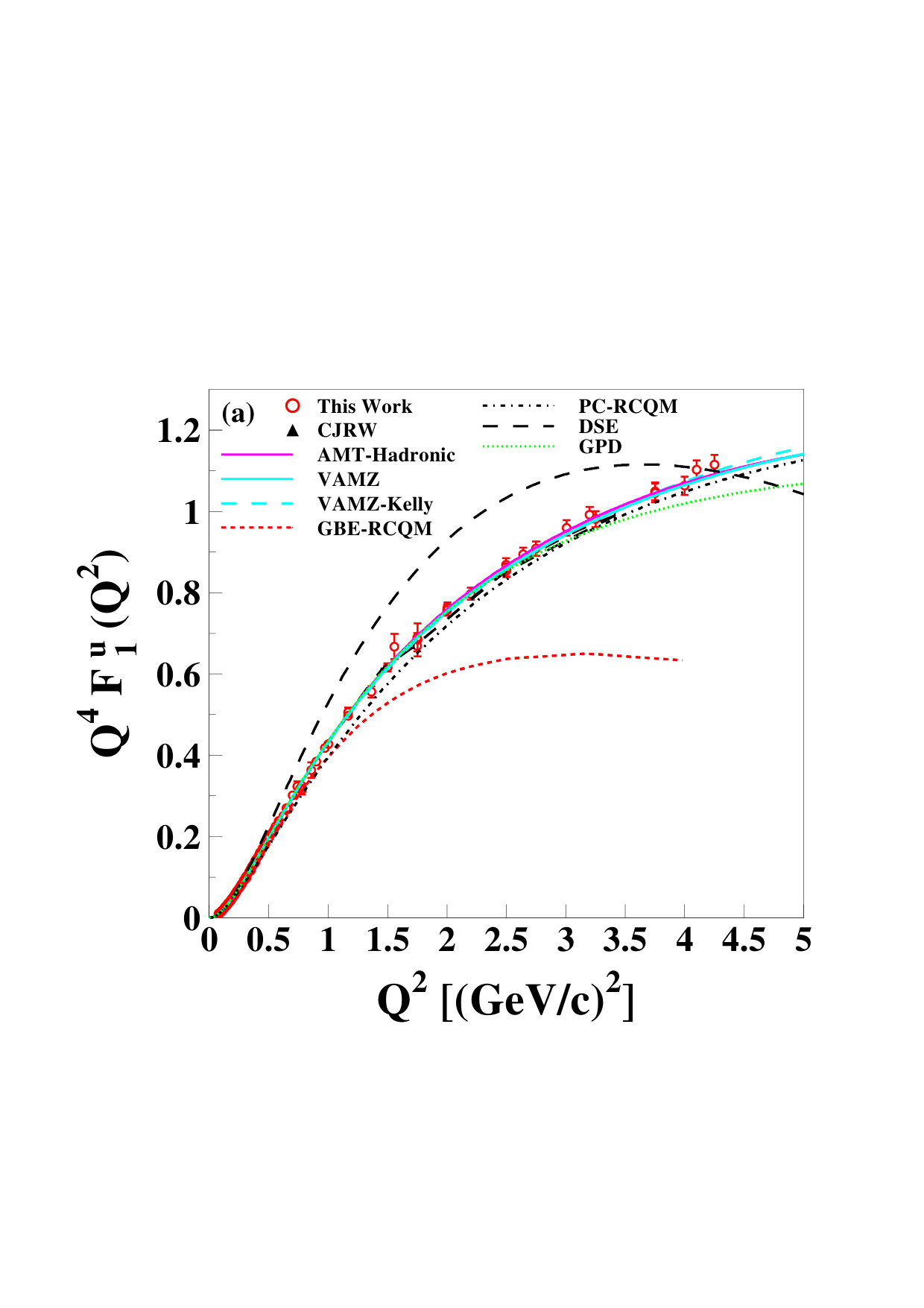 Figure 1
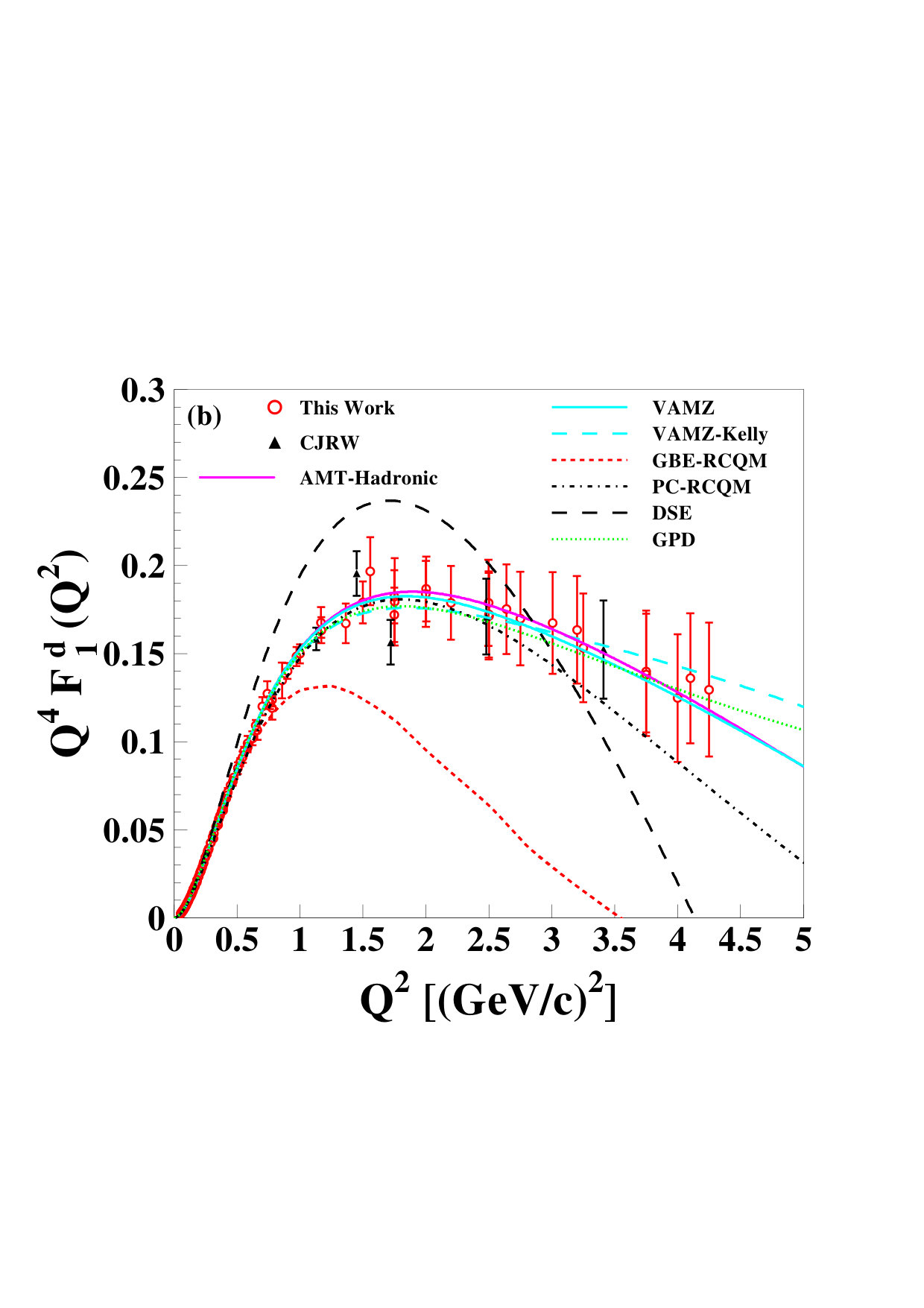 Figure 1
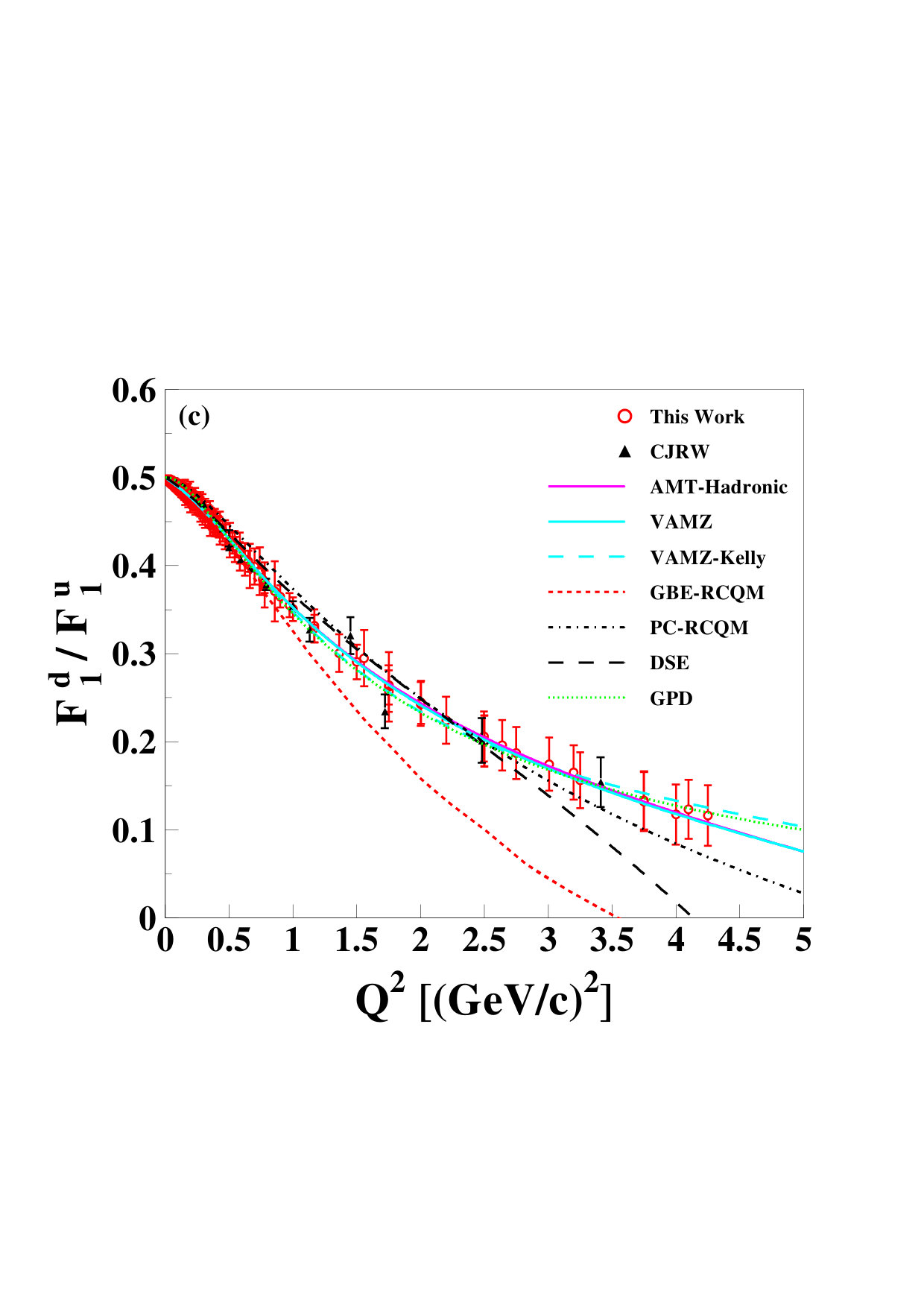 Figure 1
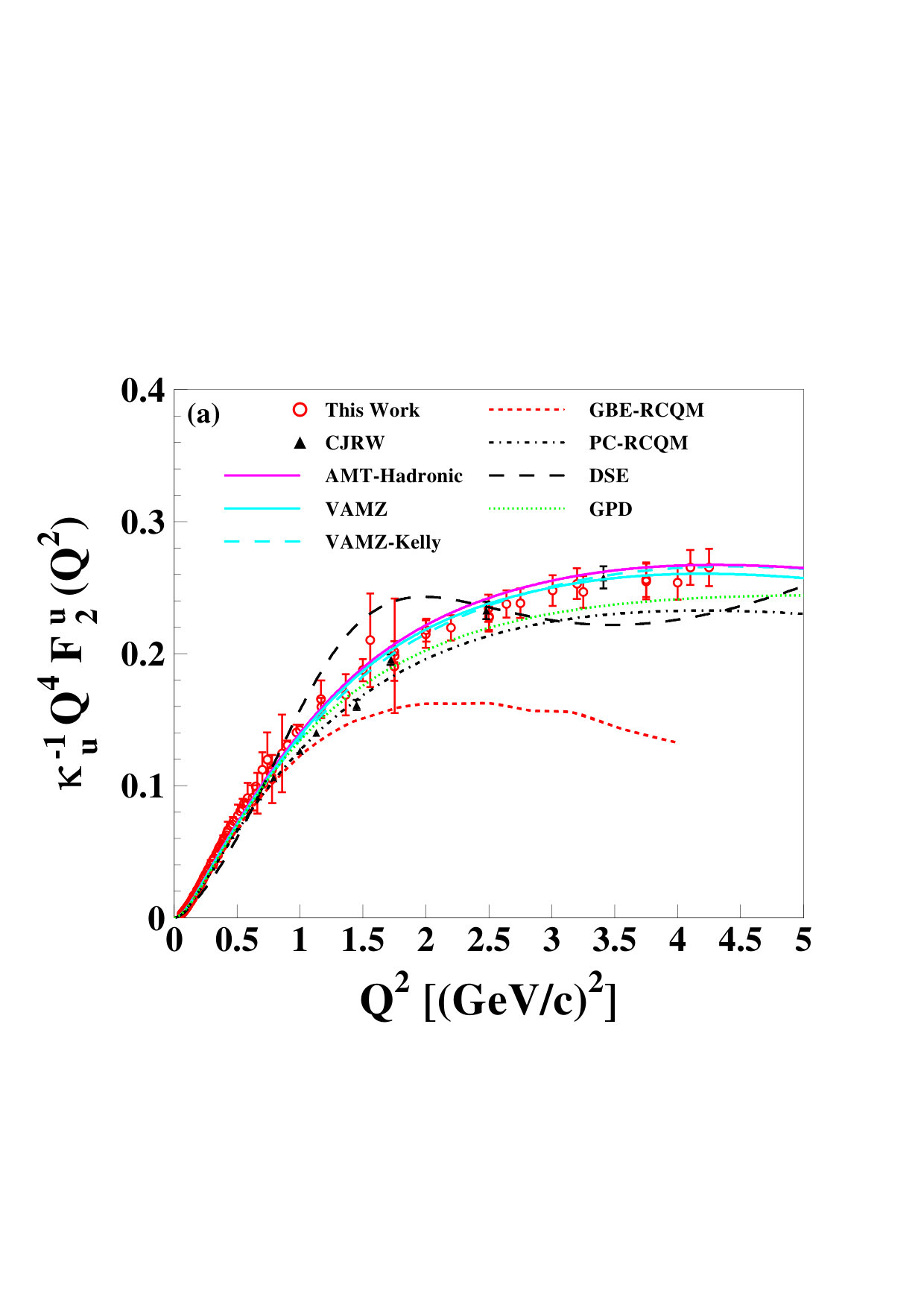 Figure 1
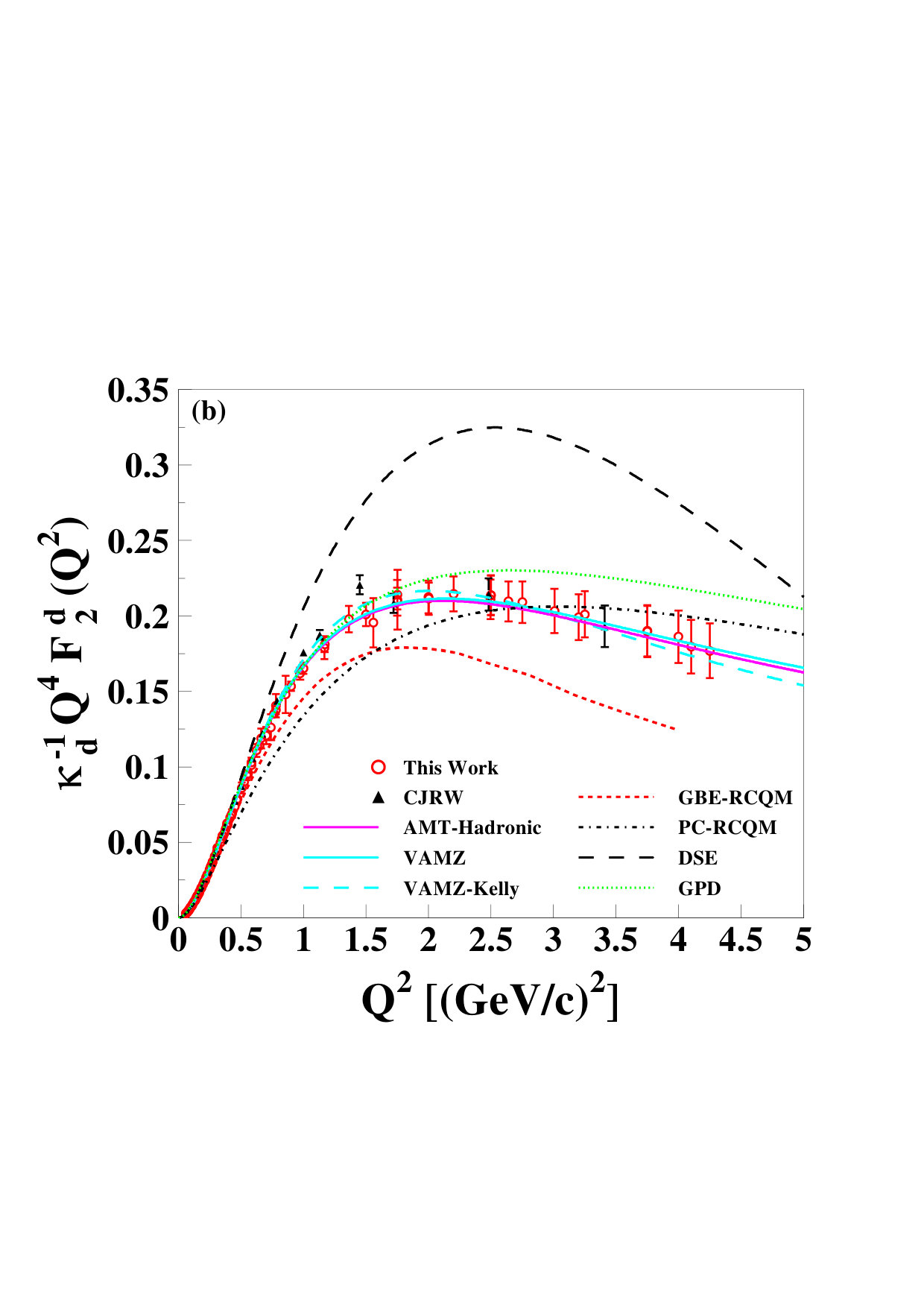 Figure 1
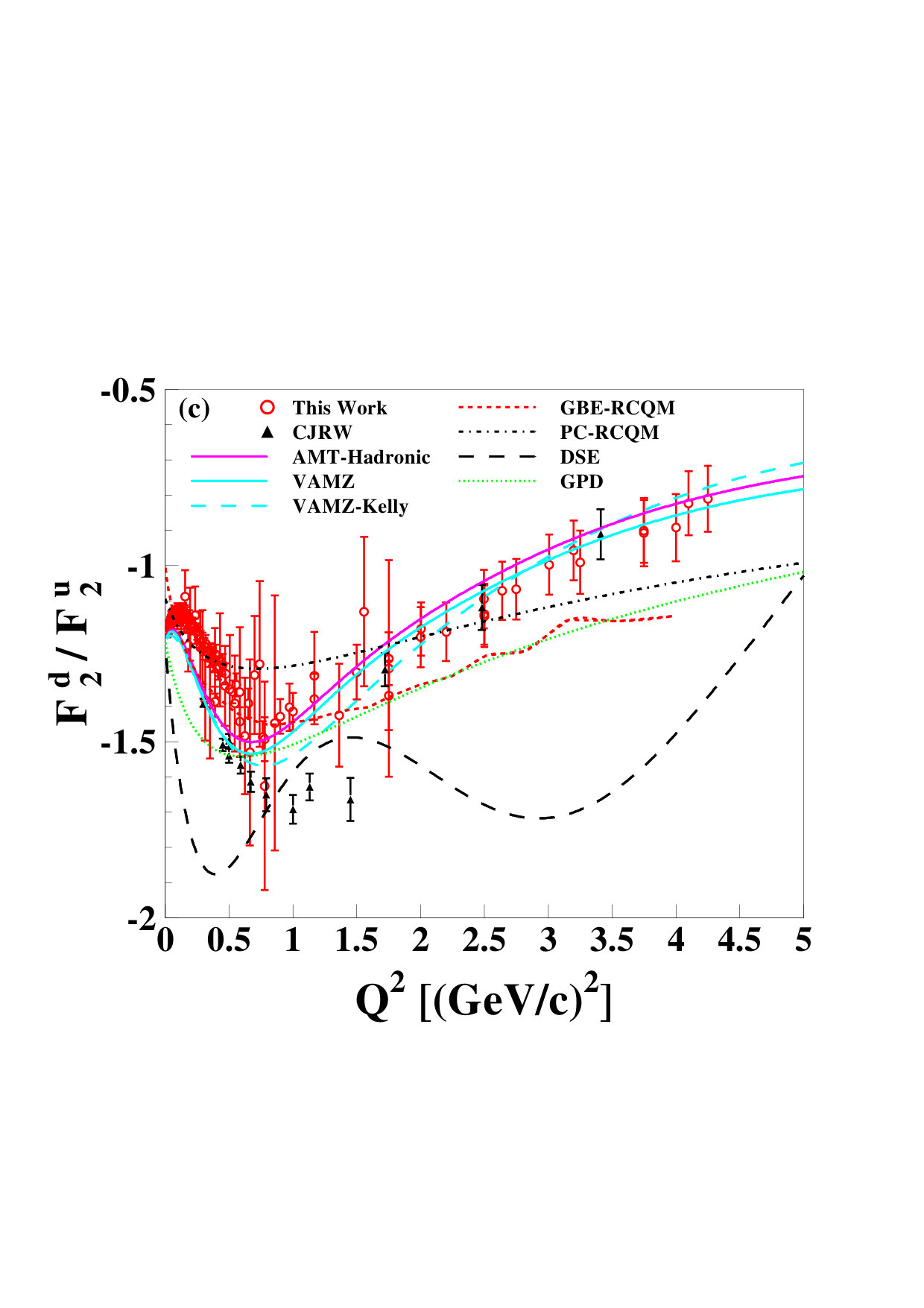 Figure 1
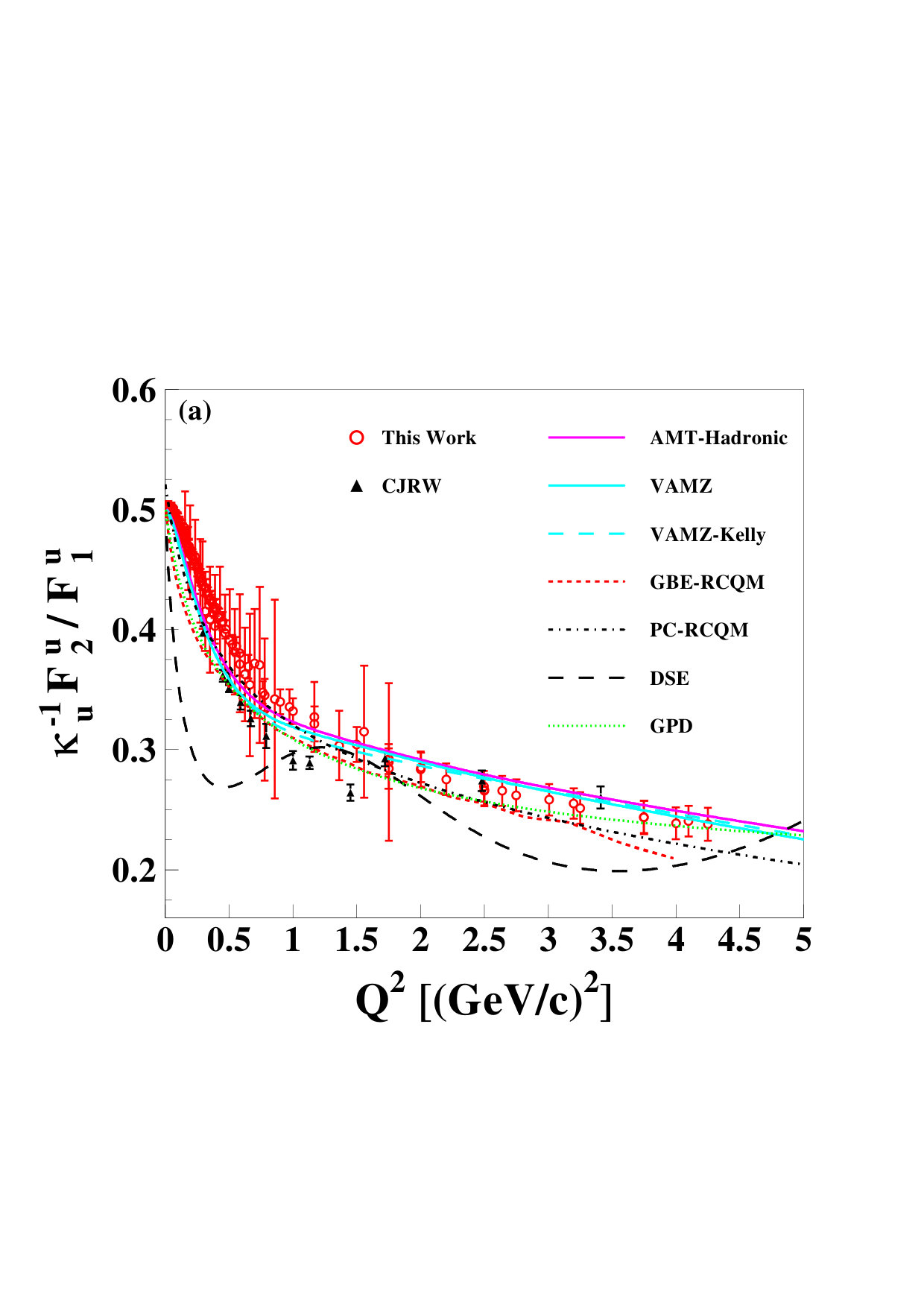 Figure 2
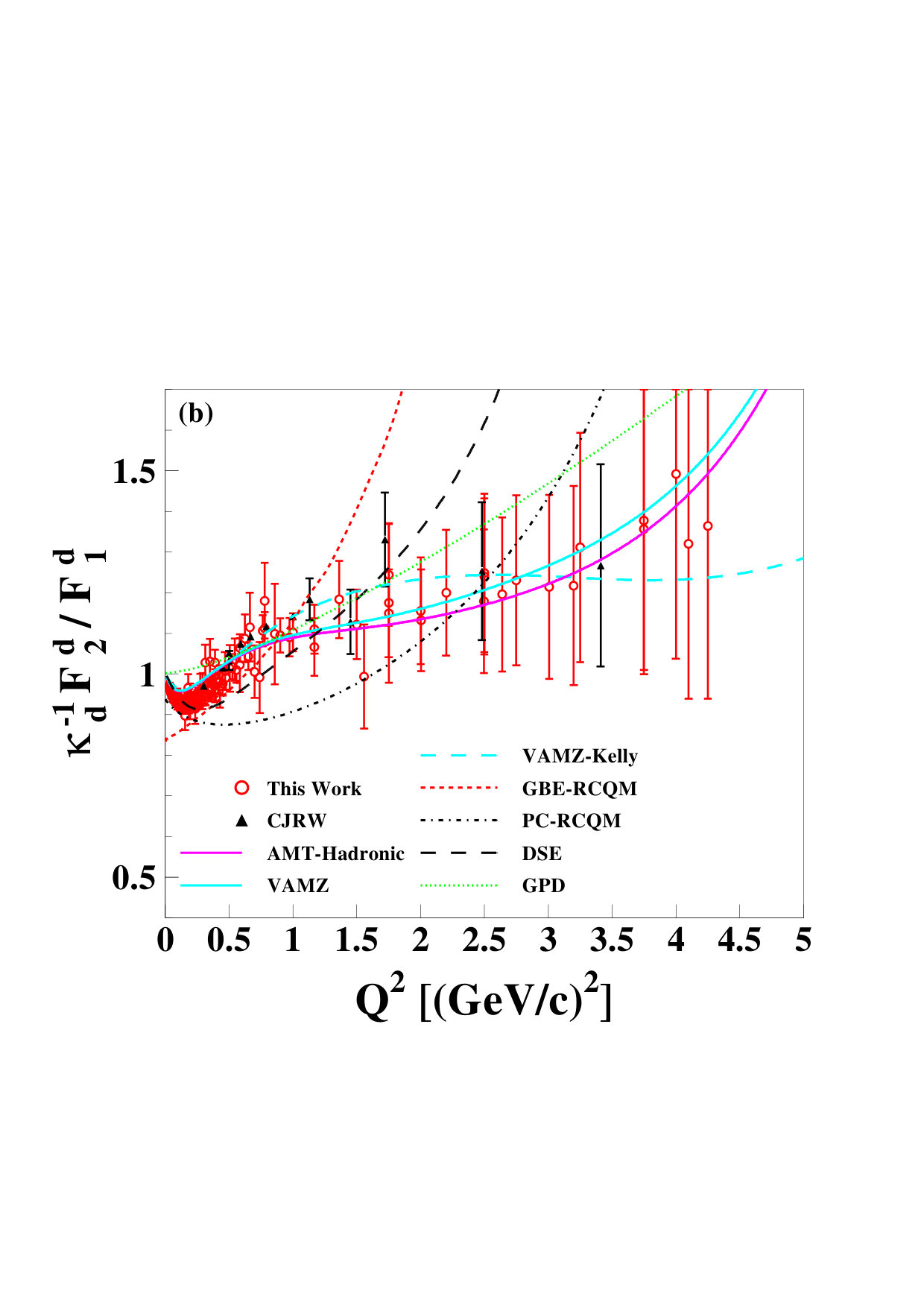 Figure 2
Peer Reviews
No public reviews on file for this paper yet. If you reviewed it on a platform where reviews are public (OpenReview, ICLR, NeurIPS, ICML), you can paste yours below so the community can read it here.
Videos
No videos yet. Explain this paper in a talk, walkthrough, or lecture? Add one.
Up- and down-quark contributions to the nucleon electromagnetic form factors at low
I A Qattan1 and J Arrington2
1 Khalifa University of Science, Technology and Research, Department of Applied Mathematics and Sciences, P.O. Box 127788, Abu Dhabi, United Arab Emirates
2 Physics Division, Argonne National Laboratory, Argonne, Illinois, 60439, USA [email protected]
Abstract
The spatial distribution of charge and magnetization within the nucleon (proton and neutron) is encoded in the elastic electromagnetic form factors and . These form factors have been precisely measured utilizing elastic electron scattering, and the combination of proton and neutron form factors allows for the separation of the up- and down-quark contributions to the nucleon form factors. We expand on our original analyses and extract the up- and down-quark contributions to the nucleon electromagnetic form factors from worldwide data with an emphasis on precise new data covering the low-momentum region, which is sensitive to the large-scale structure of the nucleon. From these, we construct the flavor-separated Dirac and Pauli form factors and their ratios, and compare the results to recent extractions and theoretical calculations and models.
1 Introduction
The nucleon electromagnetic form factors and are fundamental quantities in nuclear and elementary particle physics as they provide information on the spatial distributions of charge and magnetization within the nucleon. They are a function of the four-momentum transfer squared of the virtual photon, . In the nonrelativistic limit, they are the Fourier transform of the charge and magnetization distributions. Therefore, isolating the up- and down-quark contributions to the nucleon form factors is essential to examine spatial asymmetries in the quark distributions.
There are primarily two methods used to extract the proton form factors. The first is the Rosenbluth or longitudinal-transverse (LT) separation method [1] which uses measurements of unpolarized cross section, and the second is the polarization transfer/polarized target (PT) method [2] which requires measurements of the spin-dependent cross section. In the one-photon exchange (OPE) approximation or the Born value, the unpolarized cross section is proportional to the ”reduced” cross section, , where , is the nucleon mass, and is the virtual photon longitudinal polarization parameter defined as , where is the scattering angle of the electron. Measuring at several points for a fixed value, one can separate and . However, for cases where is extremely small (large), it is difficult to extract () with precision. On the other hand, the polarization measurements are sensitive only to the ratio . Therefore, by taking ratios of polarization components, many of the systematic uncertainties in the polarization measurements cancel, allowing for precise measurements of the ratio [3], where is the proton magnetic dipole moment. The two methods yield strikingly different results for the ratio in the region (GeV/c)2 [4], where the Rosenbluth extractions show approximate scaling, , while the recoil polarization data indicate a nearly linear decrease in with with some hint of flattening out above 5 (GeV/c)2. Recent studies suggest that hard two-photon exchange (TPE) corrections to the unpolarized cross section may resolve the discrepancy [5, 6, 7, 8, 9].
2 Extraction of the flavor-separated form factors
Recent precise measurements of the neutron’s electric to magnetic form factor ratio up to 3.4 GeV2 [11], combined with existing measurements in the same range allowed for a separation of the up- and down-quark contributions to the nucleon form factors at large [12]. This first analysis, referred to as “CJRW” in this work, examined the scaling behavior of the up- and down-quark contributions at large , supporting the idea that diquark correlations play an important role [13]. Recently, we extended the flavor separation analysis [14, 15, 16] using combined cross section and polarization measurements of elastic electron-proton scattering with an emphasis on precise new data from Ref. [17] covering the low-momentum region, which is sensitive to the large-scale structure of the nucleon. In our work, we account for effects neglected in the original work where we apply TPE corrections in the extraction of the proton form factors based on the approach of Ref. [18]. The TPE correction applied in our work, based on the parametrization from Ref. [19], is linear in [20] and vanishes in the limit 1 [21, 22]. We also compare our results to a parametrization of the proton form factors extracted [5] after applying the hadronic calculation for TPE from Ref. [10]. We also include additional new data from CLAS [23] and performed a new global fit to which we used, along with the parametrization of [11], to construct , as well as account for the uncertainties associated with all of the form factors measurements as the CJRW analysis accounted only for uncertainties on which was the dominant uncertainty for their flavor-separated results. Finally, we use our results of the flavor-separated form factors to construct the flavor-separated Dirac, , and Pauli, , form factors and their ratios.
3 Results and discussion
In this section, we present our results of the flavor-separated form factors and . We then compare our results to the CJRW extractions which allows for examination of the effect of the TPE corrections applied, additional uncertainties, as well as updated form factor data set used. We also compare our results to the Venkat et al. [24] (”VAMZ”), and Arrington et al. [5] (”AMT”) extractions which use improved proton form factor parametrization obtained assuming different treatment of TPE corrections at lower values. In addition, we used the Venkat plus the and fits mentioned above, and looked at the impact of our updated fit by replacing this with the Kelly [25] fit for (”VAMZ-Kelly”). Finally, we compare the results to recent theoretical calculations and fits to the flavor-separated form factors: a Dyson-Schwinger equation (”DSE”) calculation [13], a pion-cloud relativistic constituent quark model (”PC-RCQM”) [26], a relativistic constituent quark model whose hyperfine interaction is derived from Goldstone-boson exchange (”GBE-RCQM”) [27], and a generalized parton distribution (GPD) calculations [28].
Figure 1 shows the flavor-separated contributions of and . It was reported in the CJRW analysis that while both the up-quark form factors, and , continued to rise compared to the down-quark, the down-quark contributions, and , strikingly exhibited scaling behavior above 1.0 (GeV/c)2 in agreement with the moments of the generalized parton distributions predictions [29]. However, these predictions are based on fits which included nucleon form factors data, except for the most recent data. Our results for and suggest as well that both form factors continue to rise with increasing but with values somewhat higher than the CJRW extractions at low . This can be seen clearly in the ratio . On the other hand, our results suggest that the down-quark contributions are falling more rapidly than the up-quark contributions at high with respect to the behavior which is more apparent for and the ratio in agreement with global parametrizations and theoretical calculations which predict faster falloff than the apparent scaling behavior. However, such behavior is sensitive to the parametrization of at 2 (GeV/c)2 [11]. The difference in the results obtained are attributed mainly to the TPE corrections applied to the proton form factors and to lesser extent to the use of the updated parametrization. In addition, while the uncertainties have the largest impact, the additional uncertainties from the proton and yield a non-negligible increase in the total uncertainties.
Figure 2 shows the ratios and . Here are the 0 limits of with 1.67 and 2.03. The ratios are scaled by and normalized to yielding 0.5(1) for the up(down)-quark contribution. At low , the ratio falls rapidly up to (GeV/c)2 where it starts to decrease slowly. While our values are somewhat larger than those obtained in the CJRW extractions for 1.5 (GeV/c)2 due to the difference in the values, they are in good qualitative agreement with form factor fits and calculations. The ratio increases slowly at low and becomes almost constant for 1 (GeV/c). Our results are consistent with both the CJRW results and extractions based on form factors fits. However, our results differ from all calculations as they predict a rapid falloff of at large compared to which clearly leads to a rapid rise in the ratio. The high- measurements of planned at Jefferson Lab after the 12 GeV upgrade [30] are clearly critical to pin down the behavior of this ratio as well as to examine the theoretical calculations and models.
\ack
This work was supported by Khalifa University of Science, Technology and Research and by the U.S. Department of Energy, Office of Nuclear Physics, under contract DE-AC02-06CH11357.
References
- [1] Rosenbluth M N 1950 Phys. Rev. 79 615
- [2] Dombey N 1969 Rev. Mod. Phys. 41 236
- [3]
Punjabi V et al. 2005 Phys. Rev. C71 055202; Puckett A J R et al. 2012 Phys. Rev. C85 045203; Puckett A J R et al. 2010 Phys. Rev. Lett. 104 242301; Zhan X et al. 2011 Phys. Lett. B705 59; Ron G et al. 2011 Phys. Rev. C84 055204; Arrington J, Perdrisat C, and de Jager C W 2011 J. Phys. Conf. Ser. 299 012002
- [4]
Qattan I A et al. 2005 Phys. Rev. Lett. 94 142301; Arrington J 2003 Phys. Rev. C68 034325
- [5]
Arrington J, Melnitchouk W, and Tjon J A 2007 Phys. Rev. C76 035205
- [6]
Carlson C E and Vanderhaeghen M 2007 Ann. Rev. Nucl. Part. Sci. 57 171
- [7]
Arrington J, Blunden P, and Melnitchouk W 2011 Prog. Part. Nucl. Phys. 66 782
- [8]
Qattan I A and Alsaad A 2011 Phys. Rev. C84 054317 [ Erratum: 2011 Phys. Rev. C84 029905]
- [9]
Adikaram D et al. (CLAS Collaboration) 2015 Phys. Rev. Lett. 114 062003; Rachek I A et al. 2015 Phys. Rev. Lett. 114 062005; Rimal D et al. (CLAS Collaboration) 2016 Preprint arXiv:1603.00315 [nucl-ex]
- [10]
Blunden P G, Melnitchouk W, and Tjon J A 2005 Phys. Rev. C72 034612
- [11]
Riordan S et al. 2010 Phys. Rev. Lett. 105 262302
- [12]
Cates G, de Jager C, Riordan S, and Wojtsekhowski B 2011 Phys. Rev. Lett. 106 252003
- [13]
Cloet I et al. 2009 Few-Body Syst. 46 1
- [14]
Qattan I A and Arrington J 2012 Phys. Rev. C86 065210
- [15]
Qattan I A and Arrington J 2014 Eur. Phys. J. WOC 66 06020
- [16]
Qattan I A, Arrington J, and Alsaad A 2015 Phys. Rev. C91 065203
- [17]
Bernauer J C et al. (A1 Collaboration) 2014 Phys. Rev. C90 015206
- [18]
Qattan I A, Alsaad A, and Arrington J 2011 Phys. Rev. C84 054317
- [19]
Borisyuk D and Kobushkin A 2011 Phys. Rev. D83 057501
- [20]
Tvaskis V et al. 2006 Phys. Rev. C73 025206
- [21]
Arrington J, Blunden P G, and Melnitchouk W 2011 Prog. Part. Nucl. Phys. 66 782; Chen Y -C, Kao C -W, and Yang S -N 2007 Phys. Lett. B652 269
- [22]
Arrington J 2004 Phys. Rev. C69 032201
- [23]
Lachniet J et al. (CLAS Collaboration) 2009 Phys. Rev. Lett. 102 192001
- [24]
Venkat S, Arrington J, Miller G A, and Zhan X 2011 Phys. Rev. C83 015203
- [25]
Kelly J J 2004 Phys. Rev. C70 068202
- [26]
Cloet I C and Miller G A 2012 Phys. Rev. C86 015208
- [27]
Rohrmoser M, Choi K -S, and Plessas W 2011 Preprint arXiv:1110.3665 [hep-ph]
- [28]
Gonzalez-Hernandez J O, Liuti S, Goldstein G R, and Kathuria K 2013 Phys. Rev. C88 065206
- [29]
Diehl M, Feldmann T, Jakob R, and Kroll P 2005 Eur. Phys. J. C39 1
- [30]
Dudek J et al. 2012 Eur. Phys. J. A48 187
The reference list from the paper itself. Each links out to its DOI / PubMed record.
- 1[1] Rosenbluth M N 1950 Phys. Rev. 79 615
- 2[2] Dombey N 1969 Rev. Mod. Phys. 41 236
- 3[3] Punjabi V et al. 2005 Phys. Rev. C 71 055202; Puckett A J R et al. 2012 Phys. Rev. C 85 045203; Puckett A J R et al. 2010 Phys. Rev. Lett. 104 242301; Zhan X et al. 2011 Phys. Lett. B 705 59; Ron G et al. 2011 Phys. Rev. C 84 055204; Arrington J, Perdrisat C, and de Jager C W 2011 J. Phys. Conf. Ser. 299 012002
- 4[4] Qattan I A et al. 2005 Phys. Rev. Lett. 94 142301; Arrington J 2003 Phys. Rev. C 68 034325
- 5[5] Arrington J, Melnitchouk W, and Tjon J A 2007 Phys. Rev. C 76 035205
- 6[6] Carlson C E and Vanderhaeghen M 2007 Ann. Rev. Nucl. Part. Sci. 57 171
- 7[7] Arrington J, Blunden P, and Melnitchouk W 2011 Prog. Part. Nucl. Phys. 66 782
- 8[8] Qattan I A and Alsaad A 2011 Phys. Rev. C 84 054317 [ Erratum: 2011 Phys. Rev. C 84 029905]