Liquid-liquid triboelectric nanogenerator based on the immiscible interface of an aqueous two-phase system
Ye Lu, Longlong Jiang, Yang Yu, Dehua Wang, Wentao Sun, Yang Liu, Jing Yu, Jun Zhang, Kai Wang, Han Hu, Xiao Wang, Qingming Ma, Xiaoxiong Wang

TL;DR
A new liquid-liquid nanogenerator uses an immiscible aqueous interface to improve charge transfer and could be used in implantable devices.
Contribution
A liquid-liquid triboelectric nanogenerator is designed using an immiscible aqueous-aqueous interface to achieve stable charge transfer.
Findings
The nanogenerator achieves a contact surface charge transfer of 129 nC per droplet.
The design is applicable in humid environments and shows good biocompatibility.
The system can function as an effective drug carrier and supports aqueous electronics.
Abstract
Solid nanogenerators often have limited charge transfer due to their low contact area. Liquid–liquid nanogenerators can transfer a charge better than the solid–solid and solid–liquid counterparts. However, the precise manipulation of the liquid morphology remains a challenge because of the fluidity limits of the liquid. In this work, using the surface tension of a droplet to fix its shape, a liquid-liquid triboelectric nanogenerator in Contact-Separation mode is designed using an immiscible aqueous-aqueous interface, achieving a contact surface charge transfer of 129 nC for a single droplet. The configuration is proven to be applicable in humid environments, and the two-phase materials have good biocompatibility and can be used as an effective drug carrier. Therefore, this nanogenerator is useful for designing future implantable devices. Meanwhile, this design also establishes the…
Genes, proteins, chemicals, diseases, species, mutations and cell lines named across the full text — each resolved to its canonical identifier and authoritative record.
Click any figure to enlarge with its caption.
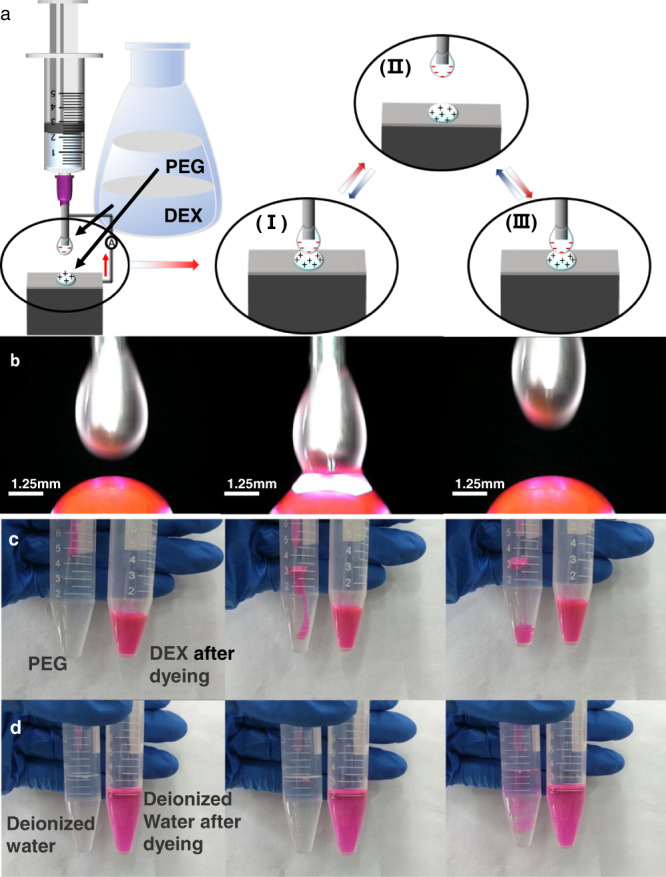 Figure 1
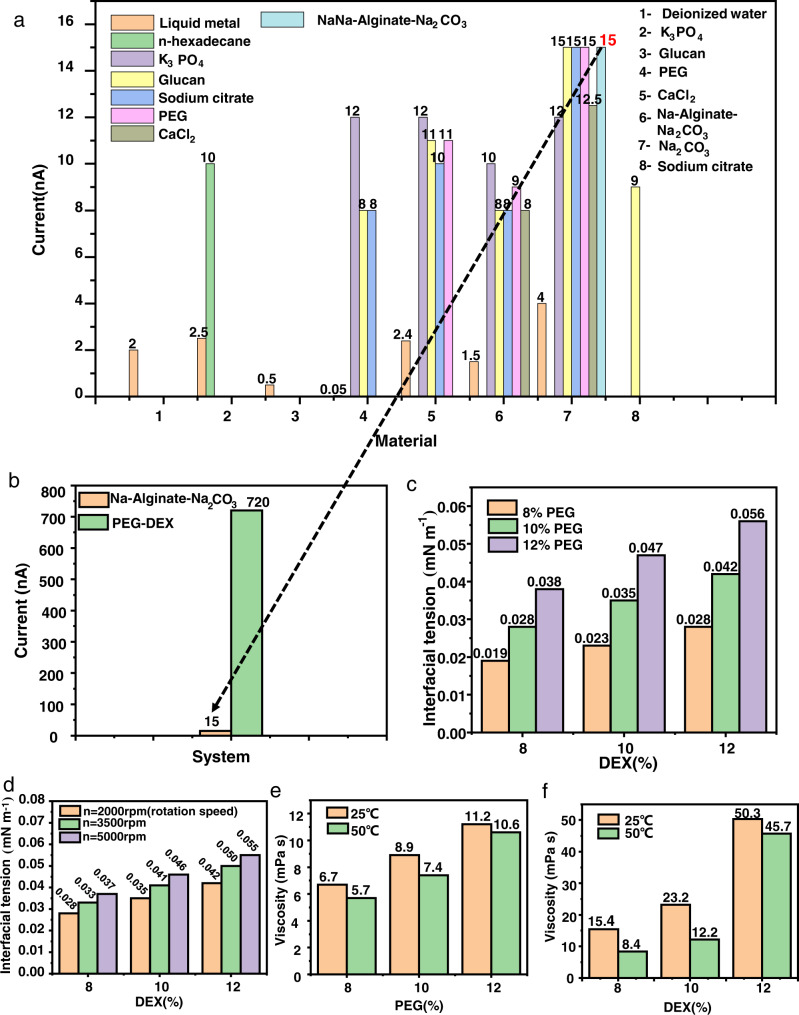 Figure 2
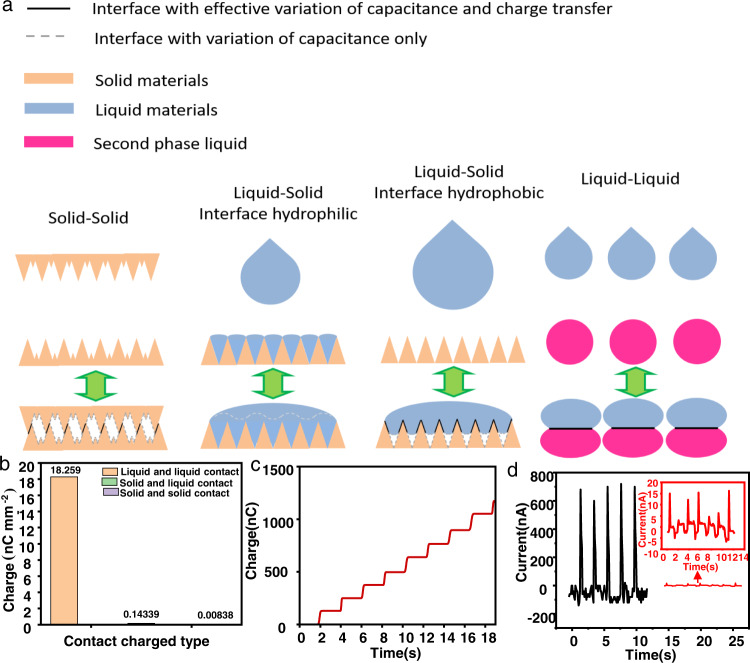 Figure 3
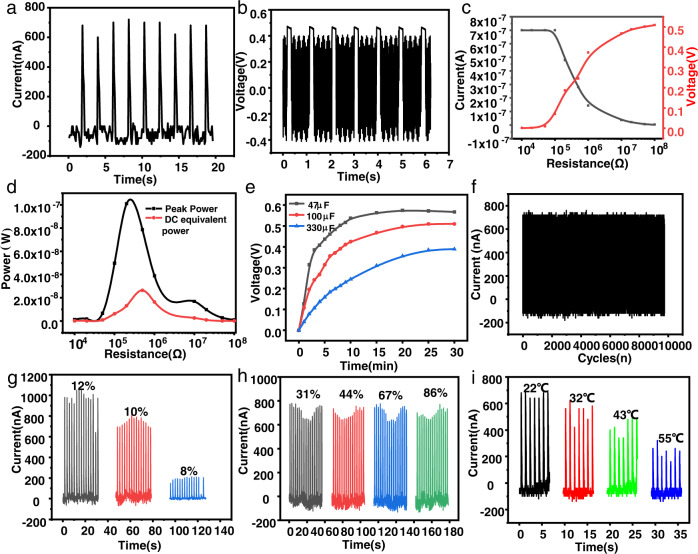 Figure 4
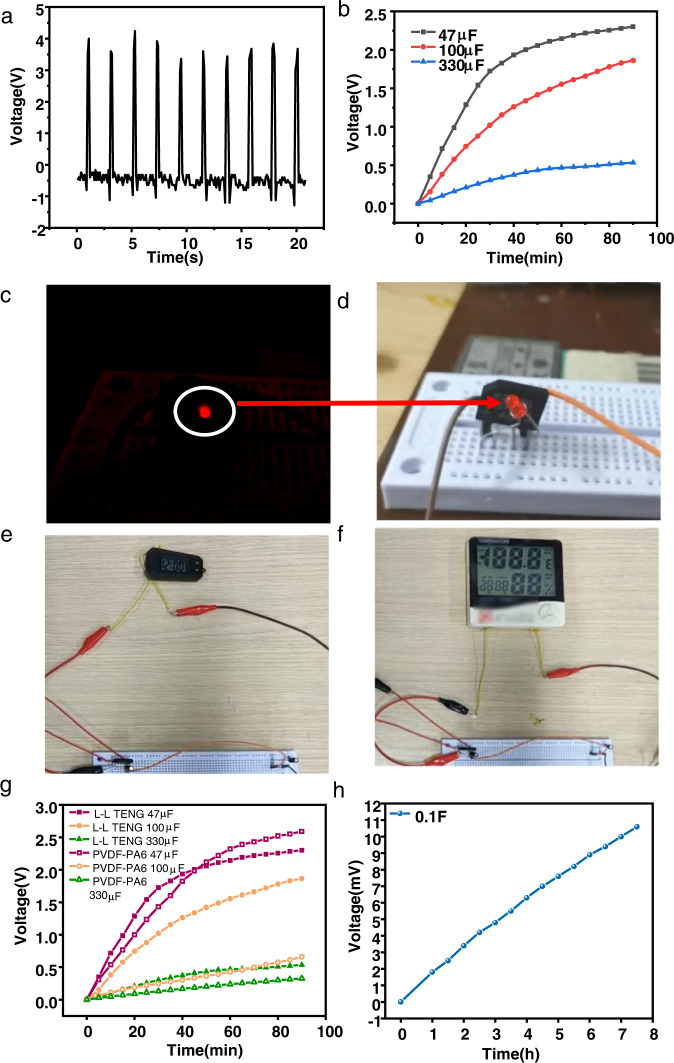 Figure 5
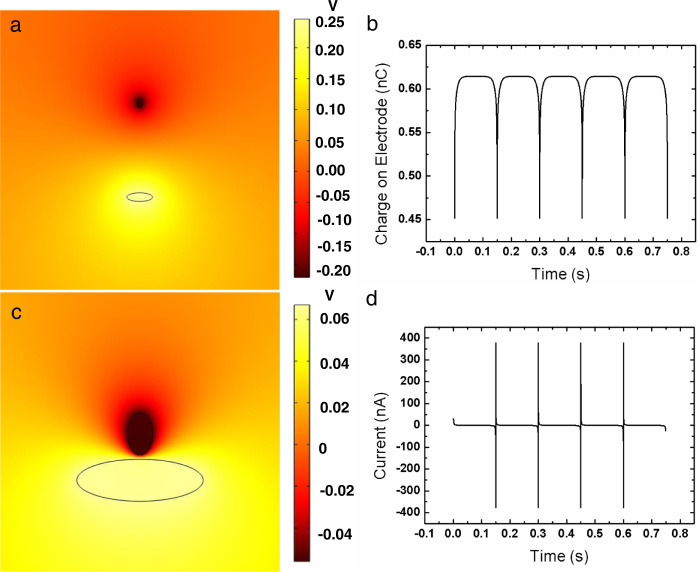 Figure 6
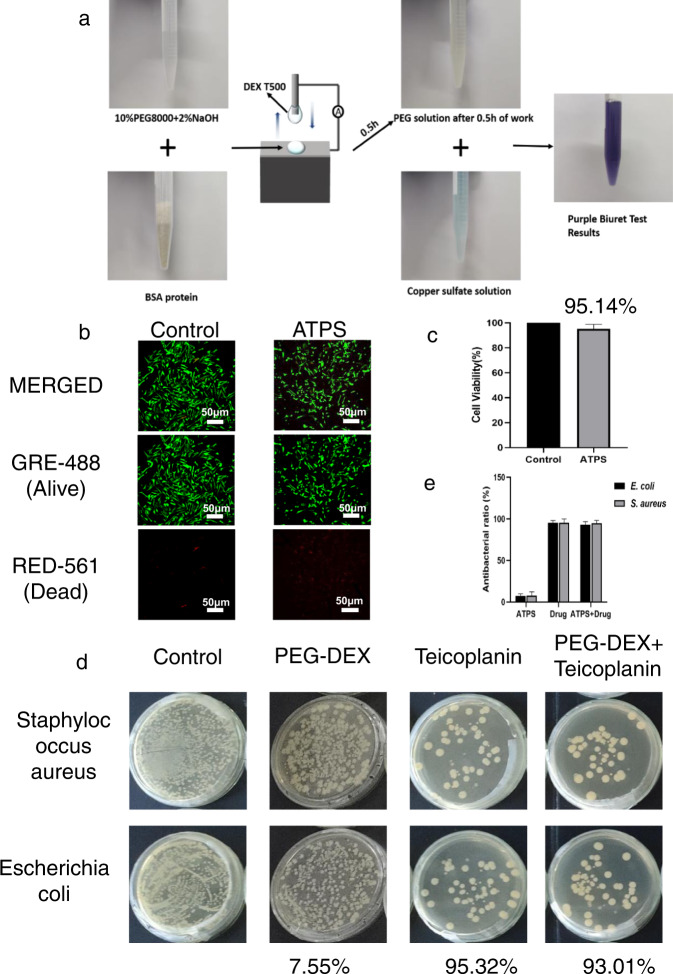 Figure 7
Peer Reviews
No public reviews on file for this paper yet. If you reviewed it on a platform where reviews are public (OpenReview, ICLR, NeurIPS, ICML), you can paste yours below so the community can read it here.
Videos
No videos yet. Explain this paper in a talk, walkthrough, or lecture? Add one.
Taxonomy
TopicsAdvanced Sensor and Energy Harvesting Materials · Conducting polymers and applications · Advanced Materials and Mechanics