Antimicrobial Peptides as an Alternative for the Eradication of Bacterial Biofilms of Multi-Drug Resistant Bacteria
Janaína Teixeira Costa de Pontes, Anna Beatriz Toledo Borges, Cesar Augusto Roque-Borda, Fernando Rogério Pavan

TL;DR
This paper reviews how antimicrobial peptides could help fight drug-resistant bacteria by targeting biofilms, which are a major cause of hospital infections.
Contribution
The paper highlights antimicrobial peptides as a novel alternative for combating biofilms of multi-drug resistant bacteria.
Findings
Antimicrobial peptides show potential in inhibiting biofilm formation by MDR/XDR bacteria.
New biomacromolecules should be developed to target dangerous drug-resistant bacteria.
AMPs offer promising prospects for eradicating biofilm proliferation.
Abstract
Bacterial resistance is an emergency public health problem worldwide, compounded by the ability of bacteria to form biofilms, mainly in seriously ill hospitalized patients. The World Health Organization has published a list of priority bacteria that should be studied and, in turn, has encouraged the development of new drugs. Herein, we explain the importance of studying new molecules such as antimicrobial peptides (AMPs) with potential against multi-drug resistant (MDR) and extensively drug-resistant (XDR) bacteria and focus on the inhibition of biofilm formation. This review describes the main causes of antimicrobial resistance and biofilm formation, as well as the main and potential AMP applications against these bacteria. Our results suggest that the new biomacromolecules to be discovered and studied should focus on this group of dangerous and highly infectious bacteria. Alternative…
Genes, proteins, chemicals, diseases, species, mutations and cell lines named across the full text — each resolved to its canonical identifier and authoritative record.
Click any figure to enlarge with its caption.
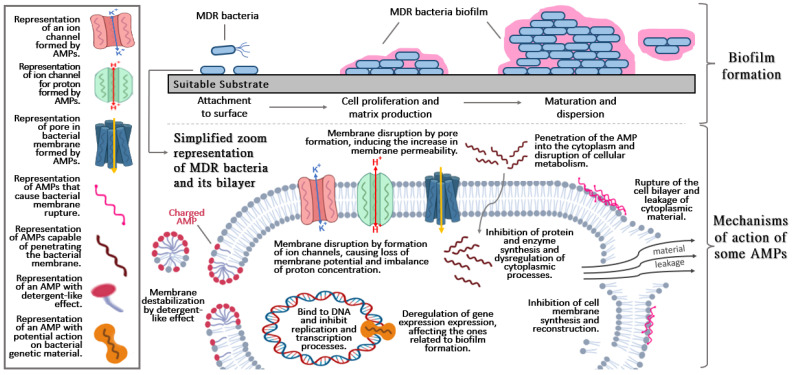 Figure 1
Peer Reviews
No public reviews on file for this paper yet. If you reviewed it on a platform where reviews are public (OpenReview, ICLR, NeurIPS, ICML), you can paste yours below so the community can read it here.
Videos
No videos yet. Explain this paper in a talk, walkthrough, or lecture? Add one.
Taxonomy
TopicsAntimicrobial Peptides and Activities · Bacterial biofilms and quorum sensing · Probiotics and Fermented Foods
1. Introduction
Bacterial resistance is a current emergency problem that has claimed millions of lives in recent years [1]. The hospital environment is the main place in which these deaths occur and, normally, the cause of this lethal bacterial resistance is the non-elimination of all petrogenic microorganisms in the treatment of patients. Thus, the microorganisms remaining after this insufficient treatment proliferate despite the use of antibiotics [2]. The recurrence of cases such as this leads to the resistance of several bacteria to different drugs, allowing their massive proliferation, which, compounded with the ability to form biofilm, makes them more resistant and more difficult to fight [3]. Bacterial resistance can be innate or acquired since many bacteria have resistance genes that are expressed only when they feel threatened; and they can easily transfer these genes when found in microecosystems to other species for community survival [4].
Naturally, bacteria capable of forming biofilms are practically everywhere. To form biofilms, these microorganisms adhere to surfaces, which can be biotic (composed of living beings or parts of them) or abiotic (composed of non-living substances). The biofilms cover the surfaces with an extracellular polymeric substance (EPS) [3]. This substance has conglomerates of proteins, polysaccharides, and exogenous DNA [5]. Diseases related to these bacteria develop slowly, allowing for greater adaptation and production of biofilm and subsequently leading to severe local inflammation [6]. The increasing cases of hospital infections, mainly highly lethal urinary tract and bloodstream infections caused by biofilm-forming bacteria in medical equipment, have concerned the World Health Organization (WHO) and led it to publish a list of priority bacteria for study and drug discovery [7,8,9].
Herein, we summarize the resistance mechanisms that can occur in bacteria. We focus on the formation of biofilm and the general characteristics and particularities of each source of biofilm, based on some species from the list of critical and high-priority bacteria. We also present some control mechanisms that are known today and concentrate on antimicrobial peptides (AMPs) as an alternative in the fight against biofilm formation by some species of multi-drug resistant (MDR) or extensively drug-resistant (XDR) bacteria [4]. To our knowledge, this is the first article reporting the importance of AMPs against biofilm-forming bacteria on the critical and high WHO priority list.
1.1. Antimicrobial Resistance
Antimicrobial resistance (AMR) could result in a setback for modern medicine due to the difficulty in the control of a series of infectious pathologies, caused by the few options available for treatment against resistant strains. This situation has led AMR to be considered one of the biggest challenges to health in the 21st century. According to the United Nations Interagency Coordinating Group on AMR, microbial resistance is linked to 700,000 deaths every year, and it is believed that by the year 2050 it will be responsible for 10 million deaths [10]. The inefficiency of the standard treatment has resulted in the persistence of bacterial infections [11], associated with both the development of resistant strains and the inadequacy of antibacterial treatment, the latter being attributed to its low spectrum of action or its high toxicity [12].
The impaired quality of life, combined with the development of systemic bacterial infections, the increase in recurrence rates, chronicity, and the development of future opportunistic infections with resistant organisms are the consequences of bacterial infections caused by antibiotic-resistant organisms, such as MDR, XDR, and pan-drug-resistant (PDR) strains [13]. Therefore, AMR is a serious problem that affects several areas beyond modern medicine and the pharmaceutical industry, intensified by the resulting serious socio-economic and ecological impacts [7].
AMR is also related to the low development of new molecules. The pharmaceutical industry fails to invest in the development of new antibiotics because of the high cost and time required to successfully bring antimicrobials to the market. The fact that the molecule may prove inefficient shortly after its introduction, the increase in regulatory conditions, and the strict price controls imposed by many governments are some of the most influential reasons discouraging investment in the development of new antibiotics [11].
The emergence and spread of resistance mechanisms among bacteria is a consequence of the small investment and long time required for the search and development of antibiotics, as well as the fact that the development of long-term-usage drugs is economically more attractive. Such circumstances have deteriorated public health worldwide, as shown by the increasing need of hospital treatment for bacterial infections that require higher doses and a longer hospital stay [2].
The administration of antimicrobials can cause bacteriostatic, bactericidal, or bacteriolytic effects. The bacteriostatic effect results from the use of medication that stalls bacterial cellular activity without directly causing bacterial death [14]. The bactericidal effect occurs when the drug results in bacterial death. The bacteriolytic effect takes place when an antimicrobial causes the dissolution and destruction of the bacteria.
Bacteria are one of the oldest life forms on Earth, and they have been around for billions of years. They have acquired a strong adaptive ability due to their genomic flexibility in shielding themselves from toxic chemicals. In addition, due to their capacity of upkeep and transfer of genes, bacteria have been responsible for AMR and the dissemination of antimicrobial-resistant genes through an exchange of genetic material between different species [2,15].
AMR occurs when there is a fragile balance between bacteria and drugs, giving rise to selective pressure of bacteria prone to developing resistance; this ends up surpassing the relationship between new bacterial resistance/drug discovery, since in recent years the number of drugs approved by the FDA has decreased [16]. This collective manifestation of selective pressure, as well as its relationship with bacterial ecology, involves genetic material grouped in introns, which can, for example, provide an entire ecological system with resistant survival and tolerance traits [17].
1.2. AMR Mechanisms
Antibiotics are known to have a variability of targets for causing death or preventing bacterial proliferation. These targets can be the cell wall or cell membrane, inhibition of essential protein, or nucleic acid synthesis, among others. AMR mechanisms involve “running away” from the action of each antibiotic caused by early treatment abandonment, dose-interval error, missed dose, or improper sharing of antimicrobials [2]. Nowadays, there are bacterial strains resistant to several types of antibiotics, the so-called “multi-resistant forms”, which have become a great public health problem in several countries [18].
One of the AMR mechanisms is intrinsic resistance, i.e., the natural resistance of some bacteria to some antibiotics to which they have never been exposed but are insensitive to because of their inner cellular defense mechanisms [19]. Another AMR mechanism is mutation, which naturally occurs in every cell proliferation, but an increase in the number of bacterial cells with resistance-conferring mutation occurs due to selective pressure in the environment, which can be generated precisely by the antibiotic along with its misuse [7].
Antibiotics may also be inactivated through the production of enzymes capable of preventing the drug from reaching its target in the microorganism. For example, antibiotics that have the β-lactam structure may be inactivated by enzymes called beta-lactamases, which are capable of cleaving the beta-lactam ring and inactivating the drug [20]. This type of resistance includes resistance to penicillins, carbapenems, cephalosporins, and monobactams [7]. In the case of AMR to the quinolone class (whose mechanisms of action target essential bacterial enzymes, namely DNA gyrase and DNA topoisomerase IV), there are three resistance mechanisms: mutations that alter drug targets (protecting DNA enzymes), mutations that reduce drug accumulation by increasing the expression of efflux pumps, and the presence of plasmids that protect bacterial cells from the lethal effects of quinolones [21].
Polymyxin antibiotics are based on their mechanism of action, i.e., the formation of pores in bacterial cell membranes, causing leakage of the internal contents and the death of the bacteria. The use of this class of antibiotics has increased as a last-line therapeutic option against several MDR bacteria, which contributes to the emergence of AMR. In the case of polymyxins, AMR may be related to the loss of a group with a negative charge on the bacterial membrane, reducing its affinity with the antibiotic, which, in turn, is a cationic molecule; alternatively, it may be related to increased rigidity of the cell membrane in defensive response to the environment [22].
The AMR can also occur by horizontal gene transfer (a kind of gene transfer that occurs between different bacterial species), which can take place by “transformation” (the uptake of exogenous DNA by the bacteria), “conjugation” (when a bacterium transfers a conjugative plasmid to another through a structure called “conjugative pilus”), or by “transduction” (a process that includes the integration and passive replication of a viral genome into bacterial chromosome through the action of bacteriophages) [18]. Finally, other AMR mechanisms involve efflux pumps (transmembrane proteins capable of blocking drug entry or extrusion) and biofilm formation (by increasing its density and quorum sensing and consequent inhibition of antibiotic penetration through the biofilm matrix) [21].
1.3. Biofilms
Biofilms are communities of microorganisms that cooperate in an organized system associated with an appropriate substrate, in a way that resembles social cooperation (Figure 1); this phenomenon is the result of the evolutionary capacity that some microorganisms have acquired to protect themselves from the environmental threats that a solitary microorganism is not able to tolerate [23]. Biofilms contain the microorganisms themselves embedded in a self-produced extracellular matrix or EPS, made up of a series of substances that provide it with nutrients and basic survival resources; in addition, the cell–cell and cell–substrate adhesive capacity forms a 3D structure with different architectures and chemical compositions. EPS can contain substances produced by the same microorganisms, in general, organic compounds, mineral salts and water; or substances that are obtained from the infected host, such as excreted fluids, serum, and saliva derivatives.
Bacterial biofilms have different characteristics in terms of growth capacity, gene expression, and protein production. In addition, their resistance mechanisms are different from those of solitary bacterial cells, such as their ability to tolerate a certain level of environmental stress [24]. EPS may vary according to the species producing the system and/or according to variations in the environment, maintaining a nutritionally rich protection system, which contributes to proliferation, communication via signaling by quorum sensing, exchange of molecules, and horizontal transfer of genetic material, i.e., a process whereby a transfer of genes occurs between non-descendant cells. Obviously, for the treatment against this phenomenon, conventional drugs must be used in doses high enough to penetrate the system and reach the bacteria [23].
1.4. Control Mechanism
Given that biofilms increase bacterial pathogenicity and resistance to antibiotics, there is a need to formulate a mechanism aimed at controlling biofilm growth, since in many bacteria there is no way to eliminate an entire biofilm, only to reduce it [25]. Such a pathogenic system, in some cases, has the ability to protect invading bacteria against the host’s immune system through altered activation of phagocytes and the complement system, generating a less accurate immune response [6].
One of the control strategies is the use of antibiotics, but due to their toxicity to the human body in general and side effects, it is not possible to reach the minimum inhibitory concentration (MIC) of antibiotic in vivo. In addition, the ability to form biofilms can increase the AMR by 1000 times, which makes it very difficult to fight bacterial infections involving biofilms with only one antibiotic [26].
Wu et al. [6] reported that one of the main causes of the increase in biofilm infections is the use of foreign bodies and that the treatment for this is the removal of the infected object, replacement with a new uninfected one, and aggressive administration of antibiotics. A combination of antibiotics is usually previously selected based on the sensitivity of the microorganism in question and the ability of the drugs to adequately penetrate the infecting biofilm matrix [6,27].
Some strategies consist of using a hydrophilic polymeric coating in the construction of antifouling surfaces that reduce microbial adhesion, a coating that can be combined with antibiotics or disinfectants [28]. Other treatments are photodynamic therapy, involving the use of a photoactive dye and subsequent irradiation in the presence of oxygen, which has a bactericidal effect, as well as the use of antibiofilm molecules, already proven to be effective, and biofilm-dissolving substances. It is known that most antibiofilm molecules interfere with bacterial signaling pathways (both in Gram-positive and Gram-negative bacteria), and they can be enzymes, peptides, antibiotics, polyphenols, among others [25]. A bacteriophage cocktail is a way of using anti-biofilm molecules. This treatment is responsible for delaying the appearance of phage-resistant bacteria because it targets different host receptors [29]. Phages with different ranges of lytic activity are used in order to increase their lytic activity, extend the phage host range, and increase the number of target pathogens, and if combined with antibiotics, the phages improve their anti-biofilm properties [30,31].
Many anti-biofilm substances have been identified, most of which were isolated from a natural force and some consist of synthetic compounds, chelating agents, and antibiotics [25]. Therefore, it can be concluded that there is a great diversity of anti-biofilm mechanisms since several anti-biofilm compounds exist. Some examples of such mechanisms are as follows.
(i) Inhibition of quorum sensing: the use of signaling molecules for colony communication, population control, and swarm motility, through inhibition of the LuxR-type transcriptional activator protein. This protein regulates the expression of the target gene responsible for the LuxI-like synthase protein, which synthesizes these signaling molecules [32]. (ii) Peptidoglycan cleavage: a method based on tannic acid, a polyphenolic compound that inhibits biofilm formation in Staphylococcus aureus, without affecting bacterial growth [33]. This method is capable of reducing biofilm formation in several ways, such as the release of signaling molecules related to biofilm gene expression into the extracellular environment, altering the composition of proteins and teichoic acids that form the cell wall.
The main biofilm-forming bacteria listed by WHO-list priority as Pseudomonas aeruginosa, Acinetobacter baumannii, Enterococcus sp., Staphylococcus aureus, Klebsiella pneumoniae and Mycobacterium tuberculosis are described in Table 1.
2. Antimicrobial Peptides and Applications
AMPs are biomolecules formed by amino acids that vary in length, usually composed of 12–50 amino acids [60]. They are known to have great antifungal, antiviral, and antibacterial properties and are capable of reducing the bacterial load and avoiding resistance due to their ability to associate rapidly with the membrane [7]. AMPs are also small protein fractions with biological activity and are part of the body’s first line of defense for pathogen inactivation [61]. The first AMPs discovered and studied were based on structures related to defensins since these molecules were produced innately when some pathogenic agent came into contact with organisms [4]. AMPs are capable of modulating the immune system and generating a better response to defend the host since previous studies would indicate this potential as a single molecule [62,63,64], or in combination with another drugs, causing an even more beneficial and less toxic synergistic effect [65,66].
AMPs have an amphipathic nature because they are composed of hydrophilic and hydrophobic regions, although they are mostly hydrophobic. This allows them to interact with biological membranes due to van der Waals interactions with the membrane lipid tails, which are natural in cell membranes [67]. Most AMPs have a cationic behavior that promotes the interaction with membrane headgroup components [68,69]. They can adopt different secondary structures that influence their mechanism according to their physicochemical characteristics (Figure 1); the mechanism of action is also influenced by the net charge, amphipathicity, and number of amino acids [70]. AMPs act against bacteria due to membrane disruption and/or pore formations. Other actions consist of the inhibition of proteins, enzymes, and cell wall synthesis when they are present in the cytoplasm [67]. Due to this ability, shown in many studies, AMPs are considered effective against MDR bacteria and fungi cells [71].
The neutralization or disassembly of lipopolysaccharides in these strategies uses AMPs, which can penetrate through the lipid bilayer, since they have a hydrophobic side and a hydrophilic side, allowing their solubilization in an aquatic environment [63]. AMPs are able to infiltrate the biofilm and cause bacterial death [72] due to their ability to electrostatically bind to lipopolysaccharides (LPS), involving interaction between two cationic amino acids (lysine and arginine) and their respective heads of groups, forming a complex. This complex destabilizes lipid groups due to the formation of multiple pores, impairing the integrity of the bacterial cell membrane [73]. This is due to the fact that the complex is stabilized through hydrophobic interactions between the hydrophobic amino acids of the peptide and the fatty acyl chains of LPS [63].
AMPs are considered an excellent alternative against resistant bacteria, in comparison with conventional antibiotics. This is due to their non-specific mechanism (ability to reach a variety of sites), which reduces the chances of resistance development. In addition, some AMPs have great anti-multi-resistant biofilm activity, interfering with the initiation of biofilm formation (preventing bacteria from adhering to surfaces) or destroying mature biofilms (killing the bacteria present or causing them to detach) [74]. Table 2 presents some examples of peptides with activity against bacteria and their properties.
Studies have shown that AMPs are effective in degrading bacterial biofilm, although the mechanism is poorly known. According to Yasir et al. [74], the five main antibiofilm mechanisms are as follows: interruption of quorum sensing; that is, of the bacterial cell signaling systems of the biofilm; disruption or degradation of the membrane potential of cells belonging to the biofilm; alarm system inhibition, preventing strict bacterial response; degradation of the polysaccharide and biofilm matrix; dysregulation of genes responsible for biofilm formation and transport of binding proteins. However, the mechanism of biofilm resistance has been associated with bacterial adaptation, heterogeneity of the bacterial cells, combined use with antibiotics, and interaction with EPS. The last mechanism is caused by the fact that most AMPs possess a positive charge. When EPS possesses a negative charge, it allows it to trap the AMPs, inhibiting their actions against the bacteria [71].
According to Wang et al. [99], AMPs may have the ability to inhibit the expansion of biofilms, and not always eliminating all microorganisms such as Nal-P-113 against Porphyromonas gingivalis W83 biofilms formation; therefore, the authors suggest its application with other drugs currently used for the oral treatment of this potentially virulent bacterium. Likewise, some studies report that their synergistic or combined effect could improve with the inclusion or structural modification of AMP; for example, chimeric peptide-Titanium conjugate (TiBP1-spacer-AMP y TiBP2-spacer-AMP) against Streptococcus mutans, Staphylococcus epidermidis, and Escherichia coli [100], A3-APO (proline-rich AMP) combined with imipenem against ESKAPE pathogens, biofilm-forming bacteria and in vivo murine model [101,102]. In addition, it was reported that modifications in the C terminal with fatty acids could further improve the specificity and activity of AMPs against superbugs and their respective biofilms [103,104]. Another study revealed that the addition of a hydrazide and using perfluoroaromatic (tetrafluorobenzene and octofluorobiphenyl) linkers enhance the antibacterial and antibiofilm activity demonstrated against MDR and XDR A. baumannii [105]. Table 3 shows promising applications of AMPs against biofilm formation.
3. Perspectives and Conclusions
To conclude, there is great urgency in terms of public health for the development of new treatments against multi-drug resistant and extensively antibiotic-resistant bacteria. The main bacteria of concern are well known as they are listed by the World Health Organization. In addition, this review describes the main bacteria causing biofilm formation. We noted that there are several mechanisms of bacterial resistance, and that the formation of biofilm is one of the most worrisome. Additionally, each biofilm-forming bacterial species forms this complex structure with different particularities at structural and molecular levels and, therefore, each species needs different treatments.
We show that many AMPs have excellent antimicrobial activity, but that they can also be potential inhibitors of biofilms. We also show that AMPs can serve to potentiate obsolete conventional antibiotics, to generate a synergistic effect to eradicate bacteria as well as their respective biofilms. Nanotechnology is another important tool during the eradication of biofilms and MDR/XDR bacteria, increasing the specificity, controlled release of the drug/peptide, decreasing toxicity, and increasing its bioavailability [134]. In addition, bioconjugation also demonstrated significant results against MDR and XDR biofilm-forming bacteria [105]. We conclude that studies on drug discovery using AMPs are promising and that these peptides can be an alternative in the fight against infections by MDR-bacterial infections and biofilm formation. Finally, we encourage and emphasize further studies involving biofilm-forming bacteria included on the WHO priority list, as these bacteria are becoming more dangerous every day.
The reference list from the paper itself. Each links out to its DOI / PubMed record.
- 1WHO Critically Important Antimicrobials for Human Medicine: Ranking of Antimicrobial Agents for Risk Management of Antimicrobial Resistance due to Non-Human Use 5th ed.World Health Organization Geneva, Switzerland 2017
- 2Sultan I. Rahman S. Jan A.T. Siddiqui M.T. Mondal A.H. Haq Q.M.R. Antibiotics, resistome and resistance mechanisms: A bacterial perspective Front. Microbiol.20189206610.3389/fmicb.2018.0206630298054 PMC 6160567 · doi ↗ · pubmed ↗
- 3Gedefie A. Demsis W. Ashagrie M. Kassa Y. Tesfaye M. Tilahun M. Bisetegn H. Sahle Z. Acinetobacter baumannii Biofilm Formation and Its Role in Disease Pathogenesis: A Review Infect. Drug Resist.202114371110.2147/IDR.S 33205134531666 PMC 8439624 · doi ↗ · pubmed ↗
- 4Magana M. Pushpanathan M. Santos A.L. Leanse L. Fernandez M. Ioannidis A. Giulianotti M.A. Apidianakis Y. Bradfute S. Ferguson A.L. The value of antimicrobial peptides in the age of resistance Lancet Infect. Dis.202020 e 216e 23010.1016/S 1473-3099(20)30327-332653070 · doi ↗ · pubmed ↗
- 5Vestby L.K. Grønseth T. Simm R. Nesse L.L. Bacterial Biofilm and its Role in the Pathogenesis of Disease Antibiotics 202095910.3390/antibiotics 902005932028684 PMC 7167820 · doi ↗ · pubmed ↗
- 6Jiménez Hernández M. Soriano A. Filella X. Calvo M. Coll E. Rebled J.M. Poch E. Graterol F. Compte M.T. Maduell F. Impact of locking solutions on conditioning biofilm formation in tunnelled haemodialysis catheters and inflammatory response activation J. Vasc. Access 20212237037910.1177/112972982094204032691665 · doi ↗ · pubmed ↗
- 7Roque-Borda C.A. Silva P.B.D. Rodrigues M.C. Azevedo R.B. Filippo L. Di Duarte J.L. Chorilli M. Vicente E.F. Pavan F.R. Challenge in the Discovery of New Drugs: Antimicrobial Peptides against WHO-List of Critical and High-Priority Bacteria Pharmaceutics 20211377310.3390/pharmaceutics 1306077334064302 PMC 8224320 · doi ↗ · pubmed ↗
- 8WHO Global Priority List of Antibiotic-Resistant Bacteria to Guide Research, Discovery, and Development of New Antibiotics World Health Organization Geneva, Switzerland 2017