Towards a biological definition of ARDS: are treatable traits the solution?
Lieuwe D. J. Bos, John G. Laffey, Lorraine B. Ware, Nanon F. L. Heijnen, Pratik Sinha, Brijesh Patel, Matthieu Jabaudon, Julie A. Bastarache, Daniel F. McAuley, Charlotte Summers, Carolyn S. Calfee, Manu Shankar-Hari

TL;DR
This paper explores how biological traits can help redefine ARDS, aiming to address its complex and varied nature for better treatment strategies.
Contribution
The paper introduces a narrative framework for identifying biological patterns in ARDS to guide future redefinitions and targeted therapies.
Findings
ARDS exhibits substantial biological heterogeneity, complicating treatment effectiveness.
Three predominant biological patterns are identified for potential targeted interventions.
Biological tests may help classify ARDS subtypes based on epithelial injury, pulmonary edema, or inflammation.
Abstract
The pathophysiology of acute respiratory distress syndrome (ARDS) includes the accumulation of protein-rich pulmonary edema in the air spaces and interstitial areas of the lung, variable degrees of epithelial injury, variable degrees of endothelial barrier disruption, transmigration of leukocytes, alongside impaired fluid and ion clearance. These pathophysiological features are different between patients contributing to substantial biological heterogeneity. In this context, it is perhaps unsurprising that a wide range of pharmacological interventions targeting these pathophysiological processes have failed to improve patient outcomes. In this manuscript, our goal is to provide a narrative summary of the potential methods to capture the underlying biological heterogeneity of ARDS and discuss how this information could inform future ARDS redefinitions. We discuss what biological tests are…
Genes, proteins, chemicals, diseases, species, mutations and cell lines named across the full text — each resolved to its canonical identifier and authoritative record.
Click any figure to enlarge with its caption.
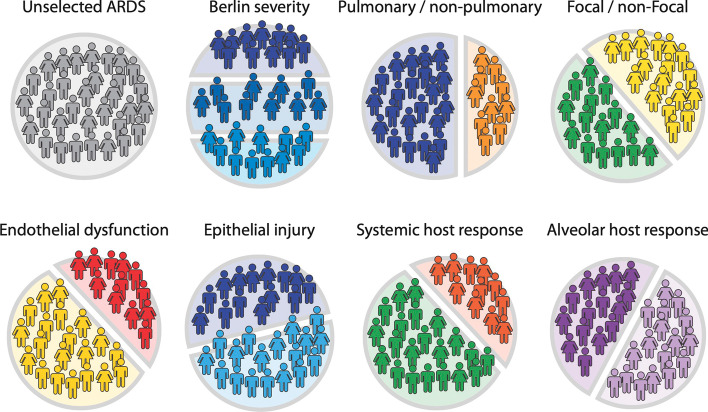 Figure 1
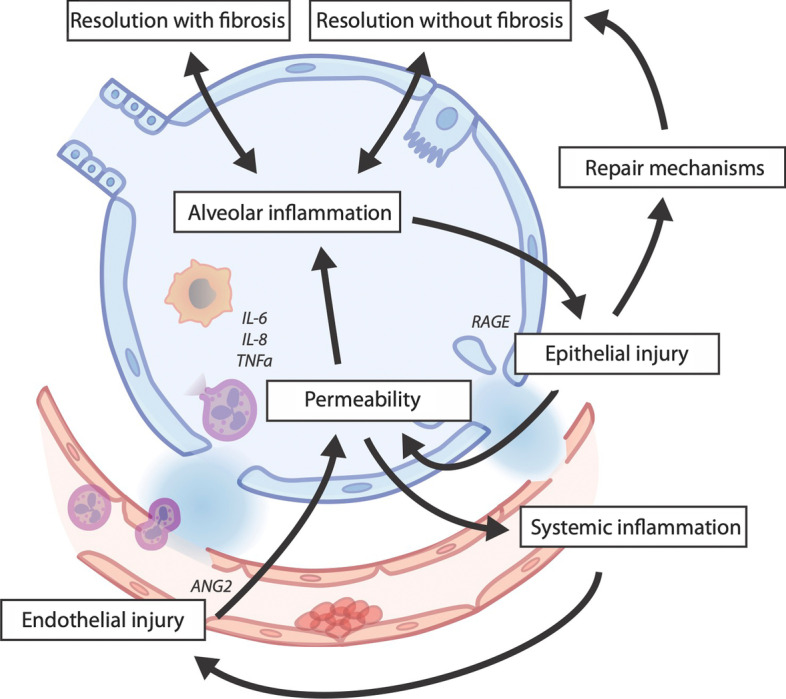 Figure 2
Peer Reviews
No public reviews on file for this paper yet. If you reviewed it on a platform where reviews are public (OpenReview, ICLR, NeurIPS, ICML), you can paste yours below so the community can read it here.
Videos
No videos yet. Explain this paper in a talk, walkthrough, or lecture? Add one.
Taxonomy
TopicsRespiratory Support and Mechanisms · Intensive Care Unit Cognitive Disorders · Sepsis Diagnosis and Treatment