Selective oxidative stress induces dual damage to telomeres and mitochondria in human T cells
Ling Wang, Zeyuan Lu, Juan Zhao, Madison Schank, Dechao Cao, Xindi Dang, Lam Nhat Nguyen, Lam Ngoc Thao Nguyen, Sushant Khanal, Jinyu Zhang, Xiao Y. Wu, Mohamed El Gazzar, Shunbin Ning, Jonathan P. Moorman, Zhi Q. Yao

TL;DR
Oxidative stress causes damage to both telomeres and mitochondria in T cells, leading to cell death, and this happens through a connection between these two parts of the cell.
Contribution
A new chemoptogenetic tool was used to show that oxidative stress at either telomeres or mitochondria causes damage to both.
Findings
Targeted oxidative stress at telomeres causes mitochondrial dysfunction and cell death.
Oxidative stress at mitochondria also damages telomeres and leads to apoptosis.
Blocking ROS formation reverses damage to telomeres and mitochondria.
Abstract
Oxidative stress caused by excess reactive oxygen species (ROS) accelerates telomere erosion and mitochondrial injury, leading to impaired cellular functions and cell death. Whether oxidative stress‐mediated telomere erosion induces mitochondrial injury, or vice versa, in human T cells—the major effectors of host adaptive immunity against infection and malignancy—is poorly understood due to the pleiotropic effects of ROS. Here we employed a novel chemoptogenetic tool that selectively produces a single oxygen (1O2) only at telomeres or mitochondria in Jurkat T cells. We found that targeted 1O2 production at telomeres triggered not only telomeric DNA damage but also mitochondrial dysfunction, resulting in T cell apoptotic death. Conversely, targeted 1O2 formation at mitochondria induced not only mitochondrial injury but also telomeric DNA damage, leading to cellular crisis and apoptosis.…
Genes, proteins, chemicals, diseases, species, mutations and cell lines named across the full text — each resolved to its canonical identifier and authoritative record.
Click any figure to enlarge with its caption.
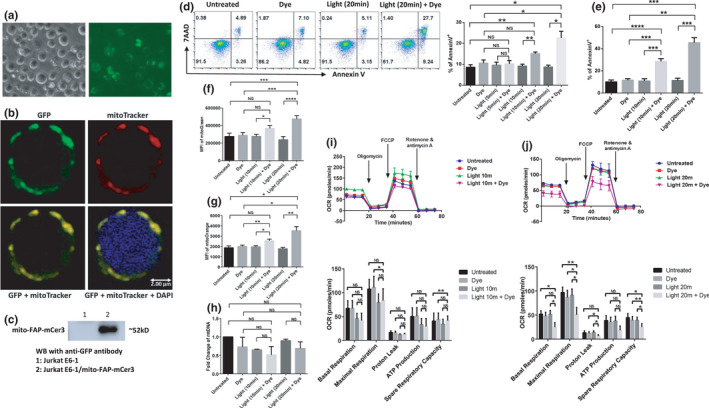 Figure 1
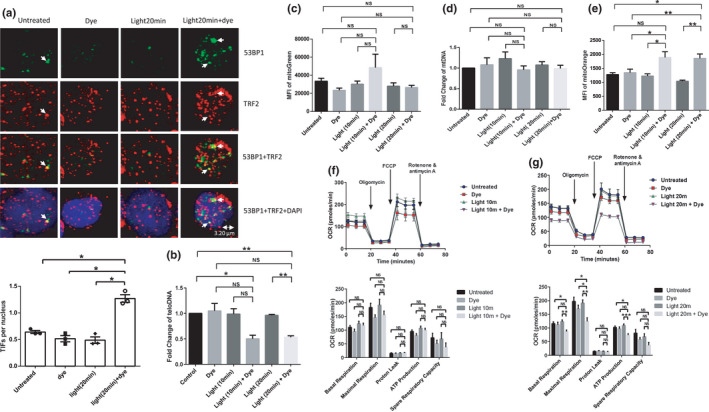 Figure 2
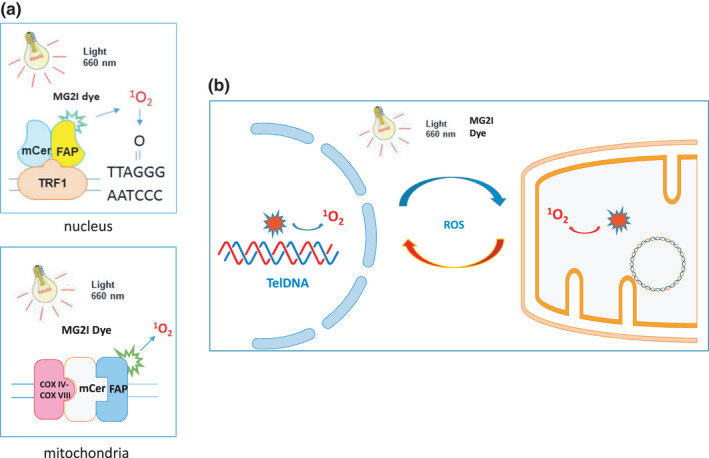 Figure 3
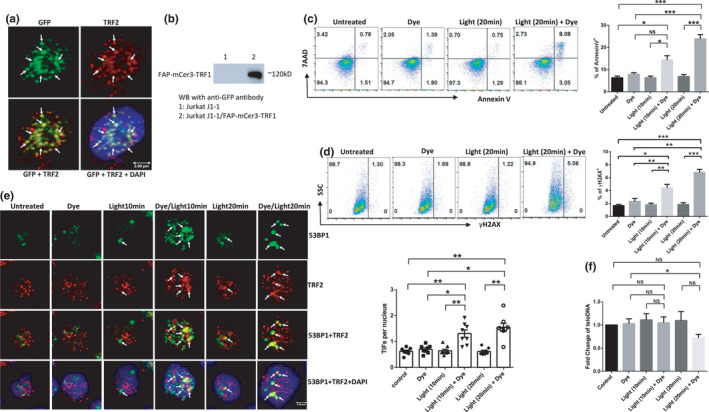 Figure 4
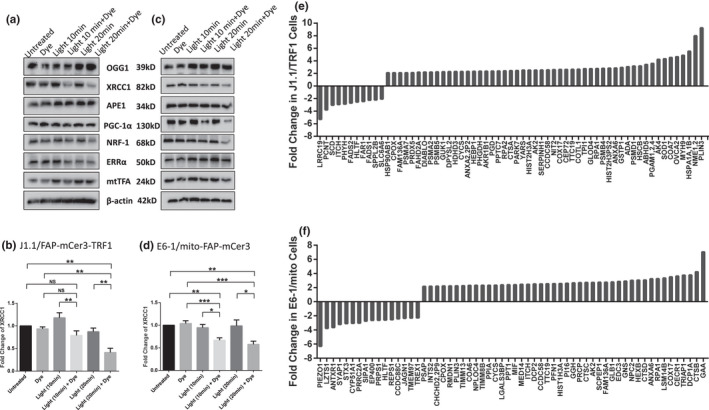 Figure 5
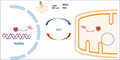 Figure 6
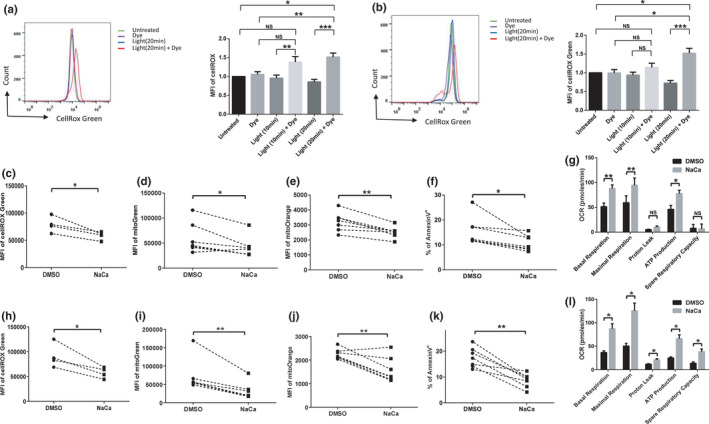 Figure 7
Peer Reviews
No public reviews on file for this paper yet. If you reviewed it on a platform where reviews are public (OpenReview, ICLR, NeurIPS, ICML), you can paste yours below so the community can read it here.
Videos
No videos yet. Explain this paper in a talk, walkthrough, or lecture? Add one.
Taxonomy
TopicsTelomeres, Telomerase, and Senescence · Neutrophil, Myeloperoxidase and Oxidative Mechanisms · Cytomegalovirus and herpesvirus research