Endocrine Disrupting Chemicals and Reproductive Health in Boys and Men
Wiwat Rodprasert, Jorma Toppari, Helena E. Virtanen

TL;DR
This paper reviews how exposure to endocrine disrupting chemicals during development may harm male reproductive health, including issues like poor semen quality and testicular cancer.
Contribution
The paper provides a comprehensive review of how prenatal and early life exposure to EDCs affects male reproductive health outcomes.
Findings
Exposure to antiandrogenic EDCs during fetal development can disrupt testicular development and function.
Evidence from animal studies supports a link between EDCs and male reproductive disorders.
Epidemiological studies show mixed results regarding the impact of EDCs on reproductive health.
Abstract
Male reproductive health has declined as indicated by increasing rates of cryptorchidism, i.e., undescended testis, poor semen quality, low serum testosterone level, and testicular cancer. Exposure to endocrine disrupting chemicals (EDCs) has been proposed to have a role in this finding. In utero exposure to antiandrogenic EDCs, particularly at a sensitive period of fetal testicular development, the so-called ‘masculinization programming window (MPW)’, can disturb testicular development and function. Low androgen effect during the MPW can cause both short- and long-term reproductive disorders. A concurrent exposure to EDCs may also affect testicular function or damage testicular cells. Evidence from animal studies supports the role of endocrine disrupting chemicals in development of male reproductive disorders. However, evidence from epidemiological studies is relatively mixed. In this…
Genes, proteins, chemicals, diseases, species, mutations and cell lines named across the full text — each resolved to its canonical identifier and authoritative record.
Click any figure to enlarge with its caption.
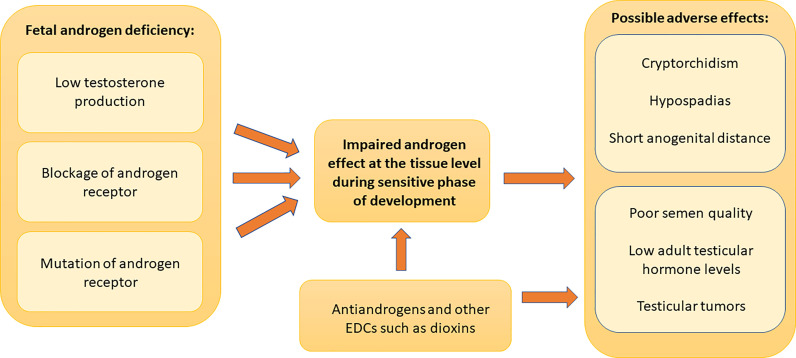 Figure 1
| Reference | matrix | Chemicals/congeners analysed | n of subjects | Country | Association between chemical levels and AGD |
|---|---|---|---|---|---|
|
| |||||
| Vafeiadi ( | Maternal plasma collected at delivery | Plasma dioxin-like activity | 119 newborn boys, 239 young boys (median age 1.6 years) | Greece and Spain | Anopenile distance in newborns: Negative association with maternal plasma dioxin-like activity. |
|
| |||||
| García-Villarino ( | Cord blood | 6 PBDEs | 116 4-y old boys | Spain | PBDE-153 levels were associated positively with anoscrotal distance/weight |
| Luan ( | Cord plasma | 9 PBDEs | 190 boys [measured at birth (n=182), at 6 mo (n=148), at 12 mo (n=149), or at 48 mo (n=158)] | China | Anoscrotal distance: Significant negative associations in the highest quartile of BDE-47 and sum of 4 PBDEs at 12 or 48 mo. Mid-range levels of BDE-28 were associated with shorter anopenile distance at 48 months of age. |
| García-Villarino et al. ( | Maternal serum at first trimester of pregnancy | PBDE-28, -99, -153 | 27 18-mo-old boys | Spain | Anoscrotal distance/weight was negatively associated with PBDE-99 and PBDE-153 levels |
| García-Villarino ( | Maternal serum at first trimester | 6 PBDEs | 74 4-y old boys | Spain | Levels of PBDE-209 were negatively associated with anoscrotal distance/weight |
|
| |||||
| Fisher ( | Maternal serum during pregnancy | 6 parabens | 237 | UK | Detection of n-Propyl paraben was associated with shorter anoscrotal distance from birth to 24 mo of age |
|
| |||||
| García-Villarino ( | Cord blood | 6 PCBs | 116 4-y old boys | Spain | PCB-153 and -180 levels were negatively associated with anoscrotal distance/weight |
| García-Villarino ( | Maternal serum at first trimester of pregnancy | PCB-28, -52 | 27 18-mo-old boys | Spain | NS |
| García-Villarino et al. ( | Maternal serum at first trimester | 6 PCBs | 74 4-y old boys | Spain | PCB-138 (second tertile), -153 (second tertile), -180 levels were negatively associated with anoscrotal distance/weight |
| Loreto-Gómez et al. ( | Maternal serum during third trimester of pregnancy | 7 PCBs | 74 boys, followed at 0, 1, 3, 6 and 12 mo | Mexico | Significant negative association between anopenile distance/height and PCB 28, 74, and 170 levels (individually and combined). |
|
| |||||
| Arbuckle ( | Maternal plasma during first trimester | PFOA, PFOS and PFHxS | 205 newborn boys | Canada | PFOA levels showed positive association with anoscrotal distance, but no dose-response effect |
| Lind ( | Maternal serum during first trimester | PFOS, PFOA, PFHxS, PFNA, and PFDA | 316 boys examined 3 months after expected date of delivery | Denmark | No consistent association between PFASs levels and anopenile or anoscrotal distance |
| Tian ( | Maternal plasma during pregnancy | Eleven PFASs | 500 boys examined at least once at birth (n=439), at 6 (n=322) or at 12 months (n=301) | China | PFOS, PFDA, PFUdA and PFTrDA levels were negatively associated with anoscrotal or anopenile distance at 0 or at 6 months. |
|
| |||||
| García-Villarino ( | cord blood | beta-HCH, gamma-HCH (lindane), HCB, 4,4′-DDT, 4,4′-DDE, 4,4′-DDD, | 116 4-y old boys | Spain | NS |
| Bornman ( | Maternal serum at delivery or after it | DDT, DDE | 343 at newborn, 344 at 1 year (follow-up) | South Africa | NS |
| García-Villarino ( | Maternal serum at first trimester of pregnancy | 2,4-DDD, 4,4-DDD, HCB | 27 18-mo-old boys | Spain | NS |
| García-Villarino et al. ( | Maternal serum at first trimester | beta-HCH, gamma-HCH (lindane), HCB, 4,4′-DDT, 4,4′-DDE, 4,4′-DDD, | 74 4-y old boys | Spain | NS |
| Longnecker ( | Maternal serum postpartum | DDT, DDE | 781 newly delivered infants | Mexico | NS |
| Loreto-Gómez ( | Maternal serum during third trimester of pregnancy | o,p’-DDT, p,p’-DDT, p,p’-DDE | 74 boys, followed at 0, 1, 3, 6 and 12 mo | Mexico | Significant positive association between p,p’-DDE and anopenile length/height. Negative association between mixture of DDT isomers and its metabolites and anopenile length/height. |
| Torres-Sanchez ( | Maternal serum before and during pregnancy | p,p′‐DDE and p,p′‐DDT | 37 boys (age 3, 6, 12 or 18 months) | Mexico | Significant negative association between anal position index (anoscrotal distance per coccyx-scrotal distance) and first trimester DDE levels. |
| Dalsager ( | Maternal urine during gestation (gw 28) | pesticide metabolites 3-PBA, TCPY, 2,4-D and DAPs | 420 boys examined 3 months after expected date of delivery | Denmark | 2,4-D levels: Second tertile compared to the first tertile was associated with shorter anoscrotal and anopenile distance |
|
| |||||
| Mammadov ( | Cord serum | BPA | 72 newborn boys | Cyprus | BPA level above the 90th percentile was associated with significantly shorter anoscrotal distance. |
| Sunman ( | Cord blood | BPA | 100 newborns (4 had hypospadias, 3 cryptorchidism, 7 retractile testes) | Turkey | Anogenital distance/weight correlated significantly with BPA levels (only in univariate analysis) |
| Fisher ( | Maternal serum during pregnancy | 9 phenols | 234 | UK | NS |
| Arbuckle ( | Maternal first trimester urine sample | BPA, Triclosan | 198 newborn boys | Canada | NS |
| Huang ( | Maternal urine collected during pregnancy | BPA, nonylphenol | 86 newborn boys | Taiwan | NS |
| Lassen ( | Maternal urine during pregnancy | Triclosan | 245 examined 3 months after expected date of delivery | Denmark | Negative association between triclosan levels and anogenital distance (borderline significance) |
| Liu ( | Maternal urine during pregnancy (third trimester) | BPA, 4-nonylphenol, 4-t-octylphenol. | 137 newborn boys | China | NS |
| Sun ( | Maternal urine collected during pregnancy | BPA | 555 newborn boys, follow-up at 6 months (n=343) and at 12 months (n=320) | China | Maternal exposure to BPA was associated with shorter anoscrotal & anopenile distance of the son at 12 months. No dose-response relationship |
|
| |||||
| Huang ( | Amniotic fluid | Five phthalate metabolites | 33 newborn boys | Taiwan | NS |
| Sunman ( | Cord blood | DEHP, MEHP | 100 newborns (4 had hypospadias, 3 cryptorchidism, 7 retractile testes) | Turkey | DEHP levels showed negative association with anogenital index. |
| Fisher ( | Maternal serum during pregnancy | 16 phthalate metabolites | 239 | UK | NS |
| Adibi ( | Maternal first trimester urine sample | 8 phthalate metabolites | 354 newborn boys | USA | MnBP and MEHP levels were negatively associated with anoscrotal distance |
| Arbuckle ( | Maternal first trimester urine sample | 11 phthalate metabolites | 198 newborn boys | Canada | MnBP levels and molar sum of low molecular weight phthalate metabolites were positively associated with anopenile distance. |
| Barrett ( | Maternal first trimester urine sample | 9 phthalate metabolites | 366 newborn boys | USA | Molar sum of DEHP metabolites, and levels of MEOHP and MEHHP were negatively associated with anoscrotal and anopenile distance in the lower stress group. In the lower stress group MECPP and MnBP levels were negatively associated with anoscrotal distance. |
| Bornehag ( | Maternal first trimester urine | Ten phthalate metabolites | 196 boys (mean age 21 months) | Sweden | Levels of oh-MMeOP and oxo-MMeOP and sum of DiNP metabolites were negatively associated with anoscrotal distance |
| Bustamante-Montes ( | Maternal urine during pregnancy (third trimester) | 4 phthalate metabolites | 73 newborn boys | Mexico | Negative association between total phthalate levels and anopenile distance. |
| Huang ( | Maternal urine during pregnancy | 5 phthalate metabolites | 33 newborn boys | Taiwan | NS |
| Jensen ( | Maternal urine during pregnancy | 12 phthalate metabolites | 245 boys 3 months after the date of expected delivery | Denmark | NS |
| Martino-Andrade ( | Maternal urine collected in each trimester | 11 phthalate metabolites | 168 newborn boys | USA | NS (tendency to negative association between anoscrotal and anopenile distance and DEHP metabolite levels in the first trimester) |
| Suzuki ( | Maternal urine during pregnancy | seven phthalate metabolites | 111 newborn boys | Japan | Negative association between anopenile distance/weight and MEHP level. |
| Swan ( | Maternal urine during pregnancy | nine phthalate monoester metabolites | 85 boys (median age 14 months) | USA | Levels of MEP, MBP, MBzP, MiBP and their summary phthalate score were negatively associated with anopenile distance/weight. |
| Levels of MEP were also inversely associated with anoscrotal distance/weight. | |||||
| Swan ( | Maternal urine during pregnancy | nine phthalate monoester metabolites | 106 boys aged 2-36 months (extension of study by Swan et al., 2005) | USA | Levels of MEP, MBP, MEHP, MEOHP and MEHHP were negatively associated with anopenile distance. |
| Swan ( | First trimester urine sample | 11 phthalate metabolites | 366 newborn boys | USA | MEHP, MEOHP, MEHHP and sum of DEHP metabolite levels were significantly and negatively associated with anoscrotal or anopenile distance. |
| Wenzel ( | Maternal urine from second trimester | 8 phthalate metabolites | 171 newborn boys | USA | Negative association between MEHP and anopenile distance. Positive association between molar sum of DBP metabolites or MiBP levels and anoscrotal distance. |
| Reference | Matrix | Chemicals/congeners analysed | N of cases/controls | Country | Association between chemical levels and cryptorchidism |
|---|---|---|---|---|---|
|
| |||||
| Koskenniemi ( | Boy’s adipose tissue | 17 PCDD/Fs, total-TEq | 30/29 | Finland | Significant positive association with the risk of cryptorchidism (sum of 17 PCDD/Fs, total-TEq) |
| 14/9 | Denmark | ||||
| Virtanen ( | Placenta | 17 PCDD/Fs, dioxin WHO-TEq, total-TEq | 56/56 | Finland | NS (sum of dioxins, dioxin WHO-TEq, total-TEq) |
| 39/129 | Denmark | ||||
|
| |||||
| Koskenniemi ( | Boy’s adipose tissue | 14 PBDEs | 30/29 | Finland | NS (sum of PBDEs) |
| 14/9 | Denmark | ||||
| Goodyer ( | Maternal hair (after pregnancy) | 8 PBDEs | 137/158 | Canada | BDE-99, BDE-100 and BDE-154 levels were positively associated with the risk of cryptorchidism |
| Small ( | Maternal serum before or after conception | PBB-153 | 9/450 | USA | NS |
| Main ( | Maternal breast milk | 14 PBDEs | 33/32 | Finland | In Denmark PBDE levels were significantly higher in cases than in controls (sum of 7 most prevalent PBDEs) |
| 29/36 | Denmark | ||||
| Main ( | Placenta | 14 PBDEs | 56/56 | Finland | NS |
| 39/129 | Denmark | ||||
|
| |||||
| Rantakokko ( | Placenta | MBT, DBT, TBT, TPhT, sum of OTCs | 56/56 | Finland | Denmark: DBT: significant positive association with the risk of cryptorchidism. |
| 39/129 | Denmark | Finland: Highest tertile of TBT and DBT: Significant negative association with the risk of cryptorchidism | |||
|
| |||||
| Fisher ( | Maternal serum during pregnancy | 6 parabens | 55/277 | UK | NS |
|
| |||||
| Hosie ( | Adipose tissue | 6 PCBs and their sum | 18/30 | Germany | NS |
| Koskenniemi ( | Adipose tissue | 37 PCBs | 30/29 | Finland | NS (sum of PCBs close to significant) |
| 14/9 | Denmark | ||||
| Brucker-Davis ( | Cord serum | 7 PCBs and their sum | 67/84 | France | NS |
| Brucker-Davis ( | Maternal breast milk | 7 PCBs and their sum | 56/69 | France | Cases were more often in the highest exposure group (sum of PCBs) |
| Chevalier ( | Maternal breast milk | PCB153 | 52/128 | France | NS |
| Axelsson ( | Maternal serum (first trimester) | PCB-153 | 163/161 | Sweden | NS |
| McGlynn ( | Maternal serum (third trimester) | 11 PCBs and their sums | 230/593 | USA | NS |
| Virtanen ( | Placenta | 37 PCBs, PCB WHO-TEq | 56/56 | Finland | NS (sum of PCBs, PCB WHO-TEq) |
| 39/129 | Denmark | ||||
| Mol ( | Umbilical cord | sum of PCBs 138, 153 and 180 | 19 boys with a history of cryptorchidism + 1 testis torsion/176 | Faroe Islands (Denmark) | NS |
|
| |||||
| Toft, Anand-Ivell ( | Amniotic fluid | PFOS | 270/300 | Denmark | NS |
| 146/190 (gw 13-16) | |||||
| Vesterholm Jensen ( | Cord blood | PFOS, PFOA and their metabolites | 78/78 | Finland | NS |
| 29/30 | Denmark | ||||
|
| |||||
| Hosie ( | Boy’s adipose tissue | DDT and metabolites, toxaphene, HCH, chlorinated cyclodienes, chlorinated benzenes | 18/30 | Germany | Cryptorchid boys had higher levels of HCE and HCB |
| Brucker-Davis ( | Cord serum | DDE | 67/84 | France | NS |
| Rouget ( | Cord plasma | Chlordecone | 17/310 | Guadeloupe (French West Indies) | NS |
| Brucker-Davis ( | Maternal breast milk | DDE | 56/69 | France | Cases tended to be more often in the highest exposure group (borderline significance) |
| Chevalier ( | Maternal breast milk | DDE | 52/128 | France | NS |
| Damgaard ( | Maternal breast milk | 27 organochlorine pesticides | 62/68 | Finland & Denmark | Cases had significantly higher levels than controls (combined analysis of 8 most abundant pesticides) |
| Rouget ( | Maternal plasma at delivery | Chlordecone | 23/382 | Guadeloupe (French West Indies) | NS |
| Axelsson ( | Maternal serum (first trimester) | p,p’DDE, HCB | 165/165 | Sweden | NS |
| Bhatia ( | Maternal serum during or after pregnancy | DDE, DDT | 75/283 | USA | NS |
| Longnecker ( | Third trimester maternal serum | DDE | 219/552 | USA | NS |
| Pierik ( | third trimester maternal serum | HCE, HCB, β-HCH, oxychlordane, dieldrin, p,p’-DDE, p,p’-DDT | 219/564 | USA | Risk of cryptorchidism was significantly increased only for β-HCH levels between 50th and 90th percentiles |
| Trabert ( | Third trimester maternal serum | transchlordane, oxychlordane | 217/557 | USA | NS |
| Waliszewski ( | Maternal serum postpartum | HCB, beta-HCH, pp’DDE, op’DDT, pp’DDT, sum of DDT | 30/30 | Mexico | No significant difference between groups in mean and median levels, but risk ratio of cryptorchidism above one for exposure to HCB, pp’DDE, op’DDT, pp’DDT, sum of DDT |
| Fratrić ( | Maternal urine postpartum | organo-phosphate metabolite dimethyl phosphate | 30/30 | Serbia | NS |
|
| |||||
| Komarowska ( | Boy’s serum | BPA | 98/57 | Poland | Total and conjugated BPA levels were higher in cases |
| Fénichel ( | Cord blood | unconjugated BPA | 46/106 | France | NS |
| Chevalier ( | Cord blood | BPA | 52/128 | France | NS |
| Fisher ( | Maternal serum during pregnancy | 9 phenols | 52/274 | UK | BPA levels were positively associated with the risk of cryptorchidism |
| Chevrier ( | Maternal urine during pregnancy | BPA, benzophenone 3, triclosan, 2,4-dichlorophenol, 2,5-dichlorophenol, methyl-, ethyl-, propyl- and butylparaben, sum of parabens | 38/113 | France | NS |
|
| |||||
| Anand-Ivell ( | Amniotic fluid (g w 13-16) | DEHP and DiNP metabolites 7cx-MMeHP and 5cx-MEPP | 146/190 (gw 13-16) | Denmark | NS |
| Jensen ( | Second- trimester amniotic fluid | DEHP metabolite 5cx-MEPP, DiNP metabolite 7cx-MMeHP | 270/300 | Denmark | NS |
| Brucker-Davis ( | Cord serum | DBP, | 67/84, | France | NS |
| mBP | 36/49 | ||||
| Brucker-Davis ( | Maternal breast milk | DBP, | 56/69, | France | NS |
| mBP | 31/40 | ||||
| Chevalier ( | Maternal breast milk | mBP | 52/128 | France | NS |
| Main ( | Maternal breast milk | 6 phthalate monoesters | 62/68 | Finland & Denmark | NS |
| Fisher ( | Maternal serum during pregnancy | 16 phthalate metabolites | 55/279 | UK | No consistent association |
| Swan ( | Maternal urine during pregnancy | 9 phthalate metabolites | 12/107 | USA | DEHP metabolite (especially MEHP) levels were associated positively with the probability of cryptorchidism |
| Chevrier ( | Maternal urine during pregnancy | 11 phthalate metabolites: | 50/149 | France | NS |
| sum of low- molecular weight phthalates, | |||||
| sum of 4 DEHP metabolites, | |||||
| sum of high- molecular weight phthalates | |||||
|
| |||||
| Warenbourg ( | Maternal urine during pregnancy | Glycol ether metabolites MAA and PhAA | 14/41 | France | NS |
|
| |||||
| Brucker-Davis ( | Maternal breast milk | Composite score: DDE, sum of PCBs, mBP | 31/40 | France | All exposures: NS |
| 56/69 | DDE + sum of PCBs: Cases tended to be more often in the highest exposure group (borderline significance) | ||||
| Krysiak-Baltyn ( | Maternal breast milk | PBDEs | 29/36 | Denmark | Only in Denmark: |
| PBBs | 33/32 | Finland | -Higher levels in case group: PBDE 119, 85, 75, 138, OCDF | ||
| phthalate metabolites | -Higher levels in control group: PCB 18, 51, 33, 49 and 52 | ||||
| organochlorine pesticides | |||||
| PCBs | |||||
| dioxins | |||||
| (106 chemicals included in the combined analysis) |
| Reference | Matrix | Chemicals/congeners reported | N of cases/controls | Country | Association between chemical levels and hypospadias |
|---|---|---|---|---|---|
|
| |||||
| Poon ( | Maternal hair (after pregnancy) | 8 PBDEs | 152/64 | Canada | Hypospadias was associated with higher maternal hair PBDE levels (total and congeners 28, 47, 99, 153 and 154) |
| Koren ( | |||||
| Carmichael ( | Maternal mid-pregnancy serum | 5 PBDEs | 20/28 | USA | NS |
| Small ( | Maternal serum before or after conception | PBB-153 | 5/454 | USA | NS |
|
| |||||
| Carmichael ( | Maternal mid-pregnancy serum | 9 PCBs | 20/28 | USA | NS |
| Giordano ( | Maternal serum after pregnancy | 4 PCBs (118,138,153 and 180) and their sum | 37/21 | Italy | NS |
| McGlynn ( | Maternal serum (third trimester) | 11 PCBs and their sums | 201/593 | USA | NS |
| Rignell-Hydbom ( | Maternal serum from early pregnancy | PCB-153 | 229/229 | Sweden | NS |
|
| |||||
| Toft ( | Amniotic fluid | PFOS | 75/300 | Denmark | NS |
| 48/190 (limited to g w 13-16) | |||||
|
| |||||
| Shekharyadav ( | Boy’s blood | HCH, aldrin, dieldrin, endosulfan alpha, endosulfan beta, DDT and DDE | 80/120 | India | Hypospadias was associated with higher levels of DDE and beta- and gamma-HCH |
| Bhatia ( | Maternal serum during or after pregnancy | DDT, DDE | 66/283 | USA | NS |
| Carmichael ( | Maternal mid-pregnancy serum | DDT, DDE, HCB | 20/28 | USA | NS |
| Giordano ( | Maternal serum after pregnancy | DDE, HCB | 37/21 | Italy | Positive association between risk of hypospadias and HCB levels |
| Longnecker ( | Third trimester maternal serum | DDE | 199/552 | USA | NS |
| Rignell-Hydbom ( | Maternal serum from early pregnancy | p,p’-DDE, HCB | 237/237 | Sweden | HCB: Highest exposure quartile was associated with higher risk of hypospadias |
| DDE: Tendency to higher risk, but no statistically significant association | |||||
| Trabert ( | Third trimester maternal serum | Trans-nonachlor, oxychlordane | 197/557 | USA | NS |
| Haraux ( | Meconium | 11 pesticides and metabolites | 25/58 | France | Presence of 2-methy-4-chlorophenoxyacetic acid (MCPA) and isoproturon in meconium was associated with the risk hypospadias |
|
| |||||
| Anand-Ivell ( | Amniotic fluid (weeks 13-16) | DEHP metabolite 5cx-MEPP and DiNP metabolite 7cx-MMeHP | 48/190 | Denmark | NS |
| Jensen ( | Second- trimester amniotic fluid | DEHP metabolite 5cx-MEPP, DiNP metabolite 7cx-MMeHP | 75/300 | Denmark | NS |
| Chevrier ( | Maternal urine during pregnancy | 11 phthalate metabolites: sum of low- molecular weight phthalates, | 19/57 | France | Significantly lower risk of hypospadias with the second tertile of urinary levels of low molecular weight phthalates |
| sum of 4 DEHP metabolites, | |||||
| sum of high- molecular weight phthalates | |||||
|
| |||||
| Warembourg ( | Maternal urine during pregnancy | Glycol ether metabolites methoxyacetic acid (MAA), phenoxyacetic acid (PhAA) | 15/45 | France | Highest tertile of MAA levels was associated with a higher risk of hypospadias |
|
| |||||
| Rignell-Hydbom ( | Maternal serum from early pregnancy | PCB-153, DDE, HCB | 229/229 | Sweden | NS |
| EDC class | Reference | Matrix | Study design | Chemicals/congeners reported | N of subjects | Country | Association between chemical levels and semen quality |
|---|---|---|---|---|---|---|---|
|
| |||||||
| Hart 2018 | ( | Maternal serum | Cohort | Maternal serum for total BPA (free+ conjugated) | 136 men (20-22 years of age) | Australia | Positive association between maternal serum BPA levels and sperm concentration and motility of the sons |
| Serum FSH, LH | |||||||
|
| |||||||
| Mocarelli 2011 | ( | Serum | cohort | Maternal dioxin level at conception | 39 men born to mothers who exposed to dioxin following the accident in Seveso, Italy (mean age, 22.5 y ± 2.2 y) | Italy | 21 breast-fed sons |
| - sperm concentration | |||||||
| - total sperm count | |||||||
| - progressive motility | |||||||
| - total motile count | |||||||
| Formula fed exposed | |||||||
|
| |||||||
| Hart 2018 | ( | Maternal serum (pooled at 18 and 34 GW) | Cohort | Maternal serum (pooled at 18 and 34 GW) for 32 phthalate metabolites | 423 men (20-22 years of age) | Australia | Negative association between |
| - antenatal serum MEP levels and seminal volume | |||||||
| 111 men who provided semen samples | - MCiOP level and sperm | ||||||
| motility | |||||||
| Axelsson 2015 | ( | Maternal serum | Cross-sectional | Maternal serum for metabolites of DEHP and DiNP | 112 adolescent males, aged 17.5-20.5 y | Sweden | Semen volume of the men with the highest tertile of MEHHP and MCiOP was lower than men with the lowest tertile. |
|
| |||||||
| Vested 2014 | ( | Maternal serum | Birth cohort | Maternal serum for 6 PCBs and p,p’-DDE (pregnancy week 30) | 176 men, aged 19-21 y | Denmark | No associations between maternal serum ∑PCBs, ∑DL-PCB, p,p’-DDE levels and semen quality of the sons |
| Semen and blood sample from each son | |||||||
|
| |||||||
| Vested 2013 | ( | Serum | Birth cohort | Maternal serum for PFOA and PFOS (pregnancy week 30) | 169 men, aged 19-21 y | Denmark | Maternal serum PFOA levels had negative association with sperm concentration and TSC (only in adjusted models) |
| Semen and blood sample from each son | Maternal serum PFOS: NS |
| EDC class | Reference | matrix | Study design | Chemicals/congeners reported | n of subjects | Country | Association between chemical levels and semen quality |
|---|---|---|---|---|---|---|---|
|
| |||||||
| Adoamnei 2018 | ( | Urine | Cross-sectional | BPA | 215 university students | Spain | Negative association with sperm concentration and TSC |
| (age range, 18–23 y) | |||||||
| Caporossi 2020 | ( | Urine | Cross-sectional | BPA | 155 male partners of subfertile couples, aged 40.5 y | Italy | Positive association between BPA level and semen volume |
| Ji 2018 | ( | Urine | Cross-sectional | BPA | 500 fertile men, aged 18-55 y | China | Negative association with sperm concentration and sperm swing characteristics and positive association with sperm velocity ratios. |
| Kranvogl 2014 | ( | urine | Cross-sectional | BPA | 136 male partners of infertile couples (mean age, 36.2 y) | Slovenia | No association between BPA and sperm concentration or sperm motility |
| Meeker 2010 | ( | Urine | Cross-sectional | BPA | 190 men attending infertility clinic | USA | Negative association with sperm concentration, motility and morphology |
| Mean age, 37 y | |||||||
| Mendiola 2010 | ( | Urine | Cross-sectional | BPA | 302 fertile men | USA | NS |
| Mean age, 31.9 y | |||||||
| Li 2011 | ( | Urine | Cohort | BPA | 218 men with and without occupational BPA exposure | China | Negative association with sperm concentration, TSC and sperm motility |
| (age from <25 to > 45y) | |||||||
| Knez 2014 | ( | Urine | Cohort | BPA | 149 male partners of couples undergoing IVF | Slovenia | Negative association with sperm concentration and TSC |
| (mean age, 34 y) | |||||||
| Lassen 2014 | ( | Urine | Cross-sectional | BPA | 308 young men from general population | Denmark | Men in the highest quartile of BPA had significantly lower % progressive motile spermatozoa |
| No association with other semen parameters | |||||||
| Goldstone 2015 | ( | Urine | Cohort | BPA | 418 male partners of couples trying to conceive | USA | NS |
| (mean age, 31.7 y) | |||||||
| Hu 2017 | ( | Urine | Cross-sectional | BPA | 357 subfertile men | China | NS |
| (mean age, 28.7 y) | Among obese men, negative association with sperm concentrations and total sperm counts | ||||||
| Omran 2018 | ( | Urine | Case-control | BPA | 50 infertile men and 50 controls | Egypt | urinary BPA levels did not differ between infertile men and controls. |
| All participants: urinary BPA levels: positive association with percentage of abnormal sperm morphology | |||||||
| Negative association with progressive sperm motility and total sperm counts | |||||||
| Pollard 2019 | ( | Urine | Cross-sectional | BPA | 161 men, aged 18-40 y with unknown subfertility | USA | Men with abnormal sperm tail morphology had higher geometric mean of BPA exposure than men with normal sperm morphology |
| Radwan 2018 | ( | Urine | Cross-sectional | BPA | 315 men, aged <45 y, who had sperm concentration of ≥ 15 million/ml | Poland | Negative association with sperm motility |
| Vitku 2015 | ( | Plasma seminal fluid | Cross-sectional | BPA | 174 men attending the fertility center | Czech Republic | Slightly infertile men had higher BPA levels in plasma and seminal plasma as compared with healthy men. |
| Mean age, 36 y | Negative association between seminal BPA level (but not plasma BPA) and sperm concentration and TSC | ||||||
| Vitku 2016 | ( | Plasma and Seminal plasma | Cross-sectional | BPA | 191 men attending infertility clinic | Czech Republic | Plasma BPA: NS |
| Mean age, 36 y | Seminal plasma BPA: negative association with sperm concentration, TSC and normal sperm morphology. | ||||||
|
| |||||||
| Ghayda 2019 | ( | Urine | Cross-sectional | BPS | 158 men attending fertility center | USA | Men with detectable |
| (age 18-56 y) | |||||||
|
| |||||||
| Adoamnei 2018 | ( | Urine | Cross-sectional | BP | 215 university students, aged 18-23 y | Spain | NS |
| EP | |||||||
| MP | |||||||
| PP | |||||||
| Jurewicz 2017 | ( | Urine | Cross-sectional | BP | 315 men aged less than 45 y who attended the infertility clinic with normal semen concentration (15-300 million/mL) | Poland | Positive association with %sperm with abnormal morphology |
| Meeker 2011 | ( | Urine | Cross-sectional | Parabens | 190 male partners attending infertility clinic who had semen analysis results | USA | NS |
| Mean age, 36.7 y | |||||||
| Smarr 2018 | ( | Urine | Cross-sectional | MP | 501 male partners of couples planning to become pregnant | USA | Negative association between EP, BP levels and sperm count |
|
| |||||||
| Albert 2018 | ( | Urine | Cross-sectional | Phthalate metabolites | 153 healthy men, aged 18-41 y | Canada | NS |
| Axelsson 2015 | ( | Urine | Cross-sectional | 10 phthalate metabolites | 314 men from general population, aged 17-20 y | Sweden | Negative association between all the DEHP metabolites (MEHP, MECPP, MEOHP, MEHHP, MBP) and progressive sperm motility |
| Positive association of MCiOP, % MEHP with semen volume | |||||||
| Chang 2017 | ( | Urine and seminal fluid | Cross-sectional | Phthalate metabolites | 253 male partners of subfertile couples | Taiwan |
|
| Negative associations between: | |||||||
| 37 male partners of fertile couples | - MBzP, MEHP, MEHPX and sperm concentration | ||||||
| Mean age: 33 y | - MBzP, MEHP and sperm motility | ||||||
|
| |||||||
| Negative association between | |||||||
| - MEHP and mono-2-ethyl-5-hydroxyhexyl phthalates and sperm concentration | |||||||
| - MEP, DEHP metabolites and sperm motility | |||||||
| - MEP and morphologically normal sperm | |||||||
| Chen 2017 | ( | Urine | Cohort | Phthalate metabolites | 796 male students who moved to a different university campuses (median age: 20 y) | China | Negative associations between |
| - mEP and sperm concentration | |||||||
| - mEP, MnBP, MCPP, ∑LMWP and sperm motility | |||||||
| - MnOP, MEHP, ∑HMWP and morphologically normal sperm | |||||||
| Positive associations between | |||||||
| - miBP, MEHP and semen volume | |||||||
| - MnOP and progressive motility | |||||||
| - MBzP and sperm with normal morphology | |||||||
| Levels of the phthalate metabolites, except MEHP, decreased, while semen volume and morphologically normal sperm increased after relocation. | |||||||
| Joensen 2012 | ( | Urinary phthalate metabolites | Cross-sectional | 14 phthalate metabolites | 881 men | Denmark | Men with the highest quartile of %MiNP had higher semen volume and % progressive motility |
| Median age 19.1 y | |||||||
| Jurewicz 2013 | ( | Urinary phthalate metabolites | Cross-sectional | mono(2-ethyl-5OH-MEHP), MEHP, DEP, MEP, BBzP, MBzP, DINP, MINP, DBP, MBP | 269 men attending infertility clinic (sperm concentration ≥ 15 M/mL) | Poland | 5OHMEHP, MEHP and MINP: Negative association with sperm motility |
| Men’s serum FSH, TT and E2 | |||||||
| Kranvogl 2014 | ( | Urinary phthalates | 9 urinary phthalate monoesters | 136 male partners of infertile couples (mean age, 36.2 y) | Slovenia | MEHP, DMP, DBP, DEHP, MEOHP and sum DEHP levels were negatively associated with sperm concentrations. | |
| MEHP, DBP, MEOHP, sum DEHP levels were negatively associated with sperm motility. | |||||||
| Han 2014 | ( | Urinary phthalate metabolites | Cross-sectional | Urinary levels of MBP | 232 men from 1 reproductive center | China | Weak association between urinary MBP levels and sperm concentration; men with MBP levels above median were 1.97 times more likely to have sperm concentration below the reference value. |
| MEP | Mean age, 32 y | ||||||
| MEHP | |||||||
| MBzP | |||||||
| PA | |||||||
| Total PA | |||||||
| Semen analysis | |||||||
| Pant 2008 | ( | Seminal phthalate metabolites | Cross-sectional | Seminal levels of DEP, DEHP, DBP, DMP and DOP | 300 healthy men, aged 21-40 y | India | Negative association between DEP, DBP, DEHP levels and sperm concentration |
| Negative association between DBP, DEHP and sperm motility | |||||||
| Positive association between DEHP level and % abnormal sperm morphology | |||||||
| Pant 2011 | ( | Seminal fluid | Cross-sectional | DEHP and DBP | 180 healthy men, aged 21-40 y | India | Negative association between DBP, DEHP levels and sperm motility |
| Pant 2014 | ( | Seminal fluid | Cross-sectional | DEHP | 60 male partners of couples attending the andrology laboratory | India | Negative associations between DEHP and sperm motility, sperm concentration and normal morphology |
| DBP | Age 21-40 y | ||||||
| DEP | |||||||
| Liu 2012 | ( | Urine | Cross-sectional | 6 urinary phthalate metabolites | 97 men attended fertility clinic | China | NS |
| (MMP, MEP, MBP, MBzP, MEHP and MEOHP) | (median age, 31.5 y) | ||||||
| Pan 2015 | ( | Urine | Cross-sectional | 14 phthalate metabolites | 1066 men | China | Negative association between MBP, MiBP and % morphologically normal sperm |
| (median age, 29 y) | Negative association between %MEHP and %progressive sperm motility | ||||||
| Smarr 2018 | ( | Seminal fluid | Cross-sectional | phthalate metabolites | 339 male partners of couples discontinuing contraception to become pregnant, mean age 31.8 years | USA | Negative associations between mEP, mBP, miBP, mBzP and semen volume |
| Thurston 2016 | ( | Urine | Cross-sectional study | 9 phthalate metabolites | 420 partners of pregnant women Mean age, 32 y | USA | No association between DEHP, DBP, DEP, DOP levels and semen quality. |
| Negative association between MBzP level and sperm motility | |||||||
| Wang 2016 | ( | Seminal fluid | Cross-sectional | 8 phthalate metabolites | Male partners of subfertile couples | China | Negative associations between MBP, MEHP, MEHHP, MEOHP and semen volume |
| Semen samples (n = 687) Blood samples (n = 342) | Positive associations between MBzP and abnormal sperm heads and tails. | ||||||
| Specht 2014 | ( | Urinary Secondary oxidized metabolites of DEHP and DiNP | Cross-sectional | 5OH-MEHP | 589 male partners of pregnant women | Greenland | Negative associations between semen volume and proxy-MEHP, 5OH-MEHP and 7OH-MMeOP |
| 7oxo-MMeOP | Negative associations between TSC and proxy-MEHP and 5OH-MEHP | ||||||
|
| |||||||
| Miranda-Cantreras 2013 | ( | Erythrocyte acetylcholinesterase (AChE) and plasma butyrylcholinesterase activity | Cross-sectional | Erythrocyte acetylcholinesterase (AChE) and plasma butyrylcholinesterase activity | 35 healthy farm male workers (unexpected group) and 64 male agricultural workers (exposed group) | Venezuela | No association between erythrocyte acetylcholinesterase (AChE) and plasma butyrylcholinesterase and semen quality |
| Melgarejo 2015 | ( | Urinary levels of 6 DAP metabolites | Cross-sectional | 6 urinary DAP metabolites (organophosphate metabolites) | 116 men, 25-38 years old | Spain | Negative correlation between urinary DMP levels and % sperm motility and morphologically normal sperm |
| (median age, 35.1 y) | Negative association between urinary levels of DMP, DMTP, DMDTP, DAPs and sperm concentration and TSC | ||||||
| Perry 2011 | ( | Urine | Case control | 6 DAPs | 94 cases and 95 controls | China | Cases had higher urinary DMP levels |
| Cases had higher sperm concentration and motility | |||||||
| Mean age, 26 y | |||||||
|
| |||||||
| Meeker 2008 | ( | Urine | Cross-sectional | Pyrethroid metabolites: 3-PBA | 207 men | USA | Men in the highest 3-PBA quartile had lower sperm concentration than men with 3PBA of less than median. |
| CDCCA | Mean age, 36 y | ||||||
| TDCCA | |||||||
| Ji 2011 | ( | Urine | Cross-sectional | 3-PBA | 240 men from infertility clinic | China | Negative association between 3-PBA level and sperm concentration |
| Imai 2014 | ( | Urine | Cross-sectional | 3-PBA | 323 university students | Japan | NS |
| Radwan 2014 | ( | Urine | Cross-sectional | Pyrethroid metabolites: 3-PBA | 334 men attended infertility clinic | Poland | Positive association between pyrethroid metabolite levels and %sperm with abnormal morphology |
| CDCCA | Mean age: 32.2 y | Negative association between DBCA and curvilinear velocity and linearity | |||||
| TDCCA | |||||||
| DBCA | |||||||
| Xia 2008 | ( | Urine | Cross-sectional | 3-PBA | 376 men with nonobstructive infertility | China | Men who had urinary creatinine-adjusted 3-PBA level in the 4th quartile had higher risk of having sperm concentration < 20 million/mL |
| Mean age 30.4 y | |||||||
|
| |||||||
| Abdelouahab 2011 | ( | Serum | Cross-sectional | p-p′ DDE | 52 men from a fertility clinic. age 25 – 50y | Canada | NS |
| Abou Ghayda 2020 | ( | Serum at the age of 8-9 y | Cohort study | HCB | 152 young men provided semen samples | Russia | Negative association between semen volume and HCB and βHCH |
| HCH | |||||||
| p,p’-DDE | |||||||
| Aneck-Hahn 2007 | ( | Plasma | Cross-sectional | p,p’-DDE | 311 men residing in the endemic malaria area | South Africa | Negative association between p,p’-DDE level and semen volume and mean CASA motility |
| Mean age 23 y | |||||||
| Ayotte 2001 | ( | Serum | Cross-sectional | p,p’-DDE | 24 young men | Mexico | Negative association between serum p,p’-DDE level and semen volume and TSC |
| Mean age 21 y | |||||||
| De Jager 2006 | ( | Plasma | Cross-sectional | p,p’-DDE | 116 men residing in the area of DDT use | Mexico | Negative association between plasma p,p’-DDE and percentage of sperm motility |
| Mean age 27 y | |||||||
| Hauser 2003 | ( | Serum | Cross-sectional | p, p’-DDE | 212 male partners of subfertile couples | USA | NS |
| Mean age 36 y | |||||||
| Mumford 2015 | ( | Serum | Cross-sectional | 9 organochlorine pesticides | 501 male partners of couples trying to conceive | USA | Highest quartiles of some pesticides were associated with higher sperm concentration, total sperm count and sperm motility when compared to the lowest quartile. |
| Mean age = 31.8 y | |||||||
| Pant 2014 | ( | Seminal plasma | Cross-sectional | P,p’-DDE | 193 infertile men | India | Men in the highest quartile of lindane or p,p-DDE had lower sperm concentration and motility. |
| lindane | 85 fertile men | ||||||
| Mean age, 28 y | |||||||
| Specht 2015 | ( | Serum | Cross-sectional | HCB | 589 fertile men | Greenland | Negative association between HCB and semen volume (only men in Greenland) |
| Median age: | Poland | ||||||
| Greenland, 30.6 y | Ukraine | ||||||
| Poland, 29.6 y | |||||||
| Ukraine, 25 y | |||||||
|
| |||||||
| Louis 2015 | ( | Serum | Cross-sectional | 7 PFCs | 501 male partners of couples planning pregnancy | USA | Positive association between PFNA level and % morphologically normal sperm by Strict criteria |
| Mean age ± SD, 31.8 ± 4.9 y | (NS by WHO criteria) | ||||||
| NS (semen volume, sperm concentration, TSC, %motility) | |||||||
| Joensen 2009 | ( | Serum | Cross-sectional | 10 PFAAs | 105 men from general population | Denmark | Men with high levels of combined PFOS and PFOA had lower number of morphologically normal sperm than men with low levels of PFOS and PFOA. |
| Median age 19 y | |||||||
| Lewis 2015 | ( | Serum | Cross-sectional | 4 PFASs | 857 men from general population | USA | NS with T |
| Age 12-80 y | |||||||
| Petersen 2018 | ( | Serum PFASs | Cross-sectional | Serum PCBs, PFASs | 263 men, aged 24-26 y | Faroe island | NS |
| Joensen 2013 | ( | Serum PFCs | Cross-sectional | 14 PFCs | 247 healthy men from general population | Denmark | PFHpS had negative association with progressive motility |
| Median age = 19 y | |||||||
| Raymer 2012 | ( | Plasma, seminal fluid | Cross-sectional | PFOS, PFOA | 256 men came for fertility assessment | USA | NS |
| Median age = 41 y | |||||||
| Toft 2012 | ( | Serum | Cross-sectional | 4 PFCs | 588 partners of pregnant women | Greenland | Combined 3 countries: |
| Greenland, 31.3 y | Ukraine | - Men who had PFOA level in the 3rd tertile had higher % sperm motility | |||||
| Poland, 29.6 y | |||||||
| Ukraine, 26.2 y | |||||||
|
| |||||||
| Abdelouahab 2011 | ( | Serum | Cross-sectional | Sum of PCB-153, PCB-180, PCB-138 | 52 men from a fertility clinic. Age 25 – 50y | Canada | NS |
| Dallinga 2002 | ( | Serum and semen | Cross-sectional | PCB 118, 138, 153, 180, | 65 men from infertility clinic | The Netherlands | Among men with good semen quality: |
| Mean age: | Negative association between serum ∑PCB and TSC and progressive motile sperm | ||||||
| Male factor subfertility group: 34.5 y | |||||||
| Female factor subfertility group: 36.7 y | |||||||
| Hauser 2003 | ( | Serum | Cross-sectional | 57 PCB congeners | 212 male partners of subfertile couples | USA | Negative association between PCB-138 level and % sperm motility and % morphologically normal sperm |
| Mean age 36 y | |||||||
| Minguez-Alarcon 2017 | ( | Serum | Cohort (peripubertal exposure) | Serum PCBs dioxins, furans, PCBs, (age 8-9 y) Semen samples (age 18-19 y) | Healthy boys, aged 8–9 y (n=516) and 18–19 y (n=133) | Russia | Serum TCDD and PCDD TEQs: Negative association with sperm concentration, TSC, total motile sperm count |
| Serum PCBs, furans and total TEQs: no association | |||||||
| Mumford 2015 | ( | Serum | Cross-sectional | 36 PCB congeners | 501 male partners of couples trying to conceive | USA | Highest quartiles of some congeners were associated with higher volume, total sperm count and sperm motility when compared to the lowest quartile |
| Mean age = 31.8 y | |||||||
| Paul 2017 | ( | Serum | Cross-sectional | DL-PCBs | Men, aged 30–55 y, from subfertile couples | Spain |
|
| - low semen quality (n = 24) | - PCB-118 and semen volume | ||||||
| - normal semen quality (n = 26) | - PCB-189 and progressive motility | ||||||
| positive associations: | |||||||
| - PCB-77, -123, total nonortho PCBs | |||||||
| (sperm with normal morphology) | |||||||
|
| |||||||
| positive associations between | |||||||
| - PCB-118, mono-ortho PCBs, PDLPCBs and semen volume | |||||||
| - PCB-77, PCB-81 and morphologically normal sperm | |||||||
| Petersen 2015 | ( | Serum | Cross-sectional | PCB28,105,118,156, 52,101,153,138, 180 | 266 fertile men | Faroe Island | NS |
| Median age, 34.8 y | |||||||
| Petersen 2018 | ( | Serum | Cross-sectional | PCBs | 263 men, aged 24–26 years | Faroe Island | NS |
| Richthoff 2003 | ( | Serum | Cross-sectional | PCB 153 | 305 young men from general population, aged 18-21 y | Sweden | Negative association between PCB 153 level and %sperm motility by CASA |
| Rignell-Hydbom 2004 | ( | Serum | Cross-sectional | PCB-153 | 195 fishermen, aged 24-65 y | Sweden | Lower sperm motility in men with the highest PCB-153 quintile as compared with men in the lowest quintile |
| Rignell-Hydbom 2005 | ( | Serum | Cross-sectional | PCB-153 | 176 fishermen | Sweden | NS |
| Mean age: 47 y | |||||||
| Rozati 2002 | ( | Semen | Cross-sectional | PCBs | 21 infertile, mean age 33.7 y | India | Negative association between PCBs and total progressive motility |
| 32 controls, mean age 32.5 y | |||||||
| Spano 2005 | ( | Serum | Cross-sectional | PCB-153 | 707 men | Greenland | NS |
| Mean age: | Sweden | ||||||
| Inuit men 31.1 y | Ukraine Poland | ||||||
| Swedish fishermen 47.1 y | |||||||
| Warsaw men 30.3 y | |||||||
| Kharkiv men 26.6 y | |||||||
| Toft 2006 | ( | Serum | Cross-sectional | CB-153 and p,p’-DDE | Men, aged > 18 y from All regions in Greenland (n = 194) | Greenland | Negative association between CB-153 level and sperm motility. |
| Fishermen from Sweden (n = 185) | Sweden | No association between CB-153 and sperm concentration or %morphologically normal sperm | |||||
| Residents of Kharkiv in Ukraine (n= 195) | Ukraine | ||||||
| Residents of Warsaw in Poland (n = 189) | Poland | ||||||
| Vitku 2016 | ( | Plasma and Seminal plasma | Cross-sectional | 6 PCB congeners (PCB 28, 101, 118, 138, 153, 180) | 191 men attended infertility clinic | Czech | ∑PCBs (PCB 180, -153, -118 and -138) had positive association with sperm concentration and TSC |
| Mean age 35 y | |||||||
|
| |||||||
| Albert 2018 | ( | Hair | Cross-sectional | 8 PBDE congeners | 153 healthy men, aged 18-41 y | Canada | NS (tendency to negative association with sperm concentration and sperm motility) |
| Yu 2018 | ( | Seminal fluid | Cross-sectional | PBDEs | Cases: men aged 20–50 y residing at an e-waste dismantling workshop (n=32) | China | TSC, progressive motility, and total motile sperm were lower in cases than in controls. |
| Controls: men aged 24–46 y (n=25) | Negative associations between seminal BDE-47 and sperm concentration and TSC | ||||||
| Abdelouahab 2011 | ( | Serum | Cross-sectional | BDE-47, BDE-99, BDE-100, BDE-153 | 52 men from a fertility clinic. Age 25 – 50y | Canada | Negative association with sperm motility |
| Akutsu 2008 | ( | Serum | Cross-sectional | 29 PBDE congeners | 10 men, aged 18 – 21 y | Japan | HxBDE-153 showed significant negative association with sperm concentration |
| Mumford 2015 | ( | Serum | Cross-sectional | 10 PBDE congeners and PBB-153 | 501 male partners of couples trying to conceive | USA | Highest quartiles of some congeners were associated with lower sperm motility and higher sperm concentration and % of abnormal morphology when compared to the lowest quartile |
| Mean age = 31.8 y | |||||||
| Toft 2014 | ( | Serum | Cross-sectional | BDE-28, 47, 99,100, 153, 154 and 183, and BB-153 | 299 partners of pregnant women | Greenland, Poland and Ukraine | BDE-47 and BDE 153: NS (no consistent associations across countries) |
| Median age: | |||||||
| Greenland, 32.1 y | |||||||
| Poland, 29.6 y | |||||||
| Ukraine, 26.1 y |
| EDC class | Reference | Matrix | Study design | Chemicals/congeners reported | N of subjects | Country | Association between chemical levels and reproductive hormone levels |
|---|---|---|---|---|---|---|---|
|
| |||||||
| Hart 2018 | ( | Maternal serum | Cohort | Maternal serum for total BPA (free+ conjugated) | 243 men (20-22 years of age) | Australia | No association between BPA and FSH, LH, inhibin B, T, LH:T, FSH:inhB, estradiol or estrone |
|
| |||||||
| Axelsson 2015 | ( | Maternal serum | Cross-sectional | Maternal serum (mean 12 weeks of gestation) for metabolites of DEHP and DiNP | 112 adolescent males, aged 17.5-20.5 y | Sweden | Highest tertile of MCiOP had higher FSH |
| MCiOP and MOiNP: positively associated with FSH | |||||||
| MHiNP and MOiNP: positively associated with LH | |||||||
| Hart 2018 | ( | Maternal serum | Cohort | Maternal serum (pooled at 18 and 34 GW) for 32 phthalate metabolites | Men in the birth cohort study (185 men had serum hormone measured and had maternal phthalate results), aged 20-22 y | Australia | TT at the age of 20-22 y: positively associated with MEHP, MiNP, ∑DEHPm, ∑DiNPm, ∑HMW phth.m and ∑DEHPm + DiNPm (adjusted for BMI) |
| Serum for hormones of sons | NS (when adjusted for multiple comparisons) | ||||||
| Positive association between MiNP level and FSH (adjusted for BMI) | |||||||
| Negative association between MEHP level and LH:T ratio (adjusted for BMI) | |||||||
| Positive association between ∑DEHPm and LH levels | |||||||
| No association between prenatal phthalate metabolite levels and adult male serum inhibin B, E1 or E2 levels | |||||||
|
| |||||||
| Mocarelli 2011 | ( | Maternal serum | Cohort | Maternal serum TCDD | 39 men born to mothers who exposed to dioxin following the accident in Seveso, Italy (mean age, 22.5 y) | Italy | Higher FSH and lower inhibin B in the breast-fed exposed group |
| Higher FSH and lower inhibin B in the breast-fed exposed group | |||||||
|
| |||||||
| Vested 2013 | ( | Maternal serum | Birth cohort | Maternal serum for PFOA and PFOS (pregnancy week 30) | 169 men, aged 19-21 y | Denmark | Positive association between maternal serum PFOA levels and FSH and LH levels in men. |
|
| |||||||
| Vested 2014 | ( | Maternal serum | Birth cohort | Maternal serum for 6 PCBs and p,p’-DDE (at pregnancy week 30) | 176 men at the age of 19-21 y | Denmark | NS |
| EDC class | Reference | Matrix | Study design | Chemicals/ congeners reported | N of subjects | Country | Association between chemical levels and reproductive hormone levels |
|---|---|---|---|---|---|---|---|
|
| |||||||
| Adoamnei 2018 | ( | Urine | Cross-sectional | BPA | 215 university students, aged 18-23 y | Spain | Positive association with serum LH |
| Galloway 2010 | ( | Urine | Cross-sectional | BPA | 307 men from general population, aged > 20 y | Italy | Positive association with serum TT |
| Hanaoka 2002 | ( | Urine | Cross-sectional | BPA | 42 occupationally exposed and 42 non-exposed men | Japan | FSH level was lower in the exposed group than that in the control. |
| Scinicariello 2016 | ( | Urine | Cross-sectional | BPA | 134 male children, aged 6-11 y and 161 male adolescents, aged 12-19 y | USA | Negative association with TT |
| Lassen 2014 | ( | Urine | Cross-sectional | BPA | 308 young men from general population (median age: 19 y) | Denmark | Men with BPA level above the lowest quartile had higher TT, LH, E2 and FT vs men in the lowest quartile. |
| Li 2014 | ( | Urine | Cross-sectional | BPA | 1116 middle-aged and elderly men | China | NS (in multivariate analysis) |
| Liang 2017 | ( | Urine | Cross-sectional | BPA | 560 men, aged 18-55 y, who had at least one child | China | Among current smokers, men with detectable BPA levels had higher FSH and LH levels as compared with men with undetectable BPA levels. |
| Liu 2015 | ( | Urine | Cross-sectional | BPA | 592 male workers, aged 16-63 y (mean age, 31.7 y) | China | Positive association between BPA and prolactin, E2 and SHBG levels |
| Manfo 2019 | ( | Urine | Cross-sectional | BPA | 44 male farmers and 37 men living in the urban area, aged 18-59 y | Cameroon | Negative association between BPA level and FT and bioavailable testosterone levels |
| Meeker 2010 | ( | Urine | Cross-sectional | BPA | 167 men from an infertility clinic | USA | Negative association between BPA level and E2:T ratio |
| Mendiola 2010 | ( | Urine | Cross-sectional | BPA | 375 partners of pregnant women | USA | Negative associations between BPA and FAI levels, FAI/LH ratio |
| Vitku 2016 | ( | Plasma and seminal fluid | Cross-sectional | 6 BPA congeners | 191 men attending fertility clinic | Czech |
|
| Zhou 2013 | ( | Serum | Cross-sectional | BPA | 290 male workers | China | Positive association between BPA and SHBG levels. |
| Zhuang 2015 | ( | Serum | Cross-sectional | Serum BPA | 281 male workers exposed to BPA (mean age 34.1 y) | China | Men exposed vs not exposed to BPA: no difference in SHBG, TT, inhibin B and androstenedione |
|
| |||||||
| Albert 2018 | ( | Hair | Cross-sectional | 8 PBDE congeners | 153 healthy men, aged 18-41 y) | Canada | NS |
| Guo 2018 | ( | Serum | Cross-sectional | sum of 13 PBDE congeners | 26 exposed men (residents from an e-waste dismantling region) and 25 non-exposed men | China | Sums of flame retardants showed positive association with T levels and negative association with FSH levels (the latter finding only with the sum of new flame retardants). |
| Makey 2016 | ( | Serum | Cross-sectional and longitudinal | 11 PBDE congeners | 27 healthy adult men | USA | Negative association with inhibin B, positive association with FSH (in men aged 40 years or above). |
| Toft 2014 | ( | Serum | Cross-sectional | BDE-28, 47, 99,100, 153, 154 and 183, and BB-153 | 299 partners of pregnant women | Greenland, Poland and Ukraine | BDE-47 and BDE 153: NS (no consistent associations across countries) |
| Turyk 2008 | ( | Serum | Cross-sectional | 8 PBDE congeners | 308 adult men (fish consumers) | USA | BDE-47 was positively associated with testosterone levels in the tertile analysis. |
|
| |||||||
| Vitku 2016 | ( | Plasma | Cross-sectional | 6 PCB | 191 men attending fertility clinic | Czech | Sum of PCB congeners: negative association with plasma TT, FT, FAI, DHT levels |
| Giwercman 2006 | ( | Serum | Cross-sectional | CB-153 | Swedish fishermen (n=184, mean age 47 y) | Sweden | Swedish fishermen: NS |
| Guo 2018 | ( | Serum | Cross-sectional | sum of 7 PCB congeners | 26 exposed men (residents from an e-waste dismantling region) and 25 non-exposed men | China | sum of PCBs: NS (with LH, FSH or T) |
| Petersen 2015 | ( | Serum | Cross-sectional | PCB28,105,118,156,52,101,153,138,180 | 266 fertile men | Faroe Island | Positive association between PCB and T/E2 ratio, SHBG and FSH levels |
| Petersen 2018 | ( | Serum | Cross-sectional | 9 PCB congeners | 263 Faroese men | Faroe island | Positive association between ∑PCBs and SHBG, LH, TT and T/E2 ratio |
| Richthoff 2003 | ( | Serum | Cross-sectional | CB-153 | 305 men from general population, aged 18-21 y | Sweden | Negative associations between CB-153 levels and testosterone:SHBG ratio |
|
| |||||||
| Albert 2018 | ( | Urine | Cross-sectional | Phthalate metabolites | 153 healthy men, aged 18-41 y | Canada | NS |
| Al-Saleh 2019 | ( | Urine | Cross-sectional | 8 phthalate metabolites | 599 men attending IVF clinic | Saudi Arabia | Negative association between MiBP and TT, between %MEHP and T/LH and T/E2 and between MEHHP and FSH |
| Axelsson 2015 | ( | Urine | Cross-sectional | 10 phthalate metabolites | 314 men from general population, aged 17-20 y | Sweden | In adjusted models, |
| Chang 2015 | ( | Urine | Case-control study | Urinary concentrations of 11 phthalate metabolites | 176 | Taiwan | Urinary MnBP, MEHP and mono-2-ethyl-5-carboxy pentyl phthalate: infertile > fertile men |
| Joensen 2012 | ( | Urine | Cross-sectional | 14 urinary phthalate metabolites | 881 men from general population (median age, 19.1 y) | Denmark | FAI: 15% lower for men in the highest %MiNP quartile vs lowest quartile |
| Henrotin 2020 | ( | Urine | Short longitudinal | Urinary OXO-MINP, CX-MINP, OH-MINP | 97 male workers | France | Urinary OXO-MINP had negative association with TT |
| Chen 2017 | ( | Urine | Cross-sectional | 7 urine phthalate metabolites | 786 subjects, aged 12-30 y, from general population | Taiwan | Negative association between urinary MEHP and T in men aged 20-30 y |
| Duty 2005 | ( | Urine | Cross-sectional | phthalate metabolites | 295 men aged 18 to 54 y from andrology laboratory | USA | Negative association between MBzP and FSH levels |
| Jurewicz 2013 | ( | Urine | Cross-sectional | Urinary phthalate metabolites | 269 men attending infertility clinic and had normal sperm concentration or slight oligozoospermia | Poland | Negative association between urinary MEHP level and TT level |
| Han 2014 | ( | Urine | Cross-sectional | Urinary levels of MBP | 232 men from 1 reproductive center | China | NS |
| Lenters 2015 | ( | Serum | Cross-sectional | 6 phthalate metabolites | 602 male partners of pregnant women | Greenland | Negative association between DiNP metabolites and TT |
| Meeker 2009 | ( | Urine | Cross-sectional | MEP | Men of infertile couples | USA | Negative associations between MEHP level and T and E2 levels |
| Meeker 2014 | ( | Urine | Cross-sectional | 13 phthalate metabolites | 707 men aged 20-80 y | USA | Negative association between urinary DEHP metabolites, MBP and T among men aged 40–60 |
| Mendiola 2011 | ( | Urine | Cross-sectional | 11 phthalate metabolites | 425 male partners of pregnant women | USA | Negative associations between phthalate metabolites (MEHP, MEHHP, MEOHP, ∑DEHP) and FAI |
| Pan 2015 | ( | Urine | Cross-sectional | 14 phthalate metabolites | 1066 male partners of infertile couples | China | Negative associations of MBP and MiBP with TT, FAI, FT and LH levels |
| Pant 2014 | ( | Seminal fluid | Cross-sectional | Seminal fluid for phthalate | 85 fertile men and 193 men from infertile couples, | India | Negative association between DBP, DEHP and T level |
| Pant 2014 | ( | Seminal fluid | Cross-sectional | DEHP | 60 male partners of couples attending the andrology laboratory | India | Negative associations between DEHP and T level and between DBP and T level |
| Specht 2014 | ( | Serum | Cross-sectional | 5OH-MEHP | 589 male partners of pregnant women | Greenland | Negative association between TT and |
| Wang 2016 | ( | Seminal fluid | Cross-sectional | 8 phthalate metabolites | Male partners of subfertile couples | China | NS |
| Wang 2016 | ( | Urine | Cross-sectional | 8 phthalate metabolites | 483 male partners of couples attending fertility clinic | China | Negative association between MEHP, DEHP and E2, TT and FT levels |
| Woodward 2020 | ( | Urine | Cross-sectional | 19 phthalate metabolites | 1420 men from general population, aged ≥20 y | USA | Age 20-39 y Positive association between ∑DEHTP and TT Negative association between ∑LMW phthalates and FT Positive association between ∑LMW phthalates and FT Negative association between ∑DINCH and TT Negative association between ∑DEHP, ∑DINCH and TT, between ∑DEHP, ∑DINP and E2 and between ∑HMW, ∑DEHP and FT |
|
| |||||||
| Den Hond 2015 | ( | Serum | Cross-sectional | PFOA | Men from fertility clinics | Belgium | NS |
| Lewis 2015 | ( | Serum | Cross-sectional | PFASs | 857 males from general population | USA | NS with T |
| Petersen 2018 | ( | Serum | Cross-sectional | Blood for PFASs | 263 Faroese men (24-26 y) | Faroe island | Positive association between PFOS and SHBG and LH |
| Joensen 2009 | ( | Serum | Cross-sectional | PFHxS, PFHpA, PFOA, PFOS, PFOSA, PFNA, PFDA, PFUnA, | 105 men | Denmark | NS |
| Joensen 2013 | ( | Serum | Cross-sectional | 14 PFASs | 247 men from general population | Denmark | Negative association between PFOS and TT, FT, FAI, FT/LH, FAI/LH, T/LH ratios |
| Raymer 2012 | ( | Plasma, seminal fluid | Cross-sectional | PFOS, PFOA | 256 men came for fertility assessment | USA | Positive association between plasma PFOA and LH levels |
| Specht 2012 | ( | Serum | Cross-sectional | 4 PFASs | 604 men | Greenland, Poland and Ukraine | No association with TT, E2, FSH, LH, inhibin B and SHBG |
|
| |||||||
| Scinicariello 2016 | ( | Urine | Cross-sectional | Triclosan parabens | 134 male children, aged 6-11 y and 161 male adolescents, aged 12-19 y | USA | No association with TT |
| Den Hond 2015 | ( | Urine | Cross-sectional | Triclosan | 163 men from fertility clinic, aged < 50 y | Belgium | Positive association between triclosan and LH |
| Jurewicz 2017 | ( | Urine | Cross-sectional | Parabens | 315 men from infertility clinic | Poland | Negative association between parabens and TT |
| Meeker 2011 | ( | Urine | Cross-sectional | Parabens | 167 male partners attending infertility clinic who had hormone results | USA | NS |
|
| |||||||
| Aguilar-Gardu ño 2013 | ( | Urine | Longitudinal | 6 DAP metabolites | 136 male floriculture workers | Mexico | Positive association between urinary DAP levels and serum FSH and prolactin levels |
| Bornman 2018 | ( | DDT and DDE uptake | Cross-sectional | DDT, DDE uptake | 535 men, aged 18-40 years | South Africa | Men with DDE uptake had higher TT, FT, bioavailable T and estradiol and lower FSH vs men with no DDE uptake. |
| Den Hond 2015 | ( | Serum | Cross-sectional | HCB | 163 men from fertility clinics, aged < 50 y | Belgium | Positive association between HCB and SHBG levels |
| Giwercman 2006 | ( | Serum | Cross-sectional | p,p’-DDE | Swedish fishermen (n=184) | Sweden | Swedish fishermen: NS |
| Han 2008 | ( | Urine | Cross-sectional | 3-PBA | 212 men | China | Positive association between 3-PBA and LH levels |
| Martin 2002 | ( | Plasma | Cross-sectional | DDE | 137 men | USA | NS (TT, bioavailable T, FAI, DHT) |
| Miranda-Cantreras 2013 | ( | Erythrocyte acetylcholinesterase (AChE) and plasma butyrylcholinesterase | Cross-sectional | Erythrocyte acetylcholinesterase (AChE) and plasma butyrylcholinesterase | 35 healthy farm male workers (unexpected group) and 64 male agricultural workers (exposed group) | Venezuela | NS |
| Ghafouri-Khosrowshahi 2019 | ( | Serum | Cross-sectional | Serum butyrylcholinesterase (BChE) activity | 30 rural farmers and 30 urban men, aged 20-40 years | Iran | Rural farmers had lower BChE activity. |
| Panuwet 2018 | ( | Urine | Cross-sectional | Urinary levels of organophosphates, pyrethroids, selected herbicides, and fungicides | 133 farmers | Thailand | Negative association between 2,4-D and TT |
| Meeker 2006 | ( | Urine | Cross-sectional | TCPY (metabolite of chlorpyrifos) | 268 male partners of couples visiting infertility clinic | USA | Negative associationbetween TCPY, 1N and T level |
| Meeker 2008 | ( | Urine | Cross-sectional | TCPY, | 322 male partners of couples attending infertility clininc | USA | Negative association between TCPY and E2 levels |
| Meeker 2009 | ( | Urine | Cross-sectional | 3PBA and cis-DCCA and trans-DCCA | 161 men from an infertility clinic | USA | Positive association between 3PBA, cis-DCCA, trans-DCCA levels and FSH and LH levels |
| Melgarejo 2015 | ( | Urine | Cross-sectional | 6 urinary DAP metabolites | 116 men, 25-38 years old | Spain | Negative association between DEDTP levels and serum TT/LH levels |
| Omoike 2015 | ( | Urine | Cross-sectional | Organophosphate metabolites | 356 men, aged 20-55 y | USA | Negative association between DEP and T levels |
| Radwan 2014 | ( | Urine | Cross-sectional | Pyrethroid metabolites: 3-PBA | 334 men from infertility clinic | Poland | Negative association between levels of TDCCA (>50th) and T |
| Specht 2015 | ( | Serum | Cross-sectional | HCB | 589 fertile men | Greenland | Positive association between HCB and SHBG |
| Yoshinaga 2014 | ( | Urine | Cross-sectional | 3-PBA | 322 male university students, aged 18-24 y | Japan | NS |
- —Academy of Finland 10.13039/501100002341
- —Novo Nordisk Fonden 10.13039/501100009708
- —Suomen Kulttuurirahasto 10.13039/501100003125
- —Jalmari ja Rauha Ahokkaan Säätiö 10.13039/100010125
- —Kirsten og Freddy Johansens Fond 10.13039/501100007505
- —Juho Vainion Säätiö 10.13039/501100004037
- —Lastentautien Tutkimussäätiö 10.13039/501100005744
- —Turun Yliopistollinen Keskussairaala 10.13039/501100011797
- —Sigrid Juséliuksen Säätiö 10.13039/501100006306
Peer Reviews
No public reviews on file for this paper yet. If you reviewed it on a platform where reviews are public (OpenReview, ICLR, NeurIPS, ICML), you can paste yours below so the community can read it here.
Videos
No videos yet. Explain this paper in a talk, walkthrough, or lecture? Add one.
Taxonomy
TopicsEffects and risks of endocrine disrupting chemicals · Carcinogens and Genotoxicity Assessment · Toxic Organic Pollutants Impact
1 Introduction
Reports on deteriorating male reproductive health have been published in many countries. Serum testosterone levels and semen quality have been declining (1–3). In addition, the rates of congenital cryptorchidism, i.e. undescended testis, and testicular germ cell tumors have been increasing (4, 5). Exposure to endocrine disrupting chemicals (EDCs) has been proposed to be one of the causes of these adverse trends. This is because these chemicals are ubiquitous, we are exposed to them via food, skin and inhaled air. Environmental EDCs include for instance pesticides, chemicals used in plastic products [like phthalates and bisphenol A (BPA)], in personal care products (like triclosan and parabens), in hydraulic and electronic devices [like polychlorinated biphenyls (PCBs)], chemicals used in clothes (like perfluorinated compounds), flame retardants, solvents, chemicals produced unintentionally as side products in chemical processes (dioxins) and many others (6).
Many experimental and epidemiological studies have supported links between EDC exposures and male reproductive health problems (7). Since development of male reproductive system requires androgens, substances that have antiandrogenic effects can disturb this process and possibly cause male reproductive disorders ( Figure 1 ). Anti-androgenic chemicals with different mechanisms of actions (inhibition of androgen biosynthesis or receptor antagonism) show accumulative effects (8). This causes the risk that even low concentrations in mixtures can be harmful. Furthermore, non-monotonic dose-response to EDCs has been described (9, 10).
Role of androgen effects in male reproductive disorders. Adequate androgen action during a sensitive period of development in male fetus is important for normal male reproductive organ development and function after birth. The lack of androgen action due to decreased testosterone synthesis, androgen receptor blockade or androgen receptor mutations can cause early or late postnatal male reproductive disorders. Early postnatal manifestations include cryptorchidism, hypospadias and decreased anogenital distance. Late postnatal manifestations consist of reduced semen quality, reduced adult reproductive hormone levels and testicular germ cell tumors. Fetal exposure to chemicals that have antiandrogenic effects can disturb male reproductive system development and can cause these manifestations. These chemicals can also cause postnatal antiandrogenic effects as shown by the direct arrow to the adult manifestations. There are also other possible mechanisms of action, and other endocrine disrupting compounds may also affect reproductive organs. Dioxin is a well-known example of such a chemical.
It has been proposed that the disruption of fetal testicular development due to, for example, maternal exposure to EDCs, can result in disorders manifested at birth, i.e., congenital cryptorchidism, congenital penile abnormality called hypospadias and reduced anogenital distance (AGD), as well as disorders presented later in life, including poor semen quality, testicular germ cell tumors, and altered reproductive hormone levels. This is the concept of testicular dysgenesis syndrome, TDS (11, 12). In addition, some studies have shown associations between postnatal EDC exposures and male reproductive disorders.
We will review the human epidemiological studies that investigated the association between pre- and postnatal EDC exposure (based on environmental chemical concentration measurements in different matrices) and above mentioned male reproductive health indicators (anogenital distance, cryptorchidism, hypospadias, semen quality, reproductive hormone levels in adults and testicular cancer) and were published in English by August 2020 and found in Pubmed. Heavy metals and pharmaceuticals are not included in this review, because medicines have been recently reviewed elsewhere (13) and because the effects of heavy metals are mostly toxic rather than endocrine modulating (14, 15). However, we include organotins, because their action is clearly hormonal.
1.1 Short Introduction to EDCs
EDCs can disturb hormonal systems and may cause male reproductive disorders by a variety of mechanisms. Studies have shown that EDCs can have estrogenic, anti-estrogenic, androgenic or antiandrogenic effects (16). PCBs, polybrominated diphenyl ethers (PBDEs), phthalates, and bisphenol A can act on estrogen receptor and exert estrogenic effects (7, 16) In contrast, benzophenone-3 and -4 and some PCBs showed antiestrogenic effects. Some ultraviolet (UV) filters, BPA, p,p′-dichlorodiphenyldichloroethylene (p,p’-DDE), PBDEs and phthalates have antiandrogenic activity (16–20). PCB-138, -153, -180, have pleiotropic effects on androgen and estrogen receptors (19, 20). Organochlorine compounds, including polychlorinated dibenzo-p-dioxins, dichlorodiphenyltrichloroethane (DDT), hexachlorobenzene (HCB) and PCBs, can bind to estrogen receptors and exert estrogenic effects or have antiandrogenic effects (16, 21–23). Only few EDCs have been reported to have androgenic activity, for example, benzophenone 2 (16). Dioxins can also bind to aryl hydrocarbon receptor (AhR), which functions in association with estrogen or androgen receptor (7, 24). Lastly, some EDCs can directly disturb spermatogenesis and cause poor semen quality.
1.1.1 Persistent EDCs
EDCs include persistent and non-persistent chemicals. Persistent organic pollutants include chemicals that can accumulate and are persistent in the body or environment. PCBs and DDT, are examples of lipophilic chemicals that can accumulate in adipose tissue, are slowly excreted, and therefore they can persist in the body for a long time (25). Because of the long half-life, the adult levels of these chemicals can be used to study an association with prenatal exposure, although the timing of exposure is unclear.
1.1.1.1 Pesticides
Dichlordiphenyldichloroethylene (p,p’-DDE) is the most persistent congener of DDT. The effects of DDE and DDT may persist even though they were banned in 1970s-1980s (26, 27). DDT and p,p’-DDE can accumulate in body fat for many years (half-life of approximately 6 years for DDT and 10 years for p,p’-DDE) (6, 27, 28). Persistent chemicals include also other organochlorine pesticides, for example lindane, chlordane and heptachlor (25).
1.1.1.2 PCBs and Dioxins
PCBs were widely used in industrial and consumer products. Even though their use was banned in the 1970s, they still persist in the environment and people continue to be exposed (29). They accumulate in body fat and have a half-life of 1 to 10 years. Humans are exposed to PCBs through ingestion of contaminated food, inhalation or skin contact (29). As mentioned above, dioxins are not produced intentionally, but they are formed as side products and humans are exposed to these persistent chemicals mainly via food of animal origin (30).
1.1.1.3 Flame Retardants
PBDEs are used as flame retardants and are found in house dust. The major routes of exposure are dust inhalation or ingestion (31, 32). They can exert anti-androgenic and estrogenic activity, which potentially leads to male reproductive disorders (16, 33). Also polybrominated biphenyls (PBBs) have been used as flame retardants (6).
1.1.1.4 Perfluorinated Compounds
Perfluorinated compounds (PFCs) are used in industry and consumer products, including surfactants, paints, lubricants and impregnation of clothes, textiles, footwear, furniture and carpets (34). Perfluorooctane sulfonate (PFOS) is the most abundant perfluoroalkyl substances (PFAS) in humans and in environment, followed by perfluorooctanoic acid (PFOA) (35, 36). PFOA was used in the production of polytetrafluoroethylene, which is used in non-stick coating cookware (37). Human exposure occurs via inhalation, ingestion and skin contact (38).
1.1.1.5 Organotins
Organotins have been used widely in industry, e.g., in anti-fouling paints of boats and ships and they have been observed to have endocrine-disrupting properties and adverse effect on male reproductive health (6, 39). Humans are exposed to them via contaminated seafood.
1.1.2 Non-Persistent EDCs
Non-persistent endocrine disrupting chemicals include, for example, BPA, parabens, triclosan, phthalates, synthetic pyrethroids and organophosphate pesticides (40).
1.1.2.1 BPA and Other Phenols
Bisphenol A is used in the lining of water supply pipes, aluminum cans, reusable plastic food containers, dental sealants, thermal receipts, medical equipment, and building supplies (41). Humans can be exposed to BPA via ingestion, inhalation or skin contact (42). It can act as a weak agonist of the estrogen receptor by binding to estrogen receptors (ER) ERα and Erβ (43, 44). It can also act as an androgen receptor antagonist (45, 46). It can cause reduced serum follicle-stimulating hormone (FSH), luteinizing hormone (LH) and testosterone levels (47). It can interfere 17α-hydroxylase/17,20 lyase and aromatase, which are important steroidogenic enzymes of Leydig cells (46). In addition, it can cross the placenta from mothers to the fetus, but its concentration in fetal circulation is much lower than in mother and thus, the placenta appears to reduce BPA exposure of the fetus (48). BPA is metabolized in the liver and excreted in urine with plasma half-life of six hours (46). Therefore, the standard method of BPA measurement is analysis of urinary levels (42, 49). Bisphenol S was used as a potentially safer substitute for BPA. However, a limited number of studies showed that it also has estrogenic, androgenic, and anti-androgenic effects (50), and therefore it might have adverse reproductive effects in humans. Triclosan is an antimicrobial agent used for instance in personal care products and it is also a phenol (6).
1.1.2.2 Phthalates
Phthalates are ubiquitous chemicals, which are widely used as plasticizers, a component of polyvinyl chloride (PVC), excipients in some medications, personal care products, solvents or adhesives (51). Humans are exposed to phthalates via ingestion, which is the main route of exposure, inhalation, intravenous administration and through direct skin contact (51). After entering the human body, phthalates are rapidly metabolized into monoesters, which are excreted into urine with a half-life of 12 hours (52, 53). Therefore, phthalate measurement from urine results in a higher level than from other biological samples, and urine is the most frequently used sample in epidemiological studies (54).
1.1.2.3 Parabens
Parabens belong to a group of esters of p-hydroxybenzoic acid. They have antibacterial and antifungal properties, therefore they are used as preservatives in personal care products, cosmetics, foodstuffs and some pharmaceuticals (55–57). They show weak estrogenic effect in vitro (57). Parabens belong to non-halogenated phenols (6).
1.1.2.4 Non-Persistent Pesticides
Non-persistent pesticides include for instance organophosphates, pyrethroids, and carbamates. Some of these chemicals have been shown to have endocrine disrupting effects and may cause male reproductive disorders (58, 59).
1.1.2.5 Solvents
Solvents are widely present in occupational and consumer products, such as cleaning products and cosmetics. These chemicals include for instance glycol ethers, some of which have been shown to affect testicular function and expression of estrogen and androgen receptors in the testis (60, 61).
2 Reproductive outcomes
2.1 Anogenital Distance
Anogenital distance has been measured either as anoscrotal distance, i.e., the distance between anus and perineoscrotal junction, or as an anopenile distance, i.e., the distance between anus and cephalad insertion of the penis. Sometimes also the distance from the centre of the anus to the posterior base of the penis was recorded (62). Anogenital distance is considered to be a life-long marker of androgen exposure in the prenatal male programming window (MPW), at least in rats (63, 64). In humans, MPW is presumed to be in gestational weeks (GW) 8–14 (63). Prenatal exposure to antiandrogenic EDCs has been associated with short AGD in male rats [reviewed in (65)]. Several human studies have evaluated associations between prenatal EDC exposure and anogenital distance in infant and young boys (Table 1).
Many, but not all, studies listed in Table 1 suggested negative associations between anoscrotal or anopenile distance and phthalate levels in maternal urine samples collected during pregnancy. A recent meta-analysis found that sum of di(2-ethylhexyl) phthalate (DEHP) metabolites in maternal urine was associated with a risk of short anoscrotal and anopenile distance in the son (97). In addition, monoethylhexyl phthalate (MEHP), mono(2-ethyl-5-hydroxyhexyl) phthalate (MEHHP), mono(2-ethyl-5-oxohexyl) phthalate (MEOHP) and mono(2-ethyl-5-carboxypentyl) phthalate(MECPP) levels (metabolites of DEHP) were associated with the risk of shortened anopenile and anoscrotal distance (97). Furthermore, monobutyl phthalate (MBP), monoethyl phthalate (MEP), and monoisobutyl phthalate (MiBP) levels were associated with the risk of shortened anopenile distance (97). A previously published systematic review included less studies than our review or the above-mentioned recent meta-analysis and it suggested moderate evidence for a negative association between DEHP and dibutylphthalate (DBP) exposure and anogenital distance in boys, and slight evidence for diisononyl phthalate (DiNP), butyl benzyl phthalate (BBP), diethyl phthalate (DEP) and diisobutyl phthalate (DiBP) (51).
In Table 1, three out of four studies suggested a negative association between PCB or PBDE exposure levels and anogenital distance. BPA/phenol levels were negatively associated with anogenital distance in less than half of the listed studies. Negative associations between pesticide exposure levels (different chemicals included) and anogenital distance in the boys were reported in less than half of the studies. For some chemical groups, only a few human studies have been published so far and it is difficult to draw any conclusions. Differences in results of the studies may be explained by variation in exposure levels, in timing of the sample collection, in matrices analyzed, in the age of the boys at examination, in other factors included in the statistical analysis (e.g., stress), and in metabolites/chemicals analyzed. It also has recently been suggested that human-rodent differences in results concerning associations between prenatal EDC exposure and anogenital distance could be due to species differences in regulation of fetal androgen production (98).
2.2 Cryptorchidism
Congenital cryptorchidism, i.e. undescended testis, is one of the most common congenital malformations in newborn boys and prevalences between 1 and 8 percentage have been reported in full term boys in prospective cohort studies (4). Testicular descent from the intra-abdominal position into the scrotum is usually completed by 35th GW [reviewed in (99)]. Proper androgen action is important especially for the last phase of testicular descent, the inguinoscrotal phase (100). Furthermore, the first phase of testicular descent is, at least in mice, dependent on insulin-like peptide 3 (INSL3), a hormone produced by Leydig cells, and estrogens have been shown to downregulate the expression of INSL3 gene (99, 101). Therefore, fetal exposure to environmental chemicals with anti-androgenic and estrogenic properties might be associated with cryptorchidism in boys.
For pesticides, several studies have been published, and nine out of 14 studies listed in Table 2 suggested no significant association with the risk of cryptorchidism. All but two studies (one for each group) in Table 2 found no significant association between PCB or phthalate exposure levels and the risk of cryptorchidism. Two out of five studies suggested that PBDE exposure levels are positively associated with the risk of cryptorchidism. For phenols, two out of five studies suggested positive association between BPA exposure levels and the risk of cryptorchidism. For dioxins, perfluorinated compounds, parabens, organotins and solvents, only a few studies have been published so far and it is difficult to draw any conclusions. In a study evaluating simultaneously the risk of cryptorchidism and levels of several congeners of different chemical groups, levels of four PBDEs and octachlorodibenzofuran (OCDF) were significantly higher in the group representing Danish cryptorchid boys when compared with controls (131).
Bonde et al. studied associations between in utero or infant exposure to environmental EDCs and cryptorchidism in a meta-analysis (132). The analysis included studies based on chemical measurements of different biological matrices. No significant association was observed between exposure to environmental EDCs and cryptorchidism, when including eight studies in the analysis (132).
2.2.1 Association Between EDC Exposure and Hormone Levels in Early Life
Some of the above mentioned studies on cryptorchidism or anogenital distance have suggested association between EDC exposure levels and reproductive hormone levels of boys in amniotic fluid, cord blood or in serum samples taken at 3 months of age (79, 83, 103, 106, 107, 110, 114, 115, 126, 128, 129). In Danish case-control studies on cryptorchidism, amniotic fluid DEHP and DiNP metabolite and PFOS levels associated positively with amniotic fluid testosterone (T) levels and negatively with amniotic fluid Insulin-like peptide 3 (INSL3) levels (114, 115, 128). In French case-control studies on cryptorchidism, cord blood levels of BPA correlated negatively with cord blood INSL3 levels (110) and unconjugated BPA levels correlated positively with cord blood T and inhibin B levels (126). Maternal breast milk levels of PCB153, DDE or mBP did not correlate with cord blood INSL3 or T levels (110). In the Chinese study on anogenital distance, maternal urine BPA levels showed negative associations with boys’ cord blood T levels and T/estradiol (E2) -ratio (83). In the Turkish study on anogenital distance in boys, cord blood levels of BPA, phthalates and reproductive hormones were studied (79). BPA levels were positively associated with E2 levels in cord blood, but no other significant associations between chemical and reproductive hormone levels were observed (79).
The Danish-Finnish cryptorchidism study evaluated associations between EDC levels in breast milk (106, 129) or in placenta (103, 106, 107) and boy’s reproductive hormone levels at 3 months of age. Breast milk phthalate metabolite levels showed positive associations with boys’ Sex hormone- binding globulin (SHBG) levels, LH levels, LH/Free T –ratio, and negative association with boys’ Free T levels (129). Breast milk PBDE levels also showed significant positive association with boys’ LH levels (106). No other significant associations between PBDE levels in breast milk or placenta and boys’ reproductive hormone levels at 3 months were observed (106). Placenta PCB WHO-TEq levels also showed significant positive association with boys’ LH levels (only in the Finnish subjects) (103), but no significant association between placenta polychlorinated dibenzo-p-dioxins and dibenzofurans (PCDD/F) WHO-TEq levels and boys’ reproductive hormone levels was observed. Associations between placenta organotin levels and boys’ reproductive hormone levels differed between countries; they showed negative associations with LH levels and FSH/Inhibin B –ratio, and positive associations with inhibin B levels in the Finnish data, but in the Danish data, organotin levels in placenta showed negative associations with T levels and T/E2 –ratio (107). These results suggest that EDC exposures may affect except fetal but also postnatal testicular function in boys.
2.3 Hypospadias
In hypospadias, penile development is disturbed so that the opening of urethra is situated on the ventral side of the penis, or in the scrotum or perineum (133). Hypospadias is due to failed fusion of penile urethra folds during embryonic weeks eleven to sixteen (134, 135). Penile development is dependent on androgens (134). Both genes and environment are thought to have a role in the etiology of hypospadias (136).
Four out of eight studies listed in Table 3 have suggested a positive association between pesticide levels and risk of hypospadias. For PCBs and phthalates, none of the few studies suggested significant positive association with risk of hypospadias. Only a few studies have evaluated so far the association between exposure to PBDEs, perfluorinated compounds, and solvents and conclusions are difficult to draw.
In the meta-analysis by Bonde et al, also associations between exposure to environmental EDCs and hypospadias was studied (132). Based on 18 risk estimates no significant association was found (132). No significant link was either found when studying association of hypospadias with specific exposures to DDE (degradation product of pesticide DDT) and PCBs (132).
Some studies evaluated cryptorchid and hypospadias cases in combination. In a Spanish study Arrebola et al. included 29 cases (16 with cryptorchidism, 12 with hypospadias, and one with both disorders) and 60 healthy controls (144). They assessed anti-androgenic activity of placenta samples using total effective xenobiotic burden of anti-androgens (TEXB-AA) as a biomarker, combined with a bioassay-directed fractionation protocol. They found a significant positive association between TEXB-AA levels in fraction 2 and occurrence of genital malformations (144). Another study from Spain compared placenta levels of 16 organochlorine pesticides and total effective xenoestrogen burden between a group of boys with cryptorchidism or hypospadias (n=36) and a group of matched control boys (n=109) (145). Cases had more often measurable level of estrogenicity due to xenoestrogens (TEXB-alpha fraction) in their placenta (145). In addition, presence of five pesticides (o,p′-DDT, p,p′-DDT, endosulfan-α, lindane, and mirex) in placenta were associated with an increased risk of birth defects (cryptorchidism or hypospadias) (145). In another study, Fernandez et al. compared placenta levels of BPA, 6 benzophenones and 4 parabens in boys with genital malformations (cryptorchidism or hypospadias, n=28) to those of control boys (n=51) (146). The third tertiles of BPA and propylparaben (PP) levels were associated with significantly increased risk of urogenital malformations, but cryptorchidism and hypospadias were not analyzed separately (146).
Also a study from the USA evaluated cryptorchid and hypospadias cases in combination. Maternal first trimester urinary phthalate metabolite (n=6) levels were not significantly associated with the risk of cryptorchidism or hypospadias (n=5 and n=3, respectively, analyzed together, and n of controls = 334) (147). In a study from Turkey, cord blood BPA, DEHP and MEHP levels were not statistically different in patients (14 out of 100 boys) with either hypospadias, cryptorchidism or retractile testis compared to control boys (79). Another study from the USA evaluated association between in utero exposure to polybrominated biphenyls (PBBs) and cryptorchidism and hypospadias separately and combined (n of all boys = 393) (105). No association was observed in the analyses (105). In the above mentioned metanalysis by Radke et al., the evidence for association between phthalate exposure and cryptorchidism or hypospadias was slight or indeterminate (51).
Small studies on risk factors of hypospadias or cryptorchidism may have limited power to find statistically significant differences. Especially hypospadias is less frequent malformation and therefore inclusion of cases may be challenging. However, some of the studies that remained negative included almost two hundred cases and thus, limited number of cases seems unlikely reason for their negative result. Differences in severity of cases, in exposure levels, in timing of the sample collection, in matrices and statistical analyses may also explain differences in results of different studies.
2.4 Semen Quality
Epidemiological studies have reported a global decline in semen quality, particularly in countries of Western origin. In 1992, Carlsen et al. reported a considerable global decline of mean sperm concentration from 113 million/mL in 1938 to 66 million/mL in 1991 (148). This finding is confirmed by later meta-analyses, including a systematic review and meta-regression analysis by Levine et al. in 2017, which showed a decline in sperm concentration globally at a rate of 0.70 million/mL/year from 1973 to 2011 (1). The decrease in sperm concentration and total sperm count was significant only among men in North America, Europe, Australia and New Zealand, which have a population of the European descent, but not in other regions (1). The cause of deteriorating semen quality is still unclear; however, some research supports the role of EDC exposure. Here, we review epidemiological studies that investigated the association between EDC exposure and results from standard semen analysis. We include only studies that reported chemical measurements in biological matrices.
2.4.1 Early Life Exposure
2.4.1.1 Phenols: Bisphenol A
Hart et al. studied associations between prenatal exposure to BPA and semen quality among Western Australian Pregnancy Cohort (Raine) Study men aged 20-22 years (149). A total of 284 men had maternal serum measured for BPA levels. Serum samples were collected at 18^th^ and 34^th^ week of gestation and pooled for the statistical analysis. Maternal serum BPA levels were positively associated with sperm concentration and progressive sperm motility, but not with other semen quality parameters, after adjustment for maternal smoking, duration of sexual abstinence and the presence of varicocele (149). This result did not support the link between BPA and poor semen quality. However, the BPA level was measured in the serum, and not in the urine, which is the standard method of assessment. In addition, BPA levels at the adult age were not measured, and therefore the BPA exposure in adulthood was not determined.
2.4.1.2 Polychlorinated Biphenyls, dioxins
Some studies have reported an association between dioxins and PCBs and low semen quality (150, 151). Guo et al. reported that men born to mothers who had been exposed to PCBs and/or polychlorinated dibenzofurans (PCDFs) during pregnancy (n=12) had higher percentage of sperm with abnormal morphology and lower percentage of total or progressive motility as compared with men who were born to non-exposed women (n=23) (151). In an Italian study, 21 men who had prenatal exposure to dioxins due to a factory accident in Seveso in 1976, were observed to have lower sperm concentration, total sperm count, percentage of progressive sperm motility, and total motile sperm count than the 36 controls (150). This finding supports a link between prenatal exposure to PCBs and/or PCDFs and poor semen quality. In contrast, a study of 176 young men from a pregnancy cohort in Denmark showed that maternal serum ∑PCB and ∑DL-PCB levels collected at 30^th^ week of pregnancy were not correlated with semen quality of the sons (152).
2.4.1.3 Phthalates
Hart et al. studied association between prenatal phthalate exposure and reproductive health in adulthood in the above-mentioned Raine study (153). The study showed that pooled maternal serum levels of monoisononyl phthalate (MiNP), sums of DEHP and DiNP metabolites and the sum of high molecular weight phthalates collected at 18 and 36 weeks of pregnancy were negatively associated with testicular volume of the sons in adulthood. Maternal serum MEP levels were negatively associated with semen volume and mono-carboxy-iso-octyl phthalate (MCiOP) levels were negatively associated with progressive sperm motility (153). Axelsson et al. analyzed association between maternal serum levels of DEHP- and DiNP metabolites during pregnancy and semen quality of the 112 sons (154). They reported that men who had MEHHP and MCiOP exposure levels in the highest tertile had lower semen volume than those of men in the lowest exposure tertile (154). The results of these studies suggested a potential role of prenatal exposure to phthalates in determination of semen quality.
The mechanism of the association between phthalate exposure and poor semen quality in men is unclear. Studies in animals, such as rodents, demonstrated that prenatal phthalate exposure, particularly during masculinization programming window, can disrupt fetal testis development and cause a reduced androgen production. This effect can result in a variety of male reproductive disorders postnatally (63, 155–159). Fetal testis xenograft into castrate male nude mice showed that serum testosterone did not differ between vehicle and DBP-exposed hosts (52). This finding suggested that human fetal testes exposure to DBP did not impair fetal testicular testosterone production as shown in animal studies (52). However, an increased amount of multinucleated germ cells were observed in the testes exposed to DBP, indicating an adverse effect on spermatogenesis (158). Some animal studies have shown that some phthalate metabolites can act as estrogen receptor agonists by binding to estrogen receptor α or β (160).
2.4.1.4 Pesticides: DDT and Degradation Products
One case-control study showed that mothers of subfertile men had significantly higher serum p,p’-DDE levels than mothers of the fertile men, which indirectly suggest the link between prenatal exposure to p,p’-DDE and male infertility (161). However, maternal serum DDE levels were measured when the men were in adult age, not during pregnancy. A pregnancy cohort study in Denmark showed that maternal level of p,p’-DDE during pregnancy was not associated with sons’ semen quality (152).
2.4.1.5 Perfluorinated Compounds
A Danish pregnancy cohort study showed a negative association between maternal serum PFOA level during pregnancy and adjusted sperm concentration and total sperm count of the sons at the young adult age (162). There was no significant association between maternal serum PFOS level and semen quality of the sons (162).
In summary, there is a limited number of studies on the association between prenatal exposure to EDCs and semen quality in adulthood. Some studies demonstrated a link between prenatal EDC exposures and poor semen quality, supporting the testicular dysgenesis syndrome (TDS) hypothesis, which stated that prenatal EDC exposure can interfere with fetal testicular development and function and may result in long-term reproductive health problems (11, 163). For EDCs with a long half-life, e.g., persistent organic pollutants (POPs), some studies use the concurrent measurement of EDCs in men or their mothers and semen quality, assuming that these EDC levels may reflect exposure since the fetal or infancy period. However, EDC exposures may have continued postnatally, and therefore, the timing of endocrine disrupting effects cannot be clearly identified.
The studies on the association between prenatal exposure to EDCs and semen quality are summarized in Table 4. Owing to a limited number of studies and inclusion of only few birth cohort studies, no conclusions can be drawn at the moment. More birth cohort studies are needed to better illustrate the role of prenatal EDC exposures in poor semen quality.
2.4.2 Postnatal Exposure
There is some evidence to support a relationship between postnatal exposure to some endocrine disrupting chemicals and low semen quality. The studies are summarized in Table 5.
2.4.2.1 Phenols: Bisphenol A
To date, ten cross-sectional, one case-control and four cohort studies have evaluated the role of BPA exposure in semen quality and they have shown mixed results. All of the studies measured BPA in urine samples, except one study in which plasma and semen samples were analyzed for BPA (179). Most studies showed a negative association between urinary BPA level and sperm concentration and/or total sperm count (164, 166–168, 170, 174, 179). A negative association between seminal BPA, but not plasma BPA levels, and sperm concentration, total sperm count and percentage of morphologically normal sperm was found in one study (179). Urinary BPA levels were negatively associated with sperm motility in some studies (170, 177).
In summary, current evidence supports the link between BPA exposure in adulthood and poor semen quality, particularly low sperm concentration, total sperm count and sperm motility.
2.4.2.2 Flame Retardants
Several studies have evaluated associations between PBDE levels in serum, hair or seminal fluid and semen quality. Most of them suggested negative associations with sperm concentration or sperm motility (184, 208, 214, 234, 235). One study including men from three countries found no consistent associations across countries (236).
2.4.2.3 Phthalates
Evidence supports the link between phthalate exposure in adulthood and poor semen quality. A number of studies have shown negative associations of phthalate metabolite levels with semen quality, particularly sperm concentration (167, 186, 191, 193) and sperm motility (167, 186, 187, 189, 191, 192, 195, 197), although two studies showed a positive association between levels of some phthalate metabolites and sperm motility (187, 188). Two studies showed a negative association of phthalate metabolite levels with semen volume (196, 198, 199) and four studies demonstrated a negative association with percentage of morphologically normal sperm (186, 193, 195, 198). Three studies did not show any significant association with semen quality (184, 190, 194).
2.4.2.4 Organochlorine Pesticides
Most studies on the association between p,p’-DDE levels and semen quality were conducted in the early 2000s. To date, evidence has supported an association between serum DDT or DDE levels and poor semen quality, particularly reduced sperm motility (210, 212, 215, 237, 238). Some studies also reported an association with low sperm concentration (210, 211), abnormal morphology (210) and low semen volume (210, 211). However, some studies did not show an association with semen quality (161, 208, 213, 229). One study reported positive associations between semen quality and serum levels organochlorine pesticides (214). Another study did not find significant associations between peripubertal serum p,p’-DDE levels and any semen parameters in adult men (209). The role of peripubertal p,p’-DDE exposure on semen quality needs to be studied further.
Studies on the association with semen quality and levels of other organochlorine pesticides, including lindane and hexachlorobenzene, are summarized in Table 5.
2.4.2.5 Other Pesticides
In epidemiological studies, organophosphate exposure is usually assessed by detecting decreased blood, erythrocyte or plasma cholinesterase activity or detecting metabolites of organophosphates, for example dialkylphosphates (DAPs), in urine samples (239, 240). Possible relationship between organophosphate exposure and low semen quality has been shown (200–202, 241), however the number of studies are limited. Three studies showed a negative association between the level of 3-phenoxybenzoic acid (3-PBA), which is a metabolite of pyrethroids, and sperm concentration (203, 204, 207). However, one study did not report such a finding (205). One study showed that higher pyrethroid metabolite levels were associated with higher percentage of sperm with abnormal morphology, lower sperm concentration, and increasing rate of abnormal computer-assisted semen analysis (CASA) parameters, including lower curvilinear velocity and linearity (206).
2.4.2.6 Parabens
Four cross-sectional studies investigated relationship between urinary paraben levels and semen quality and showed mixed results (56, 181–183). One study showed a significant positive association between urinary level of butylparaben (BP) and percentage of morphologically abnormal sperm and a negative association with percentage of sperm motility (56). Another study showed that urinary ethyl paraben (EP) and BP levels were negatively associated with sperm concentrations and urinary BP, EP and methyl paraben (MP) levels were negatively associated with percentage of sperm motility parameters by CASA. Levels of hydroxylated metabolites methyl-protocatechuic acid (OH-Me)P and ethylprotocatechuic acid (OH-EtP) were positively associated with percentage of morphologically normal sperm (183). However, two studies did not show any significant associations between paraben level and semen quality (181, 182). To summarize, there is limited amount of evidence suggesting a link between paraben exposure and semen quality.
2.4.2.7 Perfluorinated Compounds
To date, four cross-sectional studies – two from Denmark, one from Faroe Island, and one from the USA – have examined the relationship between PFC exposure in adulthood and semen quality. Three studies did not find any significant associations between serum PFC levels and semen quality (220–222). Only one study from Denmark showed lower percentage of morphologically normal sperm in men who had high combined PFOA and PFOS levels as compared with those who had low levels (218).
2.4.2.8 Polychlorinated Biphenyls
Several cross-sectional studies have demonstrated a link between PCB exposure, particularly PCB-153, in adulthood, and low semen quality (213, 224, 226, 228, 229, 231, 233, 242, 243), particularly low sperm motility (213, 224, 226, 228, 229, 231, 233). In contrast, one Chinese study showed an association with higher progressive sperm motility (238). In addition, this study also showed a positive association between sum of seminal dioxin-like PCB levels and semen volume, a negative association between seminal PCB-66, PCB-105 and sperm concentration, and a positive association between seminal PCB-44 and sperm concentration (238). A study on male partners of couples trying to conceive also reported positive associations between semen quality and serum levels of some PCB congeners (214). Whereas a study on men from a fertility clinic found no significant association between semen quality and serum PCB levels (208).
2.5 Reproductive Hormone Levels
2.5.1 Early Life Exposure
A limited number of studies have investigated the association between prenatal exposure to EDCs and reproductive hormone levels in adult men. These studies are summarized in Table 6.
2.5.1.1 Phenols: Bisphenol A
To date, there is no evidence supporting the relationship between maternal BPA exposure and reproductive hormone levels of the sons at the adult age. The pregnancy cohort in Western Australia ‘Raine study’ found no association of maternal serum BPA with hypothalamic-pituitary-gonadal (HPG) hormone levels of the sons (149).
2.5.1.2 Phthalates
The Australian Raine study found that serum total testosterone levels of the sons at a young adult age were positively associated with maternal serum levels of serum phthalate metabolites during pregnancy, including MEHP, MiNP, the sum of DEHP and DiNP metabolites, and the sum of high molecular weight phthalates after adjustment for BMI (153). In addition, there was a positive association between maternal serum MiNP levels and FSH levels of the men and between maternal serum DEHP levels and serum LH levels of the men. A negative association between maternal MEHP level and serum LH to testosterone ratio in adult men was also observed. No association between maternal levels of phthalate metabolites during pregnancy and serum inhibin B or estradiol levels in adult men was found (153).
A study in 112 males, aged 17.5-20.5 years, and paired maternal serum samples collected at a mean of 12 weeks of gestation in Sweden demonstrated positive associations between maternal serum levels of MCiOP and mono-(oxo-iso-nonyl) phthalate (MOiNP) and FSH levels of the sons, and between maternal serum levels of two DiNP metabolites [mono-hydroxy-iso-nonyl phthalate (MHiNP) and MOiNP] and LH levels of the sons (154). DEHP metabolite levels in maternal serum were positively associated with total and free testosterone levels of the sons (154).
Results from these two studies suggested the potential long-term effects of prenatal phthalate exposure on the hypothalamic-pituitary-gonadal axis. However, more studies are needed to corroborate or refute these findings.
2.5.1.3 Dioxins
Mocarelli et al. studied reproductive hormone levels of sons born to mothers who were exposed to dioxins during pregnancy due to an accident in Seveso, Italy, and compared them with hormone levels of sons born to mothers who had background exposure. Among breastfed group, 21 sons with maternal dioxin exposure had higher FSH and lower inhibin B levels than 36 sons with maternal background exposure (150). Among the maternal dioxin exposure group, breastfed sons (n=21) had higher FSH and lower inhibin B levels than formula-fed sons (n=18) (150). Among breastfed group, sons born to the exposed mothers had lower semen quality than sons born to the non-exposed mothers. These results suggest that in-utero and/or neonatal exposure to dioxins have a role in germ cell defects.
2.5.1.4 PCBs, Pesticides (p,p′-DDE), and Perfluorinated Compounds
A birth-cohort study in Denmark showed that maternal serum PFOA level at 30^th^ week of pregnancy was positively associated with serum FSH and LH level of the sons at the age of 19-21 years (162). There was no significant association between maternal serum PFOS, PCBs, p,p’-DDE levels and serum levels of FSH, LH, testosterone, inhibin B, estradiol or SHBG in the adult sons (152, 162).
2.5.2 Postnatal Exposure
Several studies have investigated the HPG axis hormone levels in adult men in relation to EDC exposure. Many studies examined the association of EDC exposure with testosterone levels. Some studies also evaluated pituitary FSH and LH levels. Only a small number of studies evaluated levels of inhibin B, which is Sertoli cell and germ cell biomarker. Results of the studies are summarized in Table 7.
2.5.2.1 Phenols: Bisphenol A
Associations between BPA levels and reproductive hormone levels were examined in 14 cross-sectional studies (Table 7), and they showed variable results. Eleven studies analyzed BPA level in urine samples, two studies analyzed BPA level in serum (252, 253), and one study measured BPA level in plasma and seminal plasma (179). An association between BPA level and serum testosterone level was not significant in most studies (164, 169, 179, 247–253). Two studies have demonstrated a positive association between BPA level and serum total testosterone level (172, 244) and only one study showed a negative association (246). Some studies did not show significant association between BPA and LH levels (169, 245, 250, 251), whereas some showed a significant positive association (164, 172, 248). Studies on the relationship between BPA and FSH levels have also shown mixed results – most studies did not show any significant correlation (164, 169, 172, 247, 250, 252), while two studies showed a positive association (248, 251). Some studies also evaluated inhibin B level, which showed no significant association with BPA level (164, 169, 172, 252, 253).
2.5.2.2 Flame Retardants
Several studies have evaluated associations between flame retardant levels in serum or hair and reproductive hormone levels in adult men. Two studies suggested a positive association with testosterone levels (254, 256). One small study suggested a negative association with inhibin B levels (255). In contrast, two large studies found no consistent or significant association between reproductive hormone levels and flame retardant levels (184, 236).
2.5.2.3 Phthalates
Experimental studies showed that phthalates had a variety of effects on the HPG axis function in male rats, including low FSH and LH levels as well as high or low GnRH and testosterone levels [reviewed in Hlisníková 2020 (281)]. Phthalates can also disturb testicular hormone production by altering steroidogenic enzyme activity, including decreased or increased levels of CYP11a1, Hsd3b, Hsd17b enzymes and decreased levels of CYP17a1 enzyme, changes in steroidogenic acute regulatory protein (StAR) amount (281).
Epidemiological studies, most of which were cross-sectional, have shown inconsistent results on the association between phthalate and reproductive hormone levels. Phthalates or phthalate metabolites were measured in urine in most studies (184, 260–262, 264, 265, 267, 282), in serum in three studies (199, 263) and in seminal fluid in three studies (193, 198, 215). Numerous studies showed an association between levels of phthalates or phthalate metabolites and low serum total or free testosterone levels (189, 195, 258, 260, 261, 264, 265, 267, 268, 282, 283), and one study also found a concurrent low LH level (195), suggesting an impaired LH secretion as a cause of low testosterone level. Some studies assessed levels of serum inhibin B, which reflects Sertoli and germ cell function and/or number, and they showed that there was no association between phthalate and inhibin B levels (188, 199, 263, 266, 284, 285), except for a negative association between urinary MiBP levels and serum inhibin B levels which was found in a Chinese study (259).
2.5.2.4 Polychlorinated Biphenyls
Some studies have demonstrated a negative association between PCB exposure and serum total testosterone levels (179, 286). Some studies have shown an association with low free testosterone level (179, 228, 257, 287), which might be due to an associated increased SHBG level in some studies (228, 257). Most studies did not show any significant associations with FSH and LH, except for two studies. Lin et al. found a negative association between CB52, CB209 and LH level and a positive association between CB44 and LH level (288), while CB170 level was positively associated with total testosterone levels (288). Petersen et al. reported a positive association between PCB level and serum FSH level (227). Giwercman et al. found no association between PCB level and serum FSH and inhibin B levels in Sweden, Greenland, Poland, and Ukraine, suggesting no disturbance in the hypothalamic-pituitary-Sertoli cell axis (257). A study from China found either no significant association between serum PCB levels and reproductive hormone levels (254). Overall, evidence suggests a link between PCB exposure and disturbed hypothalamic-pituitary-gonadal axis in men, particularly low serum testosterone level.
2.5.2.5 Perfluorinated Compounds
Cross-sectional studies on the link between perfluorinated compound and reproductive hormone levels in adult men have shown inconsistent results. Four studies did not show any significant association (218, 219, 269, 270). Only one study by Joensen et al. showed negative associations with total and free testosterone levels, free androgen index, free testosterone/LH, total testosterone/LH and free androgen index/LH (289). Positive association between serum PFOS and LH was shown in one study (220) and between plasma PFOA and LH in another study (222).
2.5.2.6 Pesticides
Several studies have examined the association between different pesticide exposure and reproductive hormone levels in adult (200, 201, 206, 216, 241, 257, 269, 271–280). The studies have shown mixed results, which are summarized in Table 7.
2.6 Testicular Cancer
Testicular germ cell tumors (TGCTs) are relatively rare - accounting for about 1% of cancers in men. However, they are the most common cancer in young adult men (290, 291). Their prevalence has been increasing in many Western countries (292). The main cause of this adverse trend is still unclear, but it has been proposed that EDCs might have a role (11). Testicular cancer appears to have a fetal origin, although it usually manifests after puberty when gonadotropin stimulation has started (293). Testicular cancer, cryptorchidism and hypospadias have similar prenatal risk factors and men with a history of cryptorchidism or hypospadias have an increased risk of testicular cancer (11).
Most of the studies that investigated the relationship between EDC exposure and testicular cancer used data on self-reported exposures or the occupational history or a history of chemical use without showing the chemical levels. Studies which reported EDC concentrations are scarce. Many studies are case-control studies. In addition, cohort studies evaluating the association between prenatal exposure levels and testicular cancer occurrence are lacking. Therefore, the cause-and-effect relationship is inconclusive.
2.6.1 Early Life EDC Exposure
Even though TGCTs are most commonly diagnosed between the ages of 15-40 years, there is evidence supporting the hypothesis that prenatal exposure to EDCs has a role in the development of testicular cancer.
A Swedish study of 44 TGCT case mothers and 45 control mothers found that the concentrations of the sum of PCBs, sum of PBDEs, hexachlorobenzene (HCB), cis- and transnonachlordane and sum of chlordanes were higher in case mothers than in control mothers (294, 295), suggesting a link between prenatal exposure to these chemicals and the development of TGCTs. The chemical levels of maternal blood samples were analyzed when the sons were diagnosed with testicular cancer. Chemical measurements were not performed in the blood taken during pregnancy; therefore, the timing of chemical exposure was unclear. However, these findings suggest a link between testicular cancer and chemical exposures, since these organochlorines have very long half-life and can stay in human body for several years.
2.6.2 Concurrent EDC exposure
2.6.2.1 Pesticides
A nested case-control study of 49 TGCT cases and 51 controls in Norway used pre-diagnostic serum samples, and no significant difference in the levels of oxychlordane, trans-nonachlor, and total chlordanes between the cases and controls was reported (296).
To date, five case-control studies have examined relationship between pre-diagnostic serum levels of p,p’-DDE and TGCTs. Two studies found higher levels of p, p’-DDE in TGCT group than those in the controls. A study among US servicemen (297) and a hospital-based study in Italy showed that the TGCT cases had significantly higher p,p’-DDE levels than those of the controls (298). A Swedish study and a Norwegian study found a tendency to higher serum p,p’-DDE levels among the TGCT cases as compared with controls; however, the difference was not statistically significant (295, 296). Another US study did not show an association between TGCT and serum DDE (299).
2.6.2.2 Polychlorinated Biphenyls
Three studies have investigated the associations between PCB exposure and the occurrence of TGCTs. A study in Norway found that the levels of some PCB congeners (PCB-99, -138, -153, -167, -183 and -195) were significantly higher in seminoma cases and the levels of some PCB congeners (PCB-44, -49, -52) were significantly lower in seminoma cases than in the controls (296). A case-control study in Sweden found no difference between the levels of PCBs between TGCT cases and controls (300). An Italian study found that men with detectable levels of total polychlorinated organic compounds (PCB congeners (PCB-31, -28, -52, -77, -153, -126, -180, -169, -170) and hexachlorobenzene) had increased risk of TGCTs as compared with men with undetectable levels (301). In contrast, a US study found that PCB-118, PCB-138, PCB-153, PCB-156, PCB-163, PCB-170, PCB-180, PCB-187 levels were associated with a decreased risk of TGCT and PCB-99, PCB-101, PCB-183 were not associated with the occurrence of TGCT (302).
In summary, studies on the role of prenatal EDC exposure on TGCTs are scarce. Studies evaluating the role of concurrent EDC exposure on TGCTs have shown mixed results. However, significant associations between EDC exposure and testicular cancer have been shown at least in some studies. More studies are needed to further assess these connections.
3 Discussion
There has been a growing research interest in the potential health risk of EDCs during recent years. Experimental studies support the role of EDC exposure in the occurrence of male reproductive health problems. Results from epidemiological studies are mixed, however, evidence suggests a link between some EDC exposures and adverse male reproductive health. Maternal exposure to some EDCs during pregnancy has, at least in part of the studies, been associated with congenital urogenital anomalies, i.e., cryptorchidism and hypospadias, and low semen quality, altered HPG hormone levels and testicular cancer in adult men. The evidence for the link to the adverse adult male reproductive health is derived from a small number of studies. The association of concurrent exposure to some EDCs in adulthood with low semen quality, low serum testosterone levels and testicular cancer has been reported, although the results are not consistent.
Human studies on the association between exposure to environmental EDCs and male reproductive health are challenging because of a number of factors. First, we are continuously exposed to a mixture of different chemicals, which is different from many experimental studies that evaluated the effect of one chemical at a time. In addition, the level of exposure in animal models can be higher than human exposure in real life. Results from experimental studies are not always repeatable in human studies. Second, the exposure starts already at the embryonic period or even before that, since paternal exposure to environmental and lifestyle factors may change sperm epigenome and recent studies suggest that such changes may be the link between paternal exposures and offspring health (303, 304). Furthermore, the critical period for exposure may vary for different reproductive outcomes, since for instance hypospadias is caused by a defect in fetal development of penile urethra, but sperm production capacity is determined by the number of Sertoli cells and these cells divide fast during fetal development but also postnatally and at the beginning of puberty (133, 305). Therefore, the timing of exposure measurement may affect the results on the association between EDC exposure and male reproductive health. Third, participant settings – men from general population, men who had occupational exposure to EDCs, or men who lived in the areas of accidental chemical leakage - also influence the results. Studies on the effects of accidental chemical leakage have usually shown a negative impact on semen quality or male reproductive hormone levels, while studies in men from general population are more likely to show mixed results. Men recruited from an infertility clinic, men from general population and men at a different age possibly show dissimilar association to chemical exposures. In addition, differences in exposure levels between study population may influence the observed associations. Fourth, a cross-sectional study examines the relationship between chemical exposure and semen quality or reproductive hormones at one point of time. For a chemical with a short half-life, chemical measurement at a single point might not reflect the real level of exposure in long-term. In addition, a significant correlation observed in cross-sectional study does not indicate a cause-and-effect relationship. Lastly, studies on the association between prenatal EDC exposures and adult male reproductive outcomes, including semen quality, serum reproductive hormone levels and testicular cancer need long period of follow-up, and are therefore difficult to conduct. In addition, prenatal EDC exposure is also followed by postnatal exposure from birth to adulthood.
More studies on the effects of maternal EDC exposures on the sons’ semen quality and reproductive hormone levels, and more results from birth cohort studies would be beneficial. Role of paternal EDC exposure during pre-conception, particularly epigenetic studies, is a topic that needs to be studied further.
Author Contributions
All authors listed have made a substantial, direct, and intellectual contribution to the work and approved it for publication.
Funding
This work was supported by the Academy of Finland (308065), Sigrid Juselius Foundation, Novo Nordisk Foundation, Special governmental funds for Turku University Hospital, Finnish Cultural Foundation, Jalmari and Rauha Ahokas Foundation, Kirsten and Freddy Johansen’s Fund, Juho Vainio Foundation, Foundation for Pediatric Research and Danish Innovation Funds.
Conflict of Interest
The authors declare that the research was conducted in the absence of any commercial or financial relationships that could be construed as a potential conflict of interest.
Publisher’s Note
All claims expressed in this article are solely those of the authors and do not necessarily represent those of their affiliated organizations, or those of the publisher, the editors and the reviewers. Any product that may be evaluated in this article, or claim that may be made by its manufacturer, is not guaranteed or endorsed by the publisher.
The reference list from the paper itself. Each links out to its DOI / PubMed record.
- 1Levine HJørgensen N Martino-Andrade A Mendiola J Weksler-Derri D Mindlis I. Temporal Trends in Sperm Count: A Systematic Review and Meta-Regression Analysis. Hum Reprod Update (2017) 23(6):646–59. doi: 10.1093/humupd/dmx 022 PMC 645504428981654 · doi ↗ · pubmed ↗
- 2Perheentupa AMäkinen J Laatikainen T Vierula M Skakkebaek NE Andersson AM. A Cohort Effect on Serum Testosterone Levels in Finnish Men. Eur J Endocrinol (2013) 168(2):227–33. doi: 10.1530/EJE-12-0288 23161753 · doi ↗ · pubmed ↗
- 3Lokeshwar SD Patel P Fantus RJ Halpern J Chang C Kargi AY. Decline in Serum Testosterone Levels Among Adolescent and Young Adult Men in the USA. Eur Urol Focus (2020) 1–4. doi: 10.1016/j.euf.2020.02.006 32081788 · doi ↗ · pubmed ↗
- 4Virtanen HE Toppari J. Epidemiology and Pathogenesis of Cryptorchidism. Hum Reprod Update (2008) 14(1):49–58. doi: 10.1093/humupd/dmm 027 18032558 · doi ↗ · pubmed ↗
- 5Znaor A Lortet-Tieulent J Jemal A Bray F. International Variations and Trends in Testicular Cancer Incidence and Mortality. Eur Urol (2014) 65:1095–106. doi: 10.1016/j.eururo.2013.11.004 24268506 · doi ↗ · pubmed ↗
- 6BergmanÅHeindel J Jobling S Kidd K Zoeller R. State of the Science of Endocrine Disrupting Chemicals 2012. United Nations Environment Programme and the World Health Organization (2013). WHO Press, World Health Organization, 20 Avenue Appia, 1211 Geneva 27, Switzerland.
- 7Gore AC Chappell VA Fenton SE Flaws JA Nadal A Prins GS. EDC-2: The Endocrine Society’s Second Scientific Statement on Endocrine-Disrupting Chemicals. Endocr Rev (2015) 36:1–150. doi: 10.1210/er.2015-1010 26544531 PMC 4702494 · doi ↗ · pubmed ↗
- 8Rider CV Furr JR Wilson VS Gray LE. Cumulative Effects of In Utero Administration of Mixtures of Reproductive Toxicants That Disrupt Common Target Tissues via Diverse Mechanisms of Toxicity. In: International Journal of Andrology. Int J Androl (2010) 33:443–62. doi: 10.1111/j.1365-2605.2009.01049.x PMC 287498820487044 · doi ↗ · pubmed ↗