Comprehensive molecular characterization of lung tumors implicates AKT and MYC signaling in adenocarcinoma to squamous cell transdifferentiation
Alvaro Quintanal-Villalonga, Hirokazu Taniguchi, Yingqian A. Zhan, Maysun M. Hasan, Shweta S. Chavan, Fanli Meng, Fathema Uddin, Viola Allaj, Parvathy Manoj, Nisargbhai S. Shah, Joseph M. Chan, Metamia Ciampricotti, Andrew Chow, Michael Offin, Jordana Ray-Kirton

TL;DR
This study identifies molecular pathways involved in lung cancer transdifferentiation, offering potential targets to prevent treatment resistance.
Contribution
First comprehensive molecular characterization of LUAD-to-LUSC transdifferentiation and identification of therapeutic targets.
Findings
LUSC transdifferentiation is driven by transcriptional reprogramming, not mutations.
PI3K/AKT and MYC pathways are consistently upregulated during transdifferentiation.
EZH1/2 inhibition combined with osimertinib prevents relapse in preclinical models.
Abstract
Lineage plasticity, the ability to transdifferentiate among distinct phenotypic identities, facilitates therapeutic resistance in cancer. In lung adenocarcinomas (LUADs), this phenomenon includes small cell and squamous cell (LUSC) histologic transformation in the context of acquired resistance to targeted inhibition of driver mutations. LUAD-to-LUSC transdifferentiation, occurring in up to 9% of EGFR-mutant patients relapsed on osimertinib, is associated with notably poor prognosis. We hypothesized that multi-parameter profiling of the components of mixed histology (LUAD/LUSC) tumors could provide insight into factors licensing lineage plasticity between these histologies. We performed genomic, epigenomics, transcriptomics and protein analyses of microdissected LUAD and LUSC components from mixed histology tumors, pre-/post-transformation tumors and reference non-transformed LUAD and…
Genes, proteins, chemicals, diseases, species, mutations and cell lines named across the full text — each resolved to its canonical identifier and authoritative record.
Click any figure to enlarge with its caption.
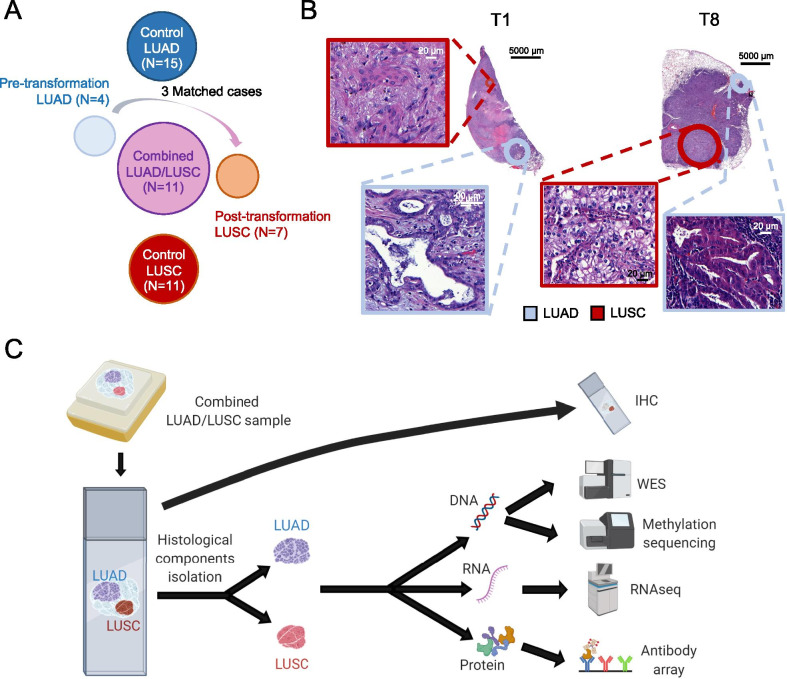 Figure 1
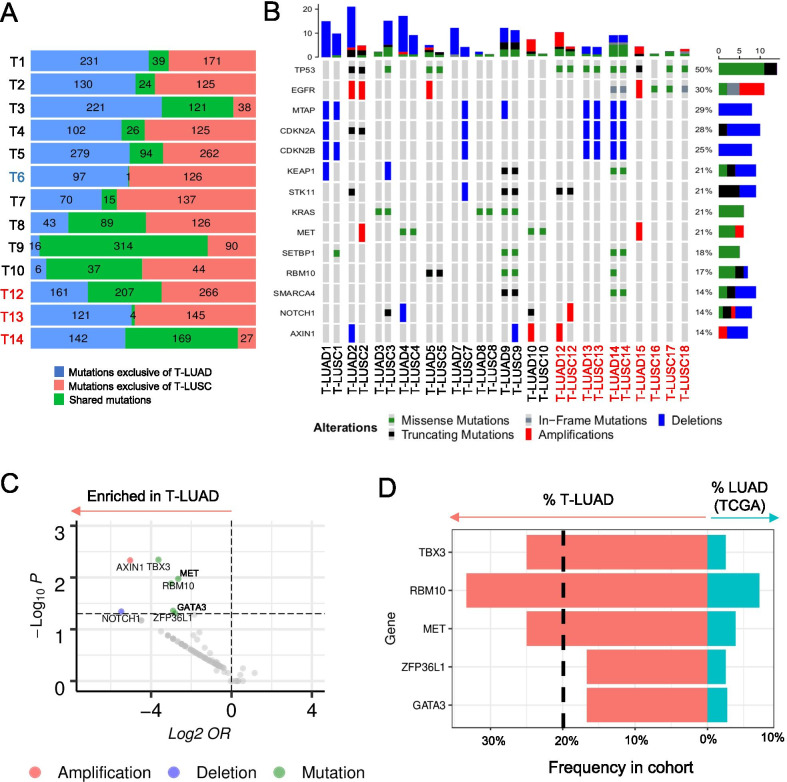 Figure 2
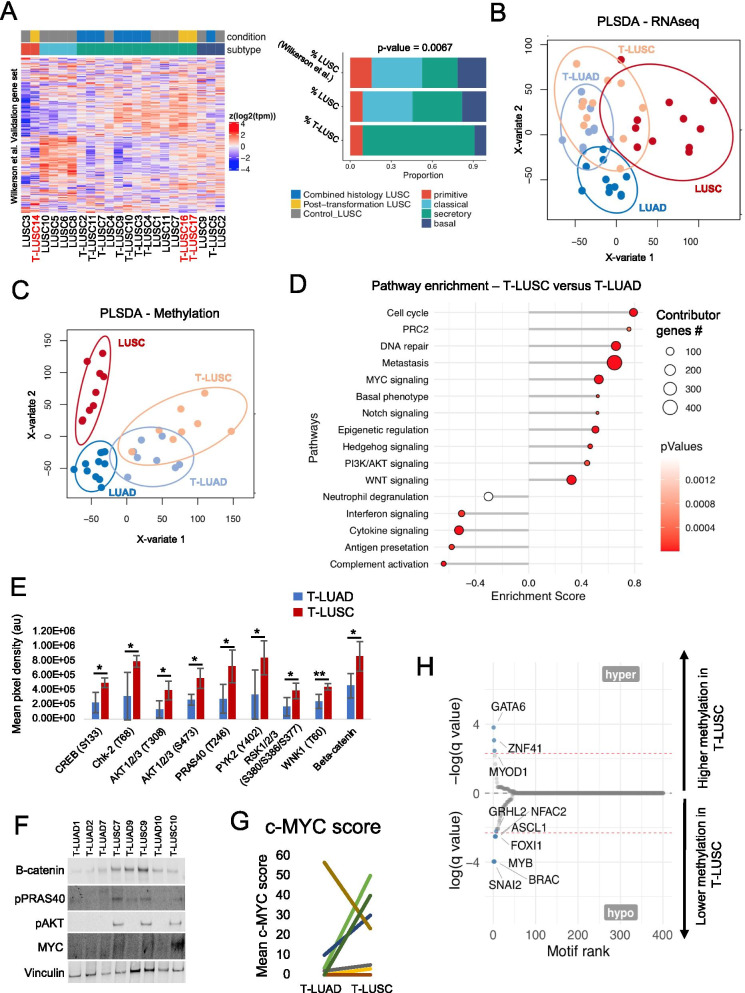 Figure 3
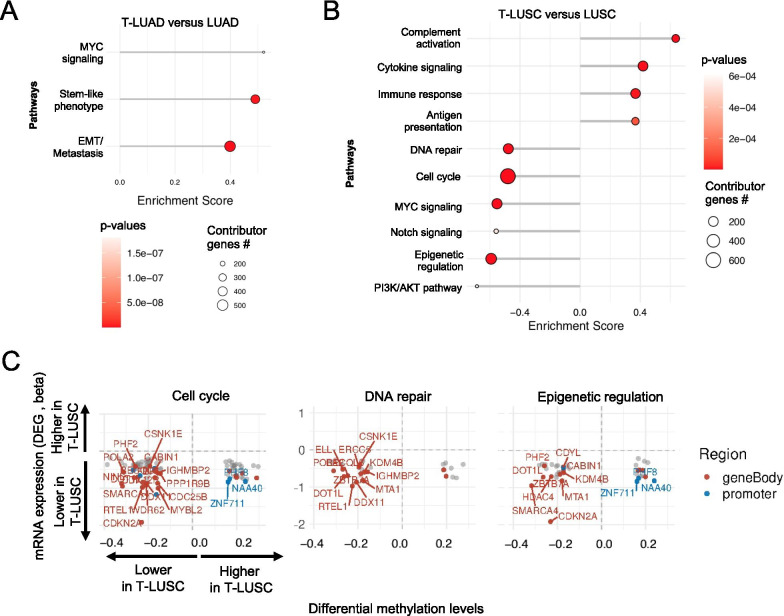 Figure 4
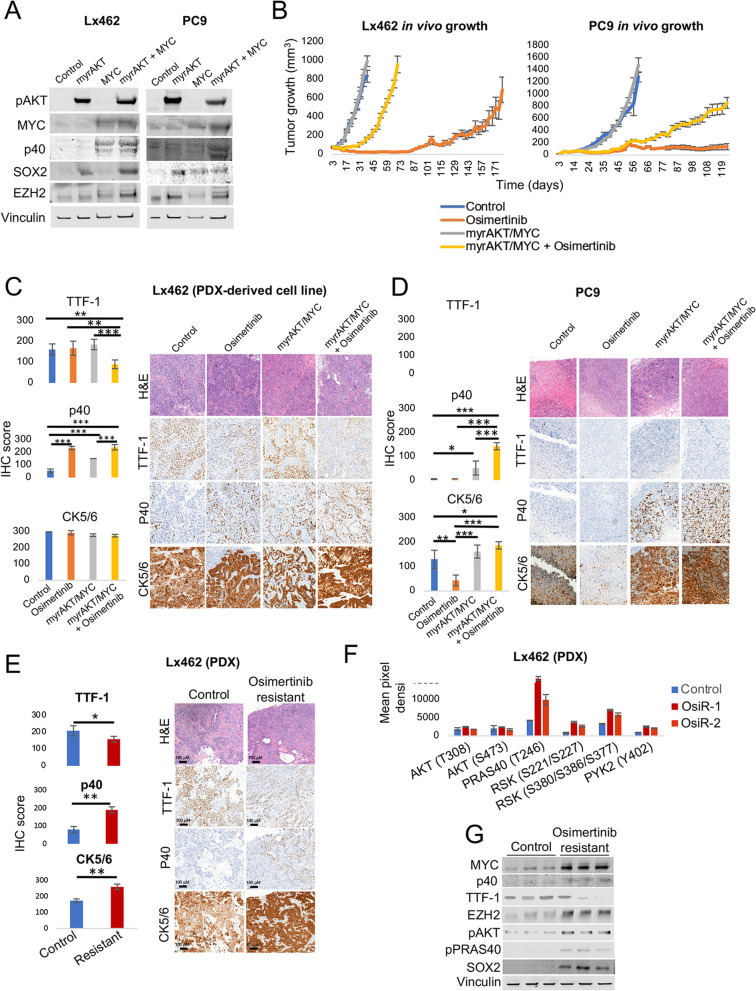 Figure 5
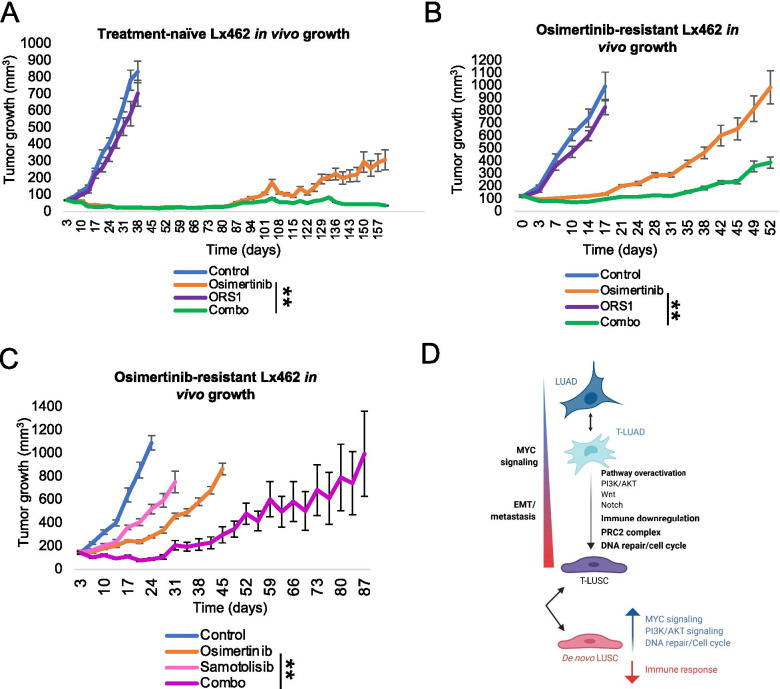 Figure 6
Peer Reviews
No public reviews on file for this paper yet. If you reviewed it on a platform where reviews are public (OpenReview, ICLR, NeurIPS, ICML), you can paste yours below so the community can read it here.
Videos
No videos yet. Explain this paper in a talk, walkthrough, or lecture? Add one.
Taxonomy
TopicsLung Cancer Treatments and Mutations · Lung Cancer Research Studies · Cancer Genomics and Diagnostics