Optimizing nutrient use efficiency, productivity, energetics, and economics of red cabbage following mineral fertilization and biopriming with compatible rhizosphere microbes
Deepranjan Sarkar, Ardith Sankar, O. Siva Devika, Sonam Singh, Shikha, Manoj Parihar, Amitava Rakshit, R. Z. Sayyed, Abdul Gafur, Mohammad Javed Ansari, Subhan Danish, Shah Fahad, Rahul Datta

TL;DR
This study shows that using certain microbes with reduced fertilizer improves cabbage growth, soil health, and economic returns.
Contribution
The study introduces dual microbial inoculation with reduced fertilizer as a novel sustainable strategy for red cabbage cultivation.
Findings
Dual inoculation with Trichoderma harzianum and Pseudomonas fluorescens improved cabbage growth and soil organic carbon.
Bio-primed plants showed higher energy output and economic returns compared to conventional methods.
Reduced fertilizer with microbial treatment maintained soil fertility while increasing productivity.
Abstract
Conventional agricultural practices and rising energy crisis create a question about the sustainability of the present-day food production system. Nutrient exhaustive crops can have a severe impact on native soil fertility by causing nutrient mining. In this backdrop, we conducted a comprehensive assessment of bio-priming intervention in red cabbage production considering nutrient uptake, the annual change in soil fertility, nutrient use efficiency, energy budgeting, and economic benefits for its sustainable intensification, among resource-poor farmers of Middle Gangetic Plains. The compatible microbial agents used in the study include Trichoderma harzianum, Pseudomonas fluorescens, and Bacillus subtilis. Field assays (2016–2017 and 2017–2018) of the present study revealed supplementing 75% of recommended NPK fertilizer with dual inoculation of T. harzianum and P. fluorescens increased…
Genes, proteins, chemicals, diseases, species, mutations and cell lines named across the full text — each resolved to its canonical identifier and authoritative record.
Click any figure to enlarge with its caption.
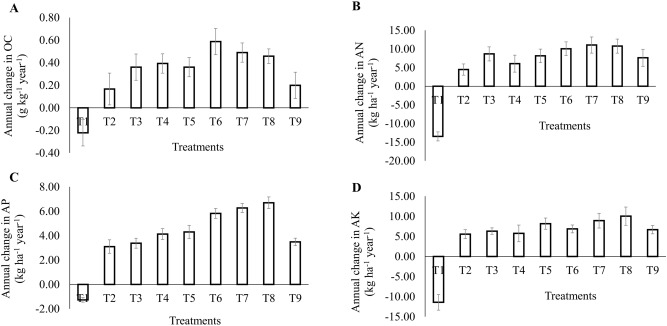 Figure 1
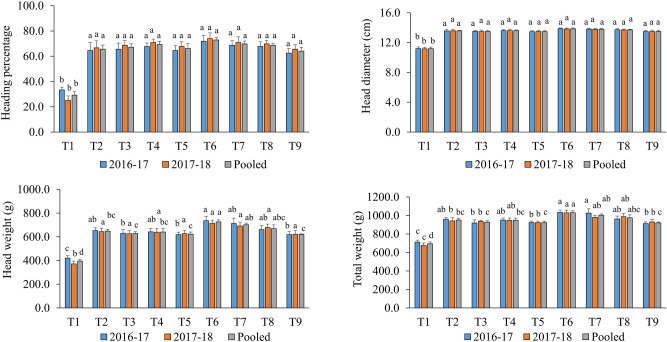 Figure 2
 Figure 3
Peer Reviews
No public reviews on file for this paper yet. If you reviewed it on a platform where reviews are public (OpenReview, ICLR, NeurIPS, ICML), you can paste yours below so the community can read it here.
Videos
No videos yet. Explain this paper in a talk, walkthrough, or lecture? Add one.
Taxonomy
TopicsGrowth and nutrition in plants · Agronomic Practices and Intercropping Systems · Composting and Vermicomposting Techniques