Sex chromosomes in meiotic, hemiclonal, clonal and polyploid hybrid vertebrates: along the ‘extended speciation continuum'
Matthias Stöck, Dmitrij Dedukh, Radka Reifová, Dunja K. Lamatsch, Zuzana Starostová, Karel Janko

TL;DR
This paper explores how sex chromosomes influence hybridization and speciation in vertebrates across a range of reproductive isolation levels, including clonal and polyploid hybrids.
Contribution
The paper introduces a framework for understanding sex chromosome roles in hybrid speciation along an extended speciation continuum.
Findings
Undifferentiated sex chromosomes are more prone to introgression and can form new sex chromosome systems.
Asexual hybrid vertebrates evolved from parents with significant genetic divergence (K2P distances >5–22%).
Female heterogamety (ZW) is more common than male heterogamety (XY) in asexual hybrids.
Abstract
We review knowledge about the roles of sex chromosomes in vertebrate hybridization and speciation, exploring a gradient of divergences with increasing reproductive isolation (speciation continuum). Under early divergence, well-differentiated sex chromosomes in meiotic hybrids may cause Haldane-effects and introgress less easily than autosomes. Undifferentiated sex chromosomes are more susceptible to introgression and form multiple (or new) sex chromosome systems with hardly predictable dominance hierarchies. Under increased divergence, most vertebrates reach complete intrinsic reproductive isolation. Slightly earlier, some hybrids (linked in ‘the extended speciation continuum') exhibit aberrant gametogenesis, leading towards female clonality. This facilitates the evolution of various allodiploid and allopolyploid clonal (‘asexual’) hybrid vertebrates, where ‘asexuality' might be a form…
Genes, proteins, chemicals, diseases, species, mutations and cell lines named across the full text — each resolved to its canonical identifier and authoritative record.
Click any figure to enlarge with its caption.
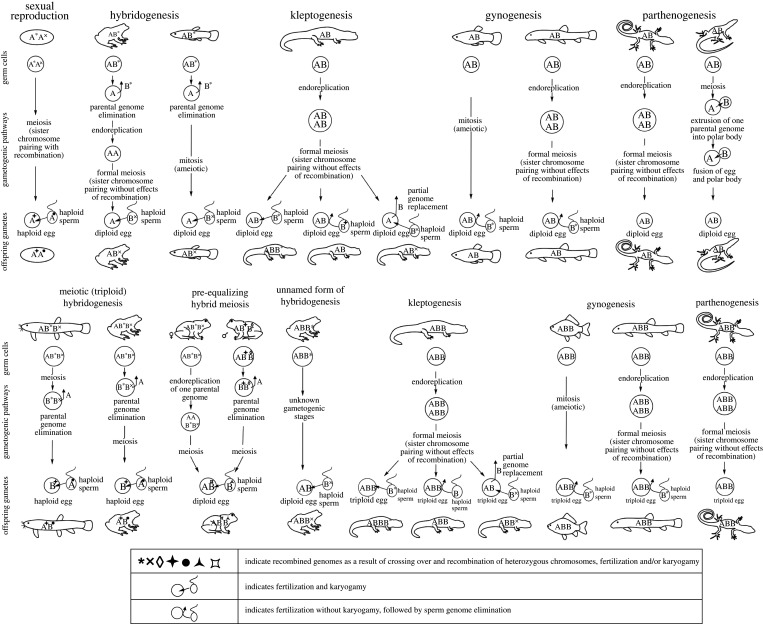 Figure 1
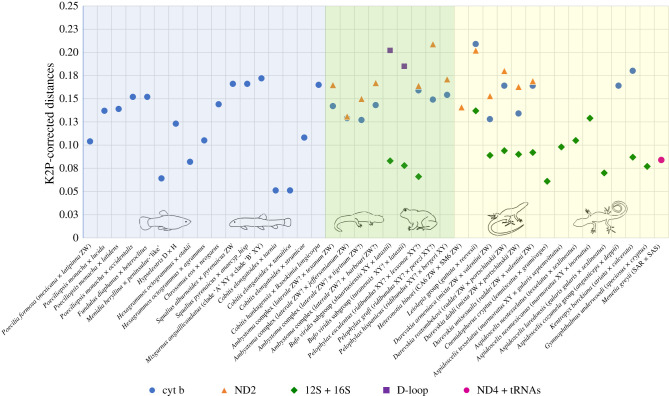 Figure 2
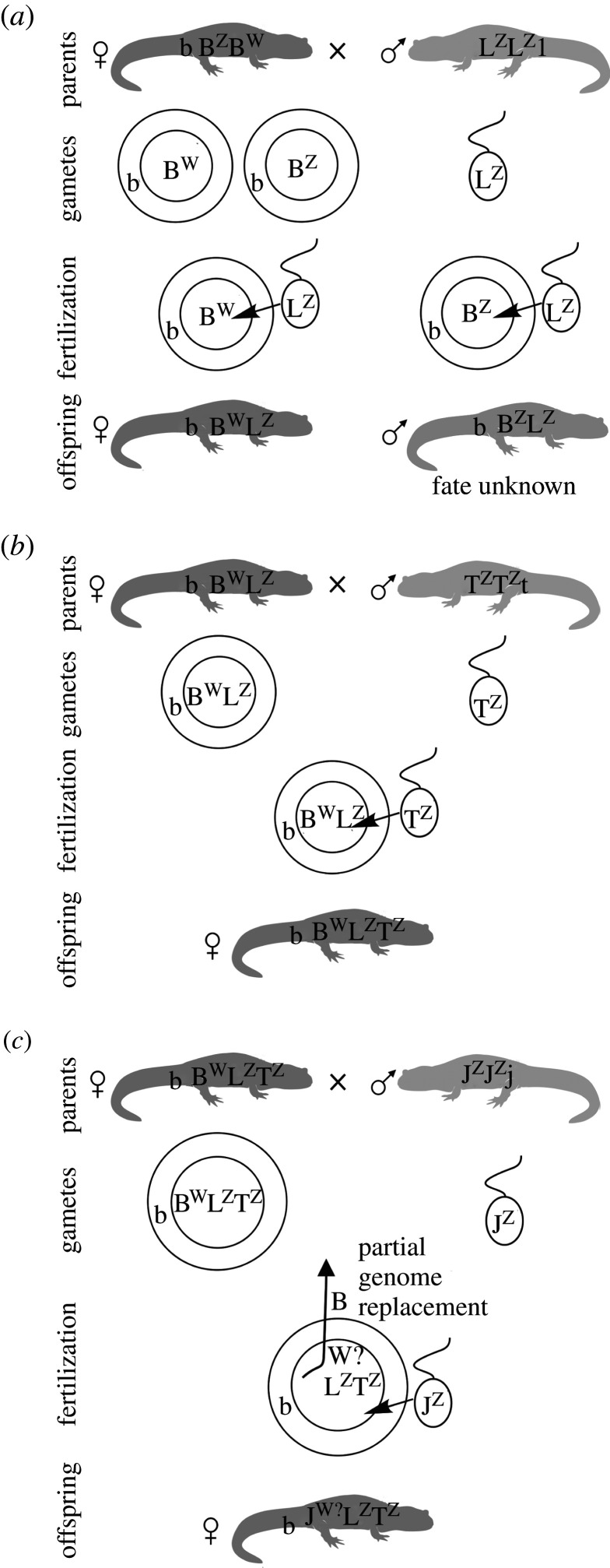 Figure 3
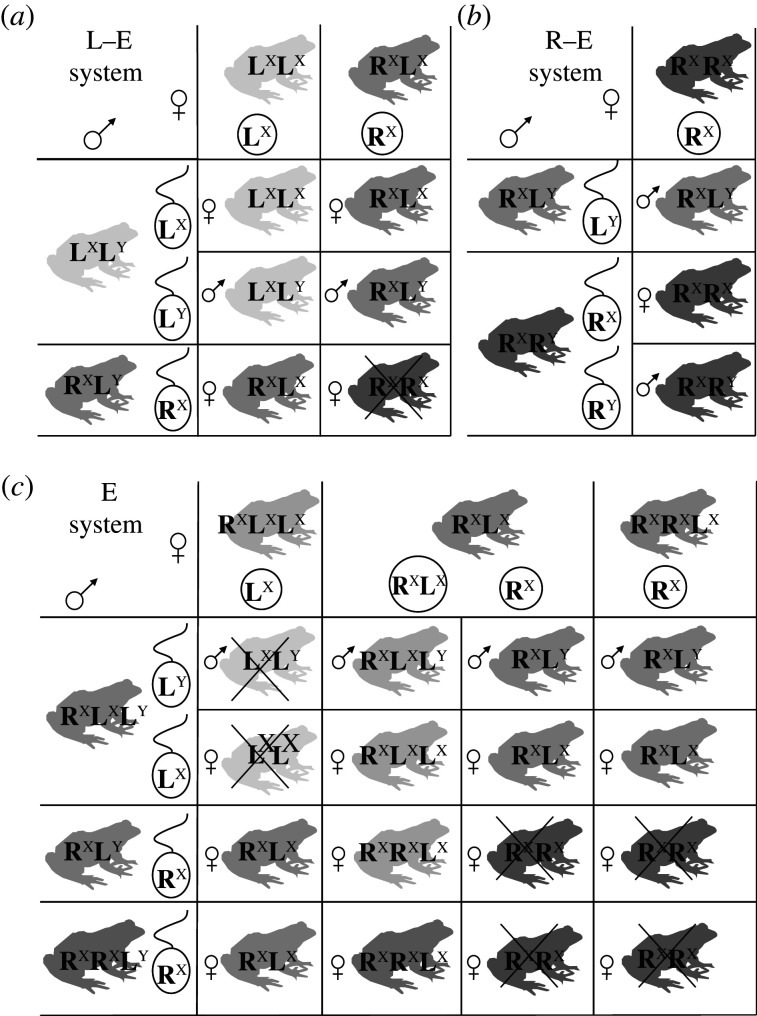 Figure 4
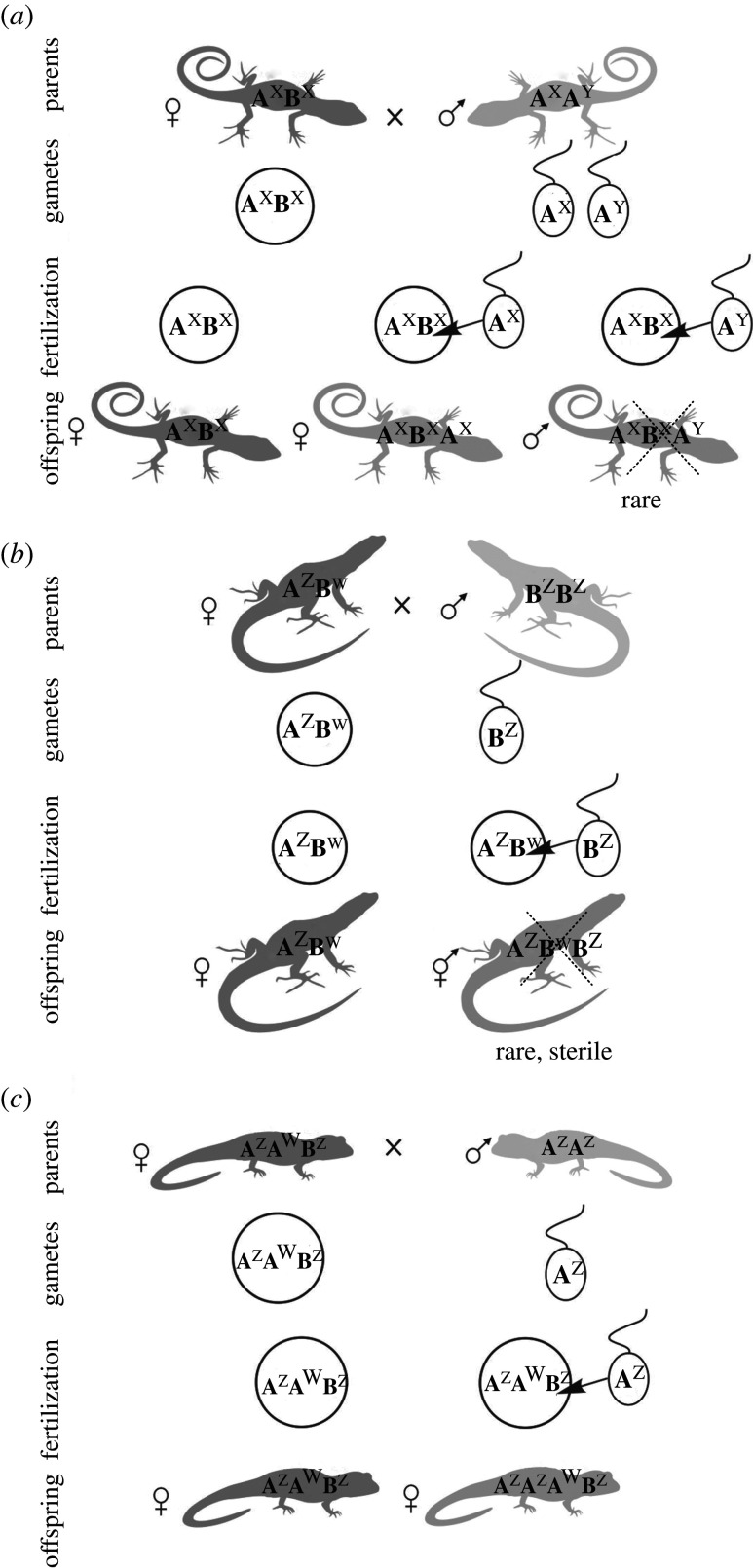 Figure 5
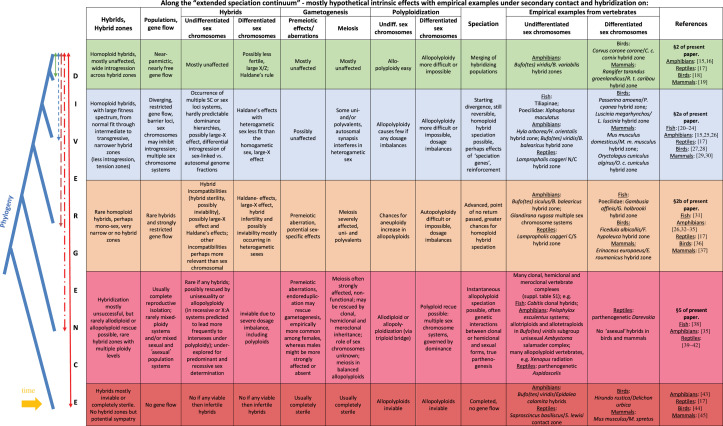 Figure 6
Peer Reviews
No public reviews on file for this paper yet. If you reviewed it on a platform where reviews are public (OpenReview, ICLR, NeurIPS, ICML), you can paste yours below so the community can read it here.
Videos
No videos yet. Explain this paper in a talk, walkthrough, or lecture? Add one.
Taxonomy
TopicsGenetic and Clinical Aspects of Sex Determination and Chromosomal Abnormalities · Animal Behavior and Reproduction · Evolution and Genetic Dynamics