Psychological Effects of Home Confinement and Social Distancing Derived from COVID-19 in the General Population—A Systematic Review
Paula Rodríguez-Fernández, Josefa González-Santos, Mirian Santamaría-Peláez, Raúl Soto-Cámara, Esteban Sánchez-González, Jerónimo J. González-Bernal

TL;DR
This review examines how home confinement and social distancing during the pandemic affected mental health, finding that certain groups experienced higher stress, anxiety, and depression.
Contribution
The study systematically identifies mental health impacts of pandemic-related restrictions and highlights vulnerable populations.
Findings
Women, young people, and those without income showed higher mental health risks.
Poor pandemic management and information overload worsened mental health outcomes.
Pre-existing psychiatric conditions increased vulnerability to stress and anxiety.
Abstract
(1) Background: Home confinement and social distancing are two of the main public health measures to curb the spread of SARS-Cov-2, which can have harmful consequences on people’s mental health. This systematic review aims to identify the best available scientific evidence on the impact that home confinement and social distancing, derived from the SARS-CoV-2 pandemic, have had on the mental health of the general population in terms of depression, stress and anxiety. (2) Methods: A systematic search was conducted on PubMed, Scopus, Web of Science and ScienceDirect between 2 January 2021 and 7 January 2021, in accordance with the recommendations of the PRISMA Declaration. The selection of studies and the evaluation of their methodological quality were performed in pairs, independently and blindly, based on predetermined eligibility criteria. (3) Results: The 26 investigations reviewed…
Genes, proteins, chemicals, diseases, species, mutations and cell lines named across the full text — each resolved to its canonical identifier and authoritative record.
Click any figure to enlarge with its caption.
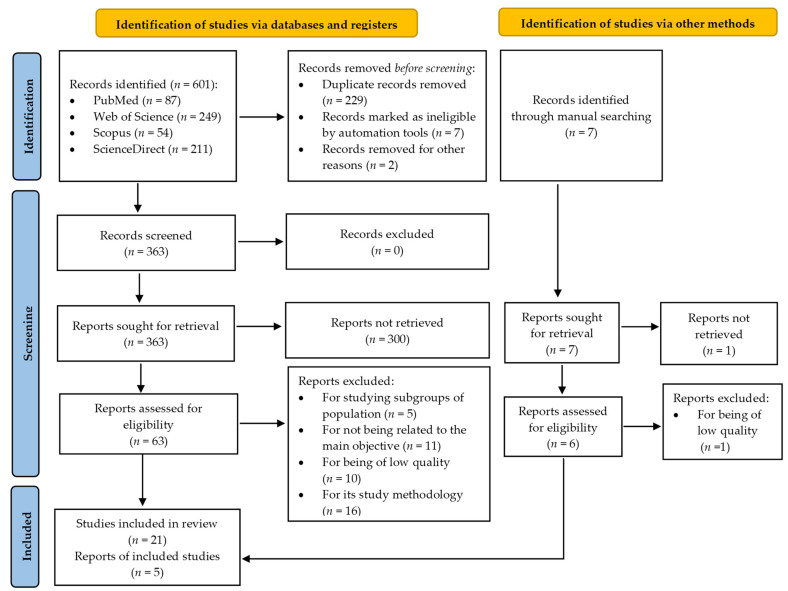 Figure 1
Peer Reviews
No public reviews on file for this paper yet. If you reviewed it on a platform where reviews are public (OpenReview, ICLR, NeurIPS, ICML), you can paste yours below so the community can read it here.
Videos
No videos yet. Explain this paper in a talk, walkthrough, or lecture? Add one.
Taxonomy
TopicsCOVID-19 and Mental Health · Psychological Well-being and Life Satisfaction · Mental Health Research Topics
1. Introduction
In December 2019, the SARS-CoV-2 emerged in Wuhan, China. The World Health Organization (WHO) declared the disease caused by this virus (the COVID-19) as the sixth international public health emergency and proclaimed the situation as a pandemic on the 11th of March of 2020 [1]. Since the pandemic began, many countries implemented public health measures, such as social distancing or home confinement, with the aim of minimizing the spread of this virus [2,3,4]. These interventions to protect the physical health of the population altered global patterns of behaviour producing changes in the economy, way of working, social interactions or daily life [5], which, in turn, can lead to an increase in the prevalence of health risk behaviours and psychological disorders [6,7,8,9].
Most studies that analyse the mental consequences in the general population of some previous epidemics and pandemics focus on symptoms related to the aftermath of the disease itself without taking into consideration the effects of social distancing or home confinement [10]. However, large-scale disasters have also been observed to increase the prevalence of different mental and behavioural disorders such as anxiety, depression, post-traumatic stress disorder (PTSD) or substance abuse [11,12,13,14]. We can take the Severe Acute Respiratory Syndrome (SARS) epidemic in 2002 as an example because this situation led to an increase in people with PTSD and psychological distress, and not only among people who suffered from the SARS disease but also among their relatives or health workers, symptoms that persisted for a long period of time [15]. Quarantine during the SARS outbreak was also associated with high rates of anxiety (28.9%) and depression (31.2%) [4].
The elderly and people with underlying diseases are particularly at risk for SARS-Cov-2 infection, but in terms of mental health as a result of measures to slow the spread of the virus, other factors appear to be contributing to the development of psychological symptoms during the pandemic [5,6,7,8,9]. For example, younger age has been linked to feelings of loneliness during the COVID-19 pandemic, leading to symptoms of anxiety and depression in this group [16]. In addition to economic losses, occupational deprivation and the pandemic itself, social isolation is the main cause of psychological symptoms during the COVID-19 [16]. Home confinement and social distancing during the pandemic have already been shown to be associated with adverse psychological outcomes, even in un-infected people [16,17], such as emotional disorders, depression, anxiety, stress, irritability, insomnia, PTSD, anger and emotional exhaustion [18], or risky behaviours and increased substance abuse [19]. This situation makes even more evident the need to pay attention to and strengthen the public’s mental health in order to minimize as much as possible the consequences of loneliness and social isolation due to the COVID-19. Therefore, investigation on this subject is justified to provide appropriate care, focused on the prevention and treatment of mental illnesses that will arise during and after the pandemic, as well as to establish programs and policies to support the global population during the crisis.
The main objective of this study was to identify the best available scientific evidence on the impact that home confinement and social distancing, derived from the SARS-CoV-2 pandemic, have had on the mental health of the general population in terms of depression, stress and anxiety.
2. Materials and Methods
In accordance with the recommendations of the PRISMA Declaration [20] and following the previously established research protocol, a systematic review of the scientific literature was made between 2 January and 7 January 2021. The electronic version of the following databases was consulted: PubMed, Scopus, Web of Science and ScienceDirect.
The search began with the formulation of a clinically answerable research question in PIO format, according to the criteria established by Sackett et al. [21] (Table 1).
Having asked that question, and according to it, different search strategies were designed and adapted to the particularities of each of the databases consulted. The appropriate “medical subjects headings” (MeSH), combined with boolean operators (AND/OR), together with free text terms, some of them truncated, were used in order to include all possible terminations (Table 2).
Those original research studies (1) with a cross-sectional or longitudinal descriptive type methodological design, (2) published in English, Spanish, French, Italian or Portuguese, (3) published from December 2019 onward, (4) with, at least, the summary being available, (5) that in their results evaluate the level of depression, stress and/or anxiety of the general population during the SARS-CoV-2 pandemic were selected. Clinical case reports, scientific letters or low-quality scientific records, and studies that did not answer the research question and were not related to the purpose of the review or those that analysed specific sub-groups of the population (children, youth, university students, health professionals, the elderly, people with specific diseases or pregnant women) were excluded.
As a secondary strategy, a manual reverse search (also known as “snowball searching”) was performed in order to identify possible relevant studies that were not previously taken into account. Sources of grey literature and bibliographic references cited in the selected studies were reviewed.
The selection of studies and the evaluation of their methodological quality were performed in pairs, independently and blindly, solving possible discrepancies by consensus and, if not, through the participation of a third evaluator. To ensure the homogeneity of all researchers in the collection of information, a standardized data extraction form was designed, including the following items for each of the selected articles: title and lead author, country and year of publication, type of study and objective, place and period of publication, sample size and characteristics, the definition of the analysed variables and instruments used, a brief summary of the obtained results and conclusions, along with the results of the evaluation of their scientific and technical quality. The “critical appraisal tools” of the Joanna Briggs Institute of the University of Adelaide (Australia) [22], suitable for the design of each study [23,24], were used for the evaluation of the methodological quality and the risk of bias. As a cut-off point for accepting the inclusion of the study in the systematic review, a minimum value of 6 out of 8 was considered for cross-sectional descriptive studies and 6 out of 9 for longitudinal studies. A pilot test was conducted in which each reviewer had to evaluate 3 articles, posteriorly analysing the concordance between their ratings.
3. Results
Of the 608 studies initially identified, 26 were selected for systematic review after a critical reading of the full text (Figure 1).
The main characteristics and results obtained in the selected studies are summarized in Table 3.
3.1. Description of the Characteristics of the Studies
The number of participants in the studies ranged between 343 and 15,308, over 18 years of age. A total of 72,056 subjects, with the female gender predominating in most of the selected studies. All the articles reviewed analysed the mental health of the adult population as a consequence of restrictive measures to stop the spread of the virus, such as home confinement and physical distancing, with the main emphasis on stress, anxiety, depression and PTSD. Sleep quality and substance abuse were not assessed in this review. Most of the studies (n = 24) were cross-sectional, and the other two were longitudinal designs. In terms of geographical distribution, the studies were performed in different regions and countries with very different health systems: China (n = 6), Spain (n = 3), Germany (n = 2), United Kingdom (n = 2), Saudi Arabia (n = 1), Brazil (n = 1), India (n = 1), South Korea (n = 1), Pakistan (n = 1), Jordan (n = 1), Italy (n = 1), Vietnam (n = 1), Turkey (n = 1), Bangladesh (n = 1) and the US (n = 1), noting that two of them were performed in several countries.
To assess the effect of home confinement and social distancing resulting from the SAR-CoV-2 pandemic on the mental health of the general population, different scales and questionnaires were used. The Beck Depression Inventory (BDI), the Short Mood and Feelings Questionnaire (SMFQ), the Patient Health Questionnaire-9 (PHQ-9), the Severity of Dependence Scale (SDS), the Centre for Epidemiologic Studies Depression Scale (CES-D), the PROMIS depression v.8a and the Patient Health Questionnaire-2 (PHQ-2) were used to measure depressive symptoms. The Beck Anxiety Inventory (BAI), the Statistical Anxiety Scale (SAS), the State-Trait Anxiety Inventory (STAI), the PROMIS anxiety v.8a and the Generalised Anxiety Disorder Assessment (GAD-7), the Short version of the Whitely Index and the Health Anxiety Inventory (HAI) for health anxiety were used to assess anxiety. PTSD symptoms were evaluated by the revised Impact of Event Scale-Revised (IES-R), the reduced civilian version of the PTSD checklist (PCL-C-2), the DSM-V PTSD checklist (PCL-5) and the International Trauma Questionnaire (ITQ). The Depression, Anxiety and Stress Scale (DASS) and the Depression, Anxiety and Stress 21-item Scale (DASS-21) were used to evaluate symptoms of anxiety, depression and stress; and the Hospital Anxiety and Depression Scale (HADS) for anxiety and depression. Anxiety, stress and depression levels were measured by the DASS-21 or DASS in nearly half of the studies (n = 10), and PTSD was mostly evaluated with IES-R (n = 8). GAD-7 and PHQ-9 were also used in numerous studies to evaluate symptoms of anxiety and depression, respectively.
Regarding the statistical analysis, most studies used univariate tests to analyse the effect of sociodemographic and COVID-19-related variables on the main result of the study and multivariate tests to simultaneously analyse various study variables.
When assessing the methodological quality and risk of bias of the studies, most of them obtained high average scores, always above the set cut-off score (Table 4 and Table 5).
3.2. Description of the Results
3.2.1. Anxiety Symptoms and Associated Factors
Anxiety symptoms were evaluated in 24 of the 26 studies [25,26,28,29,30,31,32,33,34,35,36,37,38,39,40,41,43,44,45,46,47,48,49,50]. Prevalence differed from 8.3% to 45.1% [25,26,28,32,33,34,36,37,38,39,40,41,42,44,47,49] with the exception of the research conducted by Goularte et al. [32], where 81.1% of the sample reported high levels of anxiety. This variability may be due to the lack of unanimity between the different studies regarding the definition of anxiety or the established cut-off point. In Massad et al.’s study [38], mild anxiety was reported in 21.5%, moderate anxiety in 10.9% and severe anxiety in 6% of participants; Özdin et al. [41] found symptoms of anxiety, in general, in 45.1% of the sample. Benke et al. [28] demonstrated a prevalence of 29.4% for anxiety and 21.1% of the sample obtained above cut-off point levels of anxiety disorder.
Many factors were associated with higher levels of anxiety during the COVID-19 pandemic. Women were more likely to develop anxiety symptoms compared to men, with the exception of data provided by Chen et al. [29] and Wang et al. [49], which indicated a higher incidence in males. Younger ages were also associated with anxiety [25,28,29,30,34,35,36,37,43,44,45,46,47,49]. The student [26,33,35], unemployed [28,35,44], housewife [33] or health worker status [33,35] reported more anxiety compared to other occupational status (worker, retired people, etc.). Some studies also associated lower income [29,31,32,35,37,46,47,48], education [28,29,32,33,47] and the perception of the information received about the pandemic [31,37] with anxious symptomatology. Participants with a history of mental illness or current or prior psychiatric treatment reported being more anxious than healthy people [28,32,33,41,45,46]. A study also associated living alone with anxiety compared to subjects living with dependents (spouse, children, family members, caregivers) [28]. Widespread linear models linked lower levels of anxiety to factors such as feeling healthy, high incomes and a broad social network and social support [29,38]. Conversely, sociodemographic variables such as being female, young, student, divorced or widowed, having low levels of education and income, feelings of loneliness, suffering from previous psychiatric illness or having a history of mental illness and worse self-perceived health were considered the main factors that are associated with anxious symptomatology [30,31,32,37,38,39,41,44,45,46,47,48]. Regarding the variables related to the COVID-19, high concern about the pandemic, social distancing measures and perception of risk were related to anxiety [26,30,31,37,44,46].
González-Sanguino et al. [31] identified misinformation as one of the main factors that are associated with anxiety, while Lei et al. [37] demonstrated that people with more knowledge related to the COVID-19 were more likely to experience anxiety during the pandemic. The frequency of news consumption about the COVID-19 [42] and the dissemination of health information about the pandemic over radio [50] were also associated with higher scores.
Finally, taking into consideration the area of residence of the people, Özdin et al. [41] stated that living in urban areas contributed to greater anxiety, while Schweda et al. [45] found living in rural areas was associated with anxiety.
3.2.2. Depressive Symptoms and Associated Factors
Symptoms of depression were evaluated in 23 of the 26 studies, with a prevalence from 14.6% to 46.42% [25,26,27,28,30,32,33,34,35,36,37,39,40,41,43,44,46,47,48,49,50]. Research by Goularte et al. [32] and Ripon et al. [43] demonstrated some signs of depression in 81.9% and 85.9% of the population studied, respectively. Most studies [25,26,28,30,31,32,34,35,37,42,43,45,46,47,49] associated young age and female sex or gender with greater depressive symptoms than men, and women also reported greater symptomatology compared to men [26,28,31,32,35,36,37,42,43,45,47], except in the study of Wang et al. [49] where men were the ones who showed the worst results. A low-income level contributed significantly to worse mental health, with low- or non-income people, such as students or unemployed individuals, exhibiting the most depressive symptoms [28,31,32,33,40,43,46,47,48,49]. As for marital status, singles, divorcees or widowers, and people living alone found themselves more depressed than married people and couples [32,33,36,37,43,46].
As in the case of anxiety, people with low levels of education were more likely to develop depressive symptoms than people with higher education levels [28,31,32,33,46,47,49], except for Ripon et al. [43], who reported worse depression outcomes in people with higher educational level. Being or having been in psychiatric treatment and presenting mental health problems was also associated with the onset of depressive symptoms during home confinement and social isolation derived from the pandemic [28,31,32,33,39,40,46]. Multivariate analyses showed that the main factors related to sociodemographic variables were being a female, young, having lower levels of education and income, or student, unemployed or housewife status; being a widower, divorcer or unmarried person; having feelings of loneliness; having previous psychiatric illness and worse self-perceived health [30,31,32,37,39,40,46,47,48,49]. Pandemic-related variables such as concern for the COVID-19, lack of psychological support, risk perception and long periods of social distancing also contributed to the onset of depressive symptoms [30,31,32,37,39]. Protective factors, such as spiritual well-being [31], being over 60 and having a partner [39], were identified.
3.2.3. Stress Symptoms, PTSD and Associated Factors
Of the total studies, 10 analysed stress levels [26,30,33,36,39,40,42,44,49,50] and 9 PTSD-related symptoms [26,31,32,42,43,46,47,49,50]. The prevalence of stress-related symptoms and PTSD differed from 8.1% to 49.66% [26,31,32,33,36,39,40,43,46,48,49]; but Ripon et al. [43] claimed to find symptoms of PTSD in 81.8% of the participants, of whom only 20% reported a likely diagnosis of PTSD. In his longitudinal study, Wang et al. [50] observed a significant increase in PTSD levels over time. Most research associated the female gender with higher levels of stress [26,31,32,36,39,43,49], but three of the studies found greater symptomatology in men compared to women [42,46,49]. Younger people generally showed more stress [26,30,31,32,39,42,43,44,47], but Lee et al. [36] found worse results among older people. People without income, such as students, housewives or those unemployed, proved to be more susceptible to develop symptoms of PTSD and stress than those with a job and income [26,31,32,33,40,48]. In terms of educational level, most studies reported that lower levels correlated with higher stress and PTSD [31,32,33,49], but Ripon et al. [43] found greater symptomatology among people with higher educational levels. All in all, the main factors that contributed to PTSD and stress were being a female, young, having feelings of loneliness, a low level of education and income, a student or unemployed status and previous psychiatric illness [30,31,32,39,40,43,46,47,49]. Regarding pandemic-related factors, concern about the COVID-19, social distancing, perception of danger and receiving insufficient information were the main factors associated with stress and PTSD [30,31,32,47,49].
4. Discussion
Considering a global perspective, the main objective of this systematic review was to explore the mental health of the general population, in terms of depression, stress and anxiety, during social distancing and home confinement resulting from the SARS-CoV-2 outbreak. This review revealed the main factors that are associated with the development of anxiety, depression and PTSD during the pandemic, being females, young age, unemployed and people with previous mental health or psychiatric illnesses the most vulnerable.
Women developed higher levels of anxiety, stress and depression, but men also demonstrated some risk of experiencing elevated stress levels and PTSD during the COVID-19 [29,46,49]. Although women are at a lower risk of experiencing severe symptoms or even dying due to SARS-CoV-2 than men [51], they have been shown to be more vulnerable to the psychological consequences of the pandemic [52].
Younger people proved to be more vulnerable to the development of health-related symptoms [26,30,31,32,39,42,43,44,47], anxiety [25,28,29,30,34,35,36,37,43,44,45,46,47,49] and depression [25,26,28,30,31,32,34,35,37,42,43,45,46,47,49]. The study conducted by Glowacz and Schmits [53] to assess COVID-19-related psychological discomfort by age showed that young people between 18 and 30 were the most psychologically affected by the pandemic.
Loss of income during the COVID-19 crisis has been shown to have harmful implications for mental health [54] and to be an important factor associated with poor mental health in times of social-health crisis [55]. Absence or decrease in income promotes the appearance of anxiety [29,31,32,35,37,46,47,48], stress [26,31,32,33,40,48] and depression [28,31,32,33,40,43,46,47,48,49], with the unemployed, housewives and students being the most affected groups during the pandemic.
Additionally, having a previous psychiatric illness or being treated for a psychological disorder was also associated with mental health disturbances during periods of social distancing and home confinement [28,30,31,32,33,37,39,40,41,43,46,47,48,49].
The perception of insufficient information was a very common factor associated with poor mental health in the revised studies, but receiving negative data has also shown high levels of anxiety [31,42,50] and stress [30,31,32,47,49], as well as concern for the pandemic. Although previous pandemic-related research showed a significant association between receiving enough information and good mental health, it has never been possible to communicate as quickly or access such immense amounts of information in real-time as today [56]. Responsible use of information dissemination and acquisition tools can help to spread scientific findings, share protocols of action and diagnosis, compare different approaches globally, provide psychological support to the population, etc. [57]; however, access to these huge amounts of information do not always involve the acquisition of reliable data, and some people may not be in a position or have the necessary skills to properly process and understand the information received [58]. Sharing fake news, conspiracy theories, magic cures and other decontextualized news increases the anxiety and stress of the population [59]. The WHO created the term “infodemic” to refer to the phenomenon by which an excessive amount of information about a problem is accessed and may be associated with inadequate public health responses and create confusion and mistrust among the population [60]. Proper management of information through reliable and verifiable sources, avoiding decontextualized use, is essential for the population to understand and adapt to the health measures dictated by the authorities [61].
The long-term implications of the previously mentioned mental health disturbances are a cause for concern. While the female gender, younger ages, lack or decrease in income, previous psychiatric illness and perception of lack of information or “infodemic” are the main factors associated with symptoms of depression, anxiety and stress, social networks and economic stability have been shown to be the main factors associated with good mental health during the pandemic [29,38,40].
All of these aspects should be considered when making government changes and implementing measures to reduce symptoms of anxiety, stress and depression. Social support and a proactive approach to the most vulnerable groups such as women, young people and people with previous mental illnesses could lead to the prevention, early detection and intervention of mental health symptoms arising from the COVID-19 pandemic [52]. Being clear about who are the people most affected by physical and social distancing measures during the pandemic facilitates the design of specific personalized self-care strategies and allows providing guidance and assistance to the most vulnerable groups of people to help and support their well-being.
To lessen the fear of a new recession and financial collapse, apart from strong and resilient leadership of the authorities, medium- and long-term planning is needed to rebalance and revive the economy [62]. In its plan for the global management of the SARS-CoV-2 pandemic, the United Nations Educational, Scientific, and Cultural Organization (UNESCO) highlighted the positive effect of developing clear, direct and timely information policies on the behaviour of citizens, dedicating two of its eleven ethical considerations to this subject [63]. Social media and television are the most widely used sources of information, but there is a need to improve the quality and veracity of Internet information for the general population [64]. Currently, most of the population in developed countries has access to the internet or the media, which should be used to provide specific recommendations and direct citizens to official and reliable sources.
This review provides information that will guide future research and facilitate the development of programs to alleviate pandemic-derived mental health symptoms. Knowledge of the impact of COVID-19 grows daily, so studies related to the pandemic must be continuously updated. For future investigations, these findings should be interpreted considering the limitations of this study and the revised research. The fact that all studies related to this topic were performed during the SARS-CoV-2 outbreak, the randomization of the sample may not be possible in some cases. Additionally, the online survey was the main method of information collection, being able to trigger biases in the selection of participants, such as oversampling of people with higher levels of education or younger. The absence of consideration of response rates and recruitment processes in the reviewed studies could also bias the results obtained. By removing review studies that focus on specific populations, such as health workers, people with specific diseases or the elderly, key findings related to particularly vulnerable and underrepresented communities may have been missed. Most of the studies included in the review were cross-cutting and may have assessed mental health at different stages of the outbreak, making it difficult to establish causal associations between the pandemic and the levels of depression, stress and anxiety of the population. Furthermore, although all governments based their policies on physical distancing, the measures were not the same in all countries, which may also influence the findings of the studies. Another considerable limitation is heterogeneity in the criteria used in the different studies reviewed to consider the presence of anxiety, stress and depression.
Regarding its strengths, this study identifies the most vulnerable groups of the general population, highlighting the differences between groups and identifying the factors that are associated with worse mental health. In addition, factors such as the presence of a broad social support network, receiving enough and quality information and having economic resources become particularly relevant at difficult times such as the COVID-19 social-health crisis. This scientific evidence facilitates the development of programs based on the specific needs of the general population to reduce the impact of the pandemic on its levels of stress, anxiety and depression.
5. Conclusions
The COVID-19 pandemic raised public health concerns not only in terms of physical health but also associated with a number of mental health disturbances. This review demonstrated that females, young age, unemployed, and patients with previous mental health or psychiatric illnesses were the most vulnerable. When disseminating information on the pandemic, governmental organisations, authorities and other professionals must use reliable and dependable sources to avoid misinformation or information overload and reduce mental health behaviours.
The reference list from the paper itself. Each links out to its DOI / PubMed record.
- 1World Health Organization (WHO)Statement on the Second Meeting of the International Health Regulations (2005) Emergency Committee Regarding the Outbreak of Novel Coronavirus (2019-n Co V)Available online: https://www.who.int/news/item/30-01-2020-statement-on-the-second-meeting-of-the-international-health-regulations-(2005)-emergency-committee-regarding-the-outbreak-of-novel-coronavirus-(2019-ncov)(accessed on 17 February 2021)
- 2Xiao H.Zhang Y.Kong D.Li S.Yang N.Social capital and sleep quality in individuals who self-isolated for 14 days during the coronavirus disease 2019 (COVID-19) outbreak in January 2020 in China Med. Sci. Monit.202026 e 92392110.12659/MSM.92392132194290 PMC 7111105 · doi ↗ · pubmed ↗
- 3López-Bueno R.Calatayud J.Casaña J.Casajús J.A.Smith L.Tully M.A.Andersen L.L.López-Sánchez G.F.COVID-19 Confinement and Health Risk Behaviors in Spain Front. Psychol.202011142610.3389/fpsyg.2020.0142632581985 PMC 7287152 · doi ↗ · pubmed ↗
- 4Hawryluck L.Gold W.L.Robinson S.Pogorski S.Galea S.Styra R.SARS control and psychological effects of quarantine, Toronto, Canada Emerg. Infect. Dis.2004101206121210.3201/eid 1007.03070315324539 PMC 3323345 · doi ↗ · pubmed ↗
- 5Galea S.Merchant R.M.Lurie N.The Mental Health Consequences of COVID-19 and Physical Distancing: The Need for Prevention and Early Intervention JAMA Intern. Med.202018081781810.1001/jamainternmed.2020.156232275292 · doi ↗ · pubmed ↗
- 6Dsouza D.D.Quadros S.Hyderabadwala Z.J.Mamun M.A.Aggregated COVID-19 suicide incidences in India: Fear of COVID-19 infection is the prominent causative factor Psychiatry Res.202029011314510.1016/j.psychres.2020.11314532544650 PMC 7832713 · doi ↗ · pubmed ↗
- 7Lai C.C.Shih T.P.Ko W.C.Tang H.J.Hsueh P.R.Severe acute respiratory syndrome coronavirus 2 (SARS-Co V-2) and coronavirus disease-2019 (COVID-19): The epidemic and the challenges Int. J. Antimicrob. Agents 20205510592410.1016/j.ijantimicag.2020.10592432081636 PMC 7127800 · doi ↗ · pubmed ↗
- 8Rubin G.J.Wessely S.The psychological effects of quarantining a city BMJ 2020368 m 31310.1136/bmj.m 31331992552 · doi ↗ · pubmed ↗